THE ORIGINAL COLLECTION · SINCE 2010

Environment
press releases.

Research announcements from universities, hospitals and scientific institutions. Explore the stories, people and discoveries behind the headlines.

Original publication datesPage 123
FIND A STORY

Find a past release.

Dates and source material belong to the original release.

Read our research explainers

Browse the collection · original publication order

One in five Colorado bumblebees are endangered, new report says
Environment

One in five Colorado bumblebees are endangered, new report says

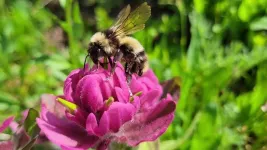
On a cliffside at Mesa Verde National Park in southern Colorado, a fuzzy bee was industriously gnawing at the red sandstone. Making a loud grinding sound, the insect used its powerful jaws to drill tunnels and holes in rocks, where it would build a nest for raising offspring. The bee, known as Anthophora pueblo, is a type of digger bee native to Colorado. Discovered less than a decade ago, the bee has quickly become Adrian Carper’s favorite pollinator. “This is just one example of how crazily diverse our native bees are,” said Carper, an ...

Read the release
Galápagos penguin is exposed to and may accumulate microplastics at high rate within its food web, modelling suggests
Environment

Galápagos penguin is exposed to and may accumulate microplastics at high rate within its food web, modelling suggests

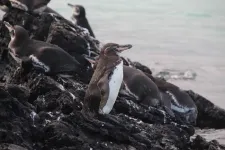
Modelling shows how microplastics may bioaccumulate in the Galápagos Islands food web, with Galápagos penguins most affected, according to a study published January 24, 2024 in the open-access journal PLOS ONE by Karly McMullen from the University of British Columbia, Canada, under the supervision of Dr. Juan José Alava and Dr. Evgeny A. Pakhomov of the Institute for the Ocean and Fisheries, University of British Columbia, Canada, and colleagues. We know that microplastics are building up in our oceans, but the extent of the damage to marine organisms is still being assessed. Here, McMullen and colleagues focused ...

Read the release
Environment

The costly, unintended consequences produced by the National Flood Insurance Program

Since the creation of the National Flood Insurance Program (NFIP) in 1968, the U.S. government has paid over $51 billion to cover flood losses. Almost half of these payouts went to just 25 counties, among the fastest-growing counties by population. A new paper published in the Journal of the Association of Environmental and Resource Economists examines whether insuring people against potential flood losses contributes directly to population growth in flood-prone areas. In “Does the National Flood Insurance Program Drive Migration ...

Read the release
A large percentage of European plastic sent to Vietnam ends up in nature
Environment

A large percentage of European plastic sent to Vietnam ends up in nature

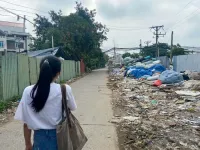
Despite strict EU regulations on plastic recycling, there is little oversight on plastic waste shipped from the EU to Vietnam. A large percentage of the exported European plastic cannot be recycled and gets dumped in nature. That is what new research led by Utrecht University’s Kaustubh Thapa has found. Following the recycling path About half of Europe’s plastic waste is exported to a number of countries in the Global South, including Vietnam. A Dutch and Vietnamese research team ventured to Minh Khai Craft Village, the largest recycling hub ...

Read the release
New study unveils how plants control the production of reactive oxygen species
Environment

New study unveils how plants control the production of reactive oxygen species

Reactive oxygen species (ROS) are highly reactive molecules containing oxygen. These compounds, which are normal byproducts of biological processes in all living organisms such as aerobic respiration as well as photosynthesis, are highly toxic. In most cases, ROS damage cellular machinery and can trigger a harmful stress response if their levels are not kept in tight check; this is why antioxidants are an important part of our diet. However, over the past few decades, scientists have discovered that ROS are often intentionally ...

Read the release
Environment

How does climate change affect eczema?

In an analysis of all relevant published studies that assessed atopic dermatitis (also known as eczema) associated with trends in climate-related hazards due to greenhouse gas emissions, investigators found that impacts include direct effects on eczema, like particulate matter-induced inflammation from wildfires, and indirect effects, such as stress resulting from drought-induced food insecurity. In their research published in Allergy, the scientists created maps showing the past, ...

Read the release
Mind the (green) gap
Environment

Mind the (green) gap

Color mixing is the process of combining two or more colors: red and green make yellow, blue and red make purple, red and green and blue make white. This process of mixing colors is the basis for the future of solid-state lighting. While currently white light is achieved by phosphor down-conversion, LED color mixing actually has a higher theoretical maximum efficiency, which is needed in order to achieve the 2035 DOE energy efficiency goals. Despite the potential efficiency of color-mixed LED sources, there exists one significant challenge: green. ...

Read the release
Marine heat waves trigger shift in hatch dates and early growth of Pacific cod
Environment

Marine heat waves trigger shift in hatch dates and early growth of Pacific cod

Marine heat waves appear to trigger earlier reproduction, high mortality in early life stages and fewer surviving juvenile Pacific cod in the Gulf of Alaska, a new study shows. These changes in the hatch cycle and early growth patterns persisted in years following the marine heat waves, which could have implications for the future of Gulf of Alaska Pacific cod, an economically and culturally significant species, END ...

Read the release
Environment

Study offers rare long-term analysis of techniques for creating standing dead trees for wildlife habitat

CORVALLIS, Ore. – Ecologists have long known that standing dead trees, commonly referred to as snags, are an important habitat element for forest dwellers and act as a driver of biodiversity. They’re so important that in some managed forests, snag creation is part of the conservation tool kit – i.e., crews sometimes convert a percentage of live trees into dead ones through techniques ranging from sawing off their tops to wounding their trunks to injecting them with disease-causing fungi. Until now, however, key questions had remained unanswered: How well do any of those techniques actually work over the long term? ...

Read the release
As a carbon offset, cookstove emission credits are greatly overestimated
Environment

As a carbon offset, cookstove emission credits are greatly overestimated

The fastest growing type of offset on the global carbon market subsidizes the distribution of efficient cookstoves in developing countries to reduce greenhouse gas emissions, but a new study finds that the credits overestimate the stoves’ carbon savings by a factor of 10. The overestimation undermines efforts to counteract carbon emissions to slow climate change, since companies use these offsets to meet climate targets and to sell products labeled as “carbon neutral” instead of making real reductions in greenhouse gas emissions. It also undermines ...

Read the release
Environment

Ants help reveal why sourcing different plants for eco fuels is crucial for biodiversity

Despite being a renewable energy source, the use of biofuel is controversial, as growing few, highly productive crops for fuel can lead to biodiversity loss in the cropping systems where biomass is produced. A cropping system refers to the crops, their sequence, and the management practices on a given field. Now, researchers in the US have compared ant communities in different types of bioenergy cropping systems to better understand how these systems shape biotic communities and their functions. The results were published in Frontiers ...

Read the release
The cause of recent cold waves over East Asia and North America was in the mid-latitude ocean fronts
Environment

The cause of recent cold waves over East Asia and North America was in the mid-latitude ocean fronts

If the world is warming, why are our winters getting colder? Indeed, East Asia and North America have experienced frequent extreme weather events since the 2000s that defy average climate change projections. Many experts have blamed Arctic warming and a weakening jet stream due to declining Arctic sea ice, but climate model experiments have not adequately demonstrated their validity. The massive power outage in Texas in February 2021 was caused by an unusual cold snap, and climate models are needed to accurately predict the risk of extreme weather events in order to prevent massive socioeconomic damage. In particular, climate technology leaders have ...

Read the release
Environment

Innovate UK, the Urban Future Lab, and Greentown Labs announce the Year 4 cohort for their Global Incubator Programme

Commencing in January, the Urban Future Lab (UFL) at the NYU Tandon School of Engineering, in collaboration with Greentown Labs, will serve as the supportive entry point in the U.S. for the fourth cohort of Innovate UK’s Global Incubator Programme: Clean Growth edition. This initiative is specifically designed to foster and assist the establishment of innovative climate technology companies demonstrating significant potential for international scalability into new markets. The annual program extends the opportunity to eight U.K.-based businesses, enabling them to explore the U.S. market and gain access to esteemed mentors over a six-month period. "We’re ...

Read the release
Groundbreaking discovery enables cost-effective and eco-friendly green hydrogen production
Environment

Groundbreaking discovery enables cost-effective and eco-friendly green hydrogen production

A breakthrough technology has been developed that enables the production of green hydrogen in a more cost-effective and environmentally friendly manner, bringing us closer to a carbon-neutral society by replacing expensive precious metal catalysts. Led by Professor Jungki Ryu in the School of Energy and Chemical Engineering at UNIST and Professor Dong-Hwa Seo from the Department of Materials Science and Engineering at KAIST, a joint research team has successfully developed a bifunctional water electrolysis catalyst for the high-efficiency and stable production of high-purity green hydrogen. The newly-developed catalyst exhibits exceptional durability even in highly corrosive acidic environments. ...

Read the release
Environment

Food from urban agriculture has carbon footprint 6 times larger than conventional produce, study shows

Photos A new University of Michigan-led international study finds that fruits and vegetables grown in urban farms and gardens have a carbon footprint that is, on average, six times greater than conventionally grown produce. However, a few city-grown crops equaled or outperformed conventional agriculture under certain conditions. Tomatoes grown in the soil of open-air urban plots had a lower carbon intensity than tomatoes grown in conventional greenhouses, while the emissions difference between conventional and urban agriculture vanished for air-freighted crops like asparagus. "The exceptions revealed by our ...

Read the release
Environment

Study says ice age could help predict oceans’ response to global warming

A team of scientists led by a Tulane University oceanographer has found that deposits deep under the ocean floor reveal a way to measure the ocean oxygen level and its connections with carbon dioxide in the Earth's atmosphere during the last ice age, which ended more than 11,000 years ago. The findings, published in Science Advances, help explain the role oceans played in past glacial melting cycles and could improve predictions of how ocean carbon cycles will respond to global warming. Oceans adjust atmospheric CO2 as ice ages transition to warmer climates by releasing the greenhouse ...

Read the release
South Florida’s nearshore reefs less vulnerable to ocean acidification, study finds
Environment

South Florida’s nearshore reefs less vulnerable to ocean acidification, study finds

South Florida’s Nearshore Reefs Less Vulnerable to Ocean Acidification, Study Finds Results offer a glimmer of hope as climate change impacts coral reefs worldwide Researchers studying South Florida’s coral reefs found that the region’s nearshore reefs and more sheltered inshore areas are less vulnerable to ocean acidification than previously thought – a major climate-related threat to coral reefs as ocean waters absorb more atmospheric CO2 from the burning of fossil fuels. This new study, led by scientists at the University of Miami Rosenstiel School of Marine, Atmospheric, ...

Read the release
Three University of Houston projects included in $17M+ funding for decarbonization and emissions research
Environment

Three University of Houston projects included in $17M+ funding for decarbonization and emissions research

HOUSTON, January 18, 2024 – The U.S. Department of Energy (DOE) recently announced $17.4 million funding for 19 early-stage research projects focused on expanding clean energy technologies at colleges and universities across America. These projects will establish visiting scholars’ programs, create new academic curricula related to geosciences, and provide interdisciplinary training in humanities-driven science, technology, engineering, and mathematics fields. The list includes three projects from the University of Houston, a Carnegie-designated Tier One Research University. Two of these explore the feasibility and benefit of repurposing ...

Read the release
Environment

Climate change linked to spread of diarrheal illness

Temperature, day length and humidity have been found to be linked to the increased spread of a diarrhoeal illness a new study from the University of Surrey reveals. The findings could help predict further outbreaks of the illness, potentially leading to better preparedness within health services. During this unique study, researchers led by Dr Giovanni Lo Iacono, investigated the impact of weather on the transmission of campylobacteriosis, a bacterial infection which can cause diarrhoea and stomach pains. According to the World Health Organisation, Campylobacter infections are the most common causes of human bacterial gastroenteritis in the world. Infections are generally ...

Read the release
Environment

Climate change may reduce life expectancy by half a year, study suggests

The cost of climate change may be six months off the average human lifespan, according to a study published January 18, 2024, in the open-access journal PLOS Climate by Amit Roy from Shahjalal University of Science and Technology and The New School for Social Research, U.S. Temperature and rainfall — two telltale signals of climate change — cause myriad public health concerns, from the acute and direct (e.g., natural disasters like flooding and heat waves) to the indirect yet equally devastating (e.g., respiratory and mental illnesses). While impacts like these are observable and well documented, existing research has not established a direct link between climate change and life ...

Read the release
Environment

How does one species become many?

Evolutionary biologists have long suspected that the diversification of a single species into multiple descendent species – that is, an “adaptive radiation” – is the result of each species adapting to a different environment. Yet formal tests of this hypothesis have been elusive owing to the difficulty of firmly establishing the relationship between species traits and evolutionary “fitness” for a group of related species that recently diverged from a common ancestral species. A global team of biologists led by McGill University have compiled nearly two decades of field data – representing the study ...

Read the release
Efficiently moving urea out of polluted water is coming to reality
Environment

Efficiently moving urea out of polluted water is coming to reality

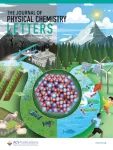
WPI Researchers have developed a material to remove urea from water and potentially convert it into hydrogen gas. By building these materials of nickel and cobalt atoms with carefully tailored electronic structures, the group has unlocked the potential to enable these transition metal oxides and hydroxides to selectively oxidize urea in an electrochemical reaction. The study, led by Xiaowei Teng, the James H. Manning professor of Chemical Engineering at WPI, was recently published in the Journal of Physical Chemistry Letters and highlighted in the publication’s supplementary front cover. The ...

Read the release
Researchers awarded $2.7 million grant to develop the faba bean as a sustainable mid-Atlantic crop
Environment

Researchers awarded $2.7 million grant to develop the faba bean as a sustainable mid-Atlantic crop

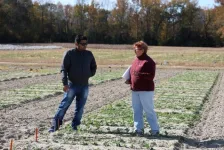
Consider the faba bean, also known as the fava bean or broad bean. The bright-green legume has been enjoyed as a diet staple for thousands of years in Africa, Asia, and the Mediterranean. Just one cup of faba beans has 13 grams of protein — making it a better protein source than most other legumes — along with plenty of fiber, potassium, and iron. Plus, it’s a good cover crop that helps improve soil health, slow erosion, and control pests, disease, and weeds. But you don’t often see it in the fields or on the menus in Virginia. That’s why College of Agriculture and Life ...

Read the release
New study reveals the impact of skin microorganisms on earthworm toxicity in polluted environments
Environment

New study reveals the impact of skin microorganisms on earthworm toxicity in polluted environments

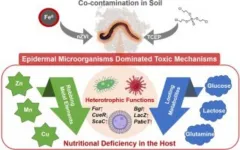
Epidermal microorganisms, vital in nutrient exchange between hosts and environments, have now been shown to play a key role in host toxicity through community changes. This research highlights how changes in the community of skin-based microbes correlate more significantly with earthworm toxicity than those in intestinal microorganisms, especially under combined soil contaminations. A new study (https://doi.org/10.1016/j.eehl.2023.11.001) published in the journal Eco-Environment & Health, researchers from Zhejiang University revealed the crucial role of epidermal microorganisms in influencing earthworm toxicity under environmental stress, notably in conditions ...

Read the release
Scientists, farmers and managers work together to avoid the decline of the little bustard, an endangered steppe bird
Environment

Scientists, farmers and managers work together to avoid the decline of the little bustard, an endangered steppe bird

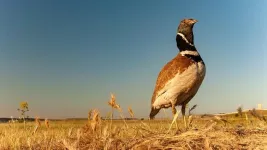
The collaboration between scientists, farmers and managers is crucial to improve the protection of the little bustard, an endangered steppe-land bird in Spain due to human activity. The reduction of natural habitats, the increase in irrigation and the urbanization of the land have led to having less surface areas that guarantee the survival of this vulnerable species. An article published in the journal Biological Conservation reveals how cooperation between different actors is key to finding answers and avoiding the decline of the most threatened populations of the little bustard. The study, a pioneer example of adaptative conservation, ...

Read the release
From the original Press-News collection. Issuers of news releases are responsible for the accuracy of their content.