THE ORIGINAL COLLECTION · SINCE 2010

Environment
press releases.

Research announcements from universities, hospitals and scientific institutions. Explore the stories, people and discoveries behind the headlines.

Original publication datesPage 124
FIND A STORY

Find a past release.

Dates and source material belong to the original release.

Read our research explainers

Browse the collection · original publication order

Environment

AMS 2024 Annual Meeting highlights climate challenges and solutions

[Boston, MA—January 18, 2023] The American Meteorological Society’s (AMS) 104th Annual Meeting will gather thousands of people at the Baltimore Convention Center 28 January–1 February to attend the world’s largest annual meeting focused on weather, water, and climate. The AMS is the professional society for everyone in the atmospheric and hydrologic sciences and services, including meteorologists, research scientists, emergency managers, academics, weather broadcasters, and more. “The theme of our 104th Annual Meeting is ‘Living in a Changing Environment,’” says AMS President Brad Colman. “It’s ...

Read the release
Most Earth System Models are missing key piece of future climate puzzle
Environment

Most Earth System Models are missing key piece of future climate puzzle

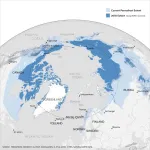
The way science is funded is hampering Earth System Models and may be skewing important climate predictions, according to a new comment published in Nature Climate Change by Woodwell Climate Research Center and an international team of model experts. Emissions from thawing permafrost, frozen ground in the North that contains twice as much carbon as the atmosphere does and is thawing due to human-caused climate warming, are one of the largest uncertainties in future climate projections. But accurate representation of permafrost dynamics is missing from ...

Read the release
When energy doesn’t add up: 200 US cities will fall short of sustainable energy goals despite pledging to transition to renewable sources by 2050
Environment

When energy doesn’t add up: 200 US cities will fall short of sustainable energy goals despite pledging to transition to renewable sources by 2050

200 US communities will fail to transition to 100% renewable energy by 2050 despite their pledges to do so, according to a new study published in IOP Publishing’s journal Environmental Research: Infrastructure and Sustainability. The study shows that by 2050 gas will firmly remain the primary source of energy in the US given that the current infrastructure plans for implementing renewable energy cannot provide sufficient energy output. Recent projections suggest that renewable energy generation will need to triple to meet even a 45% share of energy production. The results indicate that in many instances renewable energy ...

Read the release
Environment

Scientists uncover new marine source of carbon emissions into atmosphere, finding bottom trawling contributes to global warming

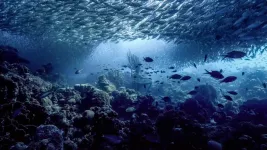
(WASHINGTON, DC) 18 JANUARY 2024 — Bottom trawling is a previously unaccounted for source of atmospheric carbon emissions, scientists reveal in a study published today. As the world scrambles to slash emissions caused by fossil fuels, deforestation and other sources, the study finds bottom trawling — the act of dragging a heavy fishing net across the ocean floor and resuspending some of the carbon in the seafloor sediment — to be a significant source of atmospheric carbon pollution. A previous study found that part of that disturbed ...

Read the release
Researchers pump brakes on ‘blue acceleration’ harming oceans
Environment

Researchers pump brakes on ‘blue acceleration’ harming oceans

Protecting the world’s oceans against accelerating damage from human activities could be cheaper and take up less space than previously thought, new research has found. The University of Queensland’s Professor Anthony Richardson collaborated on the study, which looks to halt the rapid decline of marine biodiversity from expanding industrial activities in marine areas beyond national jurisdictions (ABNJ). “This ‘blue acceleration’ as we call it, has seen a greater diversity of stakeholders interested in ABNJs, such as the high seas and the international seabed beyond exclusive economic zones,” ...

Read the release
Ditches and ponds can be the sources or sinks of non-point source pollution: observations in an upland area in the Jinglinxi catchment, China
Environment

Ditches and ponds can be the sources or sinks of non-point source pollution: observations in an upland area in the Jinglinxi catchment, China

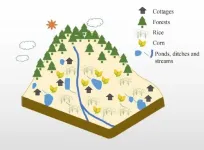
Globally, non-point source pollution is an important source of water quality deterioration in rivers and lakes. A ditch-pond system, consisting of ditches and ponds, is considered to be similar to free-surface wetlands, linking pollution sources to the receiving water bodies. The ditch-pond system includes vegetation, microorganisms and sediment, which can slow down the flow velocity and promote the precipitation of particulate matter carried by running water. At the same time, ditch and pond systems reduces nitrogen and phosphorus concentrations, and those of other nutrients entering the downstream water by means of plant absorption, sediment adsorption and microbial degradation, ...

Read the release
Butterflies could lose spots as climate warms
Environment

Butterflies could lose spots as climate warms

Female Meadow Brown butterflies have fewer spots if they develop in warmer weather – so climate change could make them less spotty, new research shows. University of Exeter scientists found females that developed at 11°C had six spots on average, while those developing 15°C had just three. The findings challenge long-held scientific views about why these butterflies have varying numbers of spots. “Meadow Browns always have large ‘eyespots’ on their forewings, probably for startling predators,” said Professor Richard ffrench-Constant, from the Centre for Ecology and Conservation on Exeter’s Penryn Campus in Cornwall. “They ...

Read the release
Environment

AMS presidential forum to address “Climate Science as Service to Society”

[Boston, MA—January 17, 2024] The American Meteorological Society (AMS) will open its 104th Annual Meeting with a Presidential Forum on how to advance society’s acceptance and use of climate science. Distinguished atmospheric scientist Dr. Kerry Emanuel will moderate a “fireside chat” with Monica Medina, President and CEO of the Wildlife Conservation Society and former Deputy Assistant Secretary at the State Department, and Bob Inglis, Executive Director of RepublicEn.org and former congressman from South Carolina. The Forum, with opening remarks by AMS President ...

Read the release
Social networks of sanctuary-living Grauer’s gorillas provide unique insights into the behavior of a critically endangered species and inform on their care and future release
Environment

Social networks of sanctuary-living Grauer’s gorillas provide unique insights into the behavior of a critically endangered species and inform on their care and future release

Social networks of sanctuary-living Grauer’s gorillas provide unique insights into the behavior of a critically endangered species and inform on their care and future release. Adult female gorillas are at the centre of social networks in a sanctuary-living Grauer's Gorilla group, according to social network analysis which also finds them to be the most gregarious. #### Article URL: https://journals.plos.org/plosone/article?id=10.1371/journal.pone.0295561 Article Title: Group structure and individual relationships of sanctuary-living Grauer’s ...

Read the release
Arsenic concentrations are predicted to increase significantly in Bangladesh's drinking well water, consumed by around 97% of Bangladeshis, thanks to sea level rise from climate change
Environment

Arsenic concentrations are predicted to increase significantly in Bangladesh's drinking well water, consumed by around 97% of Bangladeshis, thanks to sea level rise from climate change

Arsenic concentrations are predicted to increase significantly in Bangladesh's drinking well water, consumed by around 97% of Bangladeshis, thanks to sea level rise from climate change ### Article URL: https://journals.plos.org/plosone/article?id=10.1371/journal.pone.0295172 Article Title: Sea level rise from climate change is expected to increase the release of arsenic into Bangladesh’s drinking well water by reduction and by the salt effect Author Countries: USA Funding: The fieldwork in Bangladesh was funded by the United States Agency of International Development (USAID; contract number US AID RE III 388-0070; https://www.usaid.gov/). ...

Read the release
Environment

New project to improve modeling of climate change

Jingrui He, professor of information sciences at the University of Illinois Urbana-Champaign, has been awarded a two-year, $600,000 grant from the IBM-Illinois Discovery Accelerator Institute to improve modeling climate change and its impact across multiple application domains. He and a team of researchers from the University of Illinois and IBM will build Climate Runtime, a computational framework integrating cutting-edge capabilities from climate foundation models and multimodal fusion. This framework will allow for accurate prediction and quantification of weather and climate events and their impact in areas such as finance ...

Read the release
Environment

Climate change isn’t producing expected increase in atmospheric moisture over dry regions

Contacts: David Hosansky, UCAR and NSF NCAR Manager of Media Relations hosansky@ucar.edu 720-470-2073 Audrey Merket, UCAR and NSF NCAR Science Writer and Public Information Officer amerket@ucar.edu 303-497-8293 The laws of thermodynamics dictate that a warmer atmosphere can hold more water vapor, but new research has found that atmospheric moisture has not increased as expected over arid and semi-arid regions of the world as the climate has warmed. The findings are particularly puzzling because climate models have been predicting ...

Read the release
Environment

What’s stopping US climate policies from working effectively

In an effort to reduce greenhouse gas emissions and curb global warming, the U.S. has enacted several ambitious federal laws, such as the Inflation Reduction Act (IRA) passed in 2022 and the Infrastructure Investment and Jobs Act (IIJA) of 2021. These provide significant investments in clean energy projects and encourage technological innovations. Some analyses suggest they could reduce greenhouse gas emissions by more than 40% below 2005 levels by 2030. However, in a paper published Jan. 16 in the journal Nature Climate Change, researchers at the University ...

Read the release
Environment

U.S. voters’ climate change opinions swing elections

When voters cast their ballots in the 2016 and 2020 presidential elections, many were driven by their concern for climate change, according to new research out of CU Boulder’s Center for Environmental Futures (C-SEF). The new report determined that views on climate change played a significant role in whom people voted for, concluding that the climate issue very likely cost Republicans the 2020 election, all else equal. “This is obviously information that politicians and advocates across the political spectrum will want to know, heading into the 2024 election cycle,” said Matthew Burgess, CIRES Fellow and C-SEF director. “How ...

Read the release
Environment

Microplastics from natural fertilizers are blowing in the wind more often than once thought

Though natural fertilizers made from treated sewage sludge are used to reintroduce nutrients onto agricultural fields, they bring along microplastic pollutants too. And according to a small-scale study published in ACS’ Environmental Science & Technology Letters, more plastic particles get picked up by the wind than once thought. Researchers have discovered that the microplastics are released from fields more easily than similarly sized dust particles, becoming airborne from even a slight breeze. Microplastics, or small bits of plastic less than 5 millimeters long, have appeared everywhere from clouds to heart tissues. And with these plastics’ increasing prevalence in ...

Read the release
Space solar power project ends first in-space mission with successes and lessons
Environment

Space solar power project ends first in-space mission with successes and lessons

One year ago, Caltech’s Space Solar Power Demonstrator (SSPD-1) launched into space to demonstrate and test three technological innovations that are among those necessary to make space solar power a reality. The spaceborne testbed demonstrated the ability to beam power wirelessly in space; it measured the efficiency, durability, and function of a variety of different types of solar cells in space; and gave a real-world trial of the design of a lightweight deployable structure to deliver and hold the aforementioned solar cells and power transmitters. Now, with ...

Read the release
Microfossils shed light on the long fossil record of euglenoids
Environment

Microfossils shed light on the long fossil record of euglenoids

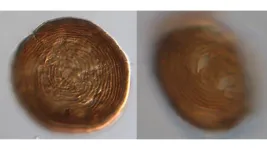
Hiding in the shadows, euglenoids are a fascinating group of single-celled protists that are neither plant nor animal. Plants photosynthesize, and animals eat. Euglenoids do both. Spiraling along the murky bottoms of shallow fresh-water ponds with their long flagella, they eat organic goop, while also using their chloroplasts to convert CO2 and water with light into sugars. Because of this in-between status, euglenoids have been placed close to the very base of the eukaryotic branch on the tree-of-life that includes ...

Read the release
Can recycled pacemakers from the U.S. save lives overseas? Study seeks to find out
Environment

Can recycled pacemakers from the U.S. save lives overseas? Study seeks to find out

From inside an operating room in Barquisimeto, Venezuela, electrophysiologist Maria Milagros Arends, M.D., threads wires from a pacemaker through the veins and into the heart muscle of a patient. This pacemaker, which regulates the heartbeat and can be lifesaving, was once in the body of another person. It has been recycled, or “reconditioned”— donated, tested, sterilized and shipped from the United States to the South American country for implantation. “We have a waiting list of around 300 people who could potentially lose their lives in less than a month,” ...

Read the release
Environment

Climate change threatens global forest carbon sequestration, study finds

Climate change is reshaping forests differently across the United States, according to a new analysis of U.S. Forest Service data. With rising temperatures, escalating droughts, wildfires, and disease outbreaks taking a toll on trees, researchers warn that forests across the American West are bearing the brunt of the consequences. The study, led by UF Biology researchers J. Aaron Hogan and Jeremy W. Lichstein was published in the Proceedings of the National Academy of Sciences. The study reveals a pronounced regional imbalance in forest productivity, a key barometer of ...

Read the release
Key moment in the evolution of life on Earth captured in fossils
Environment

Key moment in the evolution of life on Earth captured in fossils

Curtin-led research has for the first time precisely dated some of the oldest fossils of complex multicellular life in the world, helping to track a pivotal moment in the history of Earth when the seas began teeming with new lifeforms - after four billion years of containing only single-celled microbes. Lead author PhD student Anthony Clarke, from the Timescales of Mineral Systems Group within Curtin’s School of Earth and Planetary Sciences, said to determine the age of the fossils, researchers used volcanic ash layers like bookmarks in the geological sequence. “Located ...

Read the release
Chasing the light: Sandia study finds new clues about warming in the Arctic
Environment

Chasing the light: Sandia study finds new clues about warming in the Arctic

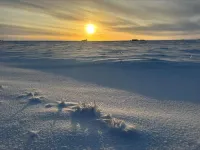
ALBUQUERQUE, N.M. — The Arctic, Earth’s icy crown, is experiencing a climate crisis like no other. It’s heating up at a furious pace — four times faster than the rest of our planet. Researchers at Sandia National Laboratories are pulling back the curtain on the reduction of sunlight reflectivity, or albedo, which is supercharging the Arctic’s warming. The scientists are not armed with parkas and shovels. Instead, they have tapped into data from GPS satellite radiometers, capturing the sunlight bouncing off the Arctic. This ...

Read the release
Going beyond plastic: Chung-Ang University team explores tara gum as a green polymer
Environment

Going beyond plastic: Chung-Ang University team explores tara gum as a green polymer

Synthetic, non-biodegradable plastics are major sources of environmental pollution and have prompted a rising interest in sustainable, biodegradable alternatives derived from natural polymers. “Tara gum,” derived from the seeds of the tara tree (Caesalpinia spinosa), stands out as a promising solution. This natural, water-soluble substance contains polysaccharides (complex carbohydrates), including the widely used “galactomannan,” which is employed in coatings, edible films, and as a stabilizer and thickener. The biocompatibility, biodegradability, and safety of tara gum also make it valuable in industries like food and drug delivery. ...

Read the release
Earth-sized planet discovered in ‘our solar backyard’
Environment

Earth-sized planet discovered in ‘our solar backyard’

MADISON — A team of astronomers have discovered a planet closer and younger than any other Earth-sized world yet identified. It’s a remarkably hot world whose proximity to our own planet and to a star like our sun mark it as a unique opportunity to study how planets evolve. The new planet was described in a new study published this week by The Astronomical Journal. Melinda Soares-Furtado, a NASA Hubble Fellow at the University of Wisconsin–Madison who will begin work as an astronomy professor at the university in the fall, and recent UW–Madison graduate Benjamin Capistrant, now a graduate student at the University of Florida, co-led the study with co-authors from ...

Read the release
Core-shell ‘chemical looping’ boosts efficiency of greener approach to ethylene production
Environment

Core-shell ‘chemical looping’ boosts efficiency of greener approach to ethylene production

Ethylene is sometimes called the most important chemical in the petrochemical industry because it serves as the feedstock for a huge range of everyday products. It’s used in the production of antifreeze, vinyl, synthetic rubber, foam insulation, and plastics of all kinds. Currently, ethylene is produced through an energy- and resource-intensive process called steam cracking, where extremes of temperature and pressure produce ethylene from crude oil in the presence of steam—and in the process, emit tons of carbon dioxide into the atmosphere. Another way ...

Read the release
Between building and unbuilding: An interdisciplinary design approach to cohabitation, material cycles, and traditional ecological knowledge
Environment

Between building and unbuilding: An interdisciplinary design approach to cohabitation, material cycles, and traditional ecological knowledge

In recent history, built environment practices have accepted a paradigm which underlines the land’s static quality, prioritizes immediate utility, and consequently adopts design processes that inevitably accelerate assimilation. With the capitalist propensity to obtain control and enhance efficiency, those processes nevertheless privilege certain cultures while rejecting other forms of knowledge or living specific to the land. The design discourse, confronted with the rising pressure of global climate challenges and environmental inequity, suggests a ...

Read the release
From the original Press-News collection. Issuers of news releases are responsible for the accuracy of their content.