THE ORIGINAL COLLECTION · SINCE 2010

Environment
press releases.

Research announcements from universities, hospitals and scientific institutions. Explore the stories, people and discoveries behind the headlines.

Original publication datesPage 133
FIND A STORY

Find a past release.

Dates and source material belong to the original release.

Read our research explainers

Browse the collection · original publication order

Environment

Devil in the detail – What corporations aren’t disclosing about their C02 emissions

A new study estimates most corporations are not reporting the full scope of their carbon footprint with many claiming to be ‘green’ despite a lack of reporting on Scope 3 key categories. Though CO2 reporting is currently voluntary for most firms, corporations are under pressure from investors, regulators, politicians, non-profit organisations and other stakeholders to disclose and reduce greenhouse gas emissions (GHG). The standard for greenhouse gas accounting, the Greenhouse Gas Protocol, is used worldwide to measure a company’s total carbon footprint with three levels of reporting. The first measures the GHG emissions directly produced by a company ...

Read the release

Roaming seabirds need ocean-wide protection
Environment

Roaming seabirds need ocean-wide protection

Seabirds roam far and wide in the Indian Ocean – so they need ocean-wide protection, new research shows. All other oceans are known to contain “hotspots” where predators including seabirds feast on prey. But the new study – by a team including Exeter, Heriot-Watt and Réunion universities, and ZSL – found no such concentrations in the Indian Ocean. With seabirds facing numerous threats due to human activity, their survival depends on protecting the open ocean. “Efforts are being made to protect key breeding colonies, but until now little was known about where Indian Ocean seabirds ...

Read the release
Climate engineering could slow Antarctic ice loss, study shows
Environment

Climate engineering could slow Antarctic ice loss, study shows

Scattering sunlight-reflecting particles in the atmosphere could slow rapid melting in West Antarctica and reduce the risk of catastrophic sea-level rise, according to a study led by Indiana University researchers. The study, one of the first to look at how climate engineering might impact Antarctica, comes as scientists sound the alarm over the increasing likelihood of accelerated ice loss in West Antarctica this century. The work appears in the Journal of Geophysical Research: Atmospheres. “Even if the world meets the ambitious target of limiting global warming to 1.5 degrees Celsius above pre-industrial levels — which we are not on track ...

Read the release
Environment

New report outlines microbial solutions to mediate methane emissions

Washington, D.C.—The American Academy of Microbiology, the scientific think tank and honorific leadership group at the American Society for Microbiology (ASM), has released a new report, The Role of Microbes in Mediating Methane Emissions. The report highlights recommendations to further the scientific community’s understanding of microbial processes of methane production and consumption to mitigate methane emissions and address climate change. Microbes can influence climate change through biogeochemical cycles that ...

Read the release
Environment

Not so silver lining: Microplastics found in clouds could affect the weather

From the depths of the seas to snow on mountains and even the air above cities, microplastics are turning up increasingly often. Now, in ACS’ Environmental Science & Technology Letters, researchers have analyzed microplastics in clouds above mountains. They suggest that these tiny particles could play a role in cloud formation and, in turn, affect weather. Microplastics — plastic fragments smaller than five millimeters — originate from a myriad of items used daily, such as clothing, packaging and car tires. As research in the field evolves, scientists are not only detecting microplastics in the atmosphere but also investigating how they may play a role in cloud formation. ...

Read the release
On two small islands in the Indian Ocean, an endangered palm with the world’s largest seed sows a lesson about landscape restoration
Environment

On two small islands in the Indian Ocean, an endangered palm with the world’s largest seed sows a lesson about landscape restoration

Every tree species has its story. Unraveling all 73,000 of them is a significant undertaking for science, in no small part because a considerable proportion of tree biodiversity is tropical, rare, remote and subject to the ravages of deforestation. And an estimated 9,200 tree species have yet to be discovered. Even trees well-known to science have mysteries. One is the Seychelles’ endangered coco de mer, or sea coconut palm tree, which is now relegated to parts of two small Indian Ocean islands and in decline. Only some 8,200 individuals remain. What Lodoicea madivica lacks in range it makes ...

Read the release
New scientific study reveals the crucial role of herbivorous fishes and sea urchins in restoring Caribbean coral reefs
Environment

New scientific study reveals the crucial role of herbivorous fishes and sea urchins in restoring Caribbean coral reefs

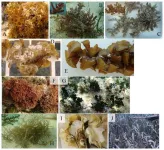
A new study by Dr. Lindsay Spiers (Florida Fish and Wildlife Conservation Commission) and Professor Thomas Frazer (College of Marine Science at the University of South Florida), published in PeerJ Life & Environment, presents crucial findings on the feeding preferences of herbivorous fishes and the sea urchin Diadema antillarum in Little Cayman. The study, titled "Comparison of feeding preferences of herbivorous fishes and the sea urchin Diadema antillarum in Little Cayman," sheds new light on the dynamics of these herbivores and their impact on the resilience of Caribbean coral reefs. Caribbean coral reefs face significant challenges, ...

Read the release
The Future of Future Earth: How global science programs can navigate the complex, shifting challenges in sustainability science
Environment

The Future of Future Earth: How global science programs can navigate the complex, shifting challenges in sustainability science

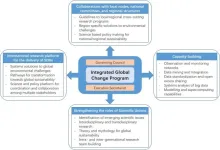
The global change program Future Earth is an international alliance of organizations and agencies that was launched by the UN in June 2012. The Future Earth 2025 Vision identified eight global challenges for scientific research to accelerate progress in sustainability, improve collaboration, and mobilize resources. After more than a decade of this global change program, researchers are analyzing the challenges Future Earth has faced and the path forward. Discussion presented in a recently published paper reviews these challenges faced by the coalition and proposes solutions to help these programs meet the many needs of the global community. The paper was published on ...

Read the release
Environment

National Climate Assessment reporting continues at AGU23 in San Francisco

WASHINGTON — AGU congratulates the many members of our scientific community whose work contributed to the Fifth National Climate Assessment (NCA5), which was published today. Climate reporting will remain essential as we close out a year of record global temperatures, wildfires in Canada, Hawaii and the U.S. Southeast, droughts in the Amazon and Mississippi river basins, and billion-dollar flooding disasters in the U.S Northeast and California, aggravated by human-driven climate change. AGU’s upcoming 2023 Annual Meeting, convening 11-15 December, will host authors from each of the NCA’s 32 chapters and feature deep ...

Read the release
Environment

Microplastics come from everywhere – yes, from sex toys too

As more research reveals how many microplastic particles humans are ingesting and absorbing in their bloodstreams, Duke and Appalachian State researchers led by Joana Sipe and Christine Hendren have examined a source for microplastic absorption many would not have considered: sex toys. In a study originally published in Microplastics and Nanoplastics in March 2023, researchers will discuss the risks of sex toys at the 2023 Society for Risk Analysis Annual Conference. The majority of American adults report having used sex toys, which, ...

Read the release
Environment

Melting ice falling snow: Sea ice declines enhance snowfall over West Antarctica

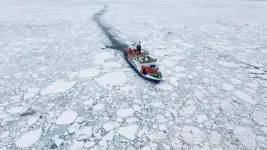
UNIVERSITY PARK, Pa. — As the world continues to warm, Antarctica is losing ice at an increasing pace, but the loss of sea ice may lead to more snowfall over the ice sheets, partially offsetting contributions to sea level rise, according to Penn State scientists. The researchers analyzed the impacts of decreased sea ice in the Amundsen Sea in West Antarctica and found the ice-free ocean surface leads to more moisture in the atmosphere and heavier snowfalls on the ice sheet, the team reported in the journal Geophysical Research Letters. While the additional snowfall is not enough to offset the impacts of melting ice, including it in climate ...

Read the release
Non-native species likely to continue spreading in North America, Australia and Europe
Environment

Non-native species likely to continue spreading in North America, Australia and Europe

Naturalized species, which are not native but have established themselves in new locations, have the potential to spread even further to suitable habitats in many parts of the world, reports a new study by Henry Häkkinen, Dave Hodgson and Regan Early at the University of Exeter, UK, publishing November 14th in the open access journal PLOS Biology. Understanding and predicting where introduced species will spread is one of the key conservation and ecological challenges of the 21st century. However, we know little about what causes one species to spread rapidly, while another species remains in small, isolated populations for years. In ...

Read the release
Environment

Twitter analysis shows users in states affected by hurricanes discuss climate change up to 200 percent more frequently in the weeks immediately post-hurricane

Twitter users in areas affected by major hurricanes discussed climate change much more frequently right after the hurricane, according to a study published November 23, 2023 in the open-access journal PLOS Climate by Maddalena Torricelli from the City University of London, UK, and colleagues. There’s evidence that people’s attitude towards climate change is influenced by extreme weather. To better understand how hurricanes might affect public discussion around climate change, Torricelli and colleagues analyzed 65 million Twitter posts (prior to the platform’s rebranding to “X”) related ...

Read the release
Environment

EPA-funded research examines renewable energy choices in light of community values

A plentiful source available for carbon-free electric power in New England states is hydroelectric dams across the border in Canada. But getting that power into the Northeast has hit political headwinds. Ryan Calder, assistant professor of environmental health and policy in the Public Health Program within the Virginia-Maryland College of Veterinary Medicine, is the principal investigator in a $650,000 grant from the Environmental Protection Agency (EPA) for research on how divides might be bridged in order to accelerate decarbonization of New England’s ...

Read the release
New CPU vulnerability makes virtual machine environments vulnerable
Environment

New CPU vulnerability makes virtual machine environments vulnerable

In the area of cloud computing, i.e. on-demand access to IT resources via the internet, so-called trusted execution environments (TEEs) play a major role. They are designed to ensure that the data on the virtual work environments (virtual machines) is secure and cannot be manipulated or stolen. Researchers at the CISPA Helmholtz Centre for Information Security and Graz University of Technology (TU Graz) have now discovered a security vulnerability in AMD processors that allows attackers to penetrate virtual work environments based on the trusted computing technologies AMD SEV-ES and AMD SEV-SNP. This is achieved by resetting data changes in the buffer memory (cache), which gives ...

Read the release
Environment

$3M to boost state-of-the-art solar manufacturing

Images A new breed of semiconductors that could enable breakthroughs in solar cells and LEDs will benefit from cutting-edge manufacturing approaches, through a new project led by the University of Michigan. Backed by $3 million from the National Science Foundation, it includes partners at the University of California San Diego. The effort combines hands-on work that improves upon the process of layer-by-layer deposition of semiconductor materials during production with an information-sharing ...

Read the release
Study sheds light on how Earth cycles fossil carbon
Environment

Study sheds light on how Earth cycles fossil carbon

HOUSTON – (Nov. 14, 2023) – As the primary element of life on our planet, carbon is constantly journeying from living creatures down into the Earth’s crust and back up into the atmosphere, but until recently, quantifying this journey was virtually impossible. To help unravel the mystery of how the Earth cycles fossil carbon, Rice University’s Mark Torres and collaborators studied the chemistry of a river system extending from the Peruvian Andes to the Amazon floodplains. Together with collaborators from five other institutions, Torres helped show that high rates of carbon breakdown persist from mountaintop to floodplain, ...

Read the release
Scientists test new method for identifying small microplastics
Environment

Scientists test new method for identifying small microplastics

Microplastics, from the beads that were once commonplace in cosmetics to the weathered and broken-down remnants of trash, are now ubiquitous in marine and inland waters around the world. To date, though, scientists have struggled to identify which plastics persist longest in the environment and measure their abundance, especially at the smaller end of the size range where they’re most likely to be consumed by foundational species near the bottom of the food web, like zooplankton. Researchers from Bigelow Laboratory for Ocean Sciences and the University of Minnesota ...

Read the release
Environment

Ammonia for fertilisers without the giant carbon footprint

The production of ammonia for fertilisers – which has one of the largest carbon footprints among industrial processes – will soon be possible on farms using low-cost, low-energy and environmentally friendly technology. This is thanks to researchers at UNSW Sydney and their collaborators who have developed an innovative technique for sustainable ammonia production at scale. Up until now, the production of ammonia has relied on high-energy processes that leave a massive global carbon footprint – temperatures of more ...

Read the release
Faster Arctic warming hastens 2C rise by eight years
Environment

Faster Arctic warming hastens 2C rise by eight years

Faster warming in the Arctic will be responsible for a global 2C temperature rise being reached eight years earlier than if the region was warming at the average global rate, according to a new modelling study led by UCL researchers. The Arctic is currently warming nearly four times faster than the global average rate. The new study, published in the journal Earth System Dynamics, aimed to estimate the impact of this faster warming on how quickly the global temperature thresholds of 1.5C and 2C, set down in the Paris Agreement, are likely to be breached. To do this, the research team created alternative ...

Read the release
Environment

New 'library of greening' can help poorest urban communities the most, Surrey expert says

Surrey scientists are celebrating with colleagues around the world, after winning new funding for a ‘library of greening’ – a new database enabling towns and cities to learn from each other's success developing green spaces, waterways and other sustainability initiatives. The RECLAIM Network Plus provides a one-stop-shop for towns and cities looking to mitigate the impacts of climate change and improve their resilience. It has over 500 members worldwide, offering information and support to implement projects such as ...

Read the release
A how-to for reducing flooding impacts in coastal towns
Environment

A how-to for reducing flooding impacts in coastal towns

A University of Texas at Arlington civil engineering researcher is determining what strategies are most effective at lessening flooding in coastal communities. Michelle Hummel, a civil engineering assistant professor, is using a $499,973 National Oceanic and Atmospheric Administration (NOAA) grant to study the benefits and costs of flood-reduction strategies aimed at increasing coastal resilience to storms and sea-level rise. Hummel and her colleague, Kevin Befus of the University of Arkansas, will apply advanced ...

Read the release
NJIT scientists uncover aurora-like radio emission above a sunspot
Environment

NJIT scientists uncover aurora-like radio emission above a sunspot

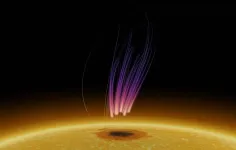
In a study published in Nature Astronomy, astronomers from New Jersey Institute of Technology’s Center for Solar-Terrestrial Research (NJIT-CSTR) have detailed radio observations of an extraordinary aurora-like display — occurring 40,000 km above a relatively dark and cold patch on the Sun, known as a sunspot. Researchers say the novel radio emission shares characteristics with the auroral radio emissions commonly seen in planetary magnetospheres such as those around Earth, Jupiter and Saturn, as well as certain low-mass stars. The discovery offers new insights into the origin of such intense solar radio bursts and potentially opens new avenues ...

Read the release
Environment

Low-intensity fires reduce wildfire risk by 60%, study finds

November 13, 2023-- There is no longer any question of how to prevent high-intensity, often catastrophic, wildfires that have become increasingly frequent across the Western U.S., according to a new study by researchers at Columbia University Mailman School of Public Health and Stanford University. The analysis reveals that low-intensity burning, such as controlled or prescribed fires, managed wildfires, and tribal cultural burning, can dramatically reduce the risk of devastating fires for years at a time. The findings are some of the first to rigorously quantify the value of low-intensity fire and be released while Congress is reassessing ...

Read the release
North Atlantic’s marine productivity may not be declining, according to new study of older ice cores
Environment

North Atlantic’s marine productivity may not be declining, according to new study of older ice cores

To paraphrase Mark Twain, reports of declining phytoplankton in the North Atlantic may have been greatly exaggerated. A prominent 2019 study used ice cores in Antarctica to suggest that marine productivity in the North Atlantic had declined by 10% during the industrial era, with worrying implications that the trend might continue. But new research led by the University of Washington shows that marine phytoplankton — on which larger organisms throughout the marine ecosystem depend — may be more stable than believed in the North Atlantic. The team’s analysis of an ice core going ...

Read the release
From the original Press-News collection. Issuers of news releases are responsible for the accuracy of their content.