THE ORIGINAL COLLECTION · SINCE 2010

Environment
press releases.

Research announcements from universities, hospitals and scientific institutions. Explore the stories, people and discoveries behind the headlines.

Original publication datesPage 137
FIND A STORY

Find a past release.

Dates and source material belong to the original release.

Read our research explainers

Browse the collection · original publication order

Environment

MSU’s ‘Robin Hood’ approach for tracking biodiversity

MSU has a satellite uplink/LTN TV studio and Comrex line for radio interviews upon request. THIS STORY IS UNDER EMBARGO UNTIL OCT. 26 AT 12:01 A.M. EDT/05:01 A.M. U.K. TIME. Images Highlights: Researchers at Michigan State University have developed a framework that can help scientists understand trends in biodiversity by using data from well-characterized species to provide insights on data-deficient species. The framework is published in the Journal of Animal Ecology, which provides a how-to guide for researchers and practitioners to implement. Roughly one in seven species are classified ...

Read the release


Environment

Research advances toward goal of net zero carbon emissions

Scientists may be on the verge of taking a big step closer to the net-zero carbon emissions goal, thanks to University of Houston research into algae. Hidden potential is being revealed in the major algae studies at the microbial products lab, located at UH at Sugar Land. The research project is detailed in a newly published article in Green Chemistry, a journal of the Royal Society of Chemistry. Venkatesh Balan, associate professor of engineering technology in UH’s Cullen College of Engineering’s Division of Technology, is ...

Read the release
Brittle star fossils found in South Africa are over 410 million years old, the oldest known examples who lived at high latitude
Environment

Brittle star fossils found in South Africa are over 410 million years old, the oldest known examples who lived at high latitude

Brittle star fossils found in South Africa are over 410 million years old, the oldest known examples who lived at high latitude ### Article URL: https://journals.plos.org/plosone/article?id=10.1371/journal.pone.0292636 Article Title: Earliest known ophiuroids from high palaeolatitude, southern Gondwana, recovered from the Pragian to earliest Emsian Baviaanskloof Formation (Table Mountain Group, Cape Supergroup) South Africa Author Countries: South Africa, Luxembourg Funding: RWG: Millennium Trust, South Africa (no number). https://www.mtrust.co.za ...

Read the release
Climate change likely impacted human populations in the Neolithic and Bronze Age
Environment

Climate change likely impacted human populations in the Neolithic and Bronze Age

Human populations in Neolithic Europe fluctuated with changing climates, according to a study published October 25, 2023 in the open-access journal PLOS ONE by Ralph Großmann of Kiel University, Germany and colleagues. The archaeological record is a valuable resource for exploring the relationship between humans and the environment, particularly how each is affected by the other. In this study, researchers examined Central European regions rich in archaeological remains and geologic sources of climate data, using these resources to identify correlations between human population trends and climate change. The ...

Read the release
Environment

Stanford collaboration offers new method to analyze implications of large-scale flood adaptation

During the summer of 2022, the Indus River in Pakistan overflowed its banks and swept through the homes of between 30-40 million people. Eight million were permanently displaced, and at least 1,700 people died. Damages to crops, infrastructure, industry, and livelihoods were estimated at $30 billion. In response to this, Stanford researchers from the Natural Capital Project (NatCap) and the Carnegie Institution for Science collaborated on a new way to quickly calculate the approximate depths of ...

Read the release
Environment

New study: Pig welfare outweighs climate concerns for consumers

Pork production is a societal concern on several fronts: antibiotics use, infectious disease, poor animal welfare and climate and environmental pressures. Even though the beef, coffee and chocolate industries are each major climate culprits, the world's total consumption of pork emits hundreds of millions of tons of CO2 every year. But are you willing to fork over extra cash for a more climate-friendly pork roast? Or, are there other considerations that would increase your willingness to pay more? And if so, how much of a premium would you be willing to pay? Researchers from the University of Copenhagen’s Department of Food and Resource Economics investigated ...

Read the release
Environment

Adapting to climate change: Individuals take action while governments plan

UNIVERSITY PARK, Pa. — While governments may take the lead in planning and financing climate change adaptation measures, such as incentivizing green infrastructure, individuals currently are most often the ones implementing actions to adapt to climate change, according to new research. The analysis, conducted by an international consortium of researchers from 20 institutions, including Penn State, in 12 countries, published in Nature Climate Change. “The evidence suggests that individuals and households are the primary adaptation actors — the ones actually implementing ways to ...

Read the release
Bitcoin mining has “very worrying” impacts on land and water, not only carbon, UN-led study reveals
Environment

Bitcoin mining has “very worrying” impacts on land and water, not only carbon, UN-led study reveals

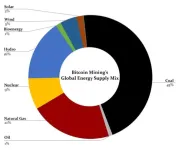
American Geophysical Union 24 October 2023 AGU Release No. 23-39 For Immediate Release This press release and accompanying multimedia are available online at: https://news.agu.org/press-release/bitcoin-mining-has-very-worrying-impacts-on-land-and-water-not-only-carbon/ AGU press contact: Rebecca Dzombak, news@agu.org (UTC-4 hours) Contact information for the researchers: Kaveh Madani, United Nations University, madani@unu.edu (UTC-4 hours) By the numbers, global bitcoin mining in 2020-2021: Used 173 terawatt ...

Read the release
Environment

Ancient landscape discovered beneath East Antarctic Ice Sheet

The research team, led by Durham University, UK, used satellite data and radio-echo sounding techniques to map a 32,000 km2 area of land underneath the vast ice sheet. They discovered a landscape that appears to have been formed by rivers at least 14 million years ago and possibly even before the initial growth of the East Antarctic ice around 34 million years ago. This newly discovered landscape consists of ancient valleys and ridges, not dissimilar in size-and-scale to the glacially-modified landscape of North Wales, ...

Read the release
Climate report: ‘Uncharted territory’ imperils life on Earth
Environment

Climate report: ‘Uncharted territory’ imperils life on Earth

CORVALLIS, Ore. – An international coalition of climate scientists says in a paper published today that the Earth’s vital signs have worsened beyond anything humans have yet seen, to the point that life on the planet is imperiled. William Ripple, a distinguished professor in the Oregon State University College of Forestry, and former OSU postdoctoral researcher Christopher Wolf are the lead authors of the report, and 10 other U.S. and global scientists are co-authors. “Without actions ...

Read the release
World Scientists' Climate Report highlights perils as Earth enters "uncharted territory"
Environment

World Scientists' Climate Report highlights perils as Earth enters "uncharted territory"

In a year marked by wildfire, catastrophic flooding, and deadly weather events, an international team of scientists has updated its influential 2019 World Scientists Warning of a Climate Emergency report, which has been cosigned by over 15,000 scientists representing 163 countries. According to the team, “life on planet Earth is under siege” and “we are now in uncharted territory.” Writing in the journal BioScience, William Ripple, a distinguished ...

Read the release
Banana trees to fight wildfires
Environment

Banana trees to fight wildfires

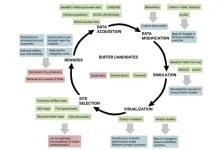
Fire buffers composed of irrigated banana trees could slow and calm wildfires and generate profit for residents of fire-prone regions, according to a study. Climate change is increasing wildfire risk. Wildfires in the Western United States doubled in frequency between 1984 and 2015. At the same time, more people are living in the wildland-urban interface (WUI) than ever before, an area that often has high or extreme fire risk. Barath Raghavan and colleagues investigate the potential of banana trees to act as a multifunctional fire buffer in the WUI. Banana trees have a high water content, ideal for stopping fire. When irrigated by recycled water, they can produce ...

Read the release
Light, freshwater sticks to Greenland's east coast
Environment

Light, freshwater sticks to Greenland's east coast

Meltwater that runs along the east coast of Greenland, hardly enters the open ocean before reaching the western side of the island. That is one of the conclusions NIOZ PhD-candidate Elodie Duyck draws in the thesis she is defending today at Utrecht University. In the changing climate, fresh water from Greenland and the Arctic could disrupt the circulation in the Atlantic Ocean. “Understanding where, and how much, of that fresh and light water enters the Atlantic Ocean is critical to predict how the circulation may evolve under climate change”, Duyck ...

Read the release
Solar farms in space are possible, say Surrey and Swansea
Environment

Solar farms in space are possible, say Surrey and Swansea

It's viable to produce low-cost, lightweight solar panels that can generate energy in space, according to new research from the Universities of Surrey and Swansea. The first study of its kind followed a satellite over six years, observing how the panels generated power and weathered solar radiation over 30,000 orbits. The findings could pave the way for commercially viable solar farms in space. Professor Craig Underwood, Emeritus Professor of Spacecraft Engineering at the Surrey Space Centre at the University of Surrey, said: “We are very pleased that a mission designed to last one year is still working after six. These detailed data ...

Read the release
Are retrospective adjustments to sustainability reports helping CEOs score a bonus?
Environment

Are retrospective adjustments to sustainability reports helping CEOs score a bonus?

A lack of clarity around sustainability reporting is allowing ASX-listed companies to retrospectively alter figures, ensuring CEO bonus pay tied to these metrics is realised, new research suggests. Sustainability reports serve as critical tools for investors, regulators and other stakeholders to gauge a company's environmental, social, and governance (ESG) performance. They highlight issues such as environmental pollution and worker safety that might otherwise be overlooked. Close to 90% of ASX top 200 companies provide detailed ESG information. Many of these ...

Read the release
Researchers capture first images of a radio 'ring of fire' solar eclipse
Environment

Researchers capture first images of a radio 'ring of fire' solar eclipse

Researchers at New Jersey Institute of Technology’s Center for Solar-Terrestrial Research (NJIT-CSTR) have captured the Oct. 14 solar eclipse in a way never seen before — recording the first radio images of an annular eclipse’s famous “ring of fire” effect. The eclipse was partially visible to much of the continental U.S. for several hours that Saturday, though the full “ring of fire” effect was only visible for less than five minutes, and only for those within its 125-mile-wide path of annularity. However, the new observations of the radio Sun’s eclipse — ...

Read the release
Climate is increasing risk of high toxin concentrations in Northern US lakes
Environment

Climate is increasing risk of high toxin concentrations in Northern US lakes

Washington, DC— As climate change warms the Earth, higher-latitude regions will be at greater risk for toxins produced by algal blooms, according to new research led by Carnegie’s Anna Michalak, Julian Merder, and Gang Zhao. Their findings, published in Nature Water, identify water temperatures of 20 to 25 degrees Celsius (68 to 77 degrees Fahrenheit) as being at the greatest risk for developing dangerous levels of a common algae-produced toxin called microcystin. Harmful algal blooms result when bodies of water get overloaded with nitrogen and phosphorus ...

Read the release
Environment

Increased West Antarctic Ice Sheet melting ‘unavoidable’

Scientists ran simulations on the UK’s national supercomputer to investigate ocean-driven melting of the West Antarctic Ice Sheet: how much is unavoidable and must be adapted to, and how much melting the international community still has control over through reduction of greenhouse gas emissions. Taking into account climate variability like El Niño, they found no significant difference between mid-range emissions scenarios and the most ambitious targets of the 2015 Paris Agreement. Even under a best-case scenario of 1.5°C global temperature rise, melting will increase three times faster than ...

Read the release
Environment

Harsh workplace climate is pushing women out of academia

Women faculty are more likely to leave academia than men faculty throughout all career stages in U.S. universities, University of Colorado Boulder researchers revealed in the most comprehensive analysis of retention in academia to date. The team published the findings Oct. 20 in the journal “Science Advances.” The researchers found that a harsh workplace climate, which can include harassment and feelings of not belonging, was the most common reason women left academia. This attrition affects not only early-career professionals, ...

Read the release
Unearthing the ecological impacts of cicada emergences on North American forests
Environment

Unearthing the ecological impacts of cicada emergences on North American forests

WASHINGTON (October 19, 2023) – Every 13 or 17 years, billions of cicadas emerge from the ground to reproduce in eastern North American deciduous forests. One of the largest emergence events of these insects happened in 2021 when theBrood X cicadas emerged. Researchers who studied that once-in-a-generation event are now unveiling the impact this occurrence had on forest ecosystems, specifically on birds, caterpillars and trees. In a new study published today in Science, researchers at the George Washington University, Georgetown University and the University of Maryland quantified the widespread ...

Read the release
Environment

Urgent action needed to address climate change threats to coastal areas

Global coastal adaptations are ‘incremental in scale’, short-sighted and inadequate to address the root causes of vulnerability to climate change, according to an international team of researchers. The 17 experts, including Prof Robert Nicholls, Professor of Climate Adaptation at the University of East Anglia (UEA), have contributed to the paper, ‘Status of global coastal adaptation’, which is published today in Nature Climate Change. Prof Nicholls said: “Recent analyses conclude that despite adaptation undertaken in all regions and sectors, global action remains incremental in scale: policies and projects ...

Read the release
Chinese scholars show that human expansion poses widespread threat to biodiversity in Asia, especially in Southeast Asia
Environment

Chinese scholars show that human expansion poses widespread threat to biodiversity in Asia, especially in Southeast Asia

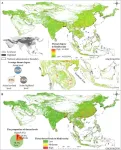
Biodiversity is essential for sustaining food security, livelihood, ecosystem health, and economic development and for preventing future epidemics. Asia, with nearly 60% of the world's population, stands out as a priority for urgent biodiversity conservation due to its large threatened species and protected areas (PAs), and many countries globally are facing extreme biodiversity and ecological threats. Satellite observations have shown that the human activities (i.e., cropland and artificial surface creations) in Asia have rapidly expanded since the 21st century and are being expanded to highlands (hilly and mountainous regions). Obviously, the intensification of human activities ...

Read the release
Scientists discover deepest known evidence of coral reef bleaching
Environment

Scientists discover deepest known evidence of coral reef bleaching

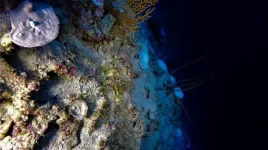
Scientists have discovered the deepest known evidence of coral reef bleaching, more than 90 metres below the surface of the Indian Ocean. The damage – attributed to a 30% rise in sea temperatures caused by the Indian Ocean dipole – harmed up to 80% of the reefs in certain parts of the seabed, at depths previously thought to be resilient to ocean warming. However, scientists say it serves as a stark warning of the harm caused in our ocean by rising ocean temperatures, and also of the hidden damage being caused throughout the natural world as a result of climate change. The findings, highlighted in a study published ...

Read the release
Environment

Holy bat skull! Fossil adds vital piece to bat evolution puzzle

Of all the mammals, bats have one of the poorest fossil records, with palaeontologists estimating that about 80 per cent of it is missing. This has made it difficult to pinpoint exactly when they first began to fly, or began roosting in caves, or developed their unique way of ‘seeing’ their surroundings in the dark using sound – called echolocation. But a near-perfectly preserved bat’s skull discovered by French palaeontologists in a cave that dates back about 50 million years has shed new light on what we thought we knew about this ancient, ...

Read the release
From the original Press-News collection. Issuers of news releases are responsible for the accuracy of their content.