THE ORIGINAL COLLECTION · SINCE 2010

Environment
press releases.

Research announcements from universities, hospitals and scientific institutions. Explore the stories, people and discoveries behind the headlines.

Original publication datesPage 138
FIND A STORY

Find a past release.

Dates and source material belong to the original release.

Read our research explainers

Browse the collection · original publication order

Environment

Biodegradable plastics still damaging to fish – Otago study

Biodegradable plastics may not be the solution to plastic pollution many hoped for, with a University of Otago study showing they are still harmful to fish. Petroleum-derived microplastics are known to impact marine life, but little is known about the impact of biodegradable alternatives. The study, published in Science of the Total Environment and funded by a University of Otago Research Grant, is the first to assess the impact petroleum-derived plastic and biodegradable plastic have on wild fish. Lead author Ashleigh Hawke, who completed a Master of Science in Otago’s Department of Marine Science, ...

Read the release
Environment

Drought conditions expose rivers to hotter water temperatures

As climate change warms the planet and droughts are anticipated to become more frequent and extreme, a new study reveals how reduced water flows and rising atmospheric temperatures are set to heat our rivers - creating major challenges for aquatic life, ecosystems, and society. Water temperature is an important control for all the physical, chemical, and biological processes in rivers. It is particularly important for organisms that cannot regulate their own body temperature, such as fish. River temperature is important for human health and industrial, domestic, and recreational ...

Read the release
How to build greener data centers? Scientists say crank up the heat
Environment

How to build greener data centers? Scientists say crank up the heat

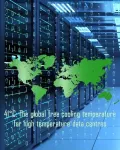
Colder is not always better for energy-hungry data centers, especially when it comes to their power bills. A new analysis says that keeping the centers at 41°C, or around 105°F, could save up to 56% in cooling costs worldwide. The study, publishing October 10 in the journal Cell Reports Physical Science, proposes new temperature guidelines that may help develop and manage more efficient data centers and IT servers in the future. “The cooling system accounts for over one-third of the data center’s total energy consumption, so many studies ...

Read the release
Map: Wildlife polluted by flame retardants on massive scale
Environment

Map: Wildlife polluted by flame retardants on massive scale

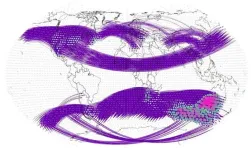
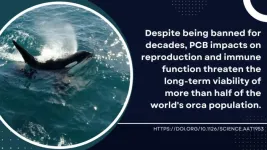
More than 150 species of wild animals across every continent are contaminated with flame retardant chemicals, according to a new map tracking peer-reviewed research worldwide. Polluted wildlife include killer whales, red pandas, chimpanzees and other endangered species. Added to furniture, electronics, vehicles, and other everyday products to meet flammability standards, the chemicals often do not work as intended. They also migrate out of products and into wildlife—and people. “Flame retardants don’t actually make TV enclosures and car interiors more fire-safe, but they can harm people and animals,” ...

Read the release
Environment

Heat-tolerant predatory sea stars will likely be a threat to coral during climate change

Population outbreaks of the crown-of-thorns sea star (COTS), a predator of coral, can cause widespread coral mortality. COTS are herbivorous as juveniles but then switch to coral consumption as they grow to adulthood. When researchers exposed juvenile COTS to heat stress scenarios at time and temperature durations designed to reflect conditions that cause coral bleaching and mortality, juveniles exhibited tolerance to heatwave conditions well above levels that kill coral. The findings, which are published in Global Change Biology, indicate that juvenile COTS are likely to persist as major coral predators in reefs already vulnerable to the effects of climate change. “This ...

Read the release
Environment

Can planting multiple crops in the same plot improve agricultural production and sustainability?

Agricultural management has typically focused on increasing yields, but there is an increasing need for sustainable food production that limits negative impacts on the environment. A new study published in Grassland Research provides insights into the potential benefits of diversifying agricultural practices, revealing how different mixtures of plant species can improve production, quality, and conservation. For the study, investigators planted multiple species in different grassland plots, manipulating plant species richness from one to six species spanning three functional groups ...

Read the release
Environment

Ocean Sciences Meeting 2024 press registration now open

WASHINGTON — Press registration is now open for the 2024 Ocean Sciences Meeting, co-sponsored by the American Geophysical Union (AGU), the Association for the Sciences of Limnology and Oceanography (ASLO), and The Oceanography Society (TOS), in New Orleans, Louisiana 18 to 23 February 2024. The biennial Ocean Sciences Meeting brings together 5,000 scientists, students, policymakers and educators to discuss breaking research across the ocean sciences and critical issues affecting a sustainable future for our oceans. PRESS: REGISTER and BOOK HOTELS Staff, freelance and student journalists are eligible to apply for complimentary press registration through the end of the conference. ...

Read the release
Transforming fossil fuels: University of Oklahoma, Kansas State University successfully complete DOE project
Environment

Transforming fossil fuels: University of Oklahoma, Kansas State University successfully complete DOE project

NORMAN, Okla. (Oct. 17, 2023) -- In collaboration, the University of Oklahoma has taken the lead in a Department of Energy project, with support from Kansas State University, to pioneer a new generation of reversible electrochemical cells. The cells have the potential to revolutionize energy storage by integrating seamlessly with fossil fuel assets. The project’s objective was to conduct an extensive study aimed at developing an energy storage technology capable of efficiently converting carbon dioxide emissions captured from fossil fuel assets into valuable fuels, such as methane, says ...

Read the release
Marine mammal longevity study reveals remarkable advances in animal welfare
Environment

Marine mammal longevity study reveals remarkable advances in animal welfare

A new study provides compelling evidence that animal care and management practices at zoos and aquariums have significantly improved over time. The study, led by Species360 and University of Southern Denmark Research Scientist Dr. Morgane Tidière in collaboration with 41 co-authors from academic, governmental, and zoological institutions around the world, is the first to examine life expectancy and lifespan equality together as a proxy of population welfare in marine mammal species. The study also found that marine mammal species live longer ...

Read the release
Environment

The biggest barrier to getting fossil fuel workers green jobs isn’t skills — it’s location

Between the Inflation Reduction Act and the EU’s Just Transition Mechanism, both the United States and Europe are poised to put tens of billions of dollars toward creating green jobs. At the same time, there are conversations about how to ensure workers in the current fossil fuel industry have the skills to participate in this green revolution. But new research published in Nature Communications shows many fossil fuel workers have the right skills already — the problem is that those new green jobs likely won’t be in the right place. The results spell a message for those planning a greener economy: If all they think about ...

Read the release
Climate network analysis helps pinpoint regions at higher risk of extreme weather
Environment

Climate network analysis helps pinpoint regions at higher risk of extreme weather

WASHINGTON, Oct. 17, 2023 – Climate change and the rapid increase in frequency of extreme weather events around the globe – such as wildfires and floods – reinforces the reality that these events are not only not random but, rather, interconnected. Interlinked climate behavior, or teleconnections, isn’t a well understood field but will be necessary to fully comprehend how our climate system works. In Chaos, from AIP Publishing, a team of researchers affiliated with Beijing Normal University and Beijing University of Posts and Telecommunications in China and the Potsdam Institute for Climate Impact Research in Germany describes a climate network analysis method to explore ...

Read the release
Environment

Ocean circulation, ice melt and increasing tourism could all be contributing to Arctic microplastics

Scientists measured microplastic concentrations in the highly productive Barents Sea and suggest that ocean circulation, ice melt, tourism, inadequate waste management, shipping and fishing are all likely contributors. Numerous studies have shown that global microplastic quantities in the marine environment are increasing, even in remote locations such as the Arctic. The Barents Sea, which adjoins the Arctic Ocean, is one of the most productive oceanic areas in the world and home to an enormous diversity of organisms. It is also a key route for Atlantic ...

Read the release
Environment

Research finds water quality in Gulf of Mexico improves when adding social costs to carbon emissions

DURHAM, N.H.—U.S. Climate policies can offer options for putting climate change efforts into place that solve environmental problems like excessive carbon dioxide in the atmosphere created by greenhouse gas emissions. Research led by the University of New Hampshire took a closer look at what would happen to agriculture if there was an extra cost, or so-called social cost, added to fossil fuels, which are essential for making fertilizer used in farming. They found that while CO2 emissions would decline by as much as 50%, the cost of fertilizer would rise leading to a significant benefit on water quality by lessening fertilizer runoff contributing ...

Read the release
Environment

In 2020, 30% of the Pantanal was burned to cinders by wildfires

In 2020, the Pantanal, the largest tropical freshwater wetland in the world and a biodiversity hotspot, was swept by high-intensity fires that destroyed native vegetation in an area totaling 44,998 square kilometers (km²), or about 30% of the Brazilian portion of the biome, which spans some 150,000 km². The estimate is presented in an article published in the science journal Fire. The area destroyed by that year’s disastrous fires was far larger than had been thought, according to the article. ...

Read the release
Surprising discovery about coral’s resilience could help reefs survive climate change
Environment

Surprising discovery about coral’s resilience could help reefs survive climate change

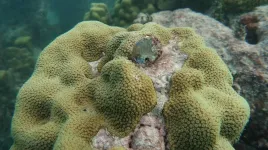
The factors affecting coral’s resilience — its ability to adapt to and survive environmental changes — seem to be more nuanced than scientists believed. In a study published Oct. 18 in the journal Global Change Biology, researchers reveal surprising findings about a species common to Caribbean waters. The discovery may help improve efforts to save corals from bleaching and other consequences of climate change. A team led by Assistant Professor of Biological Sciences Carly Kenkel at the USC Dornsife College of Letters, Arts and ...

Read the release
How to scientifically, efficiently, and cost-effectively treat the wastewater generated from anaerobic digestion?
Environment

How to scientifically, efficiently, and cost-effectively treat the wastewater generated from anaerobic digestion?

The resource utilization of waste is an important means to implement the construction of ecological civilization. Agricultural waste contains rich renewable resources and has high potential value in fertilization and energy conversion. Anaerobic digestion technology is a promising technology for treating agricultural waste. Anaerobic digestion refers to the digestion technology in which organic matter is decomposed into CH4, CO2, H2O and H2S by facultative bacteria and anaerobic bacteria under anaerobic conditions, which can transform solid organic matter into soluble organic matter. Not only does it have the advantages of stable process and low operation cost, the biogas produced can also ...

Read the release
Environment

MSU leads $2M NSF project to create carbon-negative construction materials

Images Highlights: Researchers at Michigan State University and Purdue University were awarded $2 million by the National Science Foundation to develop new “living materials” for construction that can repair themselves and sequester carbon dioxide. The materials will be sourced from sustainable biomass, including agricultural waste, and imbued with microbes that absorb carbon dioxide and synthesize polymers and minerals to bolster the materials’ strength. Unlike ...

Read the release
Study reveals areas of Brazilian Amazon where no ecological research has been done
Environment

Study reveals areas of Brazilian Amazon where no ecological research has been done

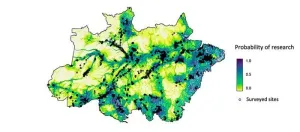
Many parts of the Brazilian Amazon are neglected in ecological research, for several reasons, according to an article published in the journal Current Biology. Authored by Joice Ferreira of the Federal University of Pará (UFP) and colleagues from many countries who also belong to the Synergize Consortium, the article identifies the areas missing from ecological research and the factors that have determined these gaps, pinpointing opportunities for the planning of new investments in research ...

Read the release
Transforming wastewater into valuable chemicals with sunlight
Environment

Transforming wastewater into valuable chemicals with sunlight

Researchers led by Prof. GAO Xiang from the Shenzhen Institute of Advanced Technology (SIAT) of the Chinese Academy of Sciences and Prof. LU Lu from the Harbin Institute of Technology have proposed a novel method to transform wastewater contaminants into valuable chemicals using sunlight, thus paving the way for sustainable and eco-friendly chemical manufacturing. The study was published in Nature Sustainability on Oct. 16. Conventional chemical manufacturing relies on energy-intensive processes. Semiconductor biohybrids, integrating efficient light-harvesting materials with superior living cells, have emerged as an exciting advancement ...

Read the release
Environment

Climate change coping mechanism discovered in humble algae

One of the building blocks of ocean life can adapt to cope with the effects of climate change, according to new research from the University of East Anglia (UEA). The discovery holds promises for biotechnology developments that could counter the negative effects of changing environmental conditions, such as ocean warming and even the reduction in the productivity of crops. Looking at eukaryotic phytoplankton, also referred to as microalgae, found over large parts of the ocean, the international team led by UEA’s Prof Thomas Mock discovered the algae have found a way to cope with nutrient starvation, which is predicted to ...

Read the release
Measuring the changing soundscape in Glacier National Park
Environment

Measuring the changing soundscape in Glacier National Park

16 October 2023 The Geological Society of America Release No. 23-38 Contact: Justin Samuel +1-303-357-1026 jsamuel@geosociety.org For Immediate Release Pittsburgh, Pa., USA: From the eerie echo of a bugling elk to the gentle swoosh of water lapping against a stony shore, a unique combination of sounds helps distinguish each national park. This acoustic environment, as perceived by humans, is known as a soundscape, and it is a vital attribute—albeit one that is increasingly under threat from anthropogenic noise. Whether from the hum ...

Read the release
Environment

New threat to Antarctic fur seals

Antarctic fur seals that were hunted to near extinction have recovered but now face dangerous decline because of a lack of food, new research suggests. The study of fur seals, almost all of which live on the sub-Antarctic islands of South Georgia, shows that the modern-day population peaked in 2009 at about 3.5 million – a healthy number, although significantly less than previously estimated. But a more detailed count of animals living on a particular South Georgia island called Bird Island also shows the seals are ...

Read the release
Move over carbon, the nanotube family just got bigger
Environment

Move over carbon, the nanotube family just got bigger

Tokyo, Japan – Researchers from Tokyo Metropolitan University have engineered a range of new single-walled transition metal dichalcogenide (TMD) nanotubes with different compositions, chirality, and diameters by templating off boron-nitride nanotubes. They also realized ultra-thin nanotubes grown inside the template, and successfully tailored compositions to create a family of new nanotubes. The ability to synthesize a diverse range of structures offers unique insights into their growth mechanism ...

Read the release
Research shows wildfire smoke may linger in homes long after initial blaze
Environment

Research shows wildfire smoke may linger in homes long after initial blaze

Newly published research on indoor air quality from Colorado State University shows wildfire smoke may linger in homes long after the initial blaze has been put out or winds have shifted. The findings, published in Science Advances, show that wildfire smoke can attach to home surfaces like carpet, drapes or counters – extending the exposure for those inside and potentially causing health problems even after an initial cleaning activity by air purifiers. However, Professor Delphine Farmer said the research also shows that simple surface cleaning – like ...

Read the release
Environment

How weather phenomena affect ocean circulation

The strength of the wind has an important influence on ocean circulation. This is particularly true for extreme events such as storm fronts, tropical storms and cyclones. These weather patterns, which last from a few days to a few weeks, will change in the future due to climate change. In particular, the average energy input into the ocean from mid-latitude storms is expected to decrease, while equatorial regions will become more active. Scientists call these different weather patterns “Atmospheric Synoptic Variability” (ASV). The ...

Read the release
From the original Press-News collection. Issuers of news releases are responsible for the accuracy of their content.