THE ORIGINAL COLLECTION · SINCE 2010

Environment
press releases.

Research announcements from universities, hospitals and scientific institutions. Explore the stories, people and discoveries behind the headlines.

Original publication datesPage 60
FIND A STORY

Find a past release.

Dates and source material belong to the original release.

Read our research explainers

Browse the collection · original publication order

Turtles change nesting patterns in response to climate change
Environment

Turtles change nesting patterns in response to climate change

New research shows that turtles are responding to climate change by nesting earlier. Researchers monitoring nesting green and loggerhead turtles in Cyprus have discovered they are returning to their regular nesting spots earlier each year to compensate for rising temperatures. In sea turtles, temperature determines the biological sex of offspring, with more females born when it is warmer, as well as fewer successful hatchings when it gets too hot. Turtles also have “natal philopatry”, which means they return to nest in the area where they themselves hatched. A research team from the University of Exeter and the Society for the Protection of ...

Read the release
Environment

Scientists call for efforts to protect habitats of critically endangered shark species

A critically endangered species of shark could be forced to adapt to new habitats – or face extinction – as a result of changes in the ocean predicted to occur as a result of climate change, a new study has suggested. The whitefin swellshark (Cephaloscyllium albipinnum) is a species of catshark found in deeper waters just off Australia’s south and east coasts. Its precise population numbers are uncertain, but the species has been assessed by the International Union for Conservation of Nature (IUCN) as Critically ...

Read the release
Closing the recycle loop: Waste-derived nutrients in liquid fertilizer
Environment

Closing the recycle loop: Waste-derived nutrients in liquid fertilizer

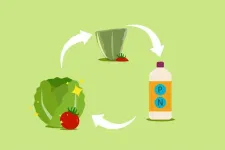
Growing plants can be a joyous, yet frustrating process as plants require a delicate balance of nutrients, sun, and water to be productive. Phosphorus and nitrogen, which are essential for plant growth, are often supplemented by chemical fertilizers to assure proper balance and output of produce. However, the amount of these nutrients on the planet is increasing due to excessive use, which in turn is causing various environmental problems. For this reason, there is a growing movement to promote sustainable agriculture through the recycling of phosphorus and nitrogen. In Japan, a target has been ...

Read the release
vmTracking enables highly accurate multi-animal pose tracking in crowded environments
Environment

vmTracking enables highly accurate multi-animal pose tracking in crowded environments

Studying the social behavior of animals in their natural environments is necessary for advancing our understanding of neurological processes. To achieve this, tracking multiple individuals simultaneously and accurately as they interact in shared spaces is crucial. Traditional multi-animal tracking systems, such as multi-animal DeepLabCut (maDLC) and Social LEAP Estimates Animal Poses (SLEAP), use frame-by-frame identification to predict movements without the need for markers. While these tools effectively track poses, such as head direction, in simple scenarios, ...

Read the release
Nitrogen fixation on marine particles is important in the global ocean
Environment

Nitrogen fixation on marine particles is important in the global ocean

How on Earth? It has puzzled scientists for years whether and how bacteria, that live from dissolved organic matter in marine waters, can carry out N2 fixation. It was assumed that the high levels of oxygen combined with the low amount of dissolved organic matter in the marine water column would prevent the anaerobic and energy consuming N2 fixation. Already in the 1980s it was suggested that aggregates, so-called “marine snow particles”, could possibly be suitable sites for N2fixation, ...

Read the release
Environment

Columbia Climate School launches M.S. in Climate Finance

The Columbia Climate School has announced the first master’s degree program in the United States for climate finance. In close collaboration with the Columbia Business School, this interdisciplinary degree will drive impactful solutions to the climate crisis through advanced financial tools and scientific knowledge. This is the third master’s program announced by the Climate School, in addition to an M.A. in Climate and Society and an M.S. in Climate degree. “The world needs problem-solvers to address the global climate crisis,” said Alexis Abramson, dean of the Columbia Climate School. “Everyone ...

Read the release
Study reveals palm trees once thrived in subarctic Canada
Environment

Study reveals palm trees once thrived in subarctic Canada

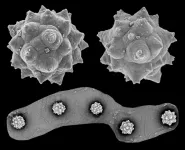
New London, Conn. — A new study by Connecticut College provides strong evidence that palm trees once thrived in subarctic Canada, reshaping scientific understanding of past Arctic climates. Conn Professor Peter Siver’s research, published in the journal Annals of Botany, confirms that during the late early Eocene—approximately 48 million years ago—this region maintained warm temperatures year-round, even during months of winter darkness. The work was done in collaboration with colleagues from Canada and Poland. Siver’s team identified fossilized phytoliths—microscopic ...

Read the release
Natural hydrogen: a sustainable energy source in mountain ranges
Environment

Natural hydrogen: a sustainable energy source in mountain ranges

The successful development of sustainable georesources for the energy transition is a key challenge for humankind in the 21st century. Hydrogen gas (H2) has great potential to replace current fossil fuels while simultaneously eliminating the associated emission of CO2 and other pollutants. However, a major obstacle is that H2 must be produced first. Current synthetic hydrogen production is at best based on renewable energies but it can also be polluting if fossil energy is used. The solution may be found ...

Read the release
New Australian dinosaurs and the oldest megaraptorid fossils in the world
Environment

New Australian dinosaurs and the oldest megaraptorid fossils in the world

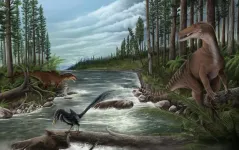
Groundbreaking research published today in the Journal of Vertebrate Paleontology has unveiled a landmark discovery – fossils of the world’s oldest known megaraptorid and the first evidence of carcharodontosaurs in Australia. These finds rewrite the evolutionary history of theropod dinosaurs, uncovering a predator hierarchy unique to Cretaceous Australia. The research, led by Museums Victoria Research Institute and Monash University PhD student Jake Kotevski, describes five theropod fossils discovered along Victoria’s coastline. The fossils were unearthed in the upper Strzelecki Group (Bunurong/Boonwurrung ...

Read the release
Devastating storms define Appalachia’s 2024 climate
Environment

Devastating storms define Appalachia’s 2024 climate

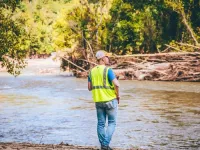
After a year of weather extremes that brought everything from deadly floods to bitter cold, experts at East Tennessee State University have released a detailed analysis of the region’s 2024 weather patterns. Their findings highlight both record-breaking temperatures and catastrophic storms – underscoring the growing need for preparedness as communities face unpredictable conditions. The report, published by Tennessee’s Climate Office housed at ETSU, details how Southern Appalachia endured scorching heat and devastating floods, including the tragic September storm linked to ...

Read the release
Global retreat of glaciers has strongly accelerated
Environment

Global retreat of glaciers has strongly accelerated

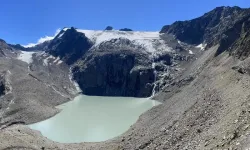
There are currently around 275,000 glaciers worldwide, in which huge quantities of fresh water are stored. But this reservoir is increasingly shrinking. Since the turn of the millennium, glaciers around the world – i.e. ice masses on land excluding the Greenland and Antarctic ice sheets – have lost around 273 billion tonnes of ice per year. This corresponds to about five and a half times the volume of Lake Constance. Overall, the world’s glaciers have lost around five per cent of their total volume since the year 2000. This is the conclusion reached by an international research team of which Tobias Bolch from the Institute of Geodesy ...

Read the release
Environment

We can farm more seafood while minimizing its impact on biodiversity, U-M research shows

Humanity can farm more food from the seas to help feed the planet while shrinking mariculture's negative impacts on biodiversity, according to new research led by the University of Michigan. There is a catch, though: We need to be strategic about it. "We can achieve this sustainable mariculture development," said Deqiang Ma, who led the study as a postdoctoral researcher at the U-M School for Environment and Sustainability. "With strategic planning, we can achieve the goal of conserving marine species while meeting the global demand for the ...

Read the release
Electrochemical carbon dioxide reduction: Dynamic surfaces of Cu-based catalysts
Environment

Electrochemical carbon dioxide reduction: Dynamic surfaces of Cu-based catalysts

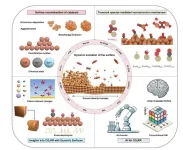
The continued massive consumption of fossil fuels in modern societies has led to a range of environmental issues, including excessive CO2 emissions. In this regard, electrochemical CO2 reduction can convert intermittent electricity into chemical fuels and other value-added products, which holds the potential to close the carbon cycle. Among the various catalysts, metals are the most extensively studied heterogeneous CO2RR electrocatalysts and can be classified into three categories based on the main products. Containing Bi, ...

Read the release
Environment

Restoring grasslands led to fewer human-wildlife conflicts in Kenya, research finds

ARLINGTON, Va. (Feb. 18 2025) – A new study led by Conservation International scientists and published today has found that grassland restoration can reduce human-wildlife conflict and social conflicts in communities facing resource scarcity. Grasslands, vital ecosystems for livelihoods and biodiversity, are under increasing pressure from climate change and human activity. The Chyulu Hills region of Kenya exemplifies these challenges, as it is home to iconic wildlife such as African elephants and black rhinos, which share the land with pastoral Maasai communities. This coexistence often leads to competition over limited water, land and pasture, sparking ...

Read the release
Environment

Restoring African grassland habitats makes life more peaceful for humans and wildlife, scientists find

Across Kenya, grasslands underpin people’s lives — as well as those of animals like elephants, giraffes, and hyenas. But the climate crisis is drying out these habitats, forcing people and animals to compete for resources, and increasing both community tensions and conflict between humans and wildlife. Researchers monitoring both grassland restoration and conflicts have now found that restoration can help reduce human-wildlife conflict and improve community relations: the more local grassland is restored, the less conflict there is. “Grassland restoration is playing a role in reducing human-wildlife conflicts, social conflicts and the overall feeling of insecurity ...

Read the release
Novel catalyst development for sustainable ammonia synthesis
Environment

Novel catalyst development for sustainable ammonia synthesis

As the world moves toward sustainability, the demand for efficient alternatives across industries continues to grow. Ammonia, a key chemical used in fertilizers, explosives, and various other products, is primarily synthesized through the energy-intensive Haber-Bosch process. This process requires extremely high temperatures and pressures, contributing to global carbon dioxide emissions. Conventional catalysts, such as iron and ruthenium, rely on these harsh conditions to drive the reaction. However, a recent study by researchers from Institute of Science Tokyo, the National Institute for Materials Science, and Tohoku University, Japan, led by Professor Masaaki Kitano, explores ...

Read the release
Wildfires in the Andes cause severe soil degradation and hinder ecosystem recovery
Environment

Wildfires in the Andes cause severe soil degradation and hinder ecosystem recovery

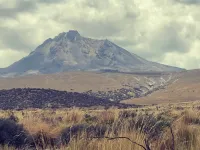
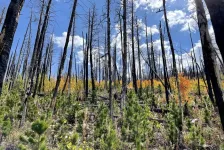
In September 2018, a wildfire burned nearly two thousand hectares of shrubland on the Pichu Pichu volcano, an ecologically significant area in the Peruvian Andes. Unlike Mediterranean ecosystems, where vegetation has evolved strategies to withstand fire, the volcanic soils of Arequipa—one of the driest regions in the world—are not adapted to wildfire disturbances. A Miguel Hernández University of Elche (UMH) research team collected and analyzed soil samples from the burned area at 3,700 meters above sea level to understand how these fragile ecosystems ...

Read the release
Environment

Reintroducing wolves to Scottish Highlands could help address climate emergency

University of Leeds news Embargoed until 05:01 GMT, 17 February Reintroducing wolves to the Scottish Highlands could lead to an expansion of native woodland which could take in and store one million tonnes of CO2 annually, according to a new study led by researchers at the University of Leeds. The team modelled the potential impact that wolves could have in four areas classified as Scottish Wild Land, where the eating of tree saplings by growing red deer populations is suppressing natural regeneration of trees and woodland. They used a predator–prey model to ...

Read the release
A new system to study phytoplankton: Crucial species for planet Earth
Environment

A new system to study phytoplankton: Crucial species for planet Earth

ROCKVILLE, MD – Phytoplankton, tiny plant-like organisms in the ocean, are incredibly important for life on Earth. They're a major food source for many sea creatures and produce almost half the oxygen we breathe. They also help control the climate by soaking up a lot of carbon dioxide, a gas that contributes to global warming. Scientists want to learn more about how these phytoplankton use sunlight to make energy and oxygen, which can be useful in the context of environmental monitoring during ...

Read the release
Scientists discover "genetic weak spot" in endangered Italian bear population
Environment

Scientists discover "genetic weak spot" in endangered Italian bear population

ROCKVILLE, MD – The Apennine brown bear, also known as the Marsican brown bear (Ursus arctos marsicanus), is a unique and critically endangered subspecies of brown bear found only in the remote and rugged Apennine Mountains of central Italy. A new study by the Italian Endemixit project (endemixit.com) reveals a potentially critical genetic flaw in the endangered Apennine brown bear population of Italy, offering insights that could help boost conservation efforts. The work will be presented at the 69th Biophysical Society Annual Meeting, to be held February 15 - 19, 2025 in Los Angeles. This distinct population has been isolated for centuries, evolving unique physical ...

Read the release
Marine mystery solved: How anemonefish avoid stings from their sea anemone hosts
Environment

Marine mystery solved: How anemonefish avoid stings from their sea anemone hosts

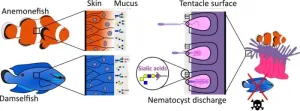
The clownfish-anemone living arrangement is one of the most widely recognized examples of symbiosis. Researchers have made a breakthrough in understanding how anemonefish can live safely among sea anemones without being stung by their venomous tentacles, solving a century-long mystery. Scientists at the Okinawa Institute of Science and Technology (OIST) and their international collaborators have discovered that anemonefish have evolved to maintain very low levels of sialic acid in their skin mucus to avoid triggering the release of nematocysts (stinging cells) in ...

Read the release
Trees might need our help to survive climate change, CSU study finds
Environment

Trees might need our help to survive climate change, CSU study finds

A new Colorado State University study of the interior U.S. West has found that tree ranges are generally contracting in response to climate change but not expanding into cooler, wetter climates – suggesting that forests are not regenerating fast enough to keep pace with climate change, wildfire, insects and disease. As the climate becomes too warm for trees in certain places, tree ranges have been expected to shift toward more ideal conditions. The study analyzed national forest inventory data for more than 25,000 plots in ...

Read the release
Researchers develop a five-minute quality test for sustainable cement industry materials
Environment

Researchers develop a five-minute quality test for sustainable cement industry materials

CHAMPAIGN, Ill. — A new test developed at the University of Illinois Urbana-Champaign can predict the performance of a new type of cementitious construction material in five minutes — a significant improvement over the current industry standard method, which takes seven or more days to complete. This development is poised to advance the use of next-generation resources called supplementary cementitious materials — or SCMs — by speeding up the quality-check process before leaving the production floor. Due ...

Read the release
Climate change threatens global cocoa production: New study highlights pollination-based solutions
Environment

Climate change threatens global cocoa production: New study highlights pollination-based solutions

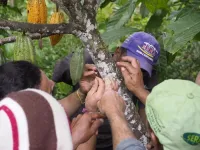
Cocoa (Theobroma cacao L.) is a vital cash-crop for four to six million small-holder farmers across the tropics, and supports a global chocolate industry valued at over USD 100 billion annually. The combination of millions of farmers relying on cocoa for their livelihoods, and increasing global demand for the crop, has driven cocoa plantation expansion and intensification of farming practices, often at the expense of biodiversity and long-term sustainability. A new research study led by the University ...

Read the release
Ecological Society of America selects 2025 EEE Scholars
Environment

Ecological Society of America selects 2025 EEE Scholars

The Ecological Society of America (ESA) announces the 2025 cohort of ESA Excellence in Ecology (EEE) Scholars. This prestigious scholarship program celebrates and supports outstanding early- to mid-career Ph.D. ecologists from groups traditionally underrepresented in the scientific community. This year’s EEE Scholars are: Elvira D'Bastiani, Postdoctoral Researcher at the University of California, Los Angeles; Gabriela Garcia, Assistant Professor at Northeastern University; Camille Griffith, Assistant Professor at Oglala Lakota College; and Estelí Jiménez-Soto, Assistant Professor at the University of South Florida. “These exceptional scholars embody ...

Read the release
From the original Press-News collection. Issuers of news releases are responsible for the accuracy of their content.