THE ORIGINAL COLLECTION · SINCE 2010

Environment
press releases.

Research announcements from universities, hospitals and scientific institutions. Explore the stories, people and discoveries behind the headlines.

Original publication datesPage 59
FIND A STORY

Find a past release.

Dates and source material belong to the original release.

Read our research explainers

Browse the collection · original publication order

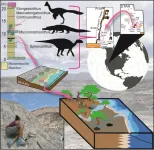
Fossil eggshells from Utah's Cedar Mountain Formation include Cretaceous period eggs from 3 feathered bird-like dinosaurs, 2 herbivorous dinosaurs, and a crocodile-like species found for the first tim
Environment

Fossil eggshells from Utah's Cedar Mountain Formation include Cretaceous period eggs from 3 feathered bird-like dinosaurs, 2 herbivorous dinosaurs, and a crocodile-like species found for the first tim

Fossil eggshells from Utah's Cedar Mountain Formation include Cretaceous period eggs from 3 feathered bird-like dinosaurs, 2 herbivorous dinosaurs, and a crocodile-like species found for the first time outside Europe Article URL: https://plos.io/42XpPYx Article title: Fossil eggshell diversity of the Mussentuchit Member, Cedar Mountain Formation, Utah Author countries: U.S., South Africa Funding: This research was supported by Canyonlands Natural History Association, Global Creatures, and MagicSpace ...

Read the release

New spatial mechanism for the coexistence of tree species
Environment

New spatial mechanism for the coexistence of tree species

The data sets are very large: with more than 75 permanent forest dynamics plots in 29 countries worldwide, the Forest Global Earth Observatory network (ForestGEO) of the Smithsonian Tropical Research Institute (STRI) provides excellent forest inventories for investigating the dynamics of forest ecosystems and better understanding the processes that drive the structure and function of forests. On these 20-to-50-hectare plots, every single tree with a diameter not much larger than a pencil has been identified, measured and mapped every five years, often totalling more than 200 000 trees. The two UFZ researchers, Dr. Thorsten Wiegand ...

Read the release
Beyond the burn: Harvesting dead wood to reduce wildfires and store carbon
Environment

Beyond the burn: Harvesting dead wood to reduce wildfires and store carbon

A century of fire suppression, combined with global warming and drought, has led to increasingly destructive wildfires in the Western United States. Forest managers use tools like prescribed burns, thinning, mastication, and piling and burning to reduce fuel – live and dead trees, needles and leaves, and downed branches – that can feed intense wildfires. These methods aim to lower fuel levels, reduce crown density, and protect fire-resistant trees, fostering healthier, more resilient forests. However, prescribed burning efforts haven’t kept up with the rapid buildup of surface fuel, creating a “fire deficit” – the gap between the amount of fuel that has ...

Read the release
New manzanita species discovered, already at risk
Environment

New manzanita species discovered, already at risk

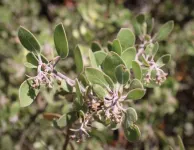
A new species of manzanita — a native California shrub famous for its twisted branches and wildfire resilience — has been discovered on the central coast, but its survival is already threatened by urban development that could destroy much of its fragile population. The discovery is detailed in a new study published in PhytoKeys, where researchers used genetic analysis to confirm the plant as a distinct species. Named Arctostaphylos nipumu to honor the Nipomo Mesa where it was discovered and its indigenous heritage, the species stands out for its shaggy gray bark — ...

Read the release
Giant ice bulldozers: How ancient glaciers helped life evolve
Environment

Giant ice bulldozers: How ancient glaciers helped life evolve

New Curtin University research has revealed how massive ancient glaciers acted like giant bulldozers, reshaping Earth’s surface and paving the way for complex life to flourish. By chemically analysing crystals in ancient rocks, the researchers discovered that as glaciers carved through the landscape, they scraped deep into the Earth’s crust, releasing key minerals that altered ocean chemistry. This process had a profound impact on our planet’s composition, creating conditions that allowed ...

Read the release
Environment

Microplastics in ocean linked to disabilities for coastal residents

EMBARGOED FOR RELEASE UNTIL 4 P.M. ET, TUESDAY, FEBRUARY 25, 2025 Media Contacts: Renee Tessman, rtessman@aan.com, (612) 928-6137 Natalie Conrad, nconrad@aan.com, (612) 928-6164 Microplastics in ocean linked to disabilities for coastal residents Mobility, self-care, independent living disability higher in areas with high microplastics MINNEAPOLIS – Tiny bits of plastic found in the ocean may be tied to a higher risk of disability for people who live in coastal areas with high levels, according to a preliminary study released today, ...

Read the release
Successful strategies for collaborative species conservation
Environment

Successful strategies for collaborative species conservation

How can the loss of species and habitats in agricultural landscapes be stopped? Up to now, measures have mostly been implemented by individual farms. In contrast, agri-environmental measures that are planned across farms at landscape level offer greater potential for creating suitable habitats for different species as a mosaic in the landscape. However, successful landscape level approaches also require cooperation between farms and other stakeholders from local governments, politics and nature conservation. Researchers at the University of Göttingen have therefore identified ...

Read the release
Environment

Scientists design novel battery that runs on atomic waste

COLUMBUS, Ohio – Researchers have developed a battery that can convert nuclear energy into electricity via light emission, a new study suggests. Nuclear power plants, which generate about 20% of all electricity produced in the United States, produce almost no greenhouse gas emissions. However, these systems do create radioactive waste, which can be dangerous to human health and the environment. Safely disposing of this waste can be challenging. Using a combination of scintillator crystals, high-density materials that emit light when they absorb radiation, and solar cells, the team, led by researchers from The Ohio State University, demonstrated that ambient ...

Read the release
Environment

Study reveals Africa will reach 1.5C climate change threshold by 2040 even under low emission scenarios

New research highlighted in the journal CABI Reviews suggests that all five subregions of Africa will breach the 1.5°C climate change threshold – the limit stipulated by the Paris Agreement – by 2040 even under low emission scenarios. A team of scientists, from the University of Zimbabwe, and the International Livestock Research Institute (ILRI) in Kenya, conducted a literature review to develop a framework for just transition pathways for Africa’s agriculture towards low emission and climate resilient development under 1.5°C of global warming. They found that despite Africa ...

Read the release
New study calls for ethical framework to protect Indigenous genetic privacy in wastewater monitoring
Environment

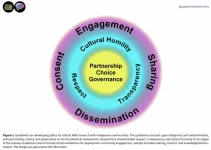
New study calls for ethical framework to protect Indigenous genetic privacy in wastewater monitoring

GUELPH, Ontario, Canada, 25 February 2025 – In a comprehensive peer-reviewed Perspective (review) article, researchers from the University of Guelph have outlined an urgent call for new ethical frameworks to protect Indigenous communities' genetic privacy in the growing field of wastewater surveillance. The study, published today in Genomic Psychiatry (Genomic Press New York), examines how the analysis of community wastewater – while valuable for public health monitoring – raises significant privacy concerns for Indigenous populations. "Wastewater-based ...

Read the release
Environment

Laser-powered device tested on Earth could help us detect microbial fossils on Mars

The first life on Earth formed four billion years ago, as microbes living in pools and seas: what if the same thing happened on Mars? If it did, how would we prove it? Scientists hoping to identify fossil evidence of ancient Martian microbial life have now found a way to test their hypothesis, proving they can detect the fossils of microbes in gypsum samples that are a close analogy to sulfate rocks on Mars. “Our findings provide a methodological framework for detecting biosignatures in Martian sulfate minerals, potentially guiding ...

Read the release
Environment nudges birds to fast, or slow, life lane
Environment

Environment nudges birds to fast, or slow, life lane

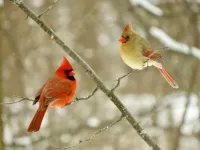
Birds worldwide make strategic decisions about how they live based on their environmental conditions. Some live fast, die young, and leave as many chicks as possible. Others live long and prosper by not breeding. A new study of non-migratory birds provides clues about how climate change may affect the long-standing evolutionary strategies of feathered friends. The work is reported in this week’s Ecology Letters and was led by Michigan State University postdoctoral fellows of the MSU Institute for Biodiversity, Ecology, Evolution, and Macrosystems (IBEEM). The ...

Read the release
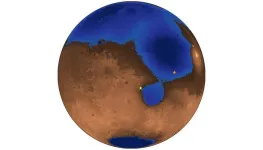
Ancient beaches testify to long-ago ocean on Mars
Environment

Ancient beaches testify to long-ago ocean on Mars

A Chinese rover that landed on Mars in 2021 detected evidence of underground beach deposits in an area thought to have once been the site of an ancient sea, providing further evidence that the planet long ago had a large ocean. The now-inactive rover, called Zhurong, operated for a year, between May 2021 and May 2022. It traveled 1.9 kilometers (1.2 miles) roughly perpendicular to escarpments thought to be an ancient shoreline from a time — 4 billion years ago — when Mars had a thicker atmosphere and a warmer climate. Along its path, the rover used ground penetrating radar (GPR) to probe up to 80 meters (260 feet) beneath the surface. This ...

Read the release
Environment

MSU researchers use open-access data to study climate change effects in 24,000 US lakes

Feb. 24, 2025 MSU has a satellite uplink/LTN TV studio and Comrex line for radio interviews upon request. Contact: Emilie Lorditch: 517-355-4082, lorditch@msu.edu Images MSU researchers use open-access data to study climate change effects in 24,000 US lakes EAST LANSING, Mich. – Each summer, more and more lake beaches are forced to close due to toxic algae blooms. While climate change is often blamed, new research suggests a more complex story: climate interacts with human activities like agriculture and urban runoff, which funnel excess ...

Read the release
Arctic study urges stronger climate action to prevent catastrophic warming
Environment

Arctic study urges stronger climate action to prevent catastrophic warming

Remember when 2°C of global warming was the doomsday scenario? Well, we're now staring down the barrel of something much worse. From the fish on your plate to the weather outside your window, everything's about to change. A new study by an international team of researchers, including Jackie Dawson, full professor, Geography, Environment and Geomatics at the University of Ottawa’s Faculty of Arts, underscores the grave risks posed by insufficient national commitments to reducing greenhouse gas emissions. “Our findings ...

Read the release
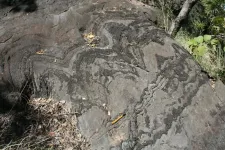
Research provides new detail on the impact of volcanic activity on early marine life
Environment

Research provides new detail on the impact of volcanic activity on early marine life

Analysis of fossilised rocks known as stromatolites from more than two-and-a-half billion years ago has provided new insights into the conditions on Earth before the evolution of oxygen. Led by Northumbria University researcher, Dr Ashley Martin, an international team with expertise in geology, microbiology, and geochemistry, worked in partnership to investigate nitrogen cycling patterns within ancient stromatolites, preserved in southern Zimbabwe. Nitrogen is vital for all life on Earth but must first be converted into useable, bioavailable, forms as it passes through the atmosphere, soil, plants and animals in the nitrogen cycle. The team believe the unusual nitrogen ...

Read the release
New USF study identifies urgent need to protect coastal marine ecosystems
Environment

New USF study identifies urgent need to protect coastal marine ecosystems

TAMPA, Fla. (Embargoed until Feb. 24, 2025) – A new study led by the University of South Florida highlights the urgent need to protect marine ecosystems in shallow water near the shore – an area that many beachgoers don’t realize is highly important to fish populations. Known as tidal flats, these coastal waters are critical to global seafood supplies, local economies and overall marine health. The findings from a team of interdisciplinary marine experts, “Habitat management and restoration as missing ...

Read the release
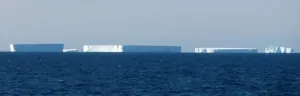
Mega-iceberg from Antarctica on collision course with South Georgia: harbinger of things to come?
Environment

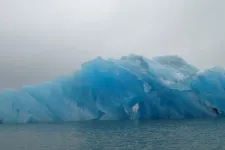
Mega-iceberg from Antarctica on collision course with South Georgia: harbinger of things to come?

It is no strange sight to see icebergs break off of the Antarctic ice cap and drift away, like the gigantic sheet of ice that is currently heading for the island of South Georgia. But climate change is making it happen more frequently, with ever-larger icebergs in the waters around Antarctica. Researchers from Utrecht University are studying the routes that icebergs followed during geological periods of rapid ice cap deterioration, such as the ends of ice ages. That provides crucial information about the effect of melting icebergs on the oceans, and its consequences for the future. In the process, ...

Read the release
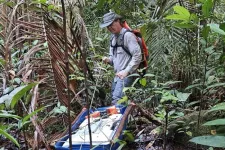
Beneath the bog: FAU awarded $1.3 million to track carbon and gas flow in peatlands
Environment

Beneath the bog: FAU awarded $1.3 million to track carbon and gas flow in peatlands

Peatlands, a type of wetland found around the globe at all latitudes – from the Arctic to the tropics – are important ecosystems that store vast amounts of carbon. In fact, peatlands hold about one-third of the world’s soil carbon, despite covering only about 3% of the Earth’s land surface. When peatlands are disturbed or altered, they can release that carbon back into the atmosphere as greenhouse gases like methane. Peatlands are valuable ecosystems both for their biodiversity and for their role in regulating climate. Researchers ...

Read the release
The rising tide of sand mining: a growing threat to marine life
Environment

The rising tide of sand mining: a growing threat to marine life

In the delicate balancing act between human development and protecting the fragile natural world, sand is weighing down the scales on the human side. A group of international scientists in this week’s journal One Earth are calling for balancing those scales to better identify the significant damage sand extraction across the world heaps upon marine biodiversity. The first step: acknowledging sand and gravel (discussed as sand in this publication) – the world’s most extracted solid materials by mass – are a threat hiding in plain sight. “Sand is a critical resource that shapes the built and ...

Read the release
What if we could revive waste carbon dioxide?
Environment

What if we could revive waste carbon dioxide?

As the severity of climate change and carbon emissions becomes a global concern, technologies to convert carbon dioxide (CO₂) into resources such as chemical fuels and compounds are urgently needed. Dr. Dahee Park’s research team from the Nano Materials Research Division at the Korea Institute of Materials Science (KIMS), has collaborated with Professor Jeong-Young Park’s team from the Department of Chemistry at KAIST to develop a catalyst technology that significantly enhances the efficiency of carbon dioxide (CO2) conversion. Conventional ...

Read the release
Environment

Hurricane-proofed downtown skyscrapers unexpectedly vulnerable to ‘bouncing’ winds

Houston, we have a problem. The ‘Space City’ boasts 50 buildings over 150 meters tall. These were designed to withstand hurricanes, to which Texas is prone. But on May 16th, 2024, a derecho – a wide, long-lived windstorm associated with rapidly moving showers or thunderstorms – managed to cause unexpected damage to many of the tall buildings downtown. The socio-economic impact was significant, due to traffic disruptions, businesses temporarily closing, and the need for repairs. Why ...

Read the release
UK peatland fires are supercharging carbon emissions as climate change causes hotter, drier summers
Environment

UK peatland fires are supercharging carbon emissions as climate change causes hotter, drier summers

A new study led by the University of Cambridge has revealed that as our springs and summers get hotter and drier, the UK wildfire season is being stretched and intensified. More fires, taking hold over more months of the year, are causing more carbon to be released into the atmosphere as carbon dioxide. Fires on peatlands, which are carbon-rich, can almost double global fire-driven carbon emissions. Researchers found that despite accounting for only a quarter of the total UK land area that burns each year, dwarfed by moor and heathland, peatland fires have caused up to 90% of annual UK fire-driven carbon emissions since 2001 – with emissions ...

Read the release
Environment

A new approach for breaking plastic waste down to monomers

Researchers have reported a method for breaking down commercial polymers like Plexiglass into monomers, a form more desirable for reuse. This could help alleviate the growing plastic waste stream. Most current plastic recycling methods rely on macroscopic mechanical shredding, cleaning and reprocessing. As a result, the properties degrade relative to the virgin polymer. Chemical decomposition to the original monomer would enable more thorough purification and then repolymerization to restore ideal performance. Here, Hyun Suk Wang and colleagues report the discovery that in dichlorobenzene solvent, violet light irradiation ...

Read the release
Environment

Chemists find greener path to making key industrial chemical

Scientists have discovered a potentially greener way to produce a crucial industrial chemical used to make many everyday products from plastics and textiles to antifreeze and disinfectants, according to a new study published in Science and co-authored by Tulane University chemical engineer Matthew Montemore. The breakthrough could significantly reduce greenhouse gas emissions from the manufacture of ethylene oxide, which has an estimated $40 billion global market. The current production process requires chlorine, which is toxic and ...

Read the release
From the original Press-News collection. Issuers of news releases are responsible for the accuracy of their content.