THE ORIGINAL COLLECTION · SINCE 2010

Environment
press releases.

Research announcements from universities, hospitals and scientific institutions. Explore the stories, people and discoveries behind the headlines.

Original publication datesPage 61
FIND A STORY

Find a past release.

Dates and source material belong to the original release.

Read our research explainers

Browse the collection · original publication order

Environment

Elephant seals in the Pacific serve as deep-ocean sentinels, revealing patterns otherwise hard to measure

Northern elephant seals may hold the key to unlocking the secrets of the open ocean’s twilight zone (~200 – 1,000 meters deep). According to a new study, these deep-diving creatures can help estimate fish abundance by providing a rare window into the elusive prey dynamics in one of the planet’s most mysterious and remote ecosystems. Ecosystems are dynamic, with resource fluctuations – natural or human-induced – shaping species interactions and food webs. These processes are well studied in terrestrial ecosystems but not in deep, open ocean ecosystems, ...

Read the release
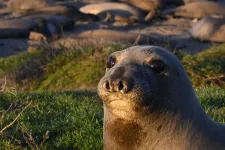

Foraging seals enable scientists to measure fish abundance across the vast Pacific Ocean
Environment

Foraging seals enable scientists to measure fish abundance across the vast Pacific Ocean

EMBARGOED until Thursday, Feb.13, 2025, at 2 P.M. U.S. Eastern Time SANTA CRUZ, Calif. – Over the past 60 years, marine biologists at UC Santa Cruz have monitored the behavior of northern elephant seals that journey to nearby Año Nuevo Natural Reserve. With the seals gathering on the beach by the thousands to breed and molt, generations of researchers have been able to amass more than 350,000 observations on over 50,000 seals. With the help of powerful technologies and the intrepidness to get close ...

Read the release
Environment

Protected habitats aren’t enough to save endangered mammals, MSU researchers find

Images EAST LANSING, Mich. – Tropical forests are massive biodiversity storehouses. While these rich swathes of land constitute less than one-tenth of Earth’s surface, they harbor more than 60% of known species. Among them is a higher concentration of endangered species than anywhere else on Earth. However, these regions are also under immense pressure, as tropical land is rapidly being transformed for industrial and agricultural purposes. Worldwide, regional governments and international groups are establishing new protected areas to slow further loss of threatened species. However, new research appearing in the journal PLOS Biology demonstrates ...

Read the release
Environment

Carbon emission drivers in the Belt and Road Initiative countries—An empirical analysis based on countries with different income levels

With the promotion of the "the Belt and Road" initiative, the economy and society of BRI countries have developed rapidly, but they are also facing severe challenges of rising carbon emissions. Many countries rely on fossil fuels, and the process of energy transition is slow. Coupled with insufficient financial and technological support, especially low-income countries that have limited access to global climate funds, they face greater difficulties in the low-carbon transformation process. To identify the carbon emission drivers at different development stages of BRI countries ...

Read the release
Tracing diversity in earth tongues —— Phylogeny and species updates of Geoglossomycetes in China
Environment

Tracing diversity in earth tongues —— Phylogeny and species updates of Geoglossomycetes in China

Geoglossomycetes is a class within the phylum Ascomycota that accommodates a single order and a single family, comprising nine genera. Geoglossomycetes is traditionally referred to as “earth tongues”. The class is characterized by tongue-shaped to clavate, stipitate, black ascomata covered with or without black setae, a swollen ascigerous portion, a cylindric stipe, filiform, septate paraphyses, cylindrical-clavate, 4–8-spored asci, and filiform or falciform, multi-septate, dark brown to hyaline ascospores. In collaboration with ...

Read the release
The genus Thaxterogaster (Cortinariaceae): Phylogeny and species diversity in Western China
Environment

The genus Thaxterogaster (Cortinariaceae): Phylogeny and species diversity in Western China

This study is led by Dr. Zhu L. Yang (Key Laboratory of Phytochemistry and Natural Medicines, Kunming Institute of Botany, Chinese Academy of Sciences). Specimens were collected by Song-Yan Zhou and Fei-Fei Liu; microscopic and phylogenetic analyses of Thaxterogaster species were conducted by Zi-Rui Wang at Kunming Institute of Botany, Chinese Academy of Sciences. The team used 514 (236 newly generated + 278 downloaded) sequences from 243 collections representing 112 species building a five-locus phylogenetic tree which includes most currently known lineages and newly described ...

Read the release
Comprehensive global study shows pesticides are major contributor to biodiversity crisis
Environment

Comprehensive global study shows pesticides are major contributor to biodiversity crisis

Pesticides are causing overwhelming negative effects on hundreds of species of microbes, fungi, plants, insects, fish, birds and mammals that they are not intended to harm – and globally their use is a major contributor to the biodiversity crisis. That is the finding of the first study assessing the impacts of pesticides across all types of species in land and water habitats, carried out by an international research team that included the UK Centre for Ecology & Hydrology (UKCEH) and the University of Sussex. Multiple negative impacts The scientists analysed over 1,700 existing lab and field studies of the impacts of 471 different ...

Read the release
California's most economically and culturally important species among those most vulnerable to projected climate change
Environment

California's most economically and culturally important species among those most vulnerable to projected climate change

California's most economically and culturally important species among those most vulnerable to projected climate change, per Climate Vulnerability Assessment of 34 marine species. ### Article URL: https://plos.io/4gslT5s Article Title: A collaborative climate vulnerability assessment of California marine fishery species Author Countries: U.S. Funding: This work was funded by a grant from the Resource Legacy Fund (#15067). Though the funders helped determine the project's initial scope of work, they had no role in data collection and analysis, the decision to publish, or the preparation of the manuscript. END ...

Read the release
Models show intensifying wildfires in a warming world due to changes in vegetation and humidity; only a minor role for lightning
Environment

Models show intensifying wildfires in a warming world due to changes in vegetation and humidity; only a minor role for lightning

Extreme fire seasons in recent years highlight the urgent need to better understand wildfires within the broader context of climate change. Under climate change, many drivers of wildfires are expected to change, such as the amount of carbon stored in vegetation, rainfall, and lightning strikes. Quantifying the relative importance of these processes in recent and future wildfire trends has remained challenging, because previous climate computer model simulations did not capture the full coupling between climate change, lightning, wildfires, smoke and corresponding shifts in solar ...

Read the release
Unraveling the complex role of climate in dengue dynamics
Environment

Unraveling the complex role of climate in dengue dynamics

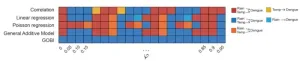
The research team led by KIM Jae Kyoung, Professor in the Department of Mathematical Sciences at KAIST and Chief Investigator of the Biomedical Mathematics Group at the Institute for Basic Science (IBS), has unveiled new insights into how weather influences the spread of dengue fever. Their study identifies temperature and rainfall as critical factors driving the global surge in dengue cases and offers actionable strategies for mitigating the disease's impact. Dengue fever, a mosquito-borne disease, poses an increasingly alarming public health challenge. According to the World Health Organization, reported dengue cases surged from 4.1 ...

Read the release
Economically, culturally important marine species vulnerable to changing climate, new study shows
Environment

Economically, culturally important marine species vulnerable to changing climate, new study shows

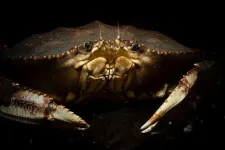
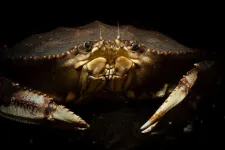
Dungeness crab, Pacific herring, and red abalone are among the marine species most vulnerable to the changing climate's effect on California's coastal waters, a new study led by UC Santa Cruz researchers finds. In a paper published on February 12 in the journal PLOS Climate, the team seeks to help the California Department of Fish and Wildlife (CDFW) in its efforts to develop and implement climate-ready fisheries management strategies that adapt to challenges such as rising ocean temperatures, acidification, and deoxygenation. The study, "A Collaborative Climate Vulnerability Assessment of California Marine Fishery Species," was led by Timothy Frawley, an assistant ...

Read the release
China Jurassic fossil discovery sheds light on bird origin
Environment

China Jurassic fossil discovery sheds light on bird origin

A research team led by Professor WANG Min from the Institute of Vertebrate Paleontology and Paleoanthropology (IVPP) of the Chinese Academy of Sciences has discovered two bird fossils in Jurassic-era rocks from Fujian Province in southeast China. These rocks date back approximately 149 million years. The fossils fill a spatiotemporal gap in the early evolutionary history of birds and provide the evidence yet that birds were diversified by the end of the Jurassic period. This study was published in Nature. Birds ...

Read the release
Antarctica’s only native insect’s unique survival mechanism
Environment

Antarctica’s only native insect’s unique survival mechanism

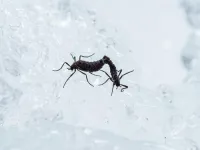
Picture an Antarctic animal and most people think of penguins, but there is a flightless midge, the only known insect native to Antarctica, that somehow survives the extreme climate. How the Antarctic midge (Belgica antarctica) copes with freezing temperatures could hold clues for humans about subjects like cryopreservation, but there remain many mysteries about the tiny insect. One mystery appears to have been solved by an Osaka Metropolitan University-led international research team. Graduate School of Science Professor Shin G. Goto and Dr. Mizuki Yoshida, a graduate student at the time of the research who is now a postdoc at Ohio State University, found ...

Read the release
Engineered animals show new way to fight mercury pollution
Environment

Engineered animals show new way to fight mercury pollution

Australian scientists have found an effective new way to clean up methylmercury, one of the world’s most dangerous pollutants, which often builds up in our food and environment because of industrial activities such as illegal gold mining and burning coal. The discovery, published in Nature Communications on 12 February 2025, could lead to new ways of engineering animals to protect both wildlife and human health. The research team from Macquarie University's Applied BioSciences, CSIRO, Macquarie Medical School, and the ARC Centre of Excellence in Synthetic Biology, has successfully genetically modified fruit flies and zebrafish to transform methylmercury into a ...

Read the release
Environment

The 3,000-year coral reef shutdown: a mysterious pause and a remarkable recovery

New study reveals that coral reefs in the Gulf of Eilat experienced a surprising 3,000-year "shutdown" in growth, from about 4,400 to 1,000 years ago, likely due to a temporary drop in sea level that could have been caused by global cooling. This phenomenon, which aligns with similar reef interruptions in Mexico, Brazil, and Australia, suggests a widespread environmental shift during that period. Despite the long pause, the reef eventually recovered, with coral species reappearing from deeper ...

Read the release
Why we need to expand the search for climate-friendly microalgae
Environment

Why we need to expand the search for climate-friendly microalgae

New research has highlighted microalgae’s capacity as a solution in the fight against climate change, but researchers warn that “smart microalgal bioprospecting” is needed to unlock its full potential. The study highlights the vast, largely unexplored capacity of microalgae to mitigate CO2 emissions while driving sustainable industry. “Microalgae have remarkable properties that make them an ideal tool for tackling climate change,” said lead author, PhD candidate Joan Labara Tirado from the University of Technology Sydney (UTS). The review paper, The need for smart microalgal bioprospecting was ...

Read the release
Environment

A wealth of evidence: PIK compiles 85,000 individual studies about climate policy

“Rather than directly providing answers to questions about the effects of climate policies, this study displays an overview of what has actually been scientifically studied so far,” explains Max Callaghan, PIK researcher and lead author of the study. “On the one hand, this informs existing gaps and thus directions for primary research, including through funding. On the other hand, this overview facilitates evidence synthesis work, i.e. the summarisation of the state of knowledge for governments, for example in the IPCC Assessment Reports.” The study shows, among other ...

Read the release
New fish species with ‘face paint’ named after Studio Ghibli character
Environment

New fish species with ‘face paint’ named after Studio Ghibli character

Researchers in China have named a newly discovered fish species after the Studio Ghibli character San from Princess Mononoke based on its similar facial markings. Published in the open-access journal ZooKeys, Branchiostegus sanae is a deepwater tilefish belonging to the family Branchiostegidae. It was discovered when scientists noticed unique cheek pattern on some deepwater tilefish individuals in online seafood markets. The research team used genetic analysis to confirm the new-species status of the fish, and were inspired by its facial stripes to name it after the female protagonist, San, from Hayao Miyazaki’s animated film Princess Mononoke, choosing “sanae” ...

Read the release
Environment

Born too late? Climate change may be delaying births

New Curtin University research has found exposure to outdoor air pollution and extreme temperatures during pregnancy may increase the risk of prolonged pregnancy, offering new insights into the impact of climate change on maternal health. The study analysed data from nearly 400,000 births in Western Australia and found that higher exposure to fine particulate air pollution (PM2.5) and biothermal stress (a measure that combines air temperature, radiant temperature, relative humidity, wind speed, and human physiology) was associated ...

Read the release
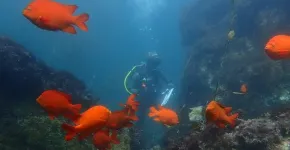
California’s marine protected areas boost fish populations across the state
Environment

California’s marine protected areas boost fish populations across the state

(Santa Barbara, Calif.) — It’s 1999, the 21st century is on the horizon, and California has big plans for marine conservation. New legislation has presented a mandate to establish an ambitious network of marine protected areas (MPAs) unlike anywhere else in the world. The goal is to craft strategic protections to safeguard the state’s marine life for preservation and economic benefits alike. Now 25 years later, an international team of researchers, led by scientists at UC Santa Barbara, have evaluated the network’s ...

Read the release
Environment

Poachers’ social media posts reveal alarming extent of illegal wildlife hunting in Lebanon

Public posts on social media platforms shed light on the extent and nature of prolific illegal wildlife hunting in Lebanon, research in Oryx—The International Journal of Conservation, published by Cambridge University Press on behalf of Fauna & Flora, has found. The study is the first to use social media as a tool for assessing illegal hunting activities in Lebanon. The country, along with the Mediterranean region more broadly, is a global poaching blackspot, particularly for the illegal killing of protected ...

Read the release
Scientists from the Woods Hole Oceanographic Institution identify heat-resistant kelp strain
Environment

Scientists from the Woods Hole Oceanographic Institution identify heat-resistant kelp strain

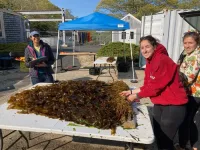
Like most aquatic vegetation, kelp is being negatively impacted by climate change. Warming ocean temperatures have led to shorter growing and harvesting seasons, including for sugar kelp, one of the most commonly farmed kelp species. The loss of kelp populations can significantly impact ecosystems, and potentially the growing demand for sustainably farming food, feed, fertilizer, medicine, and cosmetics. To give kelp a chance against climate change, scientists from the Woods Hole Oceanographic Institution (WHOI) have identified kelp species with natural adaptations to cope with heat. In a new study published in the Journal of Applied Phycology[RM1] , WHOI experts identify new strains ...

Read the release
Researchers are driving the charge of zero emissions
Environment

Researchers are driving the charge of zero emissions

No exhaust means no emissions, right? Not quite. It is commonly known that while electric vehicles do not produce tailpipe greenhouse gas emissions while driving, they do create debris from tire and brake abrasion. However, the degree to which they do and how that compares to internal combustion engine vehicles was largely unknown until the Virginia Tech Transportation Institute's Hesham Rakha investigated it. In an article published in Transportation Research Part D: Transport and Environment, Rakha, alongside institute research associate Mohamed Farag and Associate Professor of civil and environmental engineering Hosein Foroutan, reported findings ...

Read the release
Discovering the genetics of climate adaptation
Environment

Discovering the genetics of climate adaptation

As climate change accelerates, plants face mounting pressure to adapt to shifting ecosystems and environmental conditions. This challenge is especially urgent for crops – plants resilient to drought and heat are essential to secure food supply in an unpredictable future. Fortunately, plants can adapt remarkably well to diverse environments and climates: Arabidopsis thaliana, for example, thrives in regions as climatically distinct as Sweden and Italy. Understanding how plants naturally adapt to different ...

Read the release
FAU Engineering designs new autonomous system to monitor Arctic’s melting ice
Environment

FAU Engineering designs new autonomous system to monitor Arctic’s melting ice

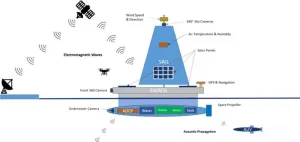
The rapid melting and thinning of the Arctic ice have sparked serious concerns in the scientific community. In addition, sea ice thickness also has decreased, which makes ice cover more vulnerable to warming air and ocean temperature. Understanding the ecological role of sea ice in the Arctic is crucial, particularly because the extent of sea ice in the region has been decreasing at an unprecedented rate. What would happen to the Arctic marine ecosystem if the sea ice melted even faster? To answer these questions, a long-term monitoring and data collection system is necessary in the harsh Arctic environment. However, ...

Read the release
From the original Press-News collection. Issuers of news releases are responsible for the accuracy of their content.