THE ORIGINAL COLLECTION · SINCE 2010

Environment
press releases.

Research announcements from universities, hospitals and scientific institutions. Explore the stories, people and discoveries behind the headlines.

Original publication datesPage 75
FIND A STORY

Find a past release.

Dates and source material belong to the original release.

Read our research explainers

Browse the collection · original publication order

Landmark 20-year study of climate change impact on permafrost forests
Environment

Landmark 20-year study of climate change impact on permafrost forests

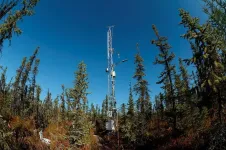
In perhaps the first long-term study of CO2 fluxes in northern forests growing on permafrost, an Osaka Metropolitan University-led research team has found that climate change increased not only the sources of carbon, but also the CO2 sinks. The 20-year observation from 2003-2022 in the interior of Alaska showed that while CO2 sinks turned into sources during the first decade, the second decade showed a nearly 20% increase in CO2 sinks. Graduate School of Agriculture Associate Professor Masahito Ueyama and colleagues found that warming led to wetness, which in turn aided the growth of black spruce trees. During photosynthesis, the growing trees were using the increasing ...

Read the release

Large meltwater accumulation revealed inside Greenland Ice Sheet
Environment

Large meltwater accumulation revealed inside Greenland Ice Sheet

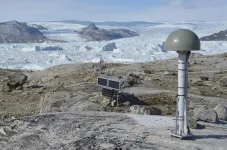
A new study published in Nature unveils a surprising discovery: a substantial amount of meltwater is temporarily stored within the Greenland Ice Sheet during summer months. For the first time, an international group of researchers was able to quantify meltwater with positioning data. The finding challenges current models of how ice sheets contribute to global sea level rise. The Greenland Ice Sheet is currently the largest single contributor to global sea-level rise, with the potential to raise the mean sea level by up to seven meters if it fully melts. While ...

Read the release
Scientists say plastic on beaches can now be seen from space
Environment

Scientists say plastic on beaches can now be seen from space

Australian researchers have developed a new method for spotting plastic rubbish on our beaches and successfully field tested it on a remote stretch of coastline. The satellite imagery tool developed by RMIT University scientists picks up differences in how sand, water and plastics reflect light, allowing plastics to be spotted on shorelines from more than 600km above. Satellite technology is already used to track the massive amounts of plastic floating around our oceans – from relatively small drifts containing thousands of plastic bottles, bags and fishing nets, up to gigantic ...

Read the release
Environment

Some wildfire suppressants contain heavy metals and could contaminate the environment

In fire-prone areas, water isn’t the only thing used to quell blazes. Wildland firefighters also apply chemical or synthetic suppressants. Researchers reporting in ACS’ Environmental Science & Technology Letters explored whether these suppressants could be a source of elevated metal levels sometimes found in waterways after wildfires are extinguished. Several products they investigated contained high levels of at least one metal, including chromium and cadmium, and could contribute to post-fire increases in the environment. “Wildfires ...

Read the release
Camera trap study reveals a “vital sanctuary” for wildlife and endangered species in Cambodia’s Central Cardamom Mountains
Environment

Camera trap study reveals a “vital sanctuary” for wildlife and endangered species in Cambodia’s Central Cardamom Mountains

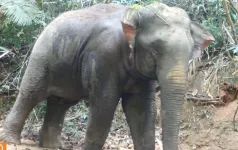
PHNOM PENH, Cambodia (October 30, 2024) – The first-ever camera trap study of the Central Cardamom Mountains Landscape has recorded 108 species, 23 of which are listed at risk (Vulnerable or above) on the IUCN Red List, underscoring the significance of the region as a global stronghold for biodiversity and rare and threatened species. Editors please note: Use these links to access camera trap footage and the full report. The report, released today by the Cambodian Ministry of Environment (MoE), the United States Agency ...

Read the release
Buried Alive: Carbon dioxide release from magma deep beneath ancient volcanoes was a hidden driver of Earth’s past climate
Environment

Buried Alive: Carbon dioxide release from magma deep beneath ancient volcanoes was a hidden driver of Earth’s past climate

An international team of geoscientists led by a volcanologist at Rutgers University-New Brunswick has discovered that, contrary to present scientific understanding, ancient volcanoes continued to spew carbon dioxide into the atmosphere from deep within the Earth long past their period of eruptions. In doing so, the research team has solved a long-standing mystery over what caused prolonged episodes of warming during turning points in Earth’s climate history. The work is detailed in today’s issue of the journal Nature Geoscience. “Our ...

Read the release
New genetic web tool to help restore climate-resilient marine ecosystems
Environment

New genetic web tool to help restore climate-resilient marine ecosystems

In the face of increased human pressures and climate change, a team of Australian scientists led by Dr Georgina Wood at Flinders University have launched a new online tool to assist marine managers and restoration experts to bolster the resilience of marine habitat-forming species. The ‘Reef Adapt’ initiative, developed by experts from the NSW Department of Primary Industries and Regional Development (NSW DPIRD), Flinders University and The University of Western Australia (UWA), aims to expand the tools available to promote diverse, adaptable and resilient ecosystems. Described in a new article in Communications Biology, Reef Adapt harnesses genetic data ...

Read the release
Environment

Three pathways to achieve global climate and sustainable development goals

"Sustainable development pathways are strategies that prevent dangerous climate change while at the same time moving towards a world that allows people to prosper on a healthy planet,” explains Bjoern Soergel, scientist at the Potsdam Institute for Climate Impact Research PIK and lead author of the study published in Environmental Research Letters. This is the essence of the 17 SDGs agreed by the United Nations in 2015. “Our analysis shows that all three sustainable development pathways are far more effective than our current ‘business as usual’. They drive substantial progress towards the SDGs, for example reducing the number of people in extreme poverty ...

Read the release
Giant rats could soon fight illegal wildlife trade by sniffing out elephant tusk and rhino horn
Environment

Giant rats could soon fight illegal wildlife trade by sniffing out elephant tusk and rhino horn

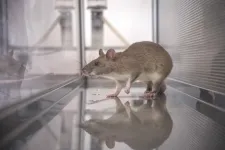
In the past, African giant pouched rats have learned to detect explosives and the tuberculosis-causing pathogen. Now, a team of researchers have trained these rats to pick up the scent of pangolin scales, elephant ivory, rhino horn, and African blackwood. These animals and plants are listed as threatened and at high danger of extinction. “Our study shows that we can train African giant pouched rats to detect illegally trafficked wildlife, even when it has been concealed among other substances,” ...

Read the release
Alcohol consumption among non-human animals may not be as rare as previously thought, say ecologists
Environment

Alcohol consumption among non-human animals may not be as rare as previously thought, say ecologists

Anecdotes abound of wildlife behaving “drunk” after eating fermented fruits, but despite this, nonhuman consumption of ethanol has been assumed to be rare and accidental. Ecologists challenge this assumption in a review publishing October 30 in the Cell Press journal Trends in Ecology & Evolution. They argue that since ethanol is naturally present in nearly every ecosystem, it is likely consumed on a regular basis by most fruit- and nectar-eating animals. “We're moving away from this anthropocentric view that ethanol is just something ...

Read the release
12 new Oriental weevil species discovered using advanced imaging tools
Environment

12 new Oriental weevil species discovered using advanced imaging tools

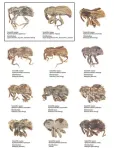
Jake Lewis, an entomologist in the Environmental Science and Informatics Section at the Okinawa Institute of Science and Technology (OIST), is fascinated by weevils, a diverse group of beetles that includes many species with elephant trunk-like mouthparts (called a rostrum). Weevils provide various ecosystem services such as pollination and decomposition, but some species are serious pests known to decimate crop fields and timber forests. Using x-ray microtomography, a 3D imaging technique ...

Read the release
New $5 million DoE award supports KU startup’s green hydrogen energy research
Environment

New $5 million DoE award supports KU startup’s green hydrogen energy research

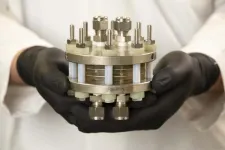
LAWRENCE — With $5 million in support from the U.S. Department of Energy, the University of Kansas and Avium — a startup firm founded by researchers from KU’s School of Engineering — aim to make clean hydrogen more affordable. According to the DoE, the work at KU is part of $750 million in funding for 52 projects across 24 states “to dramatically reduce the cost of clean hydrogen and reinforce American leadership in the growing hydrogen industry.” Green hydrogen is a key tool in the worldwide ...

Read the release
Gold bugs: Spectacular new fossil arthropod preserved in fool’s gold
Environment

Gold bugs: Spectacular new fossil arthropod preserved in fool’s gold

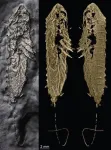
UNDER EMBARGO UNTIL 15:00 GMT / 11:00 ET TUESDAY 29 OCTOBER 2024 Gold bugs: spectacular new fossil arthropod preserved in fool’s gold Images available via link in the notes section A new 450-million-year-old fossil arthropod, preserved in 3D by iron pyrite (fool’s gold), has been unveiled by scientists. The new species, Lomankus edgecombei, is distantly related to spiders, scorpions, and horseshoe crabs. The findings have been published today (29 Oct) in the journal Current Biology. A team of researchers led by Associate Professor Luke Parry, Department of Earth Sciences, University of Oxford, have unveiled a spectacular ...

Read the release
Environment

Ancient gene influences immunity of First Nations Peoples of Oceania

AURORA, Colo. (Oct. 29, 2024) – An ancient gene mutation among First Nations inhabitants of Oceania may make them more susceptible to infectious diseases like influenza, according to a new study by scientists at the University of Colorado Anschutz Medical Campus. “We found quite a diverse set of genes in this population but there was one allele that really stood out in terms of genetic composition,” said the study’s lead author Paul Norman, PhD, professor of biomedical informatics at the University of Colorado School of Medicine. “We did some investigating, and we suspect this allele ...

Read the release
Environment

The Megacheiran candidate: Fossil hunters strike gold with new species

New Haven, Conn. — Paleontologists have identified fossils of an ancient species of bug that spent the past 450 million years covered in fool’s gold in central New York. The new species, Lomankus edgecombei, is a distant relative of modern-day horseshoe crabs, scorpions, and spiders. It had no eyes, and its small front appendages were best suited for rooting around in dark ocean sediment, back when what is now New York state was covered by water. Lomankus also happens to be bright gold — thanks to layers of pyrite ...

Read the release
Advanced biodegradable plastics run rings around their predecessors
Environment

Advanced biodegradable plastics run rings around their predecessors

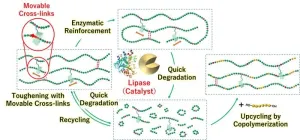
Osaka, Japan—Achieving a sustainable society requires the development of advanced degradable plastics, or polymers, which are molecules composed of long chains of repeating units. The goal of a resource-circulating society is now one step closer thanks to the efforts of a team from Osaka University that has developed tough biodegradable plastics by including movable crosslinking groups. In a study published this month in Chem, the researchers have revealed that developing polymers with movable crosslinks not only increases their strength but also promotes degradation by enzymes under mild conditions. Plastics and polymers need to achieve both desirable performance ...

Read the release
FAU awarded DOE grant to test ocean current energy offshore Palm Beach County
Environment

FAU awarded DOE grant to test ocean current energy offshore Palm Beach County

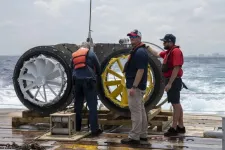
Imagine harnessing the power of ocean currents to generate clean, renewable energy right off the coast of Southeast Florida. Florida Atlantic University’s Southeast National Marine Renewable Energy Center (SNMREC) has been awarded an $800,000 grant from the United States Department of Energy’s Water Power Technologies Office to enable the commercial readiness of ocean energy technologies. SNMREC, in collaboration with a team of experts including The City of Lake Worth Beach Electric Utility, 3U Technologies, 48 North Solutions, IDOM Incorporated, Braid Theory, and the European Marine Energy Centre (EMEC), ...

Read the release
Open-access database compiles 3,500 substances measured in plastic products: Study highlights substantial knowledge gaps
Environment

Open-access database compiles 3,500 substances measured in plastic products: Study highlights substantial knowledge gaps

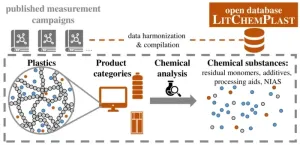
About this study: Plastics contain a vast number of chemicals, some of which greatly impact the environment and human health. However, information on the presence of individual substances in plastic products is oftentimes not publicly available. In a peer-reviewed study, set to be published on 29 October 2024, in Environmental Science and Technology Letters, a new publicly accessible database on chemicals measured in plastics is presented - LitChemPlast. The database contains over 3’500 substances measured in over 47'000 samples of plastic products across 372 studies. Key findings: • Contamination of recycled plastics: The database shows that, due to ...

Read the release
Oceanographers record the largest predation event ever observed in the ocean
Environment

Oceanographers record the largest predation event ever observed in the ocean

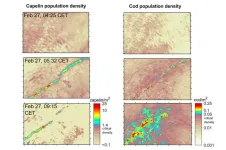
There is power in numbers, or so the saying goes. But in the ocean, scientists are finding that fish that group together don’t necessarily survive together. In some cases, the more fish there are, the larger a target they make for predators. This is what MIT and Norwegian oceanographers observed recently when they explored a wide swath of ocean off the coast of Norway during the height of spawning season for capelin — a small Arctic fish about the size of an anchovy. Billions of capelin migrate each February from the edge of the Arctic ...

Read the release
Researchers’ new outreach strategy succeeds, sets blueprint for detecting invasive species in Florida
Environment

Researchers’ new outreach strategy succeeds, sets blueprint for detecting invasive species in Florida

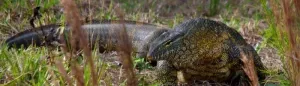
Invasive species in Florida like Nile monitors and Argentine black-and-white tegus pose a growing threat to the Sunshine State’s environment, economy and public safety. South Florida’s warm climate, disturbed habitats and bustling pet trade have made it a hotspot for these non-native, cryptic reptiles. However, finding these elusive creatures has always been a challenge – until now. University of Florida researchers are showcasing how a focused outreach initiative in Palm Beach County has led to a successful increase in reports of invasive reptiles in Florida. The findings are documented in the latest study published in Scientific Reports and authored by researchers at UF/IFAS ...

Read the release
Environment

Climate, dead zones and fish: Solving a 'wicked problem' in Lake Erie and beyond

Images There's a famous piece of advice from hockey, attributed to Wayne Gretzky, about how it's better to skate to where the puck is headed rather than where it is. Research is now showing that regulations designed to protect Lake Erie's water quality are heeding the Great One's words when it comes to safeguarding the Great Lake's fisheries. Specifically, the currently recommended limits on the flow of nutrients into Lake Erie from agriculture may be too restrictive for some species of fish. They are, however, suited to maintain healthy fisheries until the ...

Read the release
Environment

Green growth: 30% of regions worldwide achieve economic growth while reducing carbon emissions

“We found that 30 percent of the regions with available data have fully decoupled carbon emissions from economic growth. Regions with high incomes and a history of carbon-intensive industries, as well as those with significant shares of service and manufacturing sectors were particularly successful in reducing carbon emissions while still experiencing economic growth,“ says Anders Levermann, co-author and head of the research department “Complexity Science” at PIK. “A stabilization of the global mean temperature is only possible with net-zero carbon emissions. That ...

Read the release
Giant clam declared critically endangered after the latest assessment
Environment

Giant clam declared critically endangered after the latest assessment

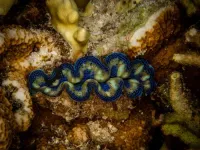
The giant clam, known for its colorful cape-like mantle, wavy shell and astonishing size, is in danger of going extinct after its population plunged by more than 80% over the last century, according to a new assessment by a University of Colorado Boulder biologist and collaborators. The assessment, led by Ruiqi Li, a postdoctoral researcher at the CU Museum of Natural History, prompted the International Union for Conservation of Nature (IUCN) today to update the conservation status of this animal from “vulnerable” to ...

Read the release
DOE awards $12 million to expand marine energy initiatives at Lehigh and partner universities
Environment

DOE awards $12 million to expand marine energy initiatives at Lehigh and partner universities

The U.S. Department of Energy (DOE) recently granted the Atlantic Marine Energy Center (AMEC) $12 million to expand research and development in marine energy initiatives. AMEC comprises four universities including the University of New Hampshire, Stony Brook University, the Coastal Studies Institute, and Lehigh University. In total, DOE’s Water Power Technologies Office invested more than $41 million in this latest round of funding using the Bipartisan Infrastructure Law (BIL) to four university-led National Marine Energy Centers located across the country. The centers will use the funds to support research, infrastructure improvements, strategy, administration, outreach, ...

Read the release
From the original Press-News collection. Issuers of news releases are responsible for the accuracy of their content.