THE ORIGINAL COLLECTION · SINCE 2010

Physics
press releases.

Research announcements from universities, hospitals and scientific institutions. Explore the stories, people and discoveries behind the headlines.

Original publication datesPage 19
FIND A STORY

Find a past release.

Dates and source material belong to the original release.

Read our research explainers

Browse the collection · original publication order

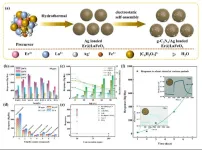
Ultra-high sensitivity for isoamyl alcohol based on g-C3N4 nanosheets incorporated Ag nanoparticles loaded Er0.05La0.95FeO3 heterojunctions with enhanced moisture resistance
Physics

Ultra-high sensitivity for isoamyl alcohol based on g-C3N4 nanosheets incorporated Ag nanoparticles loaded Er0.05La0.95FeO3 heterojunctions with enhanced moisture resistance

The volatile of isoamyl alcohol released from the stored wheat increased with the storage extending, making it one of the potential biomarkers for the early-stage of wheat mildew. Currently, there is a scarcity of chemiresistors for isoamyl alcohol detection, which suffer from low sensitivity. The team of material scientists led by Professor Chao Zhang reported that LaFeO3-based sensing materials demonstrated remarkable sensitivity for isoamyl alcohol (DOI: 10.1039/D3TA05718F, 10.1007/s11666-024-01740-4). However, it’s essential to note that there is still potential for lowering the optimal operating temperature and enhancing moisture ...

Read the release
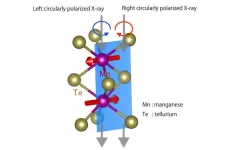
New approach to identifying altermagnetic materials
Physics

New approach to identifying altermagnetic materials

Magnetic materials have traditionally been classified as either ferromagnetic, like the decorative magnets on iron refrigerator doors that are seemingly always magnetic, or antiferromagnetic, like two bar magnets placed end-to-end with opposite poles facing each other, canceling each other out so that the material has no net magnetism. However, there appears to be a third class of magnetic materials exhibiting what in 2022 was dubbed altermagnetism. Microscopically, magnetism arises from a collection of tiny magnets associated with electrons, ...

Read the release
Physics

Implementing physical activity recommendations

An HPR abstract sessions at the 2024 EULAR congress looked specifically at harnessing the benefits of exercise in rheumatic and musculoskeletal diseases (RMD) – and the challenges to their practical implementation. Mohamed Saadi presented a systematic review examining barriers and facilitators affecting adherence to EULAR’s physical activity recommendations. Across 68 selected articles, 29 different themes were identified – 9 of which were social, 16 environmental, and 4 systemic. The five most frequently found themes were having supportive family and friends, a supportive health professional, followed by costs, and access or proximity to adapted and ...

Read the release
Physics

USC EdTech Accelerator collaborates with Intel

USC Rossier Education Technology Accelerator (USC EdTech Accelerator) announced a unique collaboration with Intel Corporation focused on supporting the use of technology for learning with a particular emphasis on supporting marginalized communities and AI. The Partnership The USC EdTech collaboration with Intel will provide free educational and technical assistance to learning-focused start-ups to increase the likelihood that they design viable, efficacious and scalable AI-enhanced solutions for learners. “We believe ...

Read the release

Uncovering the nature of emergent magnetic monopoles
Physics

Uncovering the nature of emergent magnetic monopoles

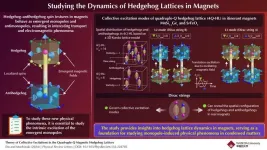
Magnetic monopoles are elementary particles with isolated magnetic charges in three dimensions. In other words, they behave as isolated north or south poles of a magnet. Magnetic monopoles have attracted continuous research interest since physicist Paul Dirac’s first proposal in 1931. However, real magnetic monopoles have not yet been observed and their existence remains an open question. On the other hand, scientists have discovered quasi-particles that mathematically behave as magnetic monopoles in condensed ...

Read the release
New plasma escape mechanism could protect fusion vessels from excessive heat
Physics

New plasma escape mechanism could protect fusion vessels from excessive heat

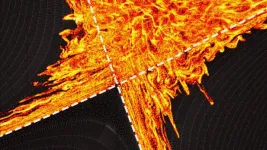
The furious exhaust heat generated by a fusing plasma in a commercial-scale reactor may not be as damaging to the vessel’s innards as once thought, according to researchers at the U.S. Department of Energy’s (DOE) Princeton Plasma Physics Laboratory (PPPL), Oak Ridge National Laboratory and the ITER Organization (ITER). “This discovery fundamentally changes how we think about the way heat and particles travel between two critically important regions at the edge of a plasma during fusion,” said PPPL Managing Principal Research Physicist Choongseok Chang, who led ...

Read the release
Switching nanomagnets using infrared lasers
Physics

Switching nanomagnets using infrared lasers

When molecules are irradiated with infrared light, they begin to vibrate due to the energy supply. For Andreas Hauser from the Institute of Experimental Physics at Graz University of Technology (TU Graz), this well-known phenomenon was the starting point for considering whether these oscillations could also be used to generate magnetic fields. This is because atomic nuclei are positively charged, and when a charged particle moves, a magnetic field is created. Using the example of metal phthalocyanines – ring-shaped, planar dye molecules – Andreas Hauser and his team have now calculated ...

Read the release
Bound-state electrons synergy over photochromic high-crystalline C₃N₅ nanosheets in enhancing charge separation for photocatalytic H₂ production
Physics

Bound-state electrons synergy over photochromic high-crystalline C₃N₅ nanosheets in enhancing charge separation for photocatalytic H₂ production

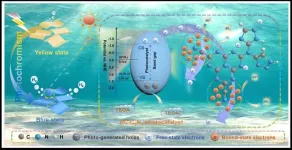
Photocatalytic water splitting, a sustainable energy strategy, utilizes solar energy to produce clean hydrogen fuel. While it offers a promising solution to the global energy crisis and environmental pollution, the slow kinetics of photogenerated electron-hole pairs result in low activity for most semiconductor materials, even with sacrificial agents. To that end, integrating electron traps and reactive centers could be a feasible strategy to enhance charge separation and catalytic performance. In ...

Read the release
The discovery of new turbulence transition in fusion plasmas
Physics

The discovery of new turbulence transition in fusion plasmas

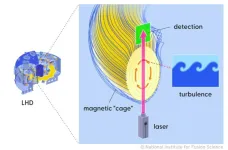
Background Fusion energy is that released when two light nuclei combine to form a single heavier one (nuclear fusion reaction). Fusion energy-based power generation (fusion power plant) uses the energy generated when deuterium and tritium combine to form helium. A nuclear fusion reaction does not produce carbon dioxide. In addition, since it is possible to extract deuterium and tritium from the sea water, fusion energy is regarded as a sustainable energy source, and research into its practical application has been progressing rapidly ...

Read the release
Transforming agriculture: engineered nanoparticles for plant gene regulation
Physics

Transforming agriculture: engineered nanoparticles for plant gene regulation

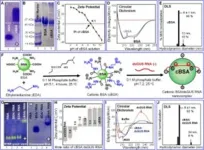
In a major advancement for plant biology and agriculture, researchers have developed a novel method for systemic gene silencing in plants using engineered dsRNA-protein nanoparticles. This technique, which rapidly characterizes gene functions, could revolutionize in planta gene editing. The new approach addresses the longstanding challenge of transporting RNA molecules across plant cell membranes, providing a faster, non-transgenic solution for enhancing crop productivity. Gene silencing in plants has faced significant challenges, primarily due to the difficulty of transporting RNA molecules across plant cell membranes and achieving systemic effects. Traditional genetic engineering ...

Read the release
Perturbations simplify the study of “super photons”
Physics

Perturbations simplify the study of “super photons”

Thousands of particles of light can merge into a type of “super photon” under suitable conditions. Physicists call such a state a photon Bose-Einstein condensate. Researchers at the University of Bonn have now shown that this exotic quantum state obeys a fundamental theorem of physics. This finding now allows one to measure properties of photon Bose-Einstein condensates which are usually difficult to access. The study has been published in the journal Nature Communications. If many atoms are cooled to a very low temperature confined in a small volume, they can become indistinguishable and behave like a single “super particle.” Physicists also call this ...

Read the release
Physics

SFU Physics collaboration pushes an information engine to its limits

The molecules that make up the matter around us are in constant motion. What if we could harness that energy and put it to use? Over 150 years ago Maxwell theorized that if molecules’ motion could be measured accurately, this information could be used to power an engine. Until recently this was a thought experiment, but technological breakthroughs have made it possible to build working information engines in the lab. With funding from the Foundational Questions Institute, SFU Physics professors John Bechhoefer and David Sivak teamed up to build an information engine and test its limits. Their work has greatly advanced ...

Read the release
Effect of Y substitution on the microstructure, magneto-optical, and thermal properties of (Tb1-xYx)3Al5O12 transparent ceramics
Physics

Effect of Y substitution on the microstructure, magneto-optical, and thermal properties of (Tb1-xYx)3Al5O12 transparent ceramics

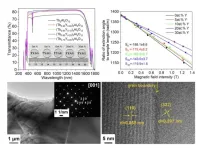
A team of material scientists led by Jiang Li from Shanghai Institute of Ceramics, Chinese Academy of Sciences, in Shanghai, China recently reported (Tb1-xYx)3Al5O12 magneto-optical ceramics with high optical quality. The optical transmittance, microstructure, Verdet constant, and thermal conductivity of (Tb1-xYx)3Al5O12 with different Y content were investigated in detail. It was found that Y2O3 can suppress the secondary phase and improve the optical quality of TAG ceramics. As optical quality occupies one ...

Read the release
A reverse particle grading strategy for design and fabrication of porous SiC ceramic supports with improved strength
Physics

A reverse particle grading strategy for design and fabrication of porous SiC ceramic supports with improved strength

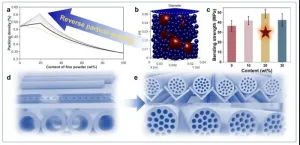
Since the brittle characteristics of porous ceramics, high mechanical strength is the most important prerequisite among the fundamental requirements especially when used as the supports. Particle grading strategy has been intensively extended in the preparation of porous ceramics to improve the mechanical strength. Unfortunately, this usually accompanies with the notable sacrifice in porosity. The trade-off between the mechanical strength and porosity is well recognized in the field of porous ceramics, and attempts have been increasingly devoted to overcome the issue. Recently, a research team ...

Read the release
Gold nanoparticles that selectively emit left-/right-handed light
Physics

Gold nanoparticles that selectively emit left-/right-handed light

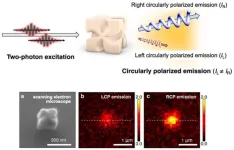
doi.org/10.1002/adom.202400699When chiral(1) gold nanoparticles(2) are irradiated with near-infrared(3) femtosecond pulses(4), visible emission of luminescence is observed. In this study, this luminescence was found to yield high selectivity for left- or right-handed circularly polarized(5) light, depending on the chirality of the nanoparticles, with a dissymmetry factor(6) of approximately 0.7. This finding suggests the potential to elevate various applications using circularly polarized light to practical levels. Abstruct The research group led by Project Assistant Professor Dr. Hyo-Yong AHN, ...

Read the release
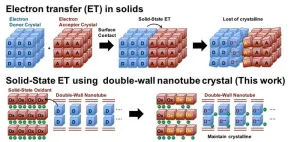
Towards next-gen functional materials: direct observation of electron transfer in solids
Physics

Towards next-gen functional materials: direct observation of electron transfer in solids

Electron transfer (ET) is a process in which an electron is transferred from one atom or molecule to another. ET is fundamental to electrochemical reactions with applications in many fields. Nanoscale ET, which involves the transfer of electrons in the range of 1–100 nanometers in solids is fundamental to the design of multifunctional materials. However, this process is not yet clearly understood. Nanotubes, nanomaterials with unique cylindrical nanostructures, offer a variety of ET properties that can be realized through electron and hole (vacant spaces left by electrons) injections into the nanotubes, making them a suitable candidate for studying nanoscale ET. Although ...

Read the release
New 3D-printed microscale photonic lantern open opportunities for spatial mode multiplexing
Physics

New 3D-printed microscale photonic lantern open opportunities for spatial mode multiplexing

Optical waves propagating through air or multi-mode fiber can be patterned or decomposed using orthogonal spatial modes, with far-ranging applications in imaging, communication, and directed energy. Yet the systems that perform these wavefront manipulations are cumbersome and large, restricting their utilization to high-end applications. The development of a Free-Standing Microscale Photonic Lantern Spatial Mode (De-)Multiplexer using 3D Nanoprinting, as revealed by a recent study, marks a significant advancement in photonic technology. This spatial multiplexer, characterized by its compactness, minimal footprint, and ability to directly print ...

Read the release
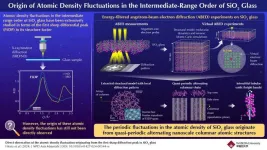
Understanding the atomic density fluctuations in silica glass
Physics

Understanding the atomic density fluctuations in silica glass

In materials science, particularly in the study of glasses, the intermediate range order (IRO) is one of the most intriguing research areas owing to its significant influence over the physical properties of glasses. The IRO refers to the structural arrangement of atoms beyond the short-range order (atomic arrangement within a few atomic distances) but shorter than the long-range order (arrangement patterns over macroscopic distances). Notably, for covalent glasses, the IRO is marked by atomic density fluctuations. Scattering experiments provide a distinct signature of ...

Read the release
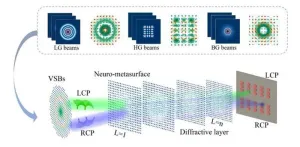
Sorting complex light beams: A breakthrough in optical physics
Physics

Sorting complex light beams: A breakthrough in optical physics

In the dynamic realm of optical physics, researchers are continually pushing the boundaries of how light can be manipulated and harnessed for practical applications. As reported in Advanced Photonics Nexus, a groundbreaking study from the Harbin Institute of Technology (HIT) introduces a method for sorting and distinguishing various types of vector structured beams (VSBs), promising significant advancements in optical communication and quantum computing. Unlike conventional light beams that propagate in simple, straight trajectories, VSBs are engineered to form complex, intricate patterns. These beams transmit ...

Read the release
Supervised physical exercise improves the wellbeing of carers of the elderly
Physics

Supervised physical exercise improves the wellbeing of carers of the elderly

Mainly older and middle-aged women, working class, with a very high prevalence of lower back pain and consequently possible psycho-affective problems and a poorer quality of life... This is the general profile of carers of the elderly. Who cares for the carer? This question or demand is not new in our society. Members of the Ageing On research group of the University of the Basque Country (UPV/EHU) asked themselves the following question: “How can we care for the carers?” The Ageing On group develops, ...

Read the release
New FRIB precision measurement program advances understanding of proton halos
Physics

New FRIB precision measurement program advances understanding of proton halos

In May 2022, the Facility for Rare Isotope Beams (FRIB) at Michigan State University (MSU), launched its precision measurement program. Staff from FRIB’s Low Energy Beam and Ion Trap (LEBIT) facility take high-energy, rare-isotope beams generated at FRIB and cool them to a lower energy state. Afterward, the researchers measure specific particles’ masses at high precision. The LEBIT team, led by Ryan Ringle, adjunct professor of physics at FRIB and in the MSU Department of Physics and Astronomy and senior ...

Read the release
Physics

Living bioelectronic device monitors and manages psoriasis in mice

Coupling skin bacteria-laden hydrogel and electronics, researchers have introduced the ABLE platform, a bioelectronics system that can deliver management and adaptive treatment of skin inflammation. They test this approach in a mouse model of psoriasis. The findings demonstrate the potential for clinical application of bioelectronics devices that promote drug-free therapeutic effects through a living hydrogel interface. “This amalgamation of living and synthetic components is a notable advance toward ...

Read the release
Physics

Physical and chemical properties of boiled oil: A traditional method of extracting oil from boiled olive fruits

In certain towns in Northern Jordan, ranchers bubble some portion of their olive natural product gathered before oil extraction to expand the amount of oil, . They perceive it as a way to get a beneficial mixed bag, as they guarantee, and to get extra medical advantages. Local peoples call this oil Bubbled oil (BO), and its cost is around 20% higher than virgin olive oil (VOO) created by a similar rancher. The speculation was thatpractice revolves around the belief that bubbling olive natural products might influence the nature of the created oil. Hence, ourResearchers from the Department of Nutrition and Food Technology, ...

Read the release
Apple versus donut: How the shape of a tokamak impacts the limits of the edge of the plasma
Physics

Apple versus donut: How the shape of a tokamak impacts the limits of the edge of the plasma

Harnessing energy from plasma requires a precise understanding of its behavior during fusion to keep it hot, dense and stable. A new theoretical model about a plasma’s edge, which can become unstable and bulge, brings the prospect of commercial fusion power closer to reality. “The model refines the thinking on stabilizing the edge of the plasma for different tokamak shapes,” said Jason Parisi, a staff research physicist at PPPL. Parisi is the lead author of three articles describing the model that were published in the journals Nuclear Fusion and Physics of Plasma. The primary paper focuses on a part of the plasma called ...

Read the release
Theory and experiment combine to shine a new light on proton spin
Physics

Theory and experiment combine to shine a new light on proton spin

NEWPORT NEWS, VA – Nuclear physicists have long been working to reveal how the proton gets its spin. Now, a new method that combines experimental data with state-of-the-art calculations has revealed a more detailed picture of spin contributions from the very glue that holds protons together. It also paves the way toward imaging the proton’s 3D structure. The work was led by Joseph Karpie, a postdoctoral associate in the Center for Theoretical and Computational Physics (Theory Center) at the U.S. Department of Energy's Thomas Jefferson National Accelerator Facility. He said that this decades-old mystery began with measurements of the sources of the proton’s spin in ...

Read the release
From the original Press-News collection. Issuers of news releases are responsible for the accuracy of their content.