THE ORIGINAL COLLECTION · SINCE 2010

Science
press releases.

Research announcements from universities, hospitals and scientific institutions. Explore the stories, people and discoveries behind the headlines.

Original publication datesPage 166
FIND A STORY

Find a past release.

Dates and source material belong to the original release.

Read our research explainers

Browse the collection · original publication order

Mere whiff of penguin poo pushes krill to take frantic evasive action
Science

Mere whiff of penguin poo pushes krill to take frantic evasive action

Imagine looking at the world through the stalked compound eyes of krill in the Southern Ocean. All of a sudden, a penguin appears like a voracious giant, streamlined like a torpedo, chasing and consuming thousands of krill at rapid speed. Now, researchers have shown that the water-borne smell of the poo of these flightless birds is enough to cause the krill to show escape behaviors. “Here we show for the first time that a small amount of penguin guano causes a sudden change in the feeding and swimming behaviors of Antarctic krill,” said Dr Nicole ...

Read the release


Science

Sharing mealtimes with others linked to better wellbeing

UCL Press Release Under embargo until Thursday 20th March, 00:01 UK time / Wednesday 19th March, 20:01 Eastern US time Not peer reviewed | Literature review & data analysis | People People who share more mealtimes with others are more likely to report higher levels of life satisfaction and wellbeing, finds research led by a UCL academic for the World Happiness Report. In chapter three of the report, Sharing Meals with Others, the researchers from UCL, University of Oxford, Harvard University and Gallup found that meal sharing as an indicator ...

Read the release
New study reveals high levels of fusarium mycotoxins in seized cannabis from Arizona and California
Science

New study reveals high levels of fusarium mycotoxins in seized cannabis from Arizona and California

A recent study conducted by researchers from Arizona State University has uncovered alarming levels of Fusarium mycotoxins in illicit cannabis samples seized in Arizona and California. The study found that 16% of the 118 samples tested positive for harmful mycotoxins, posing potential health risks to consumers. This groundbreaking research highlights the unregulated and dangerous nature of black-market cannabis. The study, led by Arizona State University professor Maxwell Leung, analyzed cannabis samples obtained between November 2023 and June 2024 from law enforcement seizures. The samples ...

Read the release
Science

Good vibrations: Scientists discover a groundbreaking method for exciting phonon-polaritons

NEW YORK, March 19, 2025 – Imagine a world where your phone stays cool no matter how long you use it, and it’s also equipped with tiny sensors that can identify dangerous chemicals or pollutants with unparalleled sensitivity and precision. Newly published research in the journal Nature demonstrates a new way of generating long-wave infrared and terahertz waves, which is an important step toward creating materials that can help realize these technological advances. The work, led by researchers at the Advanced Science Research Center at the CUNY Graduate Center (CUNY ASRC) paves the way for cheaper, smaller long-wave infrared light sources and more efficient device cooling. Phonon-polaritons ...

Read the release
Hyperuricemia: Current state and prospects
Science

Hyperuricemia: Current state and prospects

Hyperuricemia (HU) is a metabolic disorder characterized by elevated uric acid (UA) levels in the bloodstream, commonly diagnosed when UA levels exceed 420 µmol/L (7 mg/dL) in men and 350 µmol/L (6 mg/dL) in women. Unlike other mammals, humans lack uricase, an enzyme that breaks down UA into a more soluble form, making them more susceptible to HU. The condition is influenced by genetic, dietary, and environmental factors, with contributors including purine-rich foods, metabolic dysfunctions, obesity, and ...

Read the release
Science

Prescription stimulant use, misuse, and use disorder among US adults ages 18 to 64

About The Study: Although access to prescription stimulants is essential to addressing important clinical needs of patients with attention-deficit/hyperactivity disorder (ADHD), this study found that among U.S. adults ages 18 to 64 using prescription stimulants, one-fourth reported misuse, and nearly one-tenth had prescription stimulant use disorder. The findings may suggest potential progress in addressing the mental health care gap for middle-aged women and the need for evidence-based clinical guidance and training on benefits ...

Read the release
Pregnancy irreversibly remodels the mouse intestine
Science

Pregnancy irreversibly remodels the mouse intestine

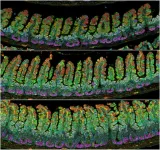
Researchers at the Francis Crick Institute have found that the small intestine grows in response to pregnancy in mice. This partially irreversible change may help mice support a pregnancy and prepare for a second. The organs of many female animals are remodelled by reproduction, but the underlying mechanisms behind the response of the gut to pregnancy have only recently begun to be investigated. For example, scientists previously identified that the fruit fly gut expands during reproduction. In research published today in Cell, the same team found that pregnant mice had a longer small intestine from just seven days ...

Read the release
Blocking gut cannabinoids may prevent leaky gut
Science

Blocking gut cannabinoids may prevent leaky gut

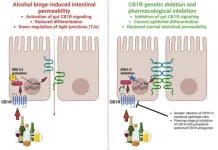
Heavy alcohol consumption is a leading cause of gastrointestinal diseases, with binge drinking linked to increased intestinal permeability—a condition commonly known as "leaky gut." Despite the significant health impact of alcohol-associated gastrointestinal disorders, effective pharmacological treatments remain limited. A new study published in eGastroenterology explores the role of gut cannabinoid receptor 1 (CB1R) in alcohol binge-induced intestinal permeability and reveals how its inhibition can help protect the gut barrier. The research, conducted by scientists from the National Institute ...

Read the release
Plant patch can detect stress signals in real time
Science

Plant patch can detect stress signals in real time

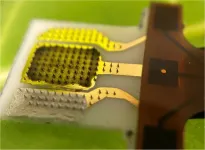
Environmental conditions can cause damaging stress to plants, posing challenges for home gardeners and farmers. Therefore, early detection — before leaves visibly discolor, wilt or wither — is crucial. Now, researchers reporting in ACS Sensors have created a wearable patch for plants that quickly senses stress and relays the information to a grower. The electrochemical sensor attaches directly to live plant leaves and monitors hydrogen peroxide, a key distress signal. Pests, drought, extreme temperatures and infections all cause stress ...

Read the release
Science

Euclid opens data treasure trove, offers glimpse of deep fields

Covering a vast sky area in three mosaics, the data release also includes numerous galaxy clusters, active galactic nuclei and transient phenomena. This first survey data unlocks a treasure trove of information for scientists to dive into and tackle some of the most intriguing questions in modern science. Euclid enables us to explore our cosmic history and the invisible forces shaping our universe. With its exceptionally large field of view for a space telescope, capturing an area 240 times larger in a single shot than the Hubble Telescope, Euclid delivers outstanding image quality in both the visible and infrared light spectrum. Crucial contributions from Germany Euclid is particularly ...

Read the release
Pacific oyster may colonize the Baltic Sea
Science

Pacific oyster may colonize the Baltic Sea

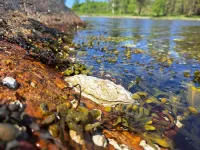
The invasive Pacific oyster have adapted to life in less salty seas and are reproducing off the coast of Skåne, although having been there for less than ten years. This discovery by researchers from the University of Gothenburg suggests that the oysters could colonise the western Baltic Sea in the future. Pacific oysters were imported to oyster farms in Europe in the 1970s to replace native oysters whose stocks had collapsed. But they quickly began to spread from the farms, reaching northern ...

Read the release
Science

E-cigarettes linked to lower cardiac risks compared to tobacco cigarettes in people with HIV

Electronic cigarettes use may pose lower cardiovascular risks in people living with HIV compared to tobacco cigarette use, new UCLA-led research shows. The study, published in JAHA, uses a novel laboratory model to examine the early stages of atherogenesis—the buildup of fats and cholesterol in the arteries. The findings suggest that electronic cigarettes (ECs) have a lower likelihood of causing changes associated with atherogenesis, compared to tobacco cigarettes (TCs), among those living with HIV. While smoking has dropped to all-time low levels in the U.S., this hasn’t been the case for people living ...

Read the release
Science

Is the “honesty” of flowering plants to their pollinators genetic?

Flowers can produce showy displays that appeal to pollinating insects or animals, but some “cheat” by enticing pollinators but not rewarding them with nectar. Research in New Phytologist indicates that the tendency of flowers to be “honest” and reward pollinators with nectar is partly genetic, meaning that it can be passed down through generations. In the study, researchers investigated floral honesty in the Mexican endemic Turnera velutina (Passifloraceae), analyzing multiple genetically distinct plants ...

Read the release
Science

Researchers reveal role of zeolite zcid site accessibility in syngas conversion

Zeolites and zeotypes are widely used in the energy and chemical industries due to their unique pore structures and excellent shape-selective catalytic properties. However, these inherent advantages also lead to diffusion limitations, preventing guest molecules from effectively accessing internal active sites and thereby hindering catalytic efficiency. In a study published in Angewandte Chemie International Edition, a research group led by Prof. JIAO Feng and Prof. PAN Xiulian from the Dalian Institute of Chemical Physics (DICP) of the Chinese Academy of Sciences has revealed how the accessibility of ...

Read the release
Science

Gender gap in teenage depression is twice as large in London than in Tokyo, new study finds

Published in The Lancet Child & Adolescent Health, the study aimed to provide robust insights into adolescent mental health trajectories in two different cultural contexts by comparing large samples of 11 to 16 years olds in London and Tokyo over time. The two studies are the Tokyo Teen Cohort (TTC) and the Resilience Ethnicity and AdolesCent Mental Health (REACH) cohorts from South London. Both groups collected data in the period 2014 to 2020 and at three different time points as the teenagers grew older. Researchers used the Short Mood and Feelings ...

Read the release
Science

Increasing fruit, fiber, dairy and caffeine linked to lower risk of tinnitus

Increased consumption of fruit, dietary fibre, dairy products and caffeine may be associated with a reduced risk of tinnitus (ringing in the ears), suggests an analysis of the available evidence, published in the open access journal BMJ Open. The researchers stress that their findings can’t establish a direct (causal) relationship and should be interpreted with care because of the low quality of the evidence. But they say possible reasons may involve the protective effects of these diets on blood vessels and nerves, as well as their anti-inflammatory ...

Read the release
Science

Does BMI become useless as we age?

Body mass index (BMI) is key method for measuring a person’s weight status, and defining if they have normal weight, overweight, or obesity. However, new research to be presented at this year’s European Congress on Obesity (ECO 2025, Malaga, Spain, 11-14 May) shows that people with obesity at similar BMIs display significant differences in body composition in different body compartments according to their age group, such as higher body fat especially in central regions and lower muscle mass ...

Read the release
New platform lets anyone rapidly prototype large, sturdy interactive structures
Science

New platform lets anyone rapidly prototype large, sturdy interactive structures

CAMBRIDGE, MA – Prototyping large structures with integrated electronics, like a chair that can monitor someone’s sitting posture, is typically a laborious and wasteful process. One might need to fabricate multiple versions of the chair structure via 3D printing and laser cutting, generating a great deal of waste, before assembling the frame, grafting sensors and other fragile electronics onto it, and then wiring it up to create a working device. If the prototype fails, the maker will likely have no choice but to discard it and go back to the drawing board. MIT researchers have come up with a better way to iteratively design large and sturdy ...

Read the release
Thorny skates come in snack and party sizes. After a century of guessing, scientists now know why.
Science

Thorny skates come in snack and party sizes. After a century of guessing, scientists now know why.

When Jeff Kneebone was a college student in 2002, his research involved a marine mystery that has stumped curious scientists for the last two decades. That mystery had to do with thorny skates in the North Atlantic. In some parts of their range, individuals of this species come in two distinct sizes, irrespective of sex, and no one could figure out why. At the time, neither could Kneebone. In a new study, Kneebone and researchers from the Florida Museum of Natural History say they’ve finally found an answer. And it’s all thanks to COVID-19. People have known about the size discrepancy in thorny skates for nearly a century, but it became critically ...

Read the release
Science

When did human language emerge?

It is a deep question, from deep in our history: When did human language as we know it emerge? A new survey of genomic evidence suggests our unique language capacity was present at least 135,000 years ago. Subsequently, language might have entered social use 100,000 years ago. Our species, Homo sapiens, is about 230,000 years old. Estimates of when language originated vary widely, based on different forms of evidence, from fossils to cultural artifacts. The authors of the new analysis took a different approach. ...

Read the release
Illinois study: Extreme heat impacts dairy production, small farms most vulnerable
Science

Illinois study: Extreme heat impacts dairy production, small farms most vulnerable

URBANA, Ill. – Livestock agriculture is bearing the cost of extreme weather events. A new study from the University of Illinois Urbana-Champaign explores how heat stress affects U.S. dairy production, finding that high heat and humidity lead to a 1% decline in annual milk yield. Small farms are hit harder than large farms, which may be able to mitigate some of the effects through management strategies. “Cows are mammals like us, and they experience heat stress just like we do. When cows are exposed to extreme heat, it can have a range of negative physical effects. There is an increased risk of infection, restlessness, and decreased ...

Read the release
New chromosome barcode system unveils genetic secrets of alfalfa
Science

New chromosome barcode system unveils genetic secrets of alfalfa

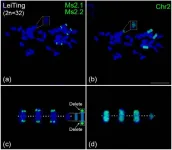
In a recent study, scientists have developed a revolutionary chromosome identification system for alfalfa, one of the world's most economically vital forage crops. Leveraging an advanced Oligo-fluorescence in situ hybridization (FISH) barcode technique, researchers successfully mapped and identified all chromosomes in alfalfa, uncovering unexpected chromosomal anomalies, including aneuploidy and large segment deletions. This breakthrough not only enhances molecular cytogenetics but also sheds light on the genetic stability ...

Read the release
Natural insect predators may serve as allies in spotted lanternfly battle
Science

Natural insect predators may serve as allies in spotted lanternfly battle

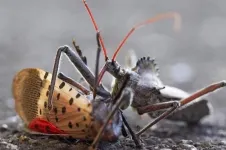
UNIVERSITY PARK, Pa. — Insect predators found in the United States could help keep spotted lanternfly populations in check while potentially reducing reliance on chemical control methods, according to a new study conducted by researchers at Penn State. Led by entomologists in Penn State’s College of Agricultural Sciences and published in Arthropod-Plant Interactions, the study evaluated the effectiveness of various insects in potentially controlling spotted lanternfly populations. The invasive pest, first detected in the United States in 2014, has spread across at least 18 states, causing significant damage to vineyards, orchards ...

Read the release
Science

Zhou conducting GPU modeling research

Keren Zhou, Assistant Professor, Computer Science, College of Engineering and Computing (CEC), received funding for: “GPU Modeling Research of Smart Modeling and Simulation for HPC (SMASH).” Zhou and his collaborators will complete research and development tasks. Zhou received $65,648 from Brookhaven National Laboratory on a subaward from the U.S. Department of Energy for this research. Funding began in Feb. 2025 and will end in late Sept. 2025. ...

Read the release
Leafcutter ants recognize and fight pathogen even 30 days after initial contamination, study shows
Science

Leafcutter ants recognize and fight pathogen even 30 days after initial contamination, study shows

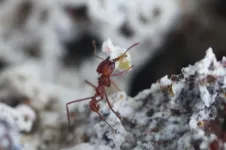
A study conducted by researchers from São Paulo State University (UNESP), in Brazil, and collaborators shows that lemon leafcutter ants (Atta sexdens) exhibit behaviors that go beyond so-called social immunity, i.e. the ability to detect pathogens and try to get rid of them for the benefit of the colony. In an article published in the journal Proceedings of the Royal Society B, scientists report that these insects are able to recognize a pathogenic fungus they have already been exposed ...

Read the release
From the original Press-News collection. Issuers of news releases are responsible for the accuracy of their content.