THE ORIGINAL COLLECTION · SINCE 2010

Science
press releases.

Research announcements from universities, hospitals and scientific institutions. Explore the stories, people and discoveries behind the headlines.

Original publication datesPage 188
FIND A STORY

Find a past release.

Dates and source material belong to the original release.

Read our research explainers

Browse the collection · original publication order

Borrowing nature’s blueprint: How scientists replicated bone marrow
Science

Borrowing nature’s blueprint: How scientists replicated bone marrow

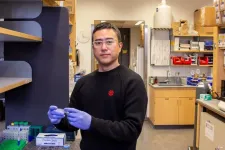
Hidden within our bones, marrow sustains life by producing billions of blood cells daily, from oxygen-carrying red cells to immune-boosting white cells. This vital function is often disrupted in cancer patients undergoing chemotherapy or radiation, which can damage the marrow and lead to dangerously low white cell counts, leaving patients vulnerable to infection. Now, researchers at the University of Pennsylvania School of Engineering and Applied Science (Penn Engineering), Perelman School of Medicine (PSOM) and the Children’s Hospital of Philadelphia (CHOP) have developed a platform that emulates human marrow’s ...

Read the release
New ‘Matchless’ grass variety yields high seed count without need for field burning
Science

New ‘Matchless’ grass variety yields high seed count without need for field burning

PULLMAN, Wash. — A new variety of Kentucky bluegrass has been commercially released by researchers at Washington State University. “Matchless,” developed from another bluegrass variety called “Kenblue,” offers seed growers higher yields without the harmful impacts of burning. It also provides consumers with the option of a more environmentally friendly grass. For several decades in the 1900s, Kentucky bluegrass growers burned fields to remove stubble after harvest, reduce thatch buildup, prevent disease, and for a number ...

Read the release
Science

Propranolol may reduce ischemic stroke risk in women with migraines

Research Highlights: Propranolol, a beta blocker medication used for treating high blood pressure and preventing migraines, may lower ischemic stroke risk in women who experience migraines frequently. In the large analysis of more than 3 million medical records, the protective effect of propranolol was stronger for ischemic stroke compared to other stroke types and in women with migraine without aura. However, it did not have the same effect on men. Note: The study featured in this news release is a research abstract. Abstracts presented at the American Heart Association’s scientific ...

Read the release
Science

Stroke may increase risk of anxiety, depression and more in children

Research Highlights: Children who have had a stroke may be at higher risk for developing anxiety, depression and related physical symptoms such as headaches and stomach aches than their peers. Among the study participants, the most common age for emotional challenges in young stroke survivors was around age 9. Note: The study featured in this news release is a research abstract. Abstracts presented at the American Heart Association’s scientific meetings are not peer-reviewed, and the findings are considered preliminary until published as full manuscripts in a peer-reviewed scientific ...

Read the release
Science

‘Sleep hygiene’: How FIFO workers can get a better night's sleep

‘Sleep hygiene’: How FIFO workers can get a better night's sleep Better sleep hygiene could see fly-in, fly-out (FIFO) mining shift workers get a better night’s sleep, new research from Edith Cowan University (ECU) has shown. Sleep hygiene includes habits and sleep environment factors that can positively influence sleep, including a healthy diet, physical exercise and limited screen time. While these all seem obvious, the remote location of mine sites across Australia and the ...

Read the release
AI-based pregnancy analysis discovers previously unknown warning signs for stillbirth and newborn complications
Science

AI-based pregnancy analysis discovers previously unknown warning signs for stillbirth and newborn complications

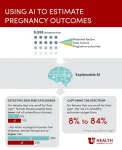
###EMBARGOED BY BMC PREGNANCY AND CHILDBIRTH UNTIL 1AM GMT JAN 30 / 8PM ET JAN 29### A new AI-based analysis of almost 10,000 pregnancies has discovered previously unidentified combinations of risk factors linked to serious negative pregnancy outcomes, including stillbirth. The study also found that there may be up to a tenfold difference in risk for infants who are currently treated identically under clinical guidelines. Nathan Blue, MD, the senior author on the study, says that the AI model the researchers generated helped identify a “really unexpected” combination of factors associated with higher risk, and that the model is an important step ...

Read the release
Science

Antidepressants reduce anxiety, but long-term impact remains unclear

A new Cochrane review confirms that antidepressants effectively reduce symptoms of generalized anxiety disorder (GAD) under trial conditions, although there is limited data on long-term usage. GAD affects millions of people worldwide and is characterized by excessive worry about everyday issues. Antidepressants, particularly selective serotonin reuptake inhibitors (SSRIs) and serotonin-norepinephrine reuptake inhibitors (SNRIs), are recognized treatments for GAD, recommended by many national bodies including the UK’s National Institute for Health and Care Excellence. However, misconceptions ...

Read the release
Science

Fresh embryo transfer may be better for women with low chance of IVF success

Fresh embryo transfer may be a better option than use of frozen embryos for women with a low chance of having a healthy baby by vitro fertilisation (IVF), suggests a trial from China published by The BMJ today. The researchers say their findings do not support the routine use of the freeze-all strategy in women with low prognosis of IVF treatment success, which can be due to older age, low quantity or quality of eggs, or certain underlying conditions. IVF has revolutionised infertility treatment and a strategy of freezing all suitable embryos before transfer (freeze-all strategy) is now a routine part of the treatment to help prevent ...

Read the release
Science

First-of-its-kind research identifies beneficial prenatal vitamins to reduce risk of infant death

Dongqing Wang, an assistant professor of Global and Community Health at George Mason’s College of Public Health, is pioneering research in prenatal nutritional interventions. His latest report identifies prenatal supplements that reduce health risks to small and vulnerable babies. This research was published in the prestigious The Lancet Global Health journal and funded by the Bill and Melinda Gates Foundation. Wang found that compared to folic acid and iron alone, a multiple micronutrient supplement ...

Read the release
Science

The benefits of speaking multiple languages

Encouraging bilingualism at home can have many cognitive benefits, which may be particularly helpful to kids with autism spectrum disorder (ASD), new research from the University of Miami College of Arts and Sciences indicates. A team of researchers led by Celia Romero, a graduate student in clinical psychology, along with associate professor Lynn Perry, professor Michael Alessandri, and former University professor Lucina Uddin, explored the role of bilingualism in 112 children, including typically developing children and children with autism, between the ages of 7 to 12 years old. Overall, they found that children who spoke two or more languages often had stronger executive ...

Read the release
Science

Topical mupirocin lowers lupus inflammation

Systemic lupus erythematosus, more commonly known as lupus, has a variety of symptoms and room for improvement when it comes to treatment. Cutaneous lupus erythematosus is a common manifestation of systemic lupus erythematosus. The condition is characterized by rashes on various parts of the body including the face and scalp, hair loss and scarring of the skin. The rashes are caused by inflammation from the immune system fighting the body. The standard treatment for cutaneous lupus erythematosus is using immunosuppressants and biologic drugs to reduce inflammation. While ...

Read the release
Uber, Lyft or transit? The answer appears to align with how people value their time
Science

Uber, Lyft or transit? The answer appears to align with how people value their time

Research led by the University of Michigan arrived at a surprisingly unsurprising result while assessing the sustainability gap between public transit and services like Uber and Lyft, formally known as transport network companies or TNCs. With data collected by the city of Chicago, the researchers studied people's use of TNCs over transit, allowing the team to put a value on the time riders saved with their choices. The median value of that number, about $34 per hour, was virtually identical to the Chicago region’s median hourly wage. "I was a bit surprised that our median ...

Read the release
Science

A window into the future of Amazonia

It’s a place where few living things can survive in the water. Deep in the world’s largest rainforest, there is a boiling river. Found in eastern central Peru, it is a small tributary that eventually leads to the Amazon River. Heated by cracks in the Earth’s crust, at its warmest spots, the water can reach 200 degrees Fahrenheit, an inhospitable environment with air temperatures hotter than anywhere else in the Amazon. But the steamy river, known locally as “Shanay-Timpishka,” which translates as “boiled with the heat of the ...

Read the release
Working dogs take a day to adjust to Daylight Savings Time, but pets are more flexible
Science

Working dogs take a day to adjust to Daylight Savings Time, but pets are more flexible

Working dogs take a day to adjust to the change in routine caused by Daylight Savings Time, whereas pet dogs and their owners seem to be unaffected, according to a study publishing January 29, 2025 in the open-access journal PLOS One by Lavania Nagendran, Ming Fei Li and colleagues at the University of Toronto, Canada. Daylight Savings Time (DST) is used by many countries to maintain the alignment between daylight hours and human activity patterns, by setting clocks forward one hour in the spring and back one hour in the autumn. Previous research has shown that DST can disrupt ...

Read the release
Reviews of movies with female- versus male-dominated casts found to contain more sexist language
Science

Reviews of movies with female- versus male-dominated casts found to contain more sexist language

In a new linguistic analysis, reviews of movies with female-dominated casts were found to have significantly higher levels of sexism than reviews of movies with male-dominated casts. Jad Doughman and Wael Khreich of the American University of Beirut, Lebanon, present these findings in the open-access journal PLOS One, on January 29, 2025. Prior research suggests that negative movie reviews can affect actors’ finances, career paths, and mental well-being, while also influencing the broader media landscape. However, studies of gender bias in reviews have traditionally relied on movie ratings or box-office ...

Read the release
Women exercising in gyms often face barriers including body image and harassment
Science

Women exercising in gyms often face barriers including body image and harassment

When exercising in gyms, women face barriers across various domains, including physical appearance and body image, gym attire, the physical gym environment, and interactions with others, according to a study published January 29, 2025, in the open-access journal PLOS One by Emma Cowley from the SHE Research Centre, TUS, Ireland, and Jekaterina Schneider from the University of the West of England, U.K. Exercise significantly improves physical, mental, and psychosocial health. Recent research indicates that women who engage in regular exercise experience greater health benefits than men, including lower incidence of all-cause mortality and reduced ...

Read the release
New microscopy technique reveals dynamic Escherichia coli membrane stiffness
Science

New microscopy technique reveals dynamic Escherichia coli membrane stiffness

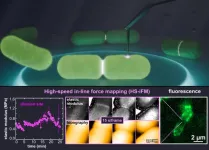
Light and electron microscopy have distinct limitations. Light microscopy makes it difficult to resolve smaller and smaller features, and electron microscopy resolves small structures, but samples must be meticulously prepared, killing any live specimens. Atomic force microscopy (AFM) is a technique originally developed to assess the physical and mechanical properties of materials at extremely high resolutions, but the imaging speeds aren’t fast enough (e.g. several minutes per frame) to capture relevant data for living biological samples. In contrast, another method, high-speed AFM (HS-AFM), is fast but cannot measure mechanical properties. Understanding ...

Read the release
Bad hair bears! Greasy hair gives polar bears fur with anti-icing properties
Science

Bad hair bears! Greasy hair gives polar bears fur with anti-icing properties

An international team of scientists has discovered the anti-icing secret of polar bear fur – something that allows one of the planet’s most iconic animals to survive and thrive in one of its most punishing climates. That secret? Greasy hair. After some polar sleuthing, which involved scrutiny of hair collected from six polar bears in the wild, the scientists homed in on the hair “sebum” (or grease) as the all-important protectant. This sebum, which is made up of cholesterol, diacylglycerols, and fatty acids, makes it very hard for ice to attach to their fur. While this finding ...

Read the release
Science

New tool can detect fast-spreading SARS-COV-2 variants before they take off

By analysing millions of viral genome sequences from around the world, a team of scientists, led by the Peter Doherty Institute for Infection and Immunity (Doherty Institute) and the University of Pittsburgh, uncovered the specific mutations that give SARS-CoV-2 a ‘turbo boost’ in its ability to spread. “Among thousands of SARS-CoV-2 mutations, we identified a small number that increase the virus’ ability to spread,” said Professor Matthew McKay, a Laboratory Head at the Doherty Institute and ARC Future Fellow in the Department of Electrical and Electronic Engineering at the University of Melbourne, and co-lead author of the ...

Read the release
Landmark genetic study: Fresh shoots of hope on the tree of life
Science

Landmark genetic study: Fresh shoots of hope on the tree of life

In the most comprehensive global analysis of genetic diversity ever undertaken, an international team of scientists has found that the genetic diversity is being lost across the globe but that conservation efforts are helping to safeguard species. The landmark study, published in the pre-eminent scientific journal Nature, was led by Associate Professor Catherine Grueber from the School of Life and Environmental Sciences and a team of researchers from countries including the UK, Sweden, Poland, Spain, Greece and China. The data spans more than three decades (from 1985-2019) and looks at 628 species of animals, plants and fungi across all terrestrial ...

Read the release
Discovery of a unique drainage and irrigation system that gave way to the “Neolithic Revolution” in the Amazon
Science

Discovery of a unique drainage and irrigation system that gave way to the “Neolithic Revolution” in the Amazon

A pre-Columbian society in the Amazon developed a sophisticated agricultural engineering system that allowed them to produce maize throughout the year, according to a recent discovery by a team of researchers from the Institute of Environmental Science and Technology (ICTA-UAB) and the Department of Prehistory at the Universitat Autònoma de Barcelona, (Spain); the Universities of Exeter, Nottingham, Oxford, Reading and Southampton (UK); the University of São Paulo (Brazil) and Bolivian collaborators. This finding contradicts previous theories that dismissed the possibility of intensive monoculture agriculture in the region. The study, published today ...

Read the release
Pathogenic variants in retinoblastoma suggest a potential gain-of-function mutation
Science

Pathogenic variants in retinoblastoma suggest a potential gain-of-function mutation

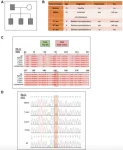
“In other words, the pR552* mutant behaves more like a gain-of-function or oncogenic mutant. Indeed, a family carrying this mutation showed complete penetrance and high expressivity.” BUFFALO, NY- January 29, 2025 – A new research paper was published in Volume 16 of Genes & Cancer on January 20, 2025, entitled, “Analysis of pathogenic variants in retinoblastoma reveals a potential gain of function mutation.” Researchers from Instituto de Física Universidad Autónoma de San Luis Potosí and Hospital Central “Ignacio Morones Prieto” have found a new way a gene mutation might contribute ...

Read the release
Improving the way flash memory is made
Science

Improving the way flash memory is made

To store ever more data in electronic devices of the same size, the manufacturing processes for these devices need to be studied in greater detail. By investigating new approaches to making digital memory at the atomic scale, researchers engaged in a public-private partnership are aiming to address the endless demand for denser data storage. One such effort has focused on developing the ideal manufacturing process for a type of digital memory known as 3D NAND flash memory, which stacks data vertically to increase storage density. The narrow, deep holes required for this type of memory can be etched ...

Read the release
Science

Better nurse staffing linked to fewer C-sections

Labor and delivery units that are adequately staffed by nurses have lower cesarean birth rates, according to new research published in the journal Nursing Outlook. “Our findings highlight how crucial nurse staffing is for optimal maternal outcomes,” said Audrey Lyndon, the Vernice D. Ferguson Professor in Health Equity and executive vice dean at NYU Rory Meyers College of Nursing. C-sections account for nearly a third of births in the US and are the most common surgery performed in hospitals. While C-sections can be lifesaving and some are necessary for the health of the mother and child, the surgery carries more risks and a longer recovery ...

Read the release
Study reveals how microbes help detoxify our atmosphere
Science

Study reveals how microbes help detoxify our atmosphere

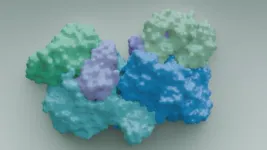
Melbourne researchers have discovered crucial new information about how microbes consume huge amounts of carbon monoxide (CO) and help reduce levels of this deadly gas. Over two billion tonnes of carbon monoxide are released into the atmosphere globally each year. Microbes consume about 250 million tonnes of this, reducing CO to safer levels. The Monash University-led Study, published in Nature Chemical Biology, reveals at an atomic level how microbes consume CO present in the atmosphere. They use a special enzyme, called the CO dehydrogenase, ...

Read the release
From the original Press-News collection. Issuers of news releases are responsible for the accuracy of their content.