THE ORIGINAL COLLECTION · SINCE 2010

Science
press releases.

Research announcements from universities, hospitals and scientific institutions. Explore the stories, people and discoveries behind the headlines.

Original publication datesPage 204
FIND A STORY

Find a past release.

Dates and source material belong to the original release.

Read our research explainers

Browse the collection · original publication order

Butchered bones suggest violent ‘othering’ of enemies in Bronze Age Britain
Science

Butchered bones suggest violent ‘othering’ of enemies in Bronze Age Britain

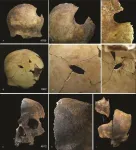
EMBARGOED UNTIL 00:01 UK TIME, Monday 16 December 2024 (19:01 ET Sunday 15 December 2024) Volume 99 No 403 February 2025 We aim to have all papers online by 10:00 UK time. More images and an embargoed preview of the paper can be found here: https://drive.google.com/drive/folders/1yMsUjDe7xuLWDCNgPH0XIX6dZtHkX2_c?usp=sharing Analysis of the remains of at least 37 individuals from Early Bronze Age England finds they were killed, butchered, and probably consumed before being thrown down a 15m-deep shaft. It is the largest-scale ...

Read the release

$791,000 grant to support future nematode-resistant soybean varieties
Science

$791,000 grant to support future nematode-resistant soybean varieties

By Jenifer Fouch University of Arkansas System Division of Agriculture Arkansas Agricultural Experiment Station FAYETTEVILLE, Ark. — Causing an estimated $160 billion in damages globally each year, one of agriculture’s biggest enemies is too small to see without a microscope. Plant-parasitic nematodes feed on agricultural crops at their roots, reducing yields and profits for producers. In the U.S., soybean producers lose about 11 percent of their crops to soybean diseases, including the southern root-knot nematode, Meloidogyne incognita, or SRKN as it’s commonly known. The nematode forms abnormal growths — or knots — in soybean ...

Read the release
Science

Buried landforms reveal North Sea’s ancient glacial past

An international team of researchers, including a glaciologist at Newcastle University, UK, has discovered remarkably well-preserved glacial landforms buried almost 1 km beneath the North Sea. The team used sound wave, known as seismic, data to reveal Ice Age landforms buried beneath almost 1 km of mud in the North Sea. The results, reported in the journal Science Advances, suggest that the landforms were produced about 1 million years ago, when an ice sheet centred over Norway extended towards the British Isles. This is important because the timing of this ice advance corresponds to a period of global cooling called the Mid-Pleistocene Transition. Glacial ...

Read the release
Science

Intermittent fasting inhibits hair regeneration in mice

Intermittent fasting has proven benefits for metabolic health, but a new study shows that it could slow hair growth—at least in mice. Researchers report December 13 in the Cell Press journal Cell that mice subjected to intermittent fasting regimes showed improved metabolic health but slower hair regeneration compared to mice with 24/7 access to food. A similar process might occur in humans, based on a small clinical trial that the team also conducted, but it’s likely to be less severe since humans have a much slower metabolic rate and different hair growth patterns compared to mice. “We don't want to scare people away ...

Read the release
Science

The genetic basis of fertility, family and longevity

Led by researchers from the University of Oxford’s Leverhulme Centre for Demographic Science and the University of Iceland, the review explores how genetic variations can explain differences in reproductive health and longevity. The study provides the most comprehensive review of male and female genetic discoveries of reproductive traits to date, and provides new insights into how our DNA affects when we have children, the timing of menopause, and even how that is connected to how long we live. Genes at the heart of reproduction Using the GWAS Catalog, an online database of Genome Wide Association Studies (GWAS), the researchers identified ...

Read the release
Science

MLB adds lifesavers to the chain of survival at annual Winter Meetings

DALLAS, December 13, 2024 — The American Heart Association and Major League Baseball (MLB) brought cardiopulmonary resuscitation (CPR) and automated external defibrillator (AED) training to the League’s annual Winter Meetings held in Dallas this week. Attendees from all 30 Major League Clubs and many organizations across the baseball industry learned lifesaving skills needed to respond confidently and capably in the event of a cardiac emergency. According to American Heart Association data, 9 out of ...

Read the release
How chemical reactions deplete nutrients in plant-based drinks
Science

How chemical reactions deplete nutrients in plant-based drinks

Over the last decade, the global market for plant-based beverages has seen remarkable growth, with oat, almond, soy and rice drinks emerging as popular alternatives to cow’s milk in coffee and oatmeal during this time. One of the likely reasons for millions of liters of plant-based drinks ending up in the shopping baskets of consumers is that their climate footprint is often lower than that of cow’s milk. But consumers would be mistaken if they considered plant-based beverages healthier than cow’s milk. This is highlighted in a new study conducted by the University of Copenhagen in collaboration with the University ...

Read the release
The CNIC presents iFlpMosaics, an innovative genetic toolkit for the study of gene function
Science

The CNIC presents iFlpMosaics, an innovative genetic toolkit for the study of gene function

A team at the Centro Nacional de Investigaciones Cardiovasculares (CNIC) has developed a comprehensive set of innovative genetic tools and mouse lines, called iFlpMosaics, designed to enhance the study of gene function and its implications in health and disease. The groundbreaking study, led by Dr. Rui Benedito and published in Nature Methods, presents a pioneering approach that overcomes critical limitations of existing methods for generating genetic mosaics. These innovations will enable scientists to more accurately investigate the effects of somatic mutations on cellular biology and disease. The study highlights the iFlpMosaics toolkit's utility across different experimental setups, ...

Read the release
M87's powerful jet unleashes rare gamma-ray outburst
Science

M87's powerful jet unleashes rare gamma-ray outburst

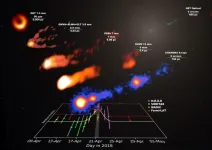
Also known as Virgo A or NGC 4486, M87 is the brightest object in the Virgo cluster of galaxies, the largest gravitationally bound type of structure in the universe. It came to fame in April 2019 after scientists from EHT released the first image of a black hole in its center. Led by the EHT multi wavelength working group, a study published in Astronomy and Astrophysics Journal presents the data from the second EHT observational campaign conducted in April 2018, involving over 25 terrestrial and orbital telescopes. The authors report the first observation of a high-energy gamma-ray flare in over a decade from the supermassive black hole M87, based on nearly ...

Read the release
Giraffes really struggle with slopes
Science

Giraffes really struggle with slopes

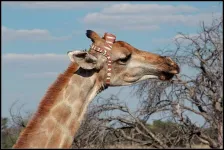
New research finds that giraffes much prefer flat terrain and do not traverse slopes of more than 20°, which severely limits the areas in, and outside, protected reserves they can access. The findings, which is are yet to be published, will be presented at the British Ecological Society’s (BES) Annual meeting in Liverpool on the 13th December. A new study analysing the movements of 33 GPS collared giraffes in South Africa has found that they avoid steep terrain and are unable to navigate slopes with a gradient of more than 20° , most likely due to the energy required and the risk of falling. The researchers from the University of Manchester ...

Read the release
Science

Study sheds light on the origin of the genetic code

Despite awe-inspiring diversity, nearly every lifeform – from bacteria to blue whales – shares the same genetic code. How and when this code came about has been the subject of much scientific controversy. Taking a fresh approach at an old problem, Sawsan Wehbi, a doctoral student in the Genetics Graduate Interdisciplinary Program at the University of Arizona, discovered strong evidence that the textbook version of how the universal genetic code evolved needs revision. Wehbi is the first author of a study published in the journal PNAS suggesting the order with which amino acids – the code's building blocks – were recruited is at odds with ...

Read the release
Illinois historian says Midwest played a crucial role in Black freedom movements worldwide
Science

Illinois historian says Midwest played a crucial role in Black freedom movements worldwide

CHAMPAIGN, Ill. — The Midwest played a central role in the growth of Black freedom movements in the 20th century. It was a key site for incubating and expanding the ideas of political activist Marcus Garvey, not only in the U.S., but globally, said University of Illinois Urbana-Champaign professor of African American studies and history Erik S. McDuffie. McDuffie examined the influence of Garvey and the importance of the Midwest in the growth of Black internationalism and radicalism in his new book, “The Second Battle for Africa: Garveyism, the U.S. Heartland and Global Black Freedom.” McDuffie ...

Read the release
New research finds how fighting female flies focus on their foes
Science

New research finds how fighting female flies focus on their foes

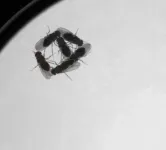
In most research labs, the scientists are on the same page about why they’re pursuing a research project. But the Rubin Lab at HHMI's Janelia Research Campus isn’t an ordinary research lab. The lab is examining how aggression affects vision in female fruit flies, but Janelia Senior Group Leader Gerry Rubin doesn’t care too much about the specific answer. Instead, he simply wants to see if the neuroscience research tools that he spent the last decade building are adequate to uncover the underlying mechanisms at play. Postdoc Katie Schretter, on the other hand, is interested in understanding how neurons in the fly brain ...

Read the release
Science

New study finds overfishing has halved shark and ray populations since 1970

A new analysis published in the journal Science reveals that overfishing has caused populations of chondrichthyan fishes – sharks, rays, and chimaeras – to decline by more than 50 per cent since 1970. To determine the consequences, a team of researchers developed an aquatic Red List Index (RLI) which shows that the risk of extinction for chondrichthyan has increased by 19 per cent. The study also highlights that the overfishing of the largest species in nearshore and pelagic habitats could eliminate up to 22 per cent of ...

Read the release
Science

Do animals get jealous like people? Researchers say it’s complicated.

It’s a question that has puzzled thinkers for centuries: Are we humans alone in our pursuit of fairness and the frustration we feel when others get what we want? In recent years, evolutionary psychologists have suggested that we’re not all that special. Animals, from corvids to capuchin monkeys, express what humans might recognize as jealousy when, for example, they are passed over for a sought-after snack. Many argue this is evidence we are not alone in our aversion toward unfairness. But new research from the University of California, Berkeley, makes the case that humans might be unique after all. Using data from ...

Read the release
UH researchers characterize keys to successful pregnancy in humpback whales
Science

UH researchers characterize keys to successful pregnancy in humpback whales

In a breakthrough study published this week in The Journal of Physiology, researchers at the Marine Mammal Research Program (MMRP) at the University of Hawaiʻi at Manoa's Hawaiʻi Institute of Marine Biology (HIMB) demystify the energetic cost of humpback pregnancy and shed light on the unique vulnerabilities of migratory humpback mothers-to-be. With an arsenal of tools that range from cutting-edge technology to historical whaling records, the research was done in close partnership with Alaska ...

Read the release
Science

Policy Forum: Considering risks of “mirror life” before it is created

In a Policy Forum, scientists discuss lifeforms composed of mirror-image biological molecules – also known as “mirror life” – and say creation of such lifeforms, which could evade immune mechanisms and predators, warrants careful consideration. The hallmark of mirror organisms is reversed chirality – a feature that would render them resistant to normal forms of biological degradation, making them useful for applications like long-lasting therapies. While these organisms haven’t yet been observed in nature, and the capability to create them is likely at least ...

Read the release
Science

Heatwave led to catastrophic and persistent loss of Alaska’s dominant seabird

The 2014-2016 Pacific marine heatwave wiped out more than half – roughly 4 million – of Alaska’s common murre (Uria aalge) seabirds, representing the largest documented vertebrate die-off linked to warming oceans, according to a new study. “Although research on the impacts of global warming on marine birds has clearly suggested major shifts in species’ ranges and abundance, documented changes have been gradual (years to decades),” write the authors. “To our knowledge, this study is the first to show that climate impacts can be swift (1 ...

Read the release
Science

Genomic analysis refines timing of Neandertal admixture – and its impact on modern humans

A genomic study encompassing more than 300 genomes spanning the last 50,000 years has revealed how a single wave of Neandertal gene flow into early modern humans left an indelible mark on human evolution. Among other findings, the study reports that modern humans acquired several Neanderthal genes that ended up being advantageous to our lineage, including those involved in skin pigmentation, immune response, and metabolism. To date, sequencing of Neanderthal and Denisovan genomes has revealed substantial gene flow between these archaic hominins ...

Read the release
Superflares once per century
Science

Superflares once per century

There is no question that the Sun is a temperamental star, as alone this year’s unusually strong solar storms prove. Some of them led to remarkable auroras even at low latitudes. But can our star become even more furious? Evidence of the most violent solar “tantrums” can be found in prehistoric tree trunks and in samples of millennia-old glacial ice. However, from these indirect sources, the frequency of superflares cannot be determined. And direct measurements of the amount of radiation reaching the Earth from the Sun have only been available since the ...

Read the release
A new timeline for Neanderthal interbreeding with modern humans
Science

A new timeline for Neanderthal interbreeding with modern humans

A new analysis of DNA from ancient modern humans (Homo sapiens) in Europe and Asia has determined, more precisely than ever, the time period during which Neanderthals interbred with modern humans, starting about 50,500 years ago and lasting about 7,000 years — until Neanderthals began to disappear. That interbreeding left Eurasians with many genes inherited from our Neanderthal ancestors, which in total make up between 1% and 2% of our genomes today. The genome-based estimate is consistent with archeological evidence that modern humans and Neanderthals lived side-by-side in Eurasia for between 6,000 and 7,000 years. The analysis, which involved present-day human genomes ...

Read the release
New timeline for Neandertal gene flow event
Science

New timeline for Neandertal gene flow event

The study of ancient DNA has greatly advanced our knowledge of human evolution, including the discovery of gene flow from Neandertals into the common ancestors of modern humans. Neandertals and modern humans diverged about 500,000 years ago, with Neandertals living in Eurasia for the past 300,000 years. Then, sometime around 40,000 to 60,000 years ago, modern human groups left Africa and spread across Eurasia, encountering Neandertals along the way. As a result, most non-Africans harbor one to two percent ...

Read the release
Science

Screen time is a poor predictor of suicide risk, Rutgers researchers find

For parents trying to shield their children from online threats, limiting screen time is a common tactic. Less time scrolling, the rationale goes, means less exposure to the psychological dangers posed by social media. But research from Rutgers University-New Brunswick upends this assumption. Writing in The Journal of Child Psychology and Psychiatry, Jessica L. Hamilton, an assistant professor in the Department of Psychology at the School of Arts and Sciences, reports that screen time ...

Read the release
Dual-unloading mode revolutionizes rice harvesting and transportation
Science

Dual-unloading mode revolutionizes rice harvesting and transportation

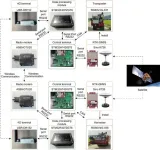
In a recent study published in Engineering, a team of researchers led by Wenyu Zhang from South China Agricultural University has developed a groundbreaking cotransporter system that combines a tracked rice harvester and transporter for fully autonomous harvesting, unloading, and transportation operations. The key innovation of this system lies in the proposed dual-unloading mode, which includes two distinct methods: harvester waiting for unloading (HWU) and transporter following for unloading (TFU). In the HWU system, the harvester halts and summons the transporter when its ...

Read the release
Science

More dense, populated neighborhoods inspire people to walk more

SPOKANE, Wash. – Adding strong evidence in support of “walkable” neighborhoods, a large national study found that the built environment can indeed increase how much people walk. The study, published in the American Journal of Epidemiology, showed a strong connection between place and activity by studying about 11,000 twins, which helps control for family influences and genetic factors. The researchers found that each 1% increase in an area’s “walkability” resulted in 0.42% increase in neighborhood walking. When scaled up, that means a 55% increase in the walkability of the surrounding neighborhood ...

Read the release
From the original Press-News collection. Issuers of news releases are responsible for the accuracy of their content.