THE ORIGINAL COLLECTION · SINCE 2010

Science
press releases.

Research announcements from universities, hospitals and scientific institutions. Explore the stories, people and discoveries behind the headlines.

Original publication datesPage 245
FIND A STORY

Find a past release.

Dates and source material belong to the original release.

Read our research explainers

Browse the collection · original publication order

Science

Dizziness in older adults is linked to higher risk of future falls

IMPERIAL COLLEGE LONDON PRESS RELEASE Peer reviewed/Systematic review and meta-analysis/People UNDER EMBARGO UNTIL Thursday 19th September at 00:01 UTC (01:01 BST) Dizziness in older adults is linked to higher risk of future falls Researchers say it’s not just a normal part of ageing The first meta-analysis of its kind has shown a conclusive link between older adults experiencing spells of dizziness and a dramatically elevated risk of falling. Dizziness is a term used to describe sensations such as vertigo, imbalance, light-headedness, and disorientation. It is common in older adults, affecting one in three of those aged 65 years and older. For the first time, dizziness ...

Read the release
Science

Iron given through the vein corrects iron deficiency anaemia in pregnant women faster and better than iron taken by mouth

Researchers found that a medicine called ferric carboxymaltose given in drip through the vein works faster and better than an iron tablet taken by mouth for the treatment of anaemia – and it is as safe as the tablet. The findings were published in Lancet Global Health. Anaemia (low blood level) is a common cause of ill-health or death in mothers and their babies, especially in sub-Saharan Africa and South-East Asia where more than four out of ten pregnant women have the condition. A sizeable proportion of pregnant women in Nigeria proceed to giving birth while still anaemic ...

Read the release
Science

Levels of protection from different cycle helmets revealed by new ratings

Cyclists choosing a new helmet can see how much protection different helmets offer, thanks to new safety testing and ratings from Imperial College London. Researchers at Imperial College London have developed a simple new cycle helmet safety rating system with simple-to-understand scores from 0-5, designed to help buyers select which helmet to buy and assist manufacturers in future helmet design. The system is based on extensive new safety testing experiments on medium-sized helmets at Imperial. Testing on the UK’s 30 most popular helmets, funded by The Road Safety Trust, revealed significant ...

Read the release
Science

Pupils with SEND continue to fall behind their peers

Pupils with special educational needs and disabilities (SEND) are continuing to fall behind their peers with the gap widening despite the introduction of SEND legislation. This is according to a new study by Durham University which analysed data on 2.5 million Year 6 pupils across four school years from 2014-2019. The research suggests there is a need to re-evaluate the policies for SEND provision and how pupils with SEND are supported in schools. It calls for more investment to support SEND pupils and for increased professional development for teachers and teaching assistants. Using ...

Read the release
Science

Half of heavier drinkers say calorie labels on alcohol would lead to a change in their drinking habits

Half of heavier drinkers say calorie labels on alcohol would lead to a change in their drinking habits Just over half of heavier drinkers in England say they would make changes to their drinking if calorie labels for alcohol were introduced, according to a new study by UCL researchers. The findings, the researchers said, suggested calorie labels could help some drinkers maintain a healthier weight. The study, published in the journal BMJ Open, looked at survey responses from 4,683 adults in England to assess the impact that alcohol calorie labelling might have on people’s attitudes and drinking ...

Read the release
Nawaz named ASME Fellow
Science

Nawaz named ASME Fellow

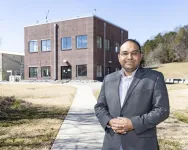
Kashif Nawaz, distinguished researcher and section head for Building Technologies Research at the Department of Energy’s Oak Ridge National Laboratory, has been named a Fellow of the American Society of Mechanical Engineers, or ASME. The Fellow grade recognizes outstanding engineering achievements for members with 10 or more years of active practice. Nawaz joined ORNL in 2016 as a research scientist in buildings equipment. He specializes in the heating, cooling and dehumidification systems of buildings including the development of novel heat exchangers and enhanced phase-change material ...

Read the release
Science

New website helps researchers overcome peer reviewers’ preference for animal experiments

WASHINGTON, D.C.—A new website, AnimalMethodsBias.org, created by the Coalition to Illuminate and Address Animal Methods Bias (COLAAB), provides researchers guidance and resources aimed at helping them successfully publish nonanimal biomedical research by overcoming the preference some peer reviewers have for animal-based research methods. “We recently found that half of researchers surveyed had been asked by reviewers to add an animal experiment to their otherwise animal-free study,” says Catharine ...

Read the release
Propagated corals reveal increased resistance to bleaching across the Caribbean during the fatal heatwave of 2023
Science

Propagated corals reveal increased resistance to bleaching across the Caribbean during the fatal heatwave of 2023

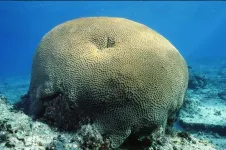
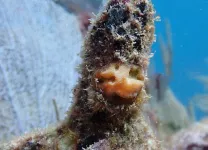
SECORE International’s Coral Seeding approach utilizes assisted reproduction, the breeding of corals, for reef restoration. This approach is realized within a training and partner network throughout the Caribbean. Now, a peer-reviewed study shows that all the effort was worthwhile: during the devastating heatwave in the Caribbean in 2023, the young, bred corals out on the reef stayed healthy while most of the remaining wild corals bleached and many died in the aftermath. The summer of 2023 was deadly for many corals in the Caribbean Basin. An unprecedented heatwave, in intensity as well as in duration, hit the Caribbean with catastrophic ...

Read the release
Flexible circuits made with silk and graphene on the horizon
Science

Flexible circuits made with silk and graphene on the horizon

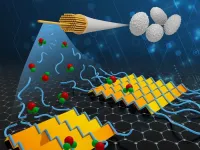
RICHLAND, Wash.—After thousands of years as a highly valuable commodity, silk continues to surprise. Now it may help usher in a whole new direction for microelectronics and computing. While silk protein has been deployed in designer electronics, its use is currently limited in part because silk fibers are a messy tangle of spaghetti-like strands. Now, a research team led by scientists at the Department of Energy’s Pacific Northwest National Laboratory has tamed the tangle. They report in the journal ...

Read the release
Scott Emr and Wesley Sundquist awarded 2024 Horwitz Prize for discovering the ESCRT pathway
Science

Scott Emr and Wesley Sundquist awarded 2024 Horwitz Prize for discovering the ESCRT pathway

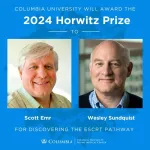
NEW YORK, NY (September 18, 2024)—Columbia University will award the 2024 Louisa Gross Horwitz Prize to Scott Emr and Wesley Sundquist for discovering the ESCRT (Endosomal Sorting Complexes Required for Transport) pathway and revealing how it works. ESCRT (pronounced “escort”) complexes deform the cell membrane and bend parts of it away from the cytoplasm, the space that houses all material inside a cell. This unique process plays an essential role in keeping cells healthy by packaging and sorting molecules, removing waste, and regulating important functions such as cell division, neuron remodeling, ...

Read the release
Science

Versatile knee exo for safer lifting

Images A set of knee exoskeletons, built with commercially available knee braces and drone motors at the University of Michigan, has been shown to help counteract fatigue in lifting and carrying tasks. They helped users maintain better lifting posture even when tired, a key factor in defending against on-the-job injuries, the researchers say. "Rather than directly bracing the back and giving up on proper lifting form, we strengthen the legs to maintain it," said Robert Gregg, U-M professor of robotics and corresponding author of the study in Science Robotics. "This differs from what's more commonly done in industry." Already ...

Read the release
Sea surface temperature record in the southwestern Pacific: Coral colony from Fiji reveals warmest temperatures in over 600 years
Science

Sea surface temperature record in the southwestern Pacific: Coral colony from Fiji reveals warmest temperatures in over 600 years

The sea surface temperature in the Fijian archipelago in the southwestern Pacific is now at its maximum for more than 600 years. This is the result of an international research team's evaluation of a new coral record providing further evidence for unprecedented warming in the western Pacific Ocean. According to this, the year 2022 was the warmest year in the region since 1370. The scientists used the giant coral Diploastrea heliopora colony in Fiji to obtain the data for the new reconstruction. These unique and long-lived massive corals record long-term climatic and ...

Read the release
Science

Discarding the placenta after birth leads to loss of valuable information, pathologists say

In an opinion article publishing September 18 in the Cell Press journal Trends in Molecular Medicine, physician-scientists argue that with most placentas discarded after birth, placental pathology is underutilized clinically, should be a routine part of obstetric and neonatal care, and also deserves more research attention. “Placentas should not be considered a waste tissue,” says senior author Mana Parast, MD, PhD, professor of pathology at University of California San Diego School of Medicine. ...

Read the release
Science

Research points a way to modulate scarring in spinal cord injury

Media Contact: laura.kurtzman@ucsf.edu, (415) 502-6397 Subscribe to UCSF News After a spinal cord injury, nearby cells quickly rush to action, forming protective scar tissue around the damaged area to stabilize and protect it. But over time, too much scarring can prevent nerves from regenerating, impeding the healing process and leading to permanent nerve damage, loss of sensation or paralysis. Now, UC San Francisco researchers have discovered how a rarely studied cell type controls the formation of scar tissue in spinal cord injuries. Activating ...

Read the release
Science

£18 million for DARE UK to support secure research on sensitive data

London, United Kingdom, 18 September 2024 – UK Research and Innovation (UKRI), the UK’s largest public funder of research, has confirmed funding for a new phase of the DARE UK (Data and Analytics Research Environments UK) programme with up to £18.2 million made available over 2.5 years. Starting this month, Phase 2 of the DARE UK programme will bring together Trusted Research Environments (TREs) across the UK to test and build new capabilities for a connected national network of secure data ...

Read the release
Constriction junction, do you function?
Science

Constriction junction, do you function?

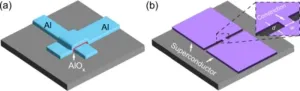
UPTON, N.Y. — Scientists from the U.S. Department of Energy’s (DOE) Brookhaven National Laboratory have shown that a type of qubit whose architecture is more amenable to mass production can perform comparably to qubits currently dominating the field. With a series of mathematical analyses, the scientists have provided a roadmap for simpler qubit fabrication that enables robust and reliable manufacturing of these quantum computer building blocks. This research was conducted as part of the Co-design Center for ...

Read the release
Early dingoes are related to dogs from New Guinea and East Asia
Science

Early dingoes are related to dogs from New Guinea and East Asia

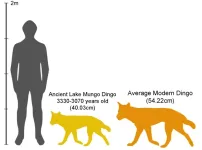
New archaeological research by the University of Sydney has discovered for the first time clear links between fossils of the iconic Australian dingo, and dogs from East Asia and New Guinea. The remarkable findings suggest that the dingo came from East Asia via Melanesia, and challenges previous claims that it derived from pariah dogs of India or Thailand. Previous studies used traditional morphometric analysis – which looks at the size and shape of the animal using callipers – ...

Read the release
Science

New tool to assess equity in scholarly communication models

[Strasbourg, 18th September 2024] A new online tool designed to assess the equity of scholarly communication models is launched today at the OASPA 2024 conference. The “How Equitable Is It” tool, developed by a multi-stakeholder Working Group, comprising librarians, library consortia representatives, funders and publishers, and convened by cOAlition S, Jisc and PLOS, aims to provide a framework for evaluating scholarly communication models and arrangements on the axis of equity. The tool, which was inspired by the “How Open Is It?” framework, is targeted at institutions, library consortia, ...

Read the release
Science

Research shows finger counting may help improve math skills in kindergarten

Preschool teachers have different views on finger counting. Some teachers consider finger counting use in children to signal that they are struggling with math, while others associate its use as advanced numerical knowledge. In a new Child Development study, researchers at the University of Lausanne in Switzerland and Lea.fr, Editions Nathan in Paris, France, explored whether a finger counting strategy can help kindergarten-aged children solve arithmetic problems. Adults rarely use their fingers to calculate a small sum (e.g., 3+2) as such behaviors could be attributed to pathological difficulties in mathematics or cognitive impairments. However, young children between ...

Read the release
Measuring how much wood a wood shuck shucks with all-new wood shuck food
Science

Measuring how much wood a wood shuck shucks with all-new wood shuck food

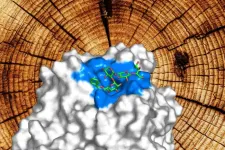
Researchers want to transform the natural and abundant resource wood into useful materials, and central to that is a molecular machine found in fungi that decomposes the complex raw material into its basic components. A Kobe University researcher and his team now were the first to come up with a test feed for the fungal molecular machine that allows them to observe its close-to-natural action, opening the door to improving it and to putting it to industrial application. Biochemical engineers want to transform the abundant and renewable material wood into bioplastics, medically relevant chemicals, food additives or fuel. ...

Read the release
What numbers do you see? A new bistable perceptual phenomenon on symbolic numbers
Science

What numbers do you see? A new bistable perceptual phenomenon on symbolic numbers

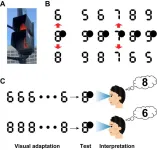
Perceptual recognition of numerical characters, like Arabic numerals, is indispensable for our daily activities in the modern society. Studying the perceptual and neural mechanisms that endow us with the ability to understand those characters is an important scientific topic. In this project, researchers explored a bistable perceptual phenomenon of a specially designed character named occluded digital numeral, to get a deeper understanding of the mechanisms underpinning the perceptual recognition of numbers. The digital numeral is a special version of number fonts designed for application in electronic products ...

Read the release
Unravelling an ancient European extinction mystery: Disappearance of dwarf megafauna on palaeolithic Cyprus
Science

Unravelling an ancient European extinction mystery: Disappearance of dwarf megafauna on palaeolithic Cyprus

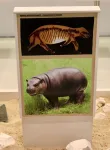
Scientists have unravelled a mystery about the disappearance of dwarf hippos and elephants that once roamed the picturesque landscape on the Mediterranean island of Cyprus before palaeolithic humans arrived. Cyprus only had two species of megafauna present during the Late Pleistocene — the 500-kg dwarf elephant (Palaeoloxodon cypriotes), and the 130-kg dwarf hippo (Phanourios minor), but both species disappeared soon after humans arrived around 14,000 years ago. In examining the reasons behind the extinction of these prehistoric animals, research funded by the European Regional Development Fund and the Republic of Cyprus through the Research and Innovation Foundation ...

Read the release
Highly-sensitive beaks could help albatrosses and penguins find their food
Science

Highly-sensitive beaks could help albatrosses and penguins find their food

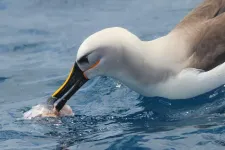
Researchers have discovered that seabirds, including penguins and albatrosses, have highly-sensitive regions in their beaks that could be used to help them find food. This is the first time this ability has been identified in seabirds. An international team of researchers, led by the University of Cambridge, studied over 350 species of modern birds and found that seabirds have a high density of sensory receptors and nerves at the tip of their beaks, which has been previously identified in specialised tactile foragers such as ducks. The researchers say this touch-sensitive region could have come from a common ancestor, and further work is needed to determine ...

Read the release
Science

No major concerns about risks to offspring for would-be dads taking epilepsy meds

Would-be dads taking drugs to stop their epilepsy seizures—and valproate in particular—should be largely reassured that the available evidence on the developmental risks to their offspring doesn’t justify any major concerns, concludes a systematic review of relevant studies published online in the Journal of Neurology Neurosurgery & Psychiatry. The available evidence is scarce and inconsistent, but most studies indicate no heightened risk, the findings show, casting doubt on the stance taken by the UK drugs regulator, the MHRA, in particular, say ...

Read the release
Science

Novel triplet regimen yields promising response in advanced-phase chronic myeloid leukemia

HOUSTON ― According to researchers at The University of Texas MD Anderson Cancer Center, 80% of patients with previously untreated or relapsed/refractory advanced-phase chronic myeloid leukemia (CML) – including both accelerated or myeloid blast phases of the disease – or Philadelphia chromosome-positive acute myeloid leukemia (AML) achieved a bone marrow remission when treated with a novel combination of decitabine, venetoclax and ponatinib. Findings from the Phase II clinical trial, published today in The Lancet Haematology, represent an important step forward for patients ...

Read the release
From the original Press-News collection. Issuers of news releases are responsible for the accuracy of their content.