THE ORIGINAL COLLECTION · SINCE 2010

Science
press releases.

Research announcements from universities, hospitals and scientific institutions. Explore the stories, people and discoveries behind the headlines.

Original publication datesPage 332
FIND A STORY

Find a past release.

Dates and source material belong to the original release.

Read our research explainers

Browse the collection · original publication order

Science

Organizations need to beware whispering death from “institutional parasites”, study finds

Organisations that fail to identify or swiftly expel “institutional parasites” risk long-term damage, academics from leading British and Finnish business schools have warned. In a paper published in the respected Academy of Management Review, they argue that the increasingly complex and opaque nature of many organisations provides fertile ground for institutional parasites – such as suppliers or other key external partners and employees. Dr Jukka Rintamäki from Finland’s Aalto University School of Business, Dr Simon Parker from Nottingham University Business School and Professor Andre Spicer, Professor ...

Read the release


UT Extension specialist chosen to help support national immunization program
Science

UT Extension specialist chosen to help support national immunization program

A University of Tennessee Extension specialist has been selected to assist land-grant university teams implementing grants through the Extension Collaboration on Immunization Teaching and Engagement (EXCITE), a national effort to encourage adult vaccinations in rural areas and among underserved communities. Laura Clark, UT Extension state specialist in family and consumer sciences, will serve as a national EXCITE Bridge Grant coach and work with six land-grant universities that are grant recipients through the program. Clark has worked for UT Extension for six years, ...

Read the release
Indigenous Australian message sticks, which feature markings to convey messages over long distances, analyzed for first time at scale through new database of 1,500 artifacts
Science

Indigenous Australian message sticks, which feature markings to convey messages over long distances, analyzed for first time at scale through new database of 1,500 artifacts

Indigenous Australian message sticks, which feature markings to convey messages over long distances, analyzed for first time at scale through new database of 1,500 artifacts ### Article URL: https://journals.plos.org/plosone/article?id=10.1371/journal.pone.0299712 Article Title: AMSD: The Australian Message Stick Database Author Countries: Australia, Germany Funding: The lead author (Piers Kelly) receives salary and project funding specifically for the research described in this paper. He is funded by an ARC Discovery Early Career Researcher ...

Read the release
Taking on the global challenge of hidden hunger
Science

Taking on the global challenge of hidden hunger

COLUMBIA, Mo. — More than 2 billion people suffer from hidden hunger, a form of malnutrition where individuals lack essential micronutrients — like vitamins and minerals — even though they consume what appears to be an adequate amount of calories. University of Missouri researcher Kiruba Krishnaswamy is focused on tackling this global challenge. She recently received a five-year, $532,000 Early Career Development (CAREER) award from the National Science Foundation (NSF) — the NSF’s most prestigious award for early-career faculty — in support of her project titled ...

Read the release
How the body switches out of “fight” mode
Science

How the body switches out of “fight” mode

Joint press release of Charité and Uniklinikum Erlangen Cortisone and other related glucocorticoids are extremely effective at curbing excessive immune reactions. But previously, astonishingly little was known about how they exactly do that. A team of researchers from Charité – Universitätsmedizin Berlin, Uniklinikum Erlangen and Ulm University have now explored the molecular mechanism of action in greater detail. As the researchers report in the journal Nature,* glucocorticoids reprogram ...

Read the release
Researchers show chemical found naturally in cannabis may reduce anxiety-inducing effects of THC
Science

Researchers show chemical found naturally in cannabis may reduce anxiety-inducing effects of THC

FOR IMMEDIATE RELEASE A Johns Hopkins Medicine-led research team has added to evidence that a chemical found naturally in cannabis (also known as marijuana) can — in the right amounts — lessen the anxiety-inducing effects of tetrahydrocannabinol (THC), the primary psychoactive sister chemical found in cannabis. The finding has the potential to advance the medicinal use of THC, and reduce the risks of its recreational use in some people. The substance, called d-limonene, is one of the most abundant terpenes, or essential oils, in the cannabis plant, and has shown promise in rodent studies in reducing anxiety behaviors. However, there has ...

Read the release
Science

AI-powered ‘sonar’ on smartglasses tracks gaze, facial expressions

ITHACA, N.Y. – Cornell University researchers have developed two technologies that track a person’s gaze and facial expressions through sonar-like sensing. The technology is small enough to fit on commercial smartglasses or virtual reality or augmented reality headsets, yet consumes significantly less power than similar tools using cameras. Both use speakers and microphones mounted on an eyeglass frame to bounce inaudible soundwaves off the face and pick up reflected signals caused by face and eye movements. ...

Read the release
Science

Trends in deaths of despair by race and ethnicity

About The Study: As of 2022, the midlife mortality rates from deaths of despair (deaths from suicide, drug overdose, and alcoholic liver disease) among Black individuals were higher than rates among white individuals, and rates among American Indian or Alaska Native individuals remained higher than rates in the other groups. Rising inequalities in deaths of despair among American Indian or Alaska Native and Black individuals were largely attributable to disproportionate early mortality from drug- and alcohol-related causes, which increased leading up to and during the COVID-19 pandemic. Authors: Joseph ...

Read the release
Science

Researchers explore role of androgens in shaping sex differences

Sex differences are widespread across human development, physiological processes, and diseases, making it important to characterize the impact of sex differences in these areas. Understanding the regulatory mechanisms associated with these differences, including the role of androgens, is also vital for clinical translation—especially for diseases more prevalent in one sex. To answer these questions, a team led by Prof. GAO Dong and Prof. CHEN Luonan from the Center for Excellence in Molecular Cell Science, Shanghai Institute ...

Read the release
Science

Studies uncovered why urine sprayed by cats emits a pungent odor

Cats communicate with others through their scents. One of their scent marking behaviors is spraying urine on vertical surfaces such as walls and furniture. Although spraying plays an essential role in the feline world, it often poses challenges for pet owners because of its strong and pungent odor. Consequently, the website is overflowing with posts discussing the issue of cat spraying. Notably, sprayed urine has a more pungent odor on the human nose than normal urine in their litter boxes. While it is believed that sprayed urine contains additional chemicals possibly ...

Read the release
Respiratory allergies: newly discovered molecule plays a major role in triggering inflammation
Science

Respiratory allergies: newly discovered molecule plays a major role in triggering inflammation

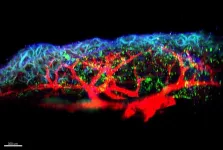
The inflammation process plays a crucial role in allergic respiratory diseases, such as asthma and allergic rhinitis. Although the pulmonary epithelium, the carpet of cells that forms the inner surface of the lungs, is recognised as a major player in the respiratory inflammation that causes these diseases, the underlying mechanisms are still poorly understood. A research team has identified one of the molecules responsible for triggering these allergic reactions, in a study co-led by two CNRS and Inserm scientists working at l’Institut de pharmacologie et de biologie structural (CNRS/Université Toulouse ...

Read the release
Science

Visiting white parts of town make some Black kids feel less safe

COLUMBUS, Ohio – Some Black youth feel less safe when they visit predominantly white areas of their city, a new study in Columbus has found. And it was those Black kids who spent the most time in white-dominated areas who felt less safe, said Christopher Browning, lead author of the study and professor of sociology at The Ohio State University. “Familiarity with white neighborhoods doesn’t make Black kids feel more comfortable and safer. In fact, familiarity seems to reveal ...

Read the release
Modeling viral evolution: A novel SIRSVIDE framework with application to SARS-CoV-2 dynamics
Science

Modeling viral evolution: A novel SIRSVIDE framework with application to SARS-CoV-2 dynamics

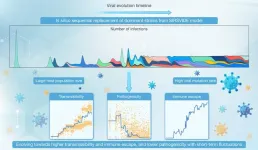
Understanding the mutation and evolution of viruses (such as SARS-CoV-2) is crucial for effective public health management and response. Traditional epidemiological models often assume that viral transmissibility and pathogenicity remain constant during disease transmission, ignoring the fact that viruses continuously evolve through natural selection and random mutations. This simplification limits the accuracy of these models in predicting epidemic trends, especially when facing rapidly mutating viruses. To overcome these limitations, ...

Read the release
Waterproof ‘e-glove’ could help scuba divers communicate
Science

Waterproof ‘e-glove’ could help scuba divers communicate

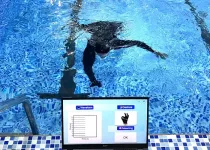
When scuba divers need to say “I’m okay” or “Shark!” to their dive partners, they use hand signals to communicate visually. But sometimes these movements are difficult to see. Now, researchers reporting in ACS Nano have constructed a waterproof “e-glove” that wirelessly transmits hand gestures made underwater to a computer that translates them into messages. The new technology could someday help divers communicate better with each other and with boat crews on the surface. E-gloves — gloves fitted ...

Read the release
Science

BioOne presents 2024 BioOne Ambassador Award to five early career scientists

BioOne proudly announces the 2024 recipients of the BioOne Ambassador Award. Now in its seventh year, this prestigious award recognizes early-career researchers in the biological, ecological, and environmental sciences who demonstrate creative approaches to science communication thereby fostering greater science literacy and aiding in the understanding of the natural world. BioOne Ambassadors are nominated by BioOne publishing partners, and each winning author will receive a $1,000 award and have their work promoted through BioOne’s multiple channels. This year’s honorees are: Dr. Elis Fisk – Draw and Learn: A Bighorn Sheep Mystery; nominated by The Wildlife ...

Read the release
New mechanism discovered for the life-threatening arrhythmias in Andersen-Tawil syndrome
Science

New mechanism discovered for the life-threatening arrhythmias in Andersen-Tawil syndrome

A team at the Centro Nacional de Investigaciones Cardiovasculares (CNIC) has made a breakthrough discovery in the understanding of cardiac arrhythmias by unraveling the complexities of Andersen-Tawil syndrome (ATS), an extremely rare inherited cardiac disorder. Led by Dr. José Jalife, head of the CNIC Cardiac Arrhythmia Group, the study demonstrates that a specific genetic mutation (C122Y) in the Kir2.1 potassium channel alters the function not only of Kir2.1 but also of the main cardiac sodium channel NaV1.5, thus establishing a direct link with the life-threatening arrhythmias associated with ATS1. The study, published in the journal Circulation Research, reveals that ...

Read the release
New method of measuring qubits promises ease of scalability in a microscopic package
Science

New method of measuring qubits promises ease of scalability in a microscopic package

Chasing ever-higher qubit counts in near-term quantum computers constantly demands new feats of engineering. Among the troublesome hurdles of this scaling-up race is refining how qubits are measured. Devices called parametric amplifiers are traditionally used to do these measurements. But as the name suggests, the device amplifies weak signals picked up from the qubits to conduct the readout, which causes unwanted noise and can lead to decoherence of the qubits if not protected by additional large components. More importantly, the bulky size of the amplification chain becomes technically challenging to work around as qubit counts increase ...

Read the release
Call for parents and youth sport coaches to get on the same page
Science

Call for parents and youth sport coaches to get on the same page

Parents and youth sport coaches need to have positive relationships to foster positive sporting experiences and enable young people to reach their sporting potential – but there’s currently no clear direction about the best way for them to come together. Flinders University researchers examining youth sport say that developing better coach-parent relationships that create an environment conducive to positive youth sport experiences and outcomes will require a fresh approach and a more interactive perspective. Improving interactions and communication between parents and coaches needs ...

Read the release
Science

Swapping red meat for herring/sardines could save up to 750,000 lives/year in 2050

Swapping red meat for ‘forage fish’, such as herring, sardines, and anchovies, could save up to 750,000 lives a year in 2050 and significantly reduce the prevalence of disability as a result of diet-related disease, suggests a data analysis published in the open access journal BMJ Global Health. Adopting this type of diet would be especially helpful for low and middle income countries, where these fish are cheap and plentiful, and where the toll taken by heart disease, in particular, is high, say the researchers. Mounting ...

Read the release
Science

Job insecurity in early adulthood linked to heightened risk of serious alcohol-related illness in later life

Experiencing the sort of job insecurity in early adulthood that is often linked to the gig economy, is linked to a heightened risk of a serious alcohol-related illness in later life, suggest the findings of a long term study published online in Occupational & Environmental Medicine. And men who find themselves in this position as young adults seem to be more at risk than young women, the findings indicate. The prevalence of ‘precarious employment’, which describes non-standard or temporary work that is often poorly paid, insecure, and unprotected, has increased in recent years, explain the researchers. ...

Read the release
Science

When should a surgeon plan for a career shift? New guidelines uphold lifelong competency of surgeons

As millions of Americans approach age 66, they face the inevitable question, is it time to retire? The physician population is aging alongside the general population – more than 40% of physicians in the U.S. will be 65 years or older within the next decade. In the case of surgeons, there is little guidance on how to best ensure their competency throughout their career and at the same time maintain patient safety while preserving physician dignity. In a current study published in the Journal of the American College of Surgeons, the American College of Surgeons (ACS) ...

Read the release
St. Jude survivorship portal brings researchers ‘one-click’ away from discovery
Science

St. Jude survivorship portal brings researchers ‘one-click’ away from discovery

(MEMPHIS, Tenn. – April 9, 2024) Scientists from St. Jude Children’s Research Hospital today announced the St. Jude survivorship portal — the first data portal for sharing, analyzing and visualizing pediatric cancer survivorship data. Details on the portal and its ability to facilitate breakthroughs in pediatric cancer survivorship research were published today in Cancer Discovery, a journal of the American Association for Cancer Research. The survivorship portal is a big-data platform that incorporates clinical and genomic information, creating an unprecedented research system. The portal integrates three dimensions ...

Read the release
Science

Has remote work changed how people travel in the U.S?

The prevalence of remote work since the start of the Covid-19 pandemic has significantly changed urban transportation patterns in the U.S., according to new study led by MIT researchers. The research finds significant variation between the effects of remote work on vehicle miles driven and on mass-transit ridership across the U.S. “A 1 percent decrease in onsite workers leads to a roughly 1 percent reduction in [automobile] vehicle miles driven, but a 2.3 percent reduction in mass transit ridership,” says Yunhan Zheng SM ’21, PhD ’24, an MIT postdoc who is co-author of the study. “This is one of the first studies that identifies the causal effect ...

Read the release
FAU lands $1.3 million grant to ‘clean up’ stinky seaweed in Florida
Science

FAU lands $1.3 million grant to ‘clean up’ stinky seaweed in Florida

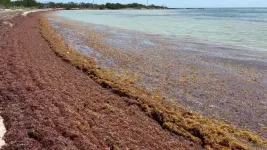
In the last decade, the emergence of a massive expanse of Sargassum, the Great Atlantic Sargassum Belt, has wreaked havoc on ecosystems and economies throughout the Caribbean. Conversely, this stinky brown seaweed provides vital habitats for marine life including loggerhead sea turtles. One of the worst invasions of Sargassum in recent history, especially for Florida, occurred in 2022 and potential impacts this year are yet to be determined. Decomposing Sargassum produces hydrogen sulfide and ammonia, which can result in potential human and environmental health impacts. Once Sargassum deluges beaches, removing, disposing and repurposing the seaweed presents many logistical ...

Read the release
Breeding more resilient soybeans may come down to test site selection
Science

Breeding more resilient soybeans may come down to test site selection

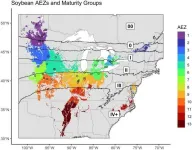
URBANA, Ill. — In the quest to optimize crop productivity across environments, soybean breeders test new cultivars in multiple locations each year. The best-performing cultivars across these locations are selected for further breeding and eventual commercialization. However, a new study from the University of Illinois Urbana-Champaign suggests current soybean testing locations may not be delivering breeders the biggest bang for their buck. “We met with most of the soybean breeders in public research universities across the Midwest and asked where they set up their trials over the last 30 to 40 years,” said Nicolas Martin, ...

Read the release
From the original Press-News collection. Issuers of news releases are responsible for the accuracy of their content.