THE ORIGINAL COLLECTION · SINCE 2010

Science
press releases.

Research announcements from universities, hospitals and scientific institutions. Explore the stories, people and discoveries behind the headlines.

Original publication datesPage 356
FIND A STORY

Find a past release.

Dates and source material belong to the original release.

Read our research explainers

Browse the collection · original publication order

A new channel for touch
Science

A new channel for touch

Every hug, every handshake, every dexterous act engages and requires touch perception. Therefore, it is essential to understand the molecular basis of touch. “Until now, we had known that the ion channel – Piezo2 – is required for touch perception, but it was clear that this protein alone cannot explain the entirety of touch sensation,” says Professor Gary Lewin, head of the Molecular Physiology of Somatic Sensation Lab at the Max Delbrück Center. For over 20 years Lewin has been studying the molecular basis of the sensation ...

Read the release
Science

Parents, wealth, race drive girls’ chances to play sports

COLUMBUS, Ohio – The likelihood that a girl will participate in high school sports in the United States is driven not so much by individual choice, new research suggests. Instead, decisions made by parents, the wealth of one’s family and community, and racial dynamics matter. By combining interviews with elite college athletes and analysis of data on over 4,000 high school girls, researchers found that socioeconomic status – of families and the school districts in which they live ...

Read the release
Science

Extreme weather events tied to increased mortality and emergency department activity

Climate change is increasing the frequency and intensity of severe weather events, which may particularly endanger vulnerable populations such as the elderly. Researchers from Mass General Brigham and colleagues examined how weather disasters between 2011 and 2016 influenced healthcare delivery and mortality among Medicare beneficiaries in affected counties, finding that one week after major weather events, emergency department (ED) use and mortality remained elevated by 1.22% and 1.4%, respectively, from pre-disaster ...

Read the release
Bottlenecks and beehives: how an invasive bee colony defied genetic expectations
Science

Bottlenecks and beehives: how an invasive bee colony defied genetic expectations

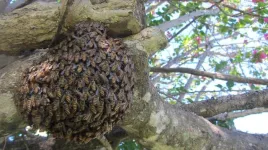
For more than a decade, invasive Asian honeybees have defied evolutionary expectations and established a thriving population in North Queensland, much to the annoyance of the honey industry and biosecurity officials. Research published today in Current Biology has shown the species, Apis cerana, has overcome what is known as a genetic bottleneck to grow from a single swarm into a population of more than 10,000 colonies over a 10,000 square kilometre area – which is about the size of Greater Sydney. Co-lead author Dr Rosalyn Gloag from the University of Sydney School of Life and Environmental Sciences said: “Our study of this bee population shows that some species can ...

Read the release
Targeting seed microbes to improve seed resilience
Science

Targeting seed microbes to improve seed resilience

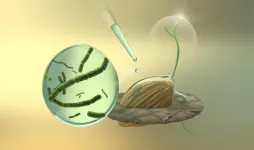
Fonio (Digitaria exilis), a type of millet, is the oldest indigenous crop in West Africa and one of the fastest maturing cereals. Despite its low yield, the combination of quick maturation and drought tolerance and its ability to thrive in poor soils make it a useful model for understanding how cereals can adapt to future climate change conditions. Nutritionally, fonio is comparable to other millets, says KAUST researcher Naheed Tabassum, but yields are much lower than the major cereal crops rice, maize and wheat. Tabassum believes fonio could complement staple crops amid climate change and desertification ...

Read the release
USTC reveals molecular mechanism of transmembrane bilirubin transport by human ABCC2 transporter
Science

USTC reveals molecular mechanism of transmembrane bilirubin transport by human ABCC2 transporter

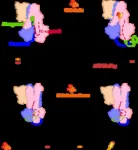
The metabolic process of bilirubin has been a focus in medical research since the abnormal accumulation of bilirubin has been found to be associated with a variety of diseases. Bilirubin is a substance produced by the breakdown of aging or damaged red blood cells, and its effective removal is essential for human health. A research team led by Prof. CHEN Yuxing and Prof. ZHOU Congzhao from the University of Science and Technology of China (USTC) of the Chinese Academy of Sciences has revealed the three-dimensional structure and working mechanism of the human bilirubin transporter ABCC2. The study was published ...

Read the release
A new plant’s name that tells a story
Science

A new plant’s name that tells a story

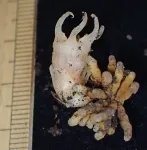
A new species and genus of fairy lantern, tiny glass-like white plants that feed on fungi, has been discovered in Japan. In the country renowned for its extensive flora research, the discovery of a new plant genus is extremely rare and has not occurred in almost 100 years. Fairy lanterns, or Thismiaceae as they are known to botany, are very unusual plants found mainly in tropical but also in subtropical and temperate regions. First of all, they are not green and do not engage in photosynthesis, but rather feed on fungal mycelia in the ground. As a consequence, they are often hidden under fallen leaves and only for a brief period produce above-ground flowers that look like glasswork. The ...

Read the release
Urgent need for guidelines for the care of child victims of sexual abuse
Science

Urgent need for guidelines for the care of child victims of sexual abuse

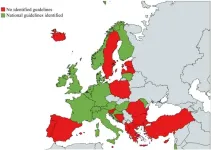
Only half of 34 surveyed European countries have national guidelines on how to provide clinical care and treatment to children who have experienced sexual abuse. This finding was revealed in a study led by researchers at Barnafrid, a national knowledge centre in the field of violence and other abuse against children, at Linköping University in Sweden. The consequences for the affected children can be severe, according to the researchers. “Our findings suggest that children in Europe may not receive equal care. From a child rights perspective, this is unacceptable. ...

Read the release
Faster and simpler point-of-care malaria test developed by Rice researchers
Science

Faster and simpler point-of-care malaria test developed by Rice researchers

Rice University researchers have developed a rapid, accurate test for diagnosing malaria that is significantly faster and easier to use than traditional tests. The advancement has the potential to improve patient outcomes, especially in rural regions with limited health care resources. Malaria remains a significant global health challenge with an estimated 247 million cases and more than 600,000 deaths annually, the majority of which occur in sub-Saharan Africa. The most severe form, cerebral malaria, has a high mortality ...

Read the release
Plant biologists identify promising new fungicides
Science

Plant biologists identify promising new fungicides

A promising new fungicide to fight devastating crop diseases has been identified by researchers at the University of California, Davis. The chemical, ebselen, prevented fungal infections in apples, grapes, strawberries, tomatoes and roses and improved symptoms of pre-existing fungal infection in rice. Fungal pathogens account for almost a quarter of global crop losses. In the United States, these losses amount to around $150 billion per year. However, fungicide development has been slow for the past 50 years, largely because researchers have had difficulty identifying molecular pathways to target. In a new study published Feb. 29 in ...

Read the release
Science

New research reveals that lockdowns had an impact on gut microbes and allergies in newborns

29 February 2024: Lockdowns imposed during the COVID-19 pandemic had an impact on the gut microbiome development of babies born during these periods according to new research from RCSI University of Medicine and Health Sciences, Children’s Health Ireland and APC Microbiome Ireland (APC), a world leading SFI Research Centre, based in University College Cork. Our gut microbiome, an ecosystem of microbes that live in our digestive tract, plays an essential role in human health. The study published in Allergy is the first to specifically explore the gut health of newborns in the pandemic. ...

Read the release
Science

Detailed study demonstrates how pulse oximeters significantly overestimate oxygen readings in people with darker skin tones

Pulse oximeters – one of the most common medical devices used in global healthcare – can provide significantly overestimated oxygen saturation readings in people with darker skin tones, according to the most comprehensive study ever to explore the issue. Published in the British Journal of Anaesthesia, the new study is based on a systematic review of previous research into the use of the devices, and examined 44 studies dating from the mid-1970s to the present day. In the course of that, researchers assessed more than 733,000 oxygen saturation readings taken from over 222,000 people – including almost ...

Read the release
Virtual walking by synthesizing avatars into a 360-degree video
Science

Virtual walking by synthesizing avatars into a 360-degree video

Overview: Researchers at the Toyohashi University of Technology and the University of Tokyo developed a system that provides a virtual walking experience to a seated person by real-time synthesis of a walking avatar and its shadow on a 360-degree video with vibrations to the feet. The shadow of the avatar induces an illusory presence of their body. In the future, it is expected to provide an immersive experience for any recorded medium with a virtual embodiment. Details: Walking is a fundamental activity for humans ...

Read the release
Science

Researchers decipher mysterious growth habit of weeping peach trees

A basic premise of how plants grow is that shoots grow up and roots grow down. A new study, published in Plant Physiology, a leading international society journal published by the American Society of Plant Biologists, reveals the answer to a fascinating question: why do weeping tree varieties defy this natural growth pattern? Researchers identified a protein called WEEP that is missing from the Weeping Peach Tree. Their results show how a DNA deletion in just one gene completely changes the localization of the hormone auxin, which ...

Read the release
Science

Odours hasten mortality and reproductive ageing – study finds

Sensory cues from the opposite sex can influence how animals age, a University of Otago-led study has found. Lead author Associate Professor Mike Garratt, of the Department of Anatomy, says research has previously shown interactions with the opposite sex can speed up ageing. This study has built on that by showing sensory cues alone can drive those effects. “This provides an example of how information detected by our sensory systems – what we see, hear and smell – can have long term effects on our ...

Read the release
Science

For people with tough-to-treat epilepsy, seizure dogs may reduce seizures

EMBARGOED FOR RELEASE UNTIL 4 P.M. ET, WEDNESDAY, FEBRUARY 28, 2024 MINNEAPOLIS – For people with drug-resistant epilepsy, having a dog companion trained in detecting seizures and other epilepsy-related tasks may reduce the amount of seizures they have, according to new research published in the February 28, 2024, online issue of Neurology®, the medical journal of the American Academy of Neurology. For the study, researchers looked at adults with severe epilepsy who have been unable to find effective treatment to reduce seizures. “Despite the development of numerous anti-seizure medications over the past 15 years, up to 30% of people ...

Read the release
Science

For young people, irregular meals, e-cigarette use linked to frequent headaches

EMBARGOED FOR RELEASE UNTIL 4 P.M. ET, WEDNESDAY, FEBRUARY 28, 2024 MINNEAPOLIS – For children and teens, irregular meals such as skipped breakfasts are linked to an increased risk of frequent headaches, according to a new study published in the February 28, 2024, online issue of Neurology®, the medical journal of the American Academy of Neurology. The study also found that for those ages 12 to 17, substance use and exposure, specifically electronic cigarettes (e-cigarettes), were associated with frequent headaches. For the study, frequent headaches were defined as occurring more than once per week. “It ...

Read the release
Science

Vision Zero road safety projects in Seattle are unlikely to have negative impacts on local business sales, UW study finds

Seattle is routinely listed as one of the most walkable and bike-friendly cities in the nation. The city government has committed to Vision Zero, which aims to completely eliminate traffic deaths and serious injuries by 2030, and embarked on a slew of infrastructure projects: expanding the city’s bike network, redesigning high-crash intersections and enhancing crosswalks to protect pedestrians. Such safety projects sometimes meet opposition from local business owners, who worry that reduced parking and disruption ...

Read the release
Drying without dying: Tracing water scarcity coping mechanisms from mosses to flowering plants
Science

Drying without dying: Tracing water scarcity coping mechanisms from mosses to flowering plants

Imagine: You find the dried-up remains of a once green and lush philodendron on your bookshelf and realize you can’t remember the last time you watered your houseplants. You soak the soil with water, hoping you can breathe life back into its desiccated husk, but it is futile. The plant has been too dehydrated for too long, and irreparable damage has been done. Now imagine that it isn’t your neglected houseplants that have been subjected to an unexpectedly dry growing season, but a field of wheat. With changes in global climate, such things are becoming more common and more of a concern for farmers, consumers, and researchers alike as the threat to food security intensifies. But ...

Read the release
Researchers create method to detect cases of anemia in archaeological remains
Science

Researchers create method to detect cases of anemia in archaeological remains

Hamilton, ON, Feb. 28, 2024 – Diagnosing anemia in living people is typically a matter of a routine blood test. Retrospectively diagnosing anemia in people who died decades or even centuries ago is much more challenging since there is no blood left to test. Anthropologists at McMaster University and the University of Montreal, working with a hematologist colleague, have overcome that obstacle by developing a way to detect anemia through patterns in the structures of bones. Paleopathologists Megan Brickley, ...

Read the release
New tool helps decipher gene behaviour
Science

New tool helps decipher gene behaviour

Scientists have extensively researched the structure and sequence of genetic material and its interactions with proteins in the hope of understanding how our genetics and environment interact in diseases. This research has partly focused on ‘epigenetic marks’, which are chemical modifications to DNA, RNA, and the associated proteins (known as histones). Epigenetic marks influence when and how genes get switched on or off. They can also instruct cells about how to interpret and use genetic information, influencing various cellular processes. Changes in epigenetic marks therefore significantly impact gene regulation and cellular ...

Read the release
Science

Hourly heat exposure and acute ischemic stroke

About The Study: The results of this study of 82,000 patients with acute ischemic stroke suggest that hourly heat exposure is associated with increased risk of acute ischemic stroke onset. This finding may benefit the formulation of public health strategies to reduce cerebrovascular risk associated with high ambient temperature under global warming. Authors: Jing Zhao, Ph.D., and Haidong Kan, Ph.D., of Fudan University in Shanghai, China, are the corresponding authors. To access the embargoed study: Visit our For The Media website at this link https://media.jamanetwork.com/ (doi:10.1001/jamanetworkopen.2024.0627) Editor’s ...

Read the release
Change in gene code may explain how human ancestors lost tails
Science

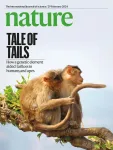
Change in gene code may explain how human ancestors lost tails

A genetic change in our ancient ancestors may partly explain why humans don’t have tails like monkeys, finds a new study led by researchers at NYU Grossman School of Medicine. Published online February 28 as the cover story of the journal Nature, the work compared the DNA of tail-less apes and humans to that of tailed monkeys, and found an insertion of DNA shared by apes and humans, but missing in monkeys. When the research team engineered a series of mice to examine whether the insertion, in a gene called TBXT, affected their tails, they found a variety of tail effects, including some mice born without tails. ...

Read the release
Science

How molecular “handedness” emerged in early biology

LA JOLLA, CA—Molecules often have a structural asymmetry called chirality, which means they can appear in alternative, mirror-image versions, akin to the left and right versions of human hands. One of the great mysteries about the origins of life on Earth is that virtually all of the fundamental molecules of biology, such as the building blocks of proteins and DNA, appear in just one chiral form. Scripps Research chemists, in two high-profile studies, have now proposed an elegant solution to this mystery, showing how this single-handedness or “homochirality” could have become established in biology. The studies were published in the Proceedings ...

Read the release
Nature’s sonar: Scientists reveal how Japanese horseshoe bats perceive moving objects
Science

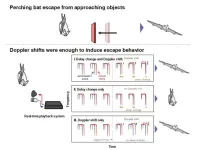
Nature’s sonar: Scientists reveal how Japanese horseshoe bats perceive moving objects

Unlike most animals that rely on visual senses, bats navigate and locate prey or obstacles through echolocation. By emitting sounds and comparing them to the reflected echoes, bats can “visualize” movement in the environment. When sound waves encounter a moving object, they can undergo changes such as a Doppler shift in frequency or experience a delay, which the bat can sense. However, it is unclear which acoustic characteristics bats rely on to detect moving objects. Japanese horseshoe bats (Rhinolophus ferrumequinum nippon) emit ultrasound pulses that are characterized ...

Read the release
From the original Press-News collection. Issuers of news releases are responsible for the accuracy of their content.