THE ORIGINAL COLLECTION · SINCE 2010

Science
press releases.

Research announcements from universities, hospitals and scientific institutions. Explore the stories, people and discoveries behind the headlines.

Original publication datesPage 358
FIND A STORY

Find a past release.

Dates and source material belong to the original release.

Read our research explainers

Browse the collection · original publication order

Science

Pythagoras was wrong: there are no universal musical harmonies, new study finds

The tone and tuning of musical instruments has the power to manipulate our appreciation of harmony, new research shows. The findings challenge centuries of Western music theory and encourage greater experimentation with instruments from different cultures. According to the Ancient Greek philosopher Pythagoras, ‘consonance’ – a pleasant-sounding combination of notes – is produced by special relationships between simple numbers such as 3 and 4. More recently, scholars have tried to find psychological explanations, but these ‘integer ratios’ are still credited with making a chord sound beautiful, and deviation from them ...

Read the release

Researchers uncover new clues about links between parent age and congenital disorders
Science

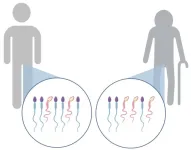
Researchers uncover new clues about links between parent age and congenital disorders

A new paper in Genome Biology and Evolution, published by Oxford University Press, finds that the link between paternal age and rare congenital disorders is more complex than scientists had previously thought. While researchers have long realized that older fathers are more likely to have children with bone and heart malformations, such as Achondroplasia, Apert, or Noonan syndrome or neurodevelopmental disorders, schizophrenia, and autism, new examination indicates that while the link between some pathogenic mutations increases with paternal age, others do not and may even occur in the father’s testis before sexual maturity. Delayed fatherhood results in a higher ...

Read the release
Science

NSF and DOE establish a Research Coordination Network dedicated to enhancing privacy research

In response to the rapidly evolving landscape of data collection and analysis driven by advances in artificial intelligence, the U.S. National Science Foundation (NSF) and the U.S. Department of Energy (DOE) have established a Research Coordination Network (RCN) dedicated to advancing privacy research and the development, deployment and scaling of privacy enhancing technologies (PETs). Fulfilling a mandate from the "Executive Order on the Safe, Secure, and Trustworthy Development and Use of Artificial Intelligence," the initiative advances the recommendations in the National Strategy to Advance ...

Read the release
Science

Want to encourage allyship? Highlight its appreciation, research shows

Allyship — the practice of relatively advantaged group members acting with the intention to support, advocate and improve circumstances for relatively disadvantaged groups — is critical to promoting more inclusive and equitable organizations. Not only are advantaged group members typically received more favorably within an organization than disadvantaged group members would be when they speak out against injustice, their allyship can improve disadvantaged group members’ psychological experience in the organization. For instance, men are more likely to believe other men, compared with women, when they confront sexism. And Black Americans report higher levels of self-esteem ...

Read the release
Australian researcher's journey from kangaroo whisperer to global dance sensation
Science

Australian researcher's journey from kangaroo whisperer to global dance sensation

Dr Weliton Menário Costa, a PhD graduate from The Australian National University (ANU), has been announced the overall winner of the 2024 global Dance Your PhD contest after wowing judges with his wickedly creative and quirky dance submission, ‘Kangaroo Time (Club Edit)’. One of the world's leading researchers in kangaroo behaviour, he is the first person from ANU to win the Dance Your PhD competition, and just the fourth person from an Australian institution to do so since its inception in 2008. Better known as ‘WELI’, the singer-songwriter, creator and biologist weaves together a funky beat, original songwriting, drag queens and Brazilian funk dancers ...

Read the release
Science

Butterflies mimic each other’s flight behaviour to avoid predators

Researchers have shown that inedible species of butterfly that mimic each others’ colour patterns have also evolved similar flight behaviours to warn predators and avoid being eaten. It is well known that many inedible species of butterfly have evolved near identical colour patterns, which act as warning signals to predators so the butterflies avoid being eaten. Researchers have now shown that these butterflies have not only evolved similar colour patterns, but that they have also evolved similar ...

Read the release
Protecting fish doesn’t have to mean neglecting people, study concludes
Science

Protecting fish doesn’t have to mean neglecting people, study concludes

BEAUFORT, N.C. –With fish stocks declining globally, more than 190 countries recently made a commitment to protect about a third of the world’s oceans within “Marine Protected Areas,” or MPAs by the year 2030. But these designated areas of the ocean where fishing is either regulated or outright banned can come at a huge cost to some coastal communities, according to a new analysis. To help prepare for the expansion of MPAs, an international team of researchers from Duke University, Florida State ...

Read the release
Live music emotionally moves us more than streamed music
Science

Live music emotionally moves us more than streamed music

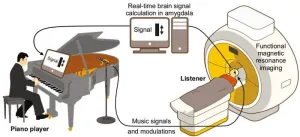
How does listening to live music affect the emotional center of our brain? A study carried out at the University of Zurich has found that live performances trigger a stronger emotional response than listening to music from a device. Concerts connect performers with their audience, which may also have to with evolutionary factors. Music can have a strong effect on our emotions. Studies have shown that listening to recorded music stimulates emotional and imaginative processes in our brain. But what happens when we listen to music in a live setting, for example at a music festival, at the opera or a folk concert? ...

Read the release
Metal in glitter impairs aquatic plant growth, study shows
Science

Metal in glitter impairs aquatic plant growth, study shows

Glitter is used in a wide array of colors and shapes in apparel, footwear, cosmetics, makeup, handbags, festive decorations, arts and crafts, and jewelry, among many other applications. During the Carnival holidays, hundreds of thousands of Brazilians cover parts of their bodies with it while dancing in the streets. Its brilliance is dazzling but it is considered an emerging pollutant by many scientists: like other microplastics (small plastic pieces less than 5 mm long), it is not filtered by wastewater treatment plants and ends up in rivers and the sea, interfering with aquatic life in various ways. A study conducted at the Federal University of ...

Read the release
Scientists assemble a richer picture of the plight and resilience of the foothill yellow-legged frog
Science

Scientists assemble a richer picture of the plight and resilience of the foothill yellow-legged frog

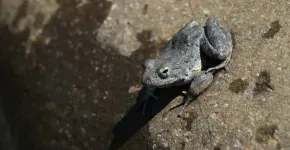
(Santa Barbara, Calif.) — Up to only a few inches in length, with a lemon-hued belly, the foothill yellow-legged frog may seem unassuming. But its range once stretched from central Oregon to Baja California. In 2023, it was listed under the federal Endangered Species Act. Its rapidly decreasing range is due in part to a fungal pathogen called Batrachochytrium dendrobatidis, or Bd, that has devastated amphibians around the world. A team of researchers, including UC Santa Barbara’s Andrea Adams, has conducted the most comprehensive study to date ...

Read the release
Science

BU researchers identify potential new subtype of chronic traumatic encephalopathy

FOR IMMEDIATE RELEASE, February 26, 2024 Contact: Gina DiGravio, 617-358-7838, ginad@bu.edu BU Researchers Identify Potential New Subtype of Chronic Traumatic Encephalopathy One in six cases have a distinct distribution of disease, clinical profile (Boston)—Chronic traumatic encephalopathy (CTE) is a neurodegenerative disease defined by abnormal tau protein accumulating in a particular pattern in specific regions of the brain. Studies to-date suggest CTE begins in the outermost layer of the frontal lobe, the neocortex, where it then spreads to connected brain regions. Later, in high-stage disease, ...

Read the release
Science

The small intestine adapt its size according to nutrient intake

One of the most striking examples of gut plasticity can be observed in animals that are exposed to prolonged periods of fasting, such as hibernating animals or phyton snakes that goes for months without eating, where the gut shrinks with as much as 50%, but recovers in size following a few days of re-feeding. Importantly, the capacity of the gut to undergo resizing is broadly conserved. Hence, in humans, an increase in gut size is observed during pregnancy, which facilitates the uptake of nutrients to support the growth of the fetus. The Colombani Andersen ...

Read the release
Science

Is it possible to predict when prejudice will occur?

What if it were possible to use a scientific model to predict hate crimes, protests, or conflict? Researchers at McGill University and University of Toronto have begun the groundwork to develop a formal predictive model of prejudice, similar to meteorological weather predictions. The model can be explained by the equation: Prejudice = Threat – Contact + Identification, “with some numbers involved,” says lead author Eric Hehman, Associate Professor in the Department of Psychology and lead author of a new study published in Psychological ...

Read the release
Science

Demystifying “black box” audio models

AI decision-making is now common in self-driving cars, patient diagnosis and legal consultation, and it needs to be safe and trustworthy. Researchers have been trying to demystify complex AI models by developing interpretable and transparent models, collectively known as explainable AI methods or XAI methods. A research team offered their insight specifically into audio XAI models in a review article published Jan. 23 in Intelligent Computing, a Science Partner Journal. Although audio tasks are less researched than visual tasks, their expressive power is not less important. Audio signals are easy to understand and communicate, as they typically depend less on expert explanations ...

Read the release
Watch these predatory fish use rapid color changes to coordinate attacks
Science

Watch these predatory fish use rapid color changes to coordinate attacks

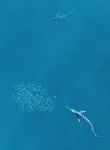
Striped marlin are some of the fastest animals on the planet and one of the ocean’s top predators. When hunting in groups, individual marlin will take turns attacking schools of prey fish one at a time. Now a new study reported in the journal Current Biology on February 5 helps to explain how they might coordinate this turn-taking style of attack on their prey to avoid injuring each other. The key, according to the new work, is rapid color changes. “We documented for the first time rapid color change in a group-hunting predator, the striped marlin, as groups of marlin hunted schools of sardines,” says Alicia Burns of Humboldt University ...

Read the release
Metal scar found on cannibal star
Science

Metal scar found on cannibal star

When a star like our Sun reaches the end of its life, it can ingest the surrounding planets and asteroids that were born with it. Now, using the European Southern Observatory’s Very Large Telescope (ESO’s VLT) in Chile, researchers have found a unique signature of this process for the first time — a scar imprinted on the surface of a white dwarf star. The results are published today in The Astrophysical Journal Letters. “It is well known that some white dwarfs — slowly cooling embers of stars like our Sun — are ...

Read the release
Science

Treating adolescent opioid use disorder in primary care

About The Study: This survey study found that primary care pediatricians felt less prepared to manage adolescents’ opioid use disorder (OUD) than alcohol, cannabis, or e-cigarette use and were more likely to refer them to offsite care. These results reveal an opportunity for greater workforce training in line with a 2019 survey showing fewer than 1 in 3 pediatric residency programs included education on prescribing OUD medications. Authors: Scott E. Hadland, M.D., M.P.H., M.S., of Mass General for Children in Boston, is the corresponding author. To access the embargoed study: Visit our For The ...

Read the release
Study of 1.2+M births in Sydney, Australia reveals associations between excess heat exposure and preterm births
Science

Study of 1.2+M births in Sydney, Australia reveals associations between excess heat exposure and preterm births

In the face of increasing temperatures globally, a new Monash-led study of 1.2 million births in Sydney over two decades has shown a strong association between the risk of pre-term birth and exposure to extreme hot temperatures in the third trimester of pregnancy. The data suggested that this association with extreme temperature might be reduced by the level of greenery in a pregnant person’s residential surrounds. The findings suggest health services should consider preparing for an increase in preterm births as our climate warms. The study, published in JAMA Pediatrics, looked at the relationship ...

Read the release
Enhancing electrogenerated chemiluminescence of an iridium complex
Science

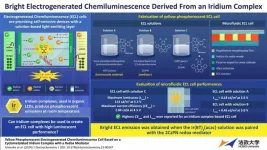
Enhancing electrogenerated chemiluminescence of an iridium complex

Electrogenerated chemiluminescence (ECL) cells, characterized by their self-emissive nature, have gathered significant interest for prospective display applications due to their uncomplicated structure and straightforward fabrication process. These cells are created by sandwiching a solution-based emitting layer between two transparent electrodes. Nevertheless, when compared to other self-emissive devices like light-emitting diodes (LED) and organic LEDs, the luminescent performance of ECL cells ...

Read the release
The effects of primer pairs, PCR conditions, and peptide nucleic acid clamps on plant root fungal diversity assessment
Science

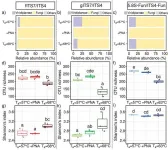
The effects of primer pairs, PCR conditions, and peptide nucleic acid clamps on plant root fungal diversity assessment

Fungi are frequently found both around and within plant tissues (especially in roots) and are involved in both plant nutrient acquisition and resistance to pathogens. Thus, characterizing the diversity and composition of plant-associated fungal communities has been a growing interest in recent years. High-throughput sequencing (HTS), also called metabarcoding, has become a prominent tool to assess complex microbial communities from environmental samples. However, HTS applied to plant-associated ...

Read the release
Science

Can hunger be eradicated by 2030?

World hunger is growing at an alarming rate, with prolonged conflicts, climate change, and COVID-19 exacerbating the problem. In 2022, the World Food Programme helped a record 158 million people. On this trajectory, the United Nations’ goal to eradicate hunger by 2030 appears increasingly unattainable. New research at McGill University shines the spotlight on a significant piece of the puzzle: international food assistance. With no global treaty in place, food aid is guided by a patchwork of international agreements and institutions. Using the concept of a “regime ...

Read the release
Poison center calls for ‘magic mushrooms’ spiked after decriminalization, study finds
Science

Poison center calls for ‘magic mushrooms’ spiked after decriminalization, study finds

Calls to U.S. poison centers involving psilocybin, or “magic mushrooms,” among adolescents and young adults rose sharply after several U.S. cities and states began decriminalizing the hallucinogen, University of Virginia School of Medicine researchers have found. Psilocybin-related calls more than tripled among teens ages 13-19 from 152 to 464 and more than doubled among adults ages 20-25 from 125 to 294 between 2018 and 2022, according to anonymized data gathered from the National Poison Data System. Local and state efforts to decriminalize the possession, use and cultivation of psilocybin began in May 2019. Oregon and Colorado have decriminalized psilocybin, as ...

Read the release
Researchers overestimate their own honesty
Science

Researchers overestimate their own honesty

The average researcher thinks they are better than their colleagues at following good research practice. They also think that their own research field is better than other research fields at following good research practice. This is shown in a new study by researchers at Linköping University, Sweden. The results point to a risk of becoming blind to one’s own shortcomings, according to the Linköping researchers. “The starting point for the project is that there’s a bit of a crisis in the research world. Research misconduct or difficulties to replicate research results have been discovered in many studies. Credibility has been called into question,” ...

Read the release
Tattoo inks don’t match the ingredients listed on the bottle
Science

Tattoo inks don’t match the ingredients listed on the bottle

When you get a tattoo, do you know what you’re putting under your skin? According to new Binghamton University research, the ingredient labels on tattoo ink don’t match the actual substances in the bottle. Produced by the lab of Binghamton Univerity Assistant Professor of Chemistry John Swierk, “What’s in my ink: An analysis of commercial tattoo ink on the U.S. market” was recently published in the journal Analytical Chemistry. Swierk’s lab explores the potential impact of light on tattoos and their chemical breakdown. Early on, doctoral student Kelli Moseman ...

Read the release
Birds and bee lessons as Pacific field trips also solve 'Michener's mystery'
Science

Birds and bee lessons as Pacific field trips also solve 'Michener's mystery'

Eight new Pacific bee species and new insights into Fijian bird behaviour on Viti Levu Island have been described in new scientific studies led by Flinders University. The studies, both funded by field work supported by the Australian Government’s New Colombo Mobility Plan Program, highlight the potential for species discovery, ecological and conservation knowledge and cultural engagement from Asia-Pacific research collaborations. In the past 10 years, Australian Government-funded Flinders University field trips have worked closely ...

Read the release
From the original Press-News collection. Issuers of news releases are responsible for the accuracy of their content.