THE ORIGINAL COLLECTION · SINCE 2010

Science
press releases.

Research announcements from universities, hospitals and scientific institutions. Explore the stories, people and discoveries behind the headlines.

Original publication datesPage 360
FIND A STORY

Find a past release.

Dates and source material belong to the original release.

Read our research explainers

Browse the collection · original publication order

Scientists can tell where a mouse is looking and located based on its neural activity
Science

Scientists can tell where a mouse is looking and located based on its neural activity

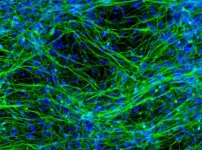
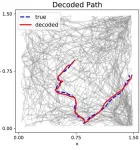
Researchers have paired a deep learning model with experimental data to “decode” mouse neural activity. Using the method, they can accurately determine where a mouse is located within an open environment and which direction it is facing just by looking at its neural firing patterns. Being able to decode neural activity could provide insight into the function and behavior of individual neurons or even entire brain regions. These findings, publishing February 22 in Biophysical Journal, could also inform the design of intelligent machines that currently ...

Read the release


Science

A third of trans masculine individuals on testosterone ovulate

"Trans masculine people are people born female but do not identify as such, for example they feel male, gender fluid or non-binary. Our examination of their ovarian tissue shows that 33% of them show signs of recent ovulation, despite being on testosterone and no longer menstruating," says Joyce Asseler, PhD candidate at Amsterdam UMC. Trans masculine people often use hormone treatment with testosterone to masculinize physically. This hormone usually stops them from menstruating. In that ...

Read the release
Non-solvating electrolytes enhance performance of organic electrode-based batteries
Science

Non-solvating electrolytes enhance performance of organic electrode-based batteries

In a groundbreaking study, Professor Won-Jin Kwak in the School of Energy and Chemical Engineering at UNIST, in collaboration with researchers from Hanyang University, have pioneered a method to significantly enhance the performance and lifespan of organic electrode-based batteries. The findings promise to accelerate the commercialization of eco-friendly batteries and pave the way for further advancements in the field. Organic electrodes have long been recognized for their cost-effectiveness and natural abundance, making them a promising alternative to traditional lithium-ion battery ...

Read the release
NIFTY® DNBSEQ-G99 platform receives CE-IVDD certification and advances prenatal care standards
Science

NIFTY® DNBSEQ-G99 platform receives CE-IVDD certification and advances prenatal care standards

BGI Europe A/S, a wholly owned subsidiary of BGI Genomics, announced its NIFTY® non-invasive prenatal testing kit and software (CE-IVDD List B) were granted an extension under its existing CE-IVDD certification to include the DNBSEQ-G99 model to meet the European Union regulations for medical devices. In January 2024, BGI Genomics unveiled the NIFTY® ultra-fast non-invasive prenatal genetic testing product, utilizing the innovative DNBSEQ-G99 platform. Designed for both small and medium throughput, this platform ensures top-notch testing ...

Read the release
Uncovering anxiety: Scientists identify causative pathway and potential cures
Science

Uncovering anxiety: Scientists identify causative pathway and potential cures

Anxiety-related disorders can have a profound impact on the mental health and quality of life of affected individuals. Understanding the neural circuits and molecular mechanisms that trigger anxiety can aid in the development of effective targeted pharmacological treatments. Delta opioid receptors (DOP), which localize in the regions of the brain associated with emotional regulation, play a key role in the development of anxiety. Several studies have demonstrated the therapeutic effects of DOP agonists (synthetic compounds which selectively bind to DOPs and mimic the effect of ...

Read the release
Stronger storms free more nutrients from mud flats
Science

Stronger storms free more nutrients from mud flats

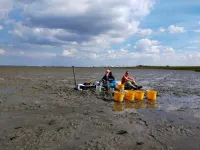
If storms become stronger in the future due to climate change, more nitrogen may be released from the bottom of coastal seas. This is shown by research of marine biogeochemist Dunia Rios-Yunes at NIOZ in Yerseke. Rios-Yunes will defend her PhD-thesis today at the University of Utrecht. “The dynamics of nutrients in deltas and estuaries have been a bit of a blind spot for marine science, so far”, she says. Inflatable couch For her experiments, Rios-Yunes spent many hours on an inflatable couch on ...

Read the release
Former Dutch minister and renowned gastroenterologist joins NTU Singapore as Vice President of Research
Science

Former Dutch minister and renowned gastroenterologist joins NTU Singapore as Vice President of Research

Nanyang Technological University, Singapore (NTU Singapore) has appointed Professor Ernst Kuipers, a renowned gastroenterologist, healthcare executive, and former Minister of Health, Welfare and Sport for The Netherlands, as NTU Singapore’s new Vice President (Research). Prof Kuipers will also be appointed to the tenured faculty rank of Distinguished University Professor, the highest faculty rank at NTU bestowed upon faculty members with extraordinary scholarly achievements that typically span multiple disciplinary boundaries. Announcing this new appointment, NTU President Prof Ho Teck Hua said: “We warmly welcome ...

Read the release
New technique can quickly detect fentanyl and other opioids
Science

New technique can quickly detect fentanyl and other opioids

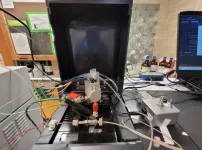
University of Waterloo researchers have developed a new blood testing method that can detect potent opioids much faster than traditional approaches and potentially save lives. The method, the latest effort by Waterloo researchers and entrepreneurs to lead health innovation in Canada, can simultaneously analyze 96 blood samples that could contain opioids such as fentanyl in under three minutes – twice as quickly as other techniques. "The difference between our blood testing method and traditional methods used in laboratories and hospitals is that we can do it faster ...

Read the release
Science

Children born in October least likely to get flu

Children born in October are both more likely to be vaccinated against influenza and least likely to be diagnosed with influenza compared with children born in other months, finds a US study published by The BMJ today. The results suggest that birth month is associated with both timing of flu vaccination and the likelihood of a flu diagnosis - and that October is the optimal time for young children to have a flu shot, in line with current recommendations. Annual influenza vaccination is particularly important for young children, who are at higher risk of flu and severe ...

Read the release
Science

MD Anderson researchers receive over $25.5 million in CPRIT funding

HOUSTON ― The University of Texas MD Anderson Cancer Center today was awarded 16 grants totaling over $25.5 million from the Cancer Prevention and Research Institute of Texas (CPRIT) in support of cancer screening, early detection and prevention programs, faculty recruitment, and groundbreaking cancer research across all areas of the institution. “We are grateful for CPRIT’s continued funding of impactful cancer research and prevention programs at MD Anderson, which propels our efforts to deliver new breakthroughs and to advance our mission to end cancer,” said Peter WT Pisters, M.D., president of MD Anderson. “These efforts are pivotal to our institutional strategy ...

Read the release
Science

Hippo signaling pathway gives new insight into systemic sclerosis

Systemic sclerosis causes the skin to tighten and harden resulting in a potentially fatal autoimmune condition that is associated with lung fibrosis and kidney disease. University of Michigan Health researchers have studied the pathology of systemic sclerosis to understand better the disease and identify key pathways in the disease process that can be targeted therapeutically. A research team led by University of Michigan Health’s Dinesh Khanna, M.B.B.S., M.Sc., professor of rheumatology and Johann Gudjonsson, M.D., Ph.D., professor of dermatology, ...

Read the release
Utah’s Bonneville Salt Flats has long been in flux
Science

Utah’s Bonneville Salt Flats has long been in flux

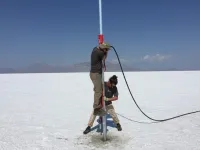
It has been long assumed that Utah’s Bonneville Salt Flats was formed as its ancient namesake lake dried up 13,000 years ago. But new research from the University of Utah has gutted that narrative, determining these crusts did not form until several thousand years after Lake Bonneville disappeared, which could have important implications for managing this feature that has been shrinking for decades to the dismay of the racing community and others who revere the saline pan 100 miles west of Salt ...

Read the release
Stowers Institute Scientific Director Kausik Si receives coveted award from the Chan Zuckerberg Initiative
Science

Stowers Institute Scientific Director Kausik Si receives coveted award from the Chan Zuckerberg Initiative

KANSAS CITY, MO—February 21, 2024—The Chan Zuckerberg Initiative (CZI) has announced the awardees of their second cycle of Collaborative Pairs Pilot Project Awards, part of the CZI Neurodegeneration Challenge Network (NDCN). Scientific Director Kausik Si, Ph.D., from the Stowers Institute for Medical Research will receive an award for the project titled, “Tuning memory by altering amyloids,” which will be conducted alongside Investigator Lukasz Joachimiak, Ph.D., from the University of Texas Southwestern. The Collaborative Pairs Pilot Project Awards were launched in 2018 to investigate unsolved mysteries ...

Read the release
Did neanderthals use glue? Researchers find evidence that sticks
Science

Did neanderthals use glue? Researchers find evidence that sticks

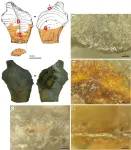
Neanderthals created stone tools held together by a multi-component adhesive, a team of scientists has discovered. Its findings, which are the earliest evidence of a complex adhesive in Europe, suggest these predecessors to modern humans had a higher level of cognition and cultural development than previously thought. The work, reported in the journal Science Advances, included researchers from New York University, the University of Tübingen, and the National Museums in Berlin. “These ...

Read the release
Snaking toward a universal antivenom
Science

Snaking toward a universal antivenom

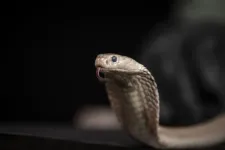
LA JOLLA, CA—Scripps Research scientists have developed an antibody that can block the effects of lethal toxins in the venoms of a wide variety of snakes found throughout Africa, Asia and Australia. The antibody, which protected mice from the normally deadly venom of snakes including black mambas and king cobras, is described on February 21, 2024, in Science Translational Medicine. The new research used forms of the toxins produced in the laboratory to screen billions of different human antibodies and identify one that can block the toxins’ activity. It represents a large step toward a universal ...

Read the release
Science

MD Anderson research highlights for February 21, 2024

HOUSTON ― The University of Texas MD Anderson Cancer Center’s Research Highlights showcases the latest breakthroughs in cancer care, research and prevention. These advances are made possible through seamless collaboration between MD Anderson’s world-leading clinicians and scientists, bringing discoveries from the lab to the clinic and back. Recent developments at MD Anderson offer insights into drug-drug interactions for patients with acute myeloid leukemia (AML) and myelodysplastic syndromes; patient-derived xenograft models as a viable translational ...

Read the release
Science

UChicago scientists invent ultra-thin, minimally-invasive pacemaker controlled by light

Sometimes our bodies need a boost. Millions of Americans rely on pacemakers—small devices that regulate the electrical impulses of the heart in order to keep it beating smoothly. But to reduce complications, researchers would like to make these devices even smaller and less intrusive. A team of researchers with the University of Chicago has developed a wireless device, powered by light, that can be implanted to regulate cardiovascular or neural activity in the body. The featherlight membranes, ...

Read the release
Science

Acupuncture for combat-related posttraumatic stress disorder

About The Study: The acupuncture intervention used in this randomized clinical trial including 93 participants was clinically efficacious and favorably affected the psychobiology of posttraumatic stress disorder (PTSD) in combat veterans. These data build on extant literature and suggest that clinical implementation of acupuncture for PTSD, along with further research about comparative efficacy, durability, and mechanisms of effects, is warranted. Authors: Michael Hollifield, M.D., of the Tibor Rubin VA Medical Center in Long Beach, California, is the corresponding author. To access the embargoed study: Visit our For The Media website at this link https://media.jamanetwork.com/ (10.1001/jamapsychiatry.2023.5651) Editor’s ...

Read the release
Nanoscale manipulation of exciton–trion interconversion in a MoSe2 monolayer via tip-enhanced cavity-spectroscopy
Science

Nanoscale manipulation of exciton–trion interconversion in a MoSe2 monolayer via tip-enhanced cavity-spectroscopy

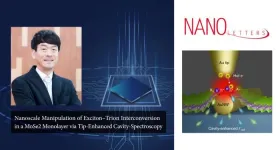
In a significant advancement for next-generation semiconductors, a collaborative research team, led by Professor Kyoung-Duck Park and Mingu Kang in the Department of Physics at POSTECH, Professor Yong Doug Suh in the Department of Chemistry at UNIST, who concurrently holds the position of Associate Director at the IBS Center for Multidimensional Carbon Materials (CMCM), and Professor Hyun Seok Lee in the Department of Physics at Chungbuk National University, has made groundbreaking discoveries in the field of two-dimensional (2D) semiconductors. Their findings, published in Nano Letters, shed light on the generation and control of trions, providing ...

Read the release
New water batteries stay cool under pressure
Science

New water batteries stay cool under pressure

A global team of researchers and industry collaborators led by RMIT University has invented recyclable ‘water batteries’ that won’t catch fire or explode. Lithium-ion energy storage dominates the market due to its technological maturity, but its suitability for large-scale grid energy storage is limited by safety concerns with the volatile materials inside. Lead researcher Distinguished Professor Tianyi Ma said their batteries were at the cutting edge of an emerging field of aqueous energy storage devices, with breakthroughs that significantly improve the technology’s performance and lifespan. “What ...

Read the release
Study details toxic elements found in stranded whales, dolphins over 15 years
Science

Study details toxic elements found in stranded whales, dolphins over 15 years

Whales and dolphins get their nutrients and essential elements through their diet. While eating fish, squid, octopus, crustaceans and other marine mammals, they are also exposed to heavy metal contaminants. Elevated levels of toxins have been found in stranded dolphins and whales along the Southeastern Coast of the United States. Monitoring toxic contaminants in these stranded marine animals, which serve as important sentinels of environmental contamination, and whose health may be linked to human health, is vital. Yet, data remain sparse on how specific elements are distributed within an animal’s body, especially for many rarely encountered ...

Read the release
An awkward family reunion: Sea monsters are our cousins
Science

An awkward family reunion: Sea monsters are our cousins

KANSAS CITY, MO—February 21, 2024—The sea lamprey, a 500-million-year-old animal with a sharp-toothed suction cup for a mouth, is the thing of nightmares. A new study from the Stowers Institute for Medical Research discovered that the hindbrain—the part of the brain controlling vital functions like blood pressure and heart rate—of both sea lampreys and humans is built using an extraordinarily similar molecular and genetic toolkit. Research from the lab of Investigator Robb Krumlauf, Ph.D., published on February 20, 2024 in Nature Communications offers a glimpse into how the brains of ancient animals evolved. The team unexpectedly uncovered that ...

Read the release
Science

Mercury levels in tuna remain nearly unchanged since 1971, study says

Tuna is one of the most popular seafoods worldwide. But this protein-rich fish can build up high levels of methylmercury from feeding on contaminated prey, like smaller fish or crustaceans. Despite efforts to reduce mercury emissions into the environment, researchers report in ACS’ Environmental Science & Technology Letters that levels in tuna appear to be unchanged since 1971. They warn that more aggressive emission reduction targets are needed to start nudging down tuna mercury levels. Environmental ...

Read the release
Weedy rice gets competitive boost from its wild neighbors
Science

Weedy rice gets competitive boost from its wild neighbors

Rice feeds the world. But a look-alike weed has many ways of getting ahead. Weedy rice is an agricultural pest with a global economic impact. It is an aggressive weed that outcompetes cultivated rice and causes billions of dollars in yield losses worldwide. In the U.S. alone, crop losses attributed to weedy rice could feed an additional 12 million people annually. A study from Washington University in St. Louis offers new insights into genetic changes that give weedy rice its edge over cultivated rice in tropical regions of the world. Writing in Nature Communications, researchers ...

Read the release
Why are fish getting smaller as waters warm? It’s not their gills, finds study led by UMass Amherst
Science

Why are fish getting smaller as waters warm? It’s not their gills, finds study led by UMass Amherst

February 21, 2024 Why Are Fish Getting Smaller as Waters Warm? It’s Not Their Gills, Finds Study Led by UMass Amherst Biologists find no link between fish size and gill surface area—study suggests that models underlying some projections of future fisheries yields need to be reconsidered AMHERST, Mass. – A collaborative team of scientists led by the University of Massachusetts Amherst recently found that there is no physiological evidence supporting a leading theory— which involves the surface area of fish gills —as to why many fish species are ...

Read the release
From the original Press-News collection. Issuers of news releases are responsible for the accuracy of their content.