THE ORIGINAL COLLECTION · SINCE 2010

Science
press releases.

Research announcements from universities, hospitals and scientific institutions. Explore the stories, people and discoveries behind the headlines.

Original publication datesPage 379
FIND A STORY

Find a past release.

Dates and source material belong to the original release.

Read our research explainers

Browse the collection · original publication order

Can topography facilitate the refinement of landscape design methods?
Science

Can topography facilitate the refinement of landscape design methods?

In the field of Landscape Architecture, Topography aims to study the complex and ongoing changing relationship between humans and the land through continuously updated and iterative tools and media. It maintains a balance between abstract concepts and concrete perceptions, which can both drive the development of science and technology in this field and hold on to openness to artistic expression. Thus, topographical design may be an effective way to help facilitate refining landscape design methods. The work entitled “Can Topography ...

Read the release


Winding down the window, drinking tea and coffee, turning the radio up and singing while driving could be signs of a dangerous snoring condition
Science

Winding down the window, drinking tea and coffee, turning the radio up and singing while driving could be signs of a dangerous snoring condition

Frequently using more than three strategies to stay alert while driving could be a sign of excessive sleepiness due to obstructive sleep apnoea (OSA), according to a study published today (Thursday) in ERJ Open Research [1]. People with OSA often snore loudly, their breathing starts and stops during the night, and they may wake up several times. Around one in five people are estimated to have OSA but the majority of sufferers do not realise they have a problem. OSA causes excessive sleepiness and people with untreated OSA are at higher risk of collisions on the road. Researchers say that asking people ...

Read the release
Science

Obsessive-compulsive disorder linked to heightened risk of death

People with obsessive-compulsive disorder (OCD) may have an increased risk of death from both natural and unnatural causes than those without the disorder, finds a study from Sweden published by The BMJ today. The researchers point out that many of the natural causes of death are preventable, suggesting that better surveillance, prevention, and early intervention strategies should be implemented to reduce the risk of fatal outcomes in people with OCD. OCD is typically a long term psychiatric disorder affecting about 2% of the population. It is characterised ...

Read the release
Science

Concerns over new laws that could end use of Whatsapp in the NHS

UK law changes pose a threat to the security of messaging apps – and therefore their use in the NHS. In The BMJ today, doctors warn that patient care will suffer if they can no longer use apps such asWhatsApp and Signal to share information. In March 2020, in the face of the pandemic, clinicians were officially allowed to use messaging services such as WhatsApp “where the benefits outweigh the risk,” reversing years of caution about their use in patient care – provided ...

Read the release
Researchers make links between woolly mammoths and colonization of the Americas
Science

Researchers make links between woolly mammoths and colonization of the Americas

Imagine journeying back in time to the era of woolly mammoths, some 14,000 years ago. That’s what a team of international researchers from the University of Ottawa, the University of Alaska Fairbanks, McMaster University and Adelphi University, and Indigenous scholars, managed to do. Using novel high-resolution isotope profiling (a sort of “paleo-GPS”), they were able to connect the dots between the wanderings of a woolly mammoth and the earliest known human settlements in the remote ...

Read the release
Keys to aging hidden in the leaves
Science

Keys to aging hidden in the leaves

Scientists have known about a particular organelle in plant cells for over a century. However, UC Riverside scientists have only now discovered that organelle’s key role in aging. The researchers initially set out to understand more generally which parts of plant cells control plant responses to stress from things like infections, too much salt, or too little light. Serendipitously, they found this organelle, and a protein responsible for maintaining the organelle, control whether plants survive being left too often in the dark. Because they had not expected this discovery, which is ...

Read the release
Rain can spoil a wolf spider’s day, too
Science

Rain can spoil a wolf spider’s day, too

If you hate the rain, you have something in common with wolf spiders. Researchers at the University of Cincinnati found that wolf spiders can’t signal others or perceive danger from predators as easily on rain-soaked leaves compared to dry ones. Even communicating with would-be mates is harder after it rains. The study was published in the Journal of Insect Behavior. Biologists in UC’s College of Arts and Sciences studied Schizocosa ocreata, a wolf spider found across much of the United States. Males respond to chemical signals from females by using a combination of visual ...

Read the release
Independent dispute resolution of no surprises act financially unviable for radiology
Science

Independent dispute resolution of no surprises act financially unviable for radiology

Leesburg, VA, January 17, 2024—According to the American Journal of Roentgenology (AJR), the No Surprises Act’s (NSA) independent dispute resolution (IDR) process would be financially unfeasible for a large portion of out-of-network (OON) claims for hospital-based specialties—more so for radiologists than other specialists. “Although the NSA enacted important patient protections, IDR fees limit clinicians’ opportunities to dispute payer-determined payments and potentially undermine their bargaining power in contract negotiations,” ...

Read the release
The heat is on: UMass Amherst scientists discover southern Africa’s temps will rise past the rhinos’ tolerance
Science

The heat is on: UMass Amherst scientists discover southern Africa’s temps will rise past the rhinos’ tolerance

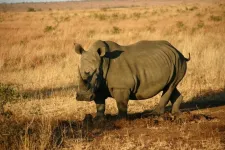
January 17, 2024 The Heat is on: UMass Amherst Scientists Discover Southern Africa’s Temps Will Rise Past the Rhinos’ Tolerance New research shows that rising temperatures caused by climate change are impacting the remaining black and white rhinoceros populations on the African continent, suggests taking steps to mitigate impact now AMHERST, Mass. – Southern Africa contains the vast majority of the world’s remaining populations of both black and white rhinoceroses ...

Read the release
Science

Next generation spinal fusion goes "meta"

A civil engineer at the University of Pittsburgh is applying his expertise in bridges and infrastructure to develop new materials that better treat spinal injury, repair, and recovery. Amir Alavi’s proposal received a $557,000 boost from the National Institutes of Health to test the first “metamaterial” orthopedic implants. With an estimated 342,000 procedures per year in the U.S.1, interbody spinal fusion is a popular procedure to treat a range of spinal pain and injuries, from herniated discs and degenerative diseases to trauma. Interbody fusion cages are spinal implants that are used in most of ...

Read the release
Science

For people with migraine, feelings of stigma may impact disability, quality of life

MINNEAPOLIS – Migraine can impact many aspects of a person’s life, but less is known about how feelings of stigma about the disease affect quality of life. For people with migraine, these feelings of stigma were linked to more disability, increased disease burden and reduced quality of life, according to new research published in the January 17, 2024, online issue of Neurology®, the medical journal of the American Academy of Neurology. “Stigma is common where the disease is not readily apparent to others, and there is indication that it could be especially relevant for those living with migraine,” said study author Robert Evan Shapiro, ...

Read the release
NIH-developed HIV antibodies protect animals in proof-of-concept study
Science

NIH-developed HIV antibodies protect animals in proof-of-concept study

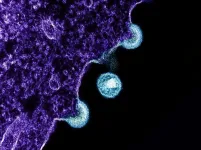
WHAT: Three different HIV antibodies each independently protected monkeys from acquiring simian-HIV (SHIV) in a placebo-controlled proof-of-concept study intended to inform development of a preventive HIV vaccine for people. The antibodies—a human broadly neutralizing antibody and two antibodies isolated from previously vaccinated monkeys—target the fusion peptide, a site on an HIV surface protein that helps the virus fuse with and enter cells. The study, published in Science Translational Medicine, was led by the Vaccine Research Center (VRC) at the National Institute of Allergy and Infectious Diseases (NIAID), part of the National Institutes of Health. Antibodies ...

Read the release
Worldwide, we are living longer and the male-female longevity gap is shrinking
Science

Worldwide, we are living longer and the male-female longevity gap is shrinking

When it comes to trends in mortality over the last thirty years, countries around the world can be grouped into five clusters, roughly representing the five continents, according to a new study published January 17, 2024, in the open-access journal PLOS ONE by David Atance of Universidad de Alcalá, Spain, and colleagues. While the clusters follow different trajectories, they share some commonalities, including longer life expectancies and fewer disparities between genders and groups of countries with different mortality and longevity indicators. Most countries in the world have seen improvements in longevity over the last two centuries, ...

Read the release
Mothers with high levels of dental plaque are 8 times more likely to transfer Candida albicans, involved in tooth decay, to their babies, underlining the need for moms to keep their own teeth clean
Science

Mothers with high levels of dental plaque are 8 times more likely to transfer Candida albicans, involved in tooth decay, to their babies, underlining the need for moms to keep their own teeth clean

Mothers with high levels of dental plaque are 8 times more likely to transfer Candida albicans, involved in tooth decay, to their babies, underlining the need for moms to keep their own teeth clean ### Article URL: https://journals.plos.org/plosone/article?id=10.1371/journal.pone.0290938 Article Title: Multilocus sequence typing of Candida albicans oral isolates reveals high genetic relatedness of mother-child dyads in early life Author Countries: Kuwait, USA Funding: JX; grants K23DE027412 and R01DE031025 from the National Institute of Dental and Craniofacial Research. https://www.nidcr.nih.gov/ The funders ...

Read the release
Dancing is an effective way for overweight and obese people to lose weight and fat, per meta-analysis
Science

Dancing is an effective way for overweight and obese people to lose weight and fat, per meta-analysis

Dancing is an effective way for overweight and obese people to lose weight and fat, per meta-analysis ### Article URL: https://journals.plos.org/plosone/article?id=10.1371/journal.pone.0296089 Article Title: Is dancing an effective intervention for fat loss? A systematic review and meta-analysis of dance interventions on body composition Author Countries: China Funding: We are sure that our funder is the Hunan Provincial Social Science Achievements Evaluation Committee project, the award number is XSP21YBZ163, and the Grant recipient is Longjun Jin. The funder had no role in study design, data collection ...

Read the release
Woolly mammoth movements tied to earliest Alaska hunting camps
Science

Woolly mammoth movements tied to earliest Alaska hunting camps

Researchers have linked the travels of a 14,000-year-old woolly mammoth with the oldest known human settlements in Alaska, providing clues about the relationship between the iconic species and some of the earliest people to travel across the Bering Land Bridge. Scientists made those connections by using isotope analysis to study the life of a female mammoth, named Élmayųujey'eh, by the Healy Lake Village Council. A tusk from Elma was discovered at the Swan Point archaeological site in Interior Alaska. Samples from the tusk revealed details about Elma and the roughly 1,000-kilometer journey she took through Alaska ...

Read the release
Researchers chronicle lifetime travels of a single woolly mammoth which wandered the north more than 14,000 years ago
Science

Researchers chronicle lifetime travels of a single woolly mammoth which wandered the north more than 14,000 years ago

Attention editors: Embargoed by Science Advances until Wednesday, January 17th, 2 p.m. eastern High resolution photos, background footage, video clips can be downloaded at this link: https://photos.app.goo.gl/Sn4unWFGHb5ULdeB9 Hamilton, ON, Jan. 17, 2024 – An international team of researchers from McMaster University, University of Alaska Fairbanks and the University of Ottawa has tracked and documented the movements and genetic connections of a female woolly mammoth that roamed the earth more than 14,000 years ago. She travelled ...

Read the release
The metalens meets the stars
Science

The metalens meets the stars

Metalenses have been used to image microscopic features of tissue and resolve details smaller than a wavelength of light. Now they are going bigger. Researchers at the Harvard John A. Paulson School of Engineering and Applied Sciences (SEAS) have developed a 10-centimeter-diameter glass metalens that can image the sun, the moon and distant nebulae with high resolution. It is the first all-glass, large-scale metalens in the visible wavelength that can be mass produced using conventional CMOS fabrication technology. The ...

Read the release
ASBMB names Mona V. Miller as next executive officer
Science

ASBMB names Mona V. Miller as next executive officer

The American Society for Biochemistry and Molecular Biology today named Mona V. Miller its next chief executive officer, effective April 1. Miller is an experienced association leader with significant experience in strategic planning, advocacy and fundraising. Most recently, she was CEO of the American Society of Human Genetics. Before that she held multiple high-level positions at the Society for Neuroscience. Miller said she was drawn to the ASBMB because “scientifically, biochemistry and molecular biology is at the forefront of knowledge that is transforming health and society.” She said she looks forward to “focusing on the pivotal ...

Read the release
Active membranes: The future of fresh water is bright
Science

Active membranes: The future of fresh water is bright

The growth of Los Angeles as a startup hub is highlighted by a robust and diverse entrepreneurial ecosystem within UCLA. The Magnify Incubator at CNSI is no exception to showcasing the range of early-stage businesses. One such company within the Magnify incubator, Active Membranes, is innovating the future of fresh water through membrane desalination. As freshwater is becoming increasingly scarce around the globe, resources such as seawater and industrial wastewater are costly to procure and operate. The company’s patented technology is electrically conducting ...

Read the release
Chromatin modifier-centered pathway points to higher crop yield
Science

Chromatin modifier-centered pathway points to higher crop yield

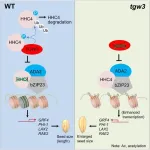
Chromatin is the complex of DNA and proteins that makes up the genetic material in the nucleus of eukaryotic cells. A chromatin modifier is a protein or complex of proteins that chemically modifies the structure of chromatin. Chromatin modifiers play a crucial role in regulating the expression of genes, which are segments of DNA strands, as well as in other chromatin-related processes. These modifiers mainly work by adding or subtracting chemical groups to histones, a type of protein within the chromatin, or to the DNA itself. In the scientific effort to manipulate the expression of plant genes, such as for grain size or drought-resistance, etc., understanding the influence ...

Read the release
Science

New research shows that most early galaxies looked like breadsticks rather than pizza pies or dough balls

Columbia researchers analyzing images from NASA’s James Webb Space Telescope have found that galaxies in the early universe are often flat and elongated, like breadsticks—and are rarely round, like balls of pizza dough. “Roughly 50 to 80% of the galaxies we studied appear to be flattened in two dimensions,” explained Viraj Pandya, a NASA Hubble Fellow at Columbia University, and the lead author of a new paper slated to appear in The Astrophysical Journal that outlines the findings. “Galaxies that look like long, thin breadsticks seem to be very common in the early universe, which is surprising, since they are uncommon among galaxies ...

Read the release
New study unveils emotional hubs that exist across languages
Science

New study unveils emotional hubs that exist across languages

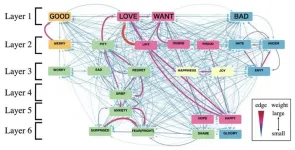
Emotions exert a profound influence on human behavior, prompting extensive explorations in the realms of psychology and linguistics. Understanding central emotions also has practical utility since it can help organizations create messages that resonate better with people. For instance, businesses can enhance their connection with their customers, and non-profits can prompt quicker action by skillfully leveraging the salient emotions in humans. Colexification is a phenomenon in which the occurrence of a single word is associated with multiple concepts that share semantic relationships. The analysis of colexification is an innovative linguistic method for ...

Read the release
Science

E-cigarettes help pregnant smokers quit without risks to pregnancy

A new analysis of trial data on pregnant smokers, led by researchers at Queen Mary University of London, finds that the regular use of nicotine replacement products during pregnancy is not associated with adverse pregnancy events or poor pregnancy outcomes. The PREP 2 study used data collected from over 1100 pregnant smokers attending 23 hospitals in England and 1 stop-smoking service in Scotland to compare pregnancy outcomes in women who did or did not use nicotine in the form of e-cigarettes (EC) or nicotine patches ...

Read the release
John Innes Centre researcher honored with prestigious Blavatnik award
Science

John Innes Centre researcher honored with prestigious Blavatnik award

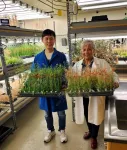
The pioneering research of Dr Yiliang Ding investigating the structure and function of RNA in living cells has been recognised with a major award. Yiliang a group leader at the John Innes Centre, is among nine recipients of the 2024 Blavatnik Awards for Young Scientists in the UK, announced today by the Blavatnik Family Foundation and The New York Academy of Sciences. The awards recognise research that is transforming medicine, technology, and our understanding of the world across three categories: Chemical Sciences, Physical Sciences & Engineering, and ...

Read the release
From the original Press-News collection. Issuers of news releases are responsible for the accuracy of their content.