THE ORIGINAL COLLECTION · SINCE 2010

Science
press releases.

Research announcements from universities, hospitals and scientific institutions. Explore the stories, people and discoveries behind the headlines.

Original publication datesPage 404
FIND A STORY

Find a past release.

Dates and source material belong to the original release.

Read our research explainers

Browse the collection · original publication order

Science

Your co-worker is sick? Your body is already preparing for a fight

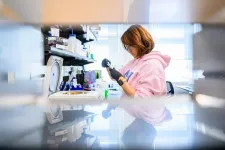
It’s well-known that when those around us get sick, there’s a good chance we’ll catch what they have, but new research reveals that simply observing a sick individual triggers a biological response. Patricia Lopes, an assistant professor of biology at Chapman University, is studying how the body anticipates the possibility of infection just by witnessing someone else's symptoms. This phenomenon raises questions about the interconnectedness of individuals within a social group and how the perception of sickness can influence the health and behavior of others. Her recent work showed that when healthy ...

Read the release

Defending your voice against deepfakes
Science

Defending your voice against deepfakes

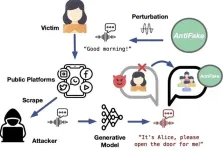
Recent advances in generative artificial intelligence have spurred developments in realistic speech synthesis. While this technology has the potential to improve lives through personalized voice assistants and accessibility-enhancing communication tools, it also has led to the emergence of deepfakes, in which synthesized speech can be misused to deceive humans and machines for nefarious purposes. In response to this evolving threat, Ning Zhang, an assistant professor of computer science and engineering at the McKelvey School of Engineering at Washington University ...

Read the release
Science

Why does puberty trigger us to stop growing?

All animals start out as a single-celled organism and then start growing. At some point, of course, they need to stop getting bigger, but the process by which this happens is poorly understood. New research from Alexander Shingleton at the University of Illinois Chicago and colleagues identifies a potential trigger that makes fruit flies stop growing, which has implications for understanding human development. The research is published in the Proceedings of the National Academy of Sciences. In humans, the body’s signal to stop growing happens around puberty, though it takes several more years before growth actually ceases. It is important to better ...

Read the release
No IKAROS, no antibodies
Science

No IKAROS, no antibodies

A cell nucleus is a busy place. Cellular proteins twist and pull DNA, folding the genome into intricate 3D structures that support functioning of its coding parts. This choreography is essential for cell development, and the exact steps vary wildly between cell types. Establishing proper communication between genes and far-away control switches at the right time in the right cell is not a small feat. In fact, very few proteins have the right combination of features to organize the genome into the right structures. In ...

Read the release
Alien haze, cooked in a lab, clears view to distant water worlds
Science

Alien haze, cooked in a lab, clears view to distant water worlds

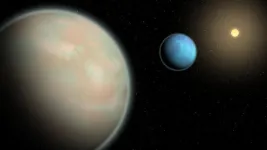
Scientists have simulated conditions that allow hazy skies to form in water-rich exoplanets, a crucial step in determining how haziness muddles observations by ground and space telescopes. The research offers new tools to study the atmospheric chemistry of exoplanets and will help scientists model how water exoplanets form and evolve, findings that could help in the search for life beyond our solar system. “The big picture is whether there is life outside the solar system, but trying to answer that kind of question requires really detailed modeling of all different types, specifically in planets with lots of water,” said co-author ...

Read the release
Fish IgM structure sheds light on antibody evolution, study finds
Science

Fish IgM structure sheds light on antibody evolution, study finds

Antibodies—proteins that are produced by our immune system to protect us—are crucial for recognizing and getting rid of unwanted substances, or antigens, in our body. Although their role is universal, antibody structure varies in different animals. In a new study, researchers have analyzed the antibody Immunoglobulin M in rainbow trout to shed some light on why these proteins may have evolved over time. In humans, IgM consists of five repeating units that are held together by a joining chain, resulting in a star shape. Consequently, IgM can bind to multiple antigens at the ...

Read the release
SwRI-led PUNCH mission advances toward 2025 launch
Science

SwRI-led PUNCH mission advances toward 2025 launch

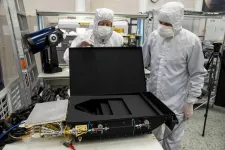
SAN ANTONIO — November 27, 2023 —On November 17, 2023, the Polarimeter to UNify the Corona and Heliosphere (PUNCH) mission achieved an important milestone, passing its internal system integration review and clearing the mission to start integrating its four observatories. Southwest Research Institute leads PUNCH, a NASA Small Explorer (SMEX) mission that will integrate understanding of the Sun’s corona, the outer atmosphere visible during total solar eclipses, with the “solar wind” that fills and defines the solar system. SwRI is also building the spacecraft and three of its five instruments. “This ...

Read the release
Science

Collaboration between women helps close the gender gap in ice core science

A Perspective article published today in Nature Geoscience tackles the longstanding issue of gender representation in science, focusing on the field of ice core science. Prior work has shown that despite progress toward gender parity over the past fifty years1, women continue to be significantly underrepresented within the discipline of Earth sciences2 and receive disproportionately fewer opportunities for recognition, such as invited talks, awards, and nominations3. This lack of opportunity can have long-term negative impacts on women’s careers. To help address these persistent gender gaps, the study evaluates patterns related to women’s publication in ice core science over the ...

Read the release
Pioneering research method reveals bluefin tuna’s fate
Science

Pioneering research method reveals bluefin tuna’s fate

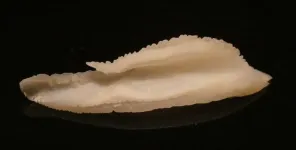
The return of bluefin tuna to Northern European waters is a conservation success story, but rising sea temperatures in their Mediterranean nursery grounds mean this recovery may be short-lived, according to new research led by the University of Southampton. Temperatures expected in the Mediterranean within the next 50 years are expected to drive juvenile tuna out of the Mediterranean, where they may be accidentally caught in existing sardine and anchovy fisheries – requiring fishery managers to adapt their methods to allow tuna nurseries to establish. Outlining the research, published in Nature, lead author Clive Trueman, Professor of Geochemical Ecology ...

Read the release
New study sheds light on the link between lipids and cholelithiasis
Science

New study sheds light on the link between lipids and cholelithiasis

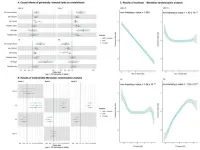
A new study published in the journal Gut has shed light on the complex relationship between serum lipids, lipid-modifying targets, and cholelithiasis, a common condition characterized by the formation of gallstones. The study, led by researchers at the First Hospital of Jilin University, employed a combination of observational and Mendelian randomization (MR) approaches to comprehensively assess these associations. Cholelithiasis is a prevalent hepatobiliary disorder that primarily affects Western populations. It is a significant risk factor for cholangiocarcinoma, ...

Read the release
Honeybee cluster—not insulation but stressful heat sink
Science

Honeybee cluster—not insulation but stressful heat sink

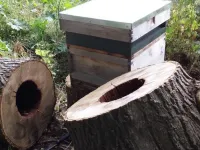
With images - the visual assets can be downloaded by clicking on this WeTransfer link:https://we.tl/t-mbRtSW5BzO *See further information at end of release for captions and required pic credits A Leeds researcher is keen to help beekeepers shape their practices following his study which appears to disprove the widespread belief that honeybees naturally insulate their colonies against the cold. His findings suggest that the creatures are potentially being subjected to thermally-induced ...

Read the release
Science

Smog from Copenhagen’s Bispeengbuen heads straight into living rooms

A large amount of the heavy automobile pollution from Copenhagen’s Bispeengbuen thoroughfare goes straight into people's homes. This, according to a study by researchers at the University of Copenhagen. A sensor developed by one of the researchers can help fill in the blanks of our understanding about local air pollution. Air pollution cuts the lives of more than four thousand Danes short every year. Locally, we have a very limited understanding how many harmful substances waft in the air we breath. Indeed, air pollution is only monitored at fourteen locations across Denmark. This ...

Read the release
Science

Most unmarried, low-income couples show positive co-parenting

COLUMBUS, Ohio – Despite the many challenges they face, slightly more than half of unmarried low-income couples with children have positive co-parenting relationships, a new study found. And those supportive relationships were linked to their children showing more empathy, less emotional insecurity and fewer behavior problems. Parents who are good co-parents work together as a team, provide support to each other and back up each other’s parenting decisions, said Susan Yoon, lead author of the study and associate professor of social work at The Ohio State University. Those types of relationships may be particularly hard for the parents in this study, ...

Read the release
Science

Secrecy at Canada's pest management agency must end

Health Canada increased maximum residue limits for glyphosate in some crops, such as oats and beans, in 2021 despite concerns about the health impact of glyphosate-based herbicides (GBHs). The World Health Organization's (WHO) International Agency for Research on Cancer regards these pesticides as genotoxic, meaning they can damage DNA and are likely carcinogenic. "Health Canada's PMRA considers pesticide sales and risk evaluation data in Canada to be confidential business information, and independent researchers cannot access these data, even through the Access to Information Act. Such ...

Read the release
The Fens of eastern England once held vast woodlands, study finds
Science

The Fens of eastern England once held vast woodlands, study finds

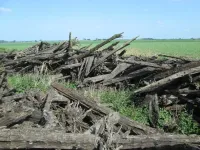
The Fens of eastern England, a low-lying, extremely flat landscape dominated by agricultural fields, was once a vast woodland filled with huge yew trees, according to new research. Scientists from the University of Cambridge studied hundreds of tree trunks, dug up by Fenland farmers while ploughing their fields. The team found that most of the ancient wood came from yew trees that populated the area between four and five thousand years ago. These trees, which are a nuisance when they jam farming equipment during ploughing, contain a treasure trove of perfectly preserved ...

Read the release
Science

Premature death of autistic people in the UK investigated for the first time

A new study led by UCL researchers confirms that autistic people experience a reduced life expectancy, however the number of years of life lost may not be as high as previously claimed. The research, published in The Lancet Regional Health – Europe, is the first to estimate the life expectancy and years of life lost by autistic people living in the UK. The team used anonymised data from GP practices throughout the UK to study people who received an autism diagnosis between 1989 to 2019. They ...

Read the release
Science

How do plants determine where the light is coming from ?

Plants have no visual organs, so how do they know where light comes from? In an original study combining expertise in biology and engineering, the team led by Prof Christian Fankhauser at UNIL, in collaboration with colleagues at EPFL, has uncovered that a light-sensitive plant tissue uses the optical properties of the interface between air and water to generate a light gradient that is 'visible' to the plant. These results have been published in the journal Science. The majority of living organisms (micro-organisms, plants and animals) have the ability to determine the origin of a light source, even in the absence of a sight organ comparable to the eye. This information is invaluable ...

Read the release
Separating out signals recorded at the seafloor
Science

Separating out signals recorded at the seafloor

Blame it on plate tectonics. The deep ocean is never preserved, but instead is lost to time as the seafloor is subducted. Geologists are mostly left with shallower rocks from closer to the shoreline to inform their studies of Earth history. “We have only a good record of the deep ocean for the last ~180 million years,” said David Fike, the Glassberg/Greensfelder Distinguished University Professor of Earth, Environmental, and Planetary Sciences in Arts & Sciences at Washington University in St. Louis. “Everything else is just shallow-water deposits. So it’s really important to understand the bias that might be present when we look ...

Read the release
Science

Dolomite crystals require cycles of saturation conditions to grow

Addressing the long-standing “dolomite problem,” an oddity that has vexed scientists for nearly 200 years, researchers report that dolomite crystals require cycling of saturation conditions to grow. The findings provide new insights into how dolomite is formed and why modern dolomite is primarily found in natural environments with pH or salinity fluctuations. Dolomite – a calcium magnesium carbonate – is one of the major minerals in carbonate rocks, accounting for nearly 30% of the sedimentary carbonate minerality in Earth’s crust. However, despite its geological abundance, dolomite does not readily grow under laboratory conditions, ...

Read the release
Science

Chinese-Russian cooperation has strengthened significantly in the past 30 years, analysis shows

Chinese and Russian cooperation has grown significantly in the past three decades thanks to joint work on energy trade, politics and official visits, analysis shows. There was a ‘limited’ Sino–Russian cooperation intensity in 1992–1995, which grew from then until 2007 and then rose. The bilateral relationship grew progressively, with no exponential growth or peaks, according to the study. There were no or dramatic changes following Russia’s 2014 annexation of Crimea. The ...

Read the release
Science

Researchers develop new method for prenatal genetic testing

A team of investigators from Massachusetts General Hospital (MGH), Brigham and Women’s Hospital (BWH), and the Broad Institute of MIT and Harvard have developed a non-invasive genetic test that can screen the blood of pregnant individuals to survey all genes for fetal DNA sequence variants. The team evaluated the test by examining blood samples from 51 pregnant persons, finding that the test was able to capture variants that were inherited from the mother as well as new variants that were not present in the mother and associated with prenatal diagnoses. ...

Read the release
Science

Adding a few servings of whole grains linked to slower memory decline in Black people

EMBARGOED FOR RELEASE UNTIL 4 P.M. ET, WEDNESDAY, NOVEMBER 22, 2022 MINNEAPOLIS – Black people who eat more foods with whole grains, including some breads and cereals, quinoa, and popcorn, may have a slower rate of memory decline compared to Black people who eat fewer whole grain foods, according to a study published in the November 22, 2023, online issue of Neurology®, the medical journal of the American Academy of Neurology. The researchers did not see a similar trend in white participants. The study does not prove that eating more whole grains slows memory decline; it only shows an association. The study found that among Black ...

Read the release
Researchers obtain promising results against capacity loss in vanadium batteries
Science

Researchers obtain promising results against capacity loss in vanadium batteries

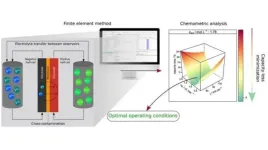
An article by researchers at the Center for Development of Functional Materials (CDMF) in Brazil describes a successful strategy to mitigate charge capacity loss in vanadium redox flow batteries, which are used by electric power utilities among other industries and can accumulate large amounts of energy. The article is published in the Chemical Engineering Journal. CDMF is a Research, Innovation and Dissemination Center (RIDC) funded by FAPESP and hosted by the Federal University of São Carlos (UFSCar) in São Paulo state. The study involved computer ...

Read the release
Casas del Turuñuelo, a site of repeated animal sacrifice in Iron Age Spain
Science

Casas del Turuñuelo, a site of repeated animal sacrifice in Iron Age Spain

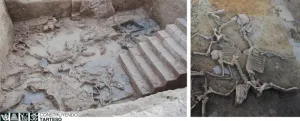
The Iron Age site of Casas del Turuñuelo was used repeatedly for ritualized animal sacrifice, according to a multidisciplinary study published November 22, 2023 in the open-access journal PLOS ONE by Mª Pilar Iborra Eres of the Institut Valencià de Conservació, Restauració i Investigació, Spain, Sebastián Celestino Pérez of Consejo Superior de Investigaciones Científicas, Spain, and their colleagues. Archaeological sites with evidence of major animal sacrifices are rarely ...

Read the release
From the original Press-News collection. Issuers of news releases are responsible for the accuracy of their content.