THE ORIGINAL COLLECTION · SINCE 2010

Science
press releases.

Research announcements from universities, hospitals and scientific institutions. Explore the stories, people and discoveries behind the headlines.

Original publication datesPage 422
FIND A STORY

Find a past release.

Dates and source material belong to the original release.

Read our research explainers

Browse the collection · original publication order

Givers to crowdfunding campaigns enjoy vicarious success
Science

Givers to crowdfunding campaigns enjoy vicarious success

Why would someone decide to give their money to help a stranger bring a creative project to life? Recent research has found that backers of crowdfunding projects participate, in part, because of a sense of indirect success and the feeling that they are contributing to something bigger. Crowdfunding — raising money for a new venture by collecting small amounts from many people — is most often done online, and messaging on the most popular sites reinforces the perception of a more democratic market. But the reality is a bit ...

Read the release
CityU joint research creates 3D-printed aluminium alloy with unprecedented fatigue resistance
Science

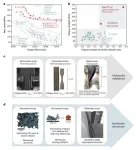
CityU joint research creates 3D-printed aluminium alloy with unprecedented fatigue resistance

It is estimated that over 80% of engineering failures are due to material fatigue, so the fight against metal fatigue failures continues, as this is a key parameter for lightweight structures for all mechanical systems, such as aircraft, automobile and energy-production systems. Recently, joint research by City University of Hong Kong (CityU) and Shanghai Jiao Tong University achieved a breakthrough by creating an aluminium alloy with unprecedented fatigue resistance using advanced 3D printing techniques. ...

Read the release
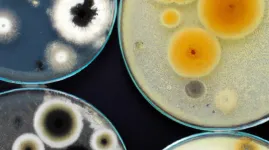
Proven for the first time: The microbiome of fruit and vegetables positively influences diversity in the gut
Science

Proven for the first time: The microbiome of fruit and vegetables positively influences diversity in the gut

Bacterial diversity in the gut plays an important role in human health. The crucial question, however, is where are the sources of this diversity? It is known that an important part of the maternal microbiome is transferred to the baby at birth, and the same happens during the breastfeeding period via breast milk. Further sources were yet to be discovered. However, a team led by Wisnu Adi Wicaksono and Gabriele Berg from the Institute of Environmental Biotechnology at Graz University of Technology (TU Graz) has now succeeded in proving that plant microorganisms from fruit and vegetables contribute to the human microbiome. They report this in a study published in ...

Read the release
New study shows which neighborhoods police spend most time patrolling
Science

New study shows which neighborhoods police spend most time patrolling

BLOOMINGTON, Ind. – Using anonymized smartphone data from nearly 10,000 police officers in 21 large U.S. cities, research from Indiana University finds officers on patrol spend more time in predominantly Black and Hispanic neighborhoods. “Research on policing has focused on documented actions such as stops and arrests – less is known about patrols and presence,” said Kate Christensen, assistant professor of marketing at the IU Kelley School of Business. “Police have discretion in deciding where law enforcement is provided within America’s cities,” she said. “Where police officers are located matters, because it affects ...

Read the release
Small but mighty: the hidden power of broccoli sprouts
Science

Small but mighty: the hidden power of broccoli sprouts

Remember when your parents used to say, “Eat your greens, they are good for you”? Well, they were really onto something. Several studies have shown that higher intakes of cruciferous vegetables like broccoli, one of the most widely consumed vegetables in the United States, are associated with reduced risks of diseases such as diabetes and cancer, thanks to their organosulfur compounds, such as glucosinolates and isothiocyanates that exhibit a broad spectrum of bioactivities including antioxidant activity. However, few studies have focused on ...

Read the release
How to slow the spread of deadly ‘superbugs’
Science

How to slow the spread of deadly ‘superbugs’

Harnessing new advances in genomic surveillance technology could help detect the rise of deadly ‘superbugs’ and slow their evolution and spread, improving global health outcomes, a new Australian study suggests. Antimicrobial resistance occurs when bacteria, viruses, fungi and parasites change over time and no longer respond to the medicines and chemicals we use to kill them. These ‘superbugs’ make infections harder to treat and increase the risk of disease spread, severe illness and death. Without significant intervention, global annual deaths involving antimicrobial resistance are estimated ...

Read the release
Science

Residents unprepared for wildland fires, face barriers in implementing prevention measures: York U study

TORONTO, October 23, 2023 –This year, Canada saw the worst wildfire season in its history, with fires destroying homes, displacing thousands of residents, and burning the largest area since contemporary records began in 1983. Much of this damage to communities could be reduced with better wildfire preparedness – but wildland urban interface (WUI) communities often face significant barriers in implementing these improvements, according to a study by York University’s Disaster and Emergency Management researchers. According to the study, Determinants of residential wildfire mitigation uptake: A ...

Read the release
Science

Major pathologic response to neoadjuvant pembrolizumab in advanced melanoma trial exceeds 50 percent

In exploratory analyses of results from the SWOG S1801 trial in patients with stage III-IV resectable melanoma, researchers saw a major pathologic response in more than half of surgical specimens taken from patients who had been treated with neoadjuvant (pre-operative) pembrolizumab. These and other results of the analyses are presented as a proffered paper (Abstract LBA48) at the European Society of Medical Oncology (ESMO) Congress 2023 in Madrid, Spain, on Monday, October 23, by Sapna P. Patel, MD, chair of the SWOG melanoma committee and associate professor of melanoma medical oncology at the University of Texas MD Anderson Cancer Center. Patel is principal investigator ...

Read the release
Science

NYSCF announces 2023 Class of NYSCF – Robertson Investigators

The New York Stem Cell Foundation (NYSCF) today announced the 2023 class of NYSCF – Robertson Investigators, welcoming three outstanding stem cell researchers into the NYSCF Innovator community. The NYSCF – Robertson Stem Cell Investigator Awards support promising early career scientists whose cutting-edge research holds the potential to accelerate treatments and cures through the NYSCF – Robertson Stem Cell Investigator Awards. The awards provide unrestricted seed funding – $1.5 million over five years – for scientists who have established their own, ...

Read the release
Science

People who communicate more, show expertise are more likely to be seen as essential team members

A new study sheds light on the vital role of communication and expertise within organizations, revealing their impact on group performance. Researchers examined how individuals become part of communication networks and the effect of selection processes on group performance. The study found that people who communicated more during training were more likely to be chosen as a central member of the network. In addition, teams that chose their central member performed as well as and often better than teams whose central member was randomly assigned. The study, by researchers ...

Read the release
Breastfeeding in the setting of substance use
Science

Breastfeeding in the setting of substance use

The Academy of Breastfeeding Medicine (ABM) has released new literature-based recommendations related to breastfeeding in the setting of substance use and substance use disorder (SUD) treatments. The new clinical protocol is published in the peer-reviewed journal Breastfeeding Medicine. Click here to read the article now. Miriam Harris, MD and Elisha Wachman, MD, from Boston Medical Center, and coauthors, provide breastfeeding recommendations in the setting of non-prescribed opioid, stimulant, sedative-hypnotic, alcohol, nicotine, and cannabis use, and SUD treatments. They also offer guidance on the use of toxicology testing in breastfeeding ...

Read the release
Who were the first modern humans to settle in Europe?
Science

Who were the first modern humans to settle in Europe?

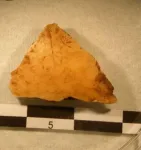
Before modern humans settled definitively in Europe, other human populations left Africa for Europe beginning approximately 60,000 years ago, albeit without settling for the long term. This was due to a major climatic crisis 40,000 years ago, combined with a super-eruption originating from the Phlegraean Fields volcanic area near current-day Naples, subsequently precipitating a decline in ancient European populations. To determine who the first modern humans to settle definitively in Europe were, a team led by CNRS scientists1 analysed the genome of two skull ...

Read the release
Science

Ramseur to receive funding for APA fellowship - APA Minority Fellowship Program (MFP)

Ramseur To Receive Funding For APA Fellowship - APA Minority Fellowship Program (MFP) Kevin Ramseur, II, a Mason doctoral student studying clinical psychology, is set to receive funding for: "APA Fellowship – APA Minority Fellowship Program (MFP)." Ramseur will receive $27,144 from the American Psychological Association on a subaward from the Substance Abuse and Mental Health Services Administration (SAMHSA). This funding will begin in Oct. 2023 and will end in late Sept. 2024. ### About George Mason University George Mason ...

Read the release
Plants transformed into detectors of dangerous chemicals
Science

Plants transformed into detectors of dangerous chemicals

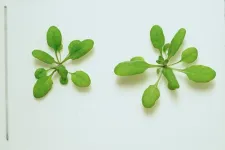
What if your house plant could tell you your water isn’t safe? Scientists are closer to realizing this vision, having successfully engineered a plant to turn beet red in the presence of a banned, toxic pesticide. To achieve this, UC Riverside researchers had to solve an engineering puzzle: how to enable a plant to sense and react to a chemical in the environment without damaging its ability to function normally in all other respects. “The biggest piece here is we’ve created an environmental sensor without modifying ...

Read the release
Science

Homeless people are 16 times more likely to die suddenly

A study led by UC San Francisco has found that people who are experiencing homelessness have a 16-fold higher rate of sudden death from heart attacks, as well as other causes. The study focused on San Francisco County, which has one of the nation’s highest concentrations of homeless people. It found that the rate of sudden cardiac death was 7 times higher than the general population. Some of these deaths may have been prevented with defibrillators and other public policy measures to improve health in this vulnerable population, according to the authors. The paper published ...

Read the release
Science

New study shows surprising effects of fire in North America’s boreal forests

A new study, using a first-of-its-kind approach to analyze satellite imagery from boreal forests over the last three decades, found that fire may be changing the face of the region in a way researchers did not previously anticipate. Historically, fires in North American boreal forests have led to coniferous trees being supplanted by deciduous trees, which are faster growing, take up more carbon and reflect more light, leading to cooling of the climate and decreased likelihood of fire. The study, led by Northern Arizona University and published today in Nature Climate Change, found that, surprisingly, while forests do become more deciduous, ...

Read the release
Researchers develop DANGER analysis tool for the safer design of gene editing
Science

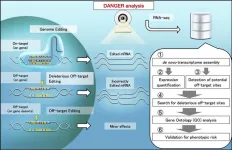
Researchers develop DANGER analysis tool for the safer design of gene editing

A team of researchers has developed a software tool called DANGER (Deleterious and ANticipatable Guides Evaluated by RNA-sequencing) analysis that provides a way for the safer design of genome editing in all organisms with a transcriptome. For about a decade, researchers have used the CRISPR technology for genome editing. However, there are some challenges in the use of CRISPR. The DANGER analysis overcomes these challenges and allows researchers to perform safer on- and off-target assessments without a reference genome. It holds the potential for applications in medicine, agriculture, and biological research. Their ...

Read the release
Science

Do people everywhere care less about their cats than their dogs?

Do canines get more care? Some studies have suggested pet owners are less emotionally attached to and less willing to finance care for cats than dogs, possibly because of cats’ behavior: cats may be perceived as caring less about humans and needing less care in return. But these studies are often conducted on non-representative samples and don’t consider possible cultural differences in attitudes to pets. A team of scientists led by Dr Peter Sandøe of the University of Copenhagen decided to investigate further. “We and others have found that people are willing to spend much less on their cats than ...

Read the release
Science

Association for Molecular Pathology appoints Lauren S. Menser as Chief Executive Officer

ROCKVILLE, Md. – Oct. 23, 2023 – The Association for Molecular Pathology (AMP), the premier global molecular diagnostic professional society, today announced the appointment of Lauren S. Menser, CAE, as its Chief Executive Officer, effective January 3, 2024. Menser will succeed Mary Steele Williams, MNA, MT(ASCP)SM, CAE, after her retirement. AMP’s national search for a new executive leader was administered by an outside consulting firm and overseen by a diverse group of member volunteers. Menser has served AMP in various capacities for more than 17 years. Since 2016, she has served as Director of Strategic Development, ...

Read the release
Science

Predictors of opioid overdose after prescription for chronic pain

A large study published in CMAJ (Canadian Medical Association Journal) https://www.cmaj.ca/lookup/doi/10.1503/cmaj.230459 identified 10 predictors of opioid overdose after prescription for chronic pain, which can help clinicians engage in shared decision-making with patients around opioid prescribing. “The opioid crisis has generated interest in identifying patients at higher risk of addiction or overdose and has led to the development of several screening tools; however, these instruments have either not been validated or shown poor psychometric properties,” writes Dr. Li Wang, a researcher and methodologist at the ...

Read the release
Plant-based isn't just about burgers anymore
Science

Plant-based isn't just about burgers anymore

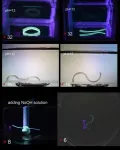
A team of University of Waterloo researchers has created smart, advanced materials that will be the building blocks for a future generation of soft medical microrobots. These tiny robots have the potential to conduct medical procedures, such as biopsy, and cell and tissue transport, in a minimally invasive fashion. They can move through confined and flooded environments, like the human body, and deliver delicate and light cargo, such as cells or tissues, to a target position. The tiny soft robots are a maximum of one centimetre long and are bio-compatible and non-toxic. The robots are made of advanced hydrogel ...

Read the release
Science

American Academy of Pediatrics sounds the alarm on excessive noise and risks to children’s hearing in updated policy statement

Media contacts: Lisa Black, lblack@aap.org; or Adam Alexander, aalexander@aap.org The parent’s universal cry in response to loud music-- “Turn that thing down!” -- is well-founded, as evidence shows that children and teens risk hearing loss by cranking up their personal listening devices. What families may not realize is that children are exposed to potentially harmful noise from infancy and that the effects are cumulative over a lifetime. The American Academy of Pediatrics discusses the common sources and effects of noise, from infant sleep ...

Read the release
Science

Challenging prehistoric gender roles: Research finds that women were hunters, too

It’s a familiar story to many of us: In prehistoric times, men were hunters and women were gatherers. Women were not physically capable of hunting because their anatomy was different from men. And because men were hunters, they drove human evolution. But that story’s not true, according to research by University of Delaware anthropology professor Sarah Lacy, which was recently published in Scientific American and in two papers in the journal American Anthropologist. Lacy and her colleague Cara Ocobock from the University of Notre Dame examined the division of labor according to sex during the Paleolithic era, approximately 2.5 million to 12,000 ...

Read the release
Massachusetts Life Sciences Center awards $4.3 million to MBL to support imaging innovation
Science

Massachusetts Life Sciences Center awards $4.3 million to MBL to support imaging innovation

WOODS HOLE, Mass.—The Massachusetts Life Sciences Center (MLSC) has awarded $4.3 million to the Marine Biological Laboratory (MBL) to expand its imaging capabilities to serve the Massachusetts life sciences community. The grant, which will be used to procure two state-of-the art microscopes capable of increased resolution and advanced technology, such as milling for the reconstruction of samples in 3D, was announced at a press conference on October 18 at the grand opening of a new incubator, the Massachusetts Biomedical Initiatives (MBI). MBL Director of Research Anne Sylvester ...

Read the release
Why do some men not produce sperm?
Science

Why do some men not produce sperm?

KANSAS CITY, MO—October 20, 2023—Millions of couples worldwide experience infertility with half of the cases originating in men. For 10% of infertile males, little or no sperm are produced. Now, new research from the Stowers Institute for Medical Research, in collaboration with the Wellcome Centre for Cell Biology at the University of Edinburgh, is shedding light on what may be going wrong in the process of sperm formation, leading to potential theories on possible treatments. “A ...

Read the release
From the original Press-News collection. Issuers of news releases are responsible for the accuracy of their content.