THE ORIGINAL COLLECTION · SINCE 2010

Science
press releases.

Research announcements from universities, hospitals and scientific institutions. Explore the stories, people and discoveries behind the headlines.

Original publication datesPage 475
FIND A STORY

Find a past release.

Dates and source material belong to the original release.

Read our research explainers

Browse the collection · original publication order

Science

Rosé renaissance: Spanish study uncorks ultrasound for superior wine quality

Since the International Organisation of Vine and Wine (OIV) approved the use of ultrasound to promote the extraction of grape compounds back in 2019, its application for obtaining superior red wines has been studied extensively. Now researchers are turning their attention to rosé – an expanding market which has seen strong growth over the past 15 years. A team from the University of Castilla-La Mancha and the University of Murcia in Spain used high-power ultrasound technology to treat Monastrell crushed grapes – a process known as sonication ...

Read the release

New radar technique lets scientists probe invisible ice sheet region on Earth and icy worlds
Science

New radar technique lets scientists probe invisible ice sheet region on Earth and icy worlds

Scientists at the University of Texas Institute for Geophysics (UTIG) have developed a radar technique that lets them image hidden features within the upper few feet of ice sheets. The researchers behind the technique said that it can be used to investigate melting glaciers on Earth as well as detect potentially habitable environments on Jupiter’s moon Europa. The near-surface layers of ice sheets are difficult to study with airborne or satellite ice-penetrating radar because much of what’s scientifically important happens too close to the surface to be accurately imaged. ...

Read the release
Webb celebrates first year of science with close-up on birth of sun-like stars
Science

Webb celebrates first year of science with close-up on birth of sun-like stars

From our cosmic backyard in the solar system to distant galaxies near the dawn of time, NASA’s James Webb Space Telescope has delivered on its promise of revealing the universe like never before in its first year of science operations. To celebrate the completion of a successful first year, NASA has released Webb’s image of a small star-forming region in the Rho Ophiuchi cloud complex. “In just one year, the James Webb Space Telescope has transformed humanity’s view of the cosmos, peering ...

Read the release
Science

Lupus Research Alliance announces recipients of 2023 Diversity in Lupus Research Awards

NEW YORK, NY, July 12. The Lupus Research Alliance is pleased to announce the 2023 recipients of the Career Development and Postdoctoral Awards to Promote Diversity in Lupus Research. The Diversity in Lupus Research Awards aim to foster the development of outstanding, underrepresented minority scientists and establish a diverse community of researchers and clinicians in the field of lupus. Lupus is a debilitating autoimmune disorder, and the prevalence, severity of symptoms, and mortality are higher among people of color. Yet a recent report by the National Science Foundation showed that while “Blacks or African Americans, Hispanics or Latinos, ...

Read the release
A glimpse into the hexasome: 40 years on
Science

A glimpse into the hexasome: 40 years on

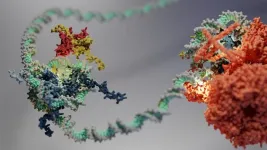
In 1983, scientists discovered hexasomes – a unique molecular structure that helps cells package their DNA. Now, a study conducted by the Eustermann group at EMBL Heidelberg has shed light on how DNA packaging into hexasomes can affect the function of enzymes involved in gene regulation. DNA: a lot to unpack DNA is a very long, thin thread containing our genetic instructions. Being much longer than the tiny space inside our cells, it needs a clever packaging system. That’s where nucleosomes come into play – tiny spool-like structures that help compact our genetic information. Multiple nucleosomes are then linked ...

Read the release
Science

A new tactic to take on leprosy

Leprosy has existed since at least Biblical times, yet scientists still don’t know exactly how Mycobacterium leprae causes the disease’s symptoms. Though antibiotics can treat the illness, researchers are concerned about the increase in drug-resistant strains. Now, a team reporting in ACS Central Science has begun to understand the unique role certain immune receptors play in leprosy infections in mice, which could lead to new types of treatments for this disease and others in humans. Thousands of people are currently affected by leprosy — also known as Hansen’s disease — according to the World Health Organization. The disease can cause skin ...

Read the release
Science

Ohio train derailment, clean-up resulted in high levels of some gases, study shows

A freight train carrying industrial chemicals derailed near East Palestine, Ohio, in February 2023, and to avoid explosions, authorities conducted a controlled release and burned the cars’ contents. Residents were worried about their health and the environment, so researchers have been assessing the local air quality with stationary and mobile sampling methods. Now, in ACS’ Environmental Science & Technology Letters, they report that some gases, including acrolein, reached levels that could be hazardous. After the derailment, disaster response teams ...

Read the release
2018–2022 Southern Resident killer whale presence in the Salish Sea: continued shifts in habitat usage
Science

2018–2022 Southern Resident killer whale presence in the Salish Sea: continued shifts in habitat usage

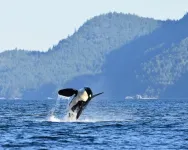
Monika Wieland Shields, Director of the Orca Behavior Institute, has observed orcas in the Salish Sea, a marginal sea of the Pacific Ocean located in the Canadian province of British Columbia and the U.S. state of Washington, since 2000. She has recently published an article in the peer-reviewed Open Access journal PeerJ Life & Environment that provides crucial insights into the changing habitat usage of the critically endangered Southern Resident killer whales (Orcinus orca), shedding light on historic trends and the current status of the population in the Salish Sea. ...

Read the release
Science

$3.9M grant funds e-cigarette flavoring research at Ohio State’s Center for Tobacco Research

COLUMBUS, Ohio - A new $3.9 million grant from the U.S. Food and Drug Administration (FDA) will allow researchers with the Center for Tobacco Research at The Ohio State University Comprehensive Cancer Center to evaluate effects of e-cigarette flavors on the smoking behaviors of current adult smokers. The study, co-led by Theodore Wagener, PhD, director of Ohio State’s Center for Tobacco Research, and Tracy Smith, PhD, of the Medical University of South Carolina (MUSC) Hollings Cancer Center, will be the first ...

Read the release
Gulf War illness caused by mitochondrial dysfunction, not inflammation
Science

Gulf War illness caused by mitochondrial dysfunction, not inflammation

Gulf War Illness (GWI) is a chronic multisymptom health condition affecting one-third of all veterans who served in the 1991 Gulf War, most of whom remain afflicted more than 30 years later. Common symptoms include fatigue, headaches, muscle aches, joint pain, diarrhea, insomnia and cognitive impairment. The condition is believed to have been triggered by veterans’ exposure to environmental toxins. However, its exact mechanism in the body continues to be debated, making it difficult to diagnose and treat. The prevailing ...

Read the release
Science

Queen Mary-led research uncovers why people who have Down’s Syndrome age prematurely

An overdosed gene on chromosome 21 causes people with Down’s Syndrome to age faster than the general population. The molecular processes responsible for natural ageing of cells are poorly understood. Studying conditions in humans where ageing is accelerated due to genetic causes presents opportunities to learn about the mechanisms that control ageing and devise strategies to slow down the ageing process. Adults who have Down’s Syndrome (DS) show earlier signs of ageing-related conditions: reduction in tissue regenerative capacity, alopecia, dry skin, ...

Read the release
Sea snakes may have evolved to see colors again
Science

Sea snakes may have evolved to see colors again

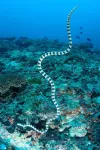
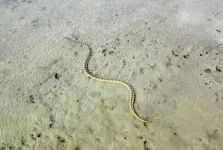
A new paper in Genome Biology and Evolution, published by Oxford University Press, finds that the annulated sea snake, a species of venomous snake found in ocean waters around Australia and Asia, appears to have evolved to see an extended palette of colors after its ancestors lost that ability in response to changing environments. Color vision in animals is primarily determined by genes called visual opsins. While there have been multiple losses of opsin genes during the evolution of tetrapods (the group including amphibians, reptiles, and mammals), the emergence of new opsin genes is extremely ...

Read the release
Sea snake vision evolved to regain color
Science

Sea snake vision evolved to regain color

An international team of scientists examining the genetic history of sea snakes have found that the species has enhanced their colour vision in response to living in brighter and more colourful marine environments. “Our research has found that the annulated sea snake possesses four intact copies of the opsin gene SWS1,” said PhD candidate Isaac Rossetto, from the University of Adelaide’s School of Biological Sciences who led the study. “Two of these genes have the ancestral ultraviolet sensitivity, and two have evolved a new sensitivity to the longer wavelengths that dominate ocean habitats. “The earliest ...

Read the release
Bound states in the continuum is possible in the acoustoelastic coupling
Science

Bound states in the continuum is possible in the acoustoelastic coupling

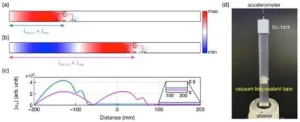
Let’s imagine a hypothetical scenario where two individuals are gripping a rope, each holding one end. Person A proceeds to shake the rope in an up-and-down motion, thus generating a propagating wave that travels towards person B. Now, if person C, positioned between person A and B, engages in a comparable frequency of waving motion as that of the rope’s wave, could the wave be redirected back to person A rather than reaching person B? Initially, this situation appears implausible, as person C does not physically ...

Read the release
Science

Pre-operative exercise substantially helps with recovery – study

Policy-makers are being urged to take notice of a University of Otago study that confirms that undertaking a short programme of high intensity interval training before surgery can substantially help with recovery. The study, published in the journal Surgery, reviewed and analysed 12 studies including 832 patients who had undertaken preoperative high-intensity interval training. Such training involves repeated aerobic high-intensity intervals at about 80 per cent of the maximum heart rate followed by active recovery. Lead investigator Dr Kari Clifford says the study included all types of major surgeries – those expected ...

Read the release
Plant Biology 2023 plenary closeup: Connecting the dots
Science

Plant Biology 2023 plenary closeup: Connecting the dots

This year’s Presidential Symposium places plant science within a larger context, spotlighting the connections between plants and humanity. Accordingly, ASPB President Gustavo MacIntosh selected speakers with a broad array of backgrounds and expertise. Yet when the Presidential Symposium takes place Saturday, August 5, at 1:30 pm, you’ll find they agree on critical fundamentals. “Humans are totally dependent on plants for food,” began Barbara Schaal of Washington University. “When it comes to agriculture, plants and people are really ...

Read the release
Tiny fish surprise scientists in ‘volunteer’s dilemma’
Science

Tiny fish surprise scientists in ‘volunteer’s dilemma’

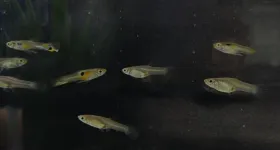
Tiny fish called Trinidadian guppies have surprised scientists when faced with the so-called “volunteer’s dilemma”. The idea of the dilemma is that individuals are less likely to cooperate if they are in a large group. Various studies have demonstrated this in humans – but guppies appear to buck the trend. In the new study, by the University of Exeter, guppies in larger groups were more likely to risk approaching a predator to gather information for the shoal. “When faced with a possible predator, guppies have to balance risks,” said Rebecca Padget, from Exeter’s Centre for Research in Animal Behaviour. “At least one ...

Read the release
Zoonotic researcher receives ORAU Ralph E. Powe Junior Faculty Enhancement Award
Science

Zoonotic researcher receives ORAU Ralph E. Powe Junior Faculty Enhancement Award

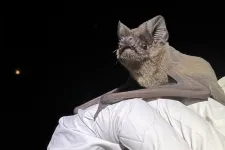
Daniel Becker, Ph.D., an assistant professor of Biology in the Dodge Family College of Arts and Sciences, has received an Oak Ridge Associated Universities Ralph E. Powe Junior Faculty Enhancement Award for his continued research on bat migration in western Oklahoma. “We’re studying migratory Mexican free-tailed bats and the pathogens they might carry that are possible threats to human or wildlife health,” Becker said. “This award allows us to purchase the microchips we implant in the bats and ...

Read the release
Science

AGS supports CMS decision to require real-world data for monoclonal antibodies

New York (July 11, 2023) — The American Geriatrics Society (AGS) supports the recently announced decision from the Centers for Medicare and Medicaid Services (CMS) to require the collection of real-world information via a registry to study monoclonal antibodies directed against amyloid for the treatment of Alzheimer's disease. This decision applies to monoclonal antibodies that receive traditional approval from the Food and Drug Administration (FDA). Currently, lecanemab (trade name ...

Read the release
Science

Satisfaction with online dating app depends on what you’re looking for

With an estimated 75 million active users each month, Tinder is the most popular dating app in the world. But a new study by Stanford Medicine researchers and collaborators has found, surprisingly - though perhaps not to users of the app - that many users are not swiping for dates. In a survey of more than a thousand Tinder users, half said they were not interested in meeting offline, and nearly two-thirds were already married or "in a relationship." In fact, the psychological motivations behind people's use of the app varied widely and had a strong influence on their satisfaction with the app and the dates it led to, according to the study published June 23 ...

Read the release
Warmer weather makes venomous snake bites more likely, especially in spring
Science

Warmer weather makes venomous snake bites more likely, especially in spring

American Geophysical Union Press Release No. 23-27 For Immediate Release 11 July 2023 This press release is available online at: https://news.agu.org/press-release/warmer-weather-makes-venomous-snake-bites-more-likely-especially-in-spring AGU press contact: Rebecca Dzombak, news@agu.org, +1 (202) 777-7492 (UTC-4 hours) Emory University press contact: Rob Spahr, rob.spahr@emory.edu (UTC-4 hours) Interview requests should be sent to Rob. WASHINGTON — Climate change is not only making Georgia hotter but also increasing the likelihood of snake bite, according to a new study. Every degree Celsius of daily temperature increase corresponds with about ...

Read the release
Crawford Lake chosen as the primary marker to identify the start of the Anthropocene epoch
Science

Crawford Lake chosen as the primary marker to identify the start of the Anthropocene epoch

EMBARGOED: Not for Release Until 18:00 BST 11 July 2023. Crawford Lake chosen as the primary marker to identify the start of the Anthropocene epoch Anthropocene proposes human activity has become a dominant influence on the planet, especially since the mid-twentieth century Nuclear bomb tests have left a ‘stark plutonium fingerprint’ of this change in human activity Evidence from Crawford Lake in Canada and 12 secondary locations will be assessed by International Commission on Stratigraphy to decide if we have entered a new geological era Today [11 July 2023] an international team of researchers has chosen the location ...

Read the release
Breaking into tears with microrheology to design custom eye drops
Science

Breaking into tears with microrheology to design custom eye drops

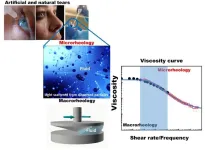
WASHINGTON, July 11, 2023 – Compared to artificial tears, or eye drops, human tears are significantly more complex liquids, with a wide range of components including lipids, carbohydrates, proteins, water, and salt. It is this complex mixture that gives tears the perfect thickness and ability to moisturize the eye, a design that is hard to replicate with fewer ingredients. In Physics of Fluids, from AIP Publishing, Vega et al. researched human tears at the micron level to reveal new ways of customizing artificial tears to address individual symptoms of dry eye disease. The detailed insights they gained about the composition and behavior ...

Read the release
Unborn babies use ‘greedy’ gene from dads to ‘remote-control’ mums into feeding them extra food
Science

Unborn babies use ‘greedy’ gene from dads to ‘remote-control’ mums into feeding them extra food

Unborn babies use ‘greedy’ gene from dads to ‘remote-control’ mums into feeding them extra food Fetuses use a copy of a gene inherited from their dad to force their mum to release as much nutrients as possible during pregnancy, Cambridge scientists have discovered. The unborn baby ‘remote controls’ its mother’s metabolism so the two are in a nutritional tug of war. The mother’s body wants the baby to survive but needs to keep enough glucose and fats circulating in her system for her own health, to be able to deliver ...

Read the release
The science behind skipping stones
Science

The science behind skipping stones

WASHINGTON, July 11, 2023 – Inspired by the need to safeguard marine animals and promote sustainable solutions within marine environments, an interdisciplinary team of researchers from King Abdullah University of Science and Technology in Saudi Arabia and Sofia University in Bulgaria are delving into the hydrodynamics of buoyant objects at the air-water interface. By studying these dynamics, their goal is to expand the understanding of fluid hydrodynamics and complex surface interactions – and advance fields such as the design and performance of marine engineering systems, buoy systems, and ...

Read the release
From the original Press-News collection. Issuers of news releases are responsible for the accuracy of their content.