THE ORIGINAL COLLECTION · SINCE 2010

Science
press releases.

Research announcements from universities, hospitals and scientific institutions. Explore the stories, people and discoveries behind the headlines.

Original publication datesPage 474
FIND A STORY

Find a past release.

Dates and source material belong to the original release.

Read our research explainers

Browse the collection · original publication order

A scalable, safer, and potentially cheaper way to isolate valuable isotopes
Science

A scalable, safer, and potentially cheaper way to isolate valuable isotopes

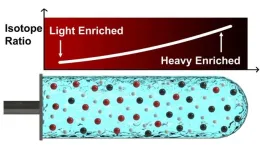
New York, NY—July 13, 2023—New research published in Science Advances, led by Yuan Yang, associate professor of materials science at Columbia Engineering, and collaborators at Lamont-Doherty Earth Observatory, demonstrates a novel technique for isolating isotopes. High Stakes Oxygen is a critical component in the positron emission tomography (PET) scans oncologists use to search for tumors. But not just any oxygen will work. While most oxygen atoms have eight neutrons, about 1 in 500 atoms has ten. Those extra neutrons are necessary for the PET imaging scans to work. The Challenge It’s extremely expensive to isolate ...

Read the release

Science

Under representation of women in policing: Study reveals persistent barriers and gender differences in career advancement

A new study published this week examines the under-representation of women in policing. It reveals that cultural and structural barriers persist and are impacting female career advancement when compared to that of male colleagues. The research, carried out by the University of Portsmouth as part of Dr Jackie Alexander’s doctoral research, is based on unique survey and interview data with female and male senior police leaders in England and Wales. It highlights the challenges faced by women en route to a senior rank and the impact of gender differences ...

Read the release
Science

High-quality sleep promotes resilience to depression and anxiety

Research has shown quality sleep can help bolster resilience to depression and anxiety. The study, led by researchers at the University of York, highlights that chronic stress is a major risk factor for a number of mental health disorders, including depression and pathological anxiety, but high-quality sleep and coping strategies - such as the ability to reframe a situation to see the positive side - can help to prevent poor mental health when faced with negative or stressful experiences. The research studied data from over 600 participants during the COVID-19 pandemic ...

Read the release
Science

Controlled cruelty: New study from VCU finds aggression can arise from successful self-control

RICHMOND, Va. (July 13, 2023) — A new study by a Virginia Commonwealth University researcher has found that aggression is not always the product of poor self-control but, instead, often can be the product of successful self-control in order to inflict greater retribution. The new paper, “Aggression As Successful Self-Control,” by corresponding author David Chester, Ph.D., an associate professor of social psychology in the Department of Psychology at VCU’s College of Humanities and Sciences, was published by the journal Social and Personality Psychology Compass and uses meta-analysis to summarize evidence from dozens of existing ...

Read the release
Science

Successful cooperation depends on good mindreading abilities - study

A person’s ‘mindreading ability’ can predict how well they are able to cooperate, even with people they have never met before. Researchers at the University of Birmingham found that people with strong mind reading abilities – the ability to understand and take the perspective of another person’s feelings and intentions– are more successful in cooperating to complete tasks than people with weaker mind reading abilities. These qualities, also called ‘theory of mind’, are not necessarily related to intelligence and could be improved through training programmes to foster improved cooperation, for example in ...

Read the release
Low-dose atropine eyedrops no better than placebo for slowing myopia progression
Science

Low-dose atropine eyedrops no better than placebo for slowing myopia progression

Use of low-dose atropine eyedrops (concentration 0.01%) was no better than placebo at slowing myopia (nearsightedness) progression and elongation of the eye among children treated for two years, according to a randomized controlled trial conducted by the Pediatric Eye Disease Investigator Group (PEDIG) and funded by the National Eye Institute (NEI). The trial aimed to identify an effective way to manage this leading and increasingly common cause of refractive error, which can cause serious uncorrectable vision loss later in life. Results from the trial were published in JAMA Ophthalmology. Importantly, the findings contradict results from recent trials, primarily in East Asia, which ...

Read the release
Science

Low-dose atropine eye drops vs placebo for myopia control

About The Study: In this randomized clinical trial of school-age children in the U.S. with low to moderate myopia (nearsightedness), atropine, 0.01%, eye drops administered nightly when compared with placebo did not slow myopia progression or axial elongation. These results do not support use of atropine, 0.01%, eye drops to slow myopia progression or axial elongation in U.S. children. Authors: Michael X. Repka, M.D., M.B.A., of the Wilmer Eye Institute in Baltimore, is the corresponding author. To access the embargoed study: Visit our For The Media website at this ...

Read the release
Science

Red pill or blue pill? The critical decision to control the superbugs

Researchers from Tokyo Medical and Dental University (TMDU) investigate a pharmacist-led intervention to optimize the oral antimicrobial prescriptions in dental setting Tokyo, Japan - The battle to stop the increase of superbugs in hospitals has been an ongoing struggle for healthcare professionals. Dentists are currently facing a medical challenge that determines the faith of antimicrobial resistance in healthcare settings. To choose the “red pill” means to embrace the painful truth that bacteria are acquiring resistance to many antimicrobials. Meanwhile, the “blue pill” creates ...

Read the release
Researchers propose strategy for improving NASICON-type cathode performance
Science

Researchers propose strategy for improving NASICON-type cathode performance

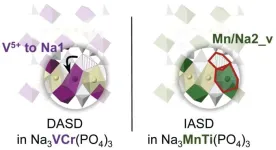
Manganese-rich NASICON-type materials have attracted widespread attention for developing advanced polyanionic cathodes, primarily driven by their abundant reserves, promising cycling performance, and potentially high operating voltage. Unfortunately, their charge/discharge profiles exhibit significant voltage hysteresis, which leads to a limited reversible capacity, thereby preventing their application. Now, however, the situation may be changing due to research by scientists at the Institute of Process Engineering (IPE) and the Institute of Physics of the Chinese Academy of Sciences. They recently identified ...

Read the release
FAU receives $11.5 million gift to combat life-threating illness, amyloidosis
Science

FAU receives $11.5 million gift to combat life-threating illness, amyloidosis

Currently, there is no cure for amyloidosis, a life-threatening disease that can be present throughout the body, including the heart, kidneys, liver and brain. The most common localized form of amyloidosis, which is seen significantly more often, is in the brain. Cerebral amyloidosis, when symptomatic, usually manifests in one of two ways: in Alzheimer’s disease and related dementias and in brain bleeds, which have consequences such as a stroke. Because amyloidosis does not affect a specific organ, unraveling the underlying cause of amyloid fibril creation – a hallmark ...

Read the release
Fear is in the eye of the beholder
Science

Fear is in the eye of the beholder

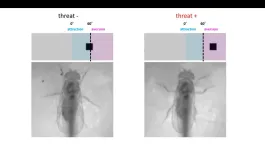
Averting our eyes from things that scare us may be due to a specific cluster of neurons in a visual region of the brain, according to new research at the University of Tokyo. Researchers found that in fruit fly brains, these neurons release a chemical called tachykinin which appears to control the fly’s movement to avoid facing a potential threat. Fruit fly brains can offer a useful analogy for larger mammals, so this research may help us better understand our own human reactions to scary situations and phobias. Next, the team want to find out how these ...

Read the release
Science

Skin lightening products can be dangerous, but users don’t know risks

· Colorism – system of inequality that views lighter skin as more beautiful and advantageous – motivates skin lightening · Users aren’t aware of adulterated ingredients in over-the-counter products such as mercury and steroids · Products are purchased from chain grocery stores or online, used without medical advice CHICAGO --- Skin lightening is prevalent in the U.S. among skin of color individuals – particularly women – but the people who use those products don’t know the risks, reports a new Northwestern ...

Read the release
Science

Unemployment and underemployment significant drivers of suicide: Analysis

A study examining unemployment and underemployment figures and suicide rates in Australia has found both were significant drivers of suicide mortality between 2004-2016. The researchers say the findings indicate that economic policies such as a Job Guarantee, which prioritise full employment, should be a core part of any comprehensive national suicide prevention strategy. Predictive modelling also revealed an estimated 9.5 percent of suicides reported during that time resulted directly from unemployment ...

Read the release
Fungi blaze a trail to fireproof cladding
Science

Fungi blaze a trail to fireproof cladding

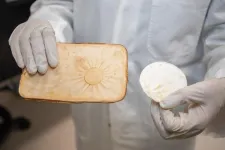
Mycelium, an incredible network of fungal strands that can thrive on organic waste and in darkness, could be a basis for sustainable fireproofing. RMIT researchers are chemically manipulating its composition to harness its fire-retardant properties. Associate Professor Tien Huynh, an expert in biotechnology and mycology, said they’ve shown that mycelium can be grown from renewable organic waste. “Fungi are usually found in a composite form mixed with residual feed material, but we found a way to grow pure mycelium sheets that can be layered and engineered into different uses – from flat panels for the building industry to a leather-like material for ...

Read the release
Three ways to fight invasive Prosopis juliflora tree in Eastern Africa all proved very effective, new study shows
Science

Three ways to fight invasive Prosopis juliflora tree in Eastern Africa all proved very effective, new study shows

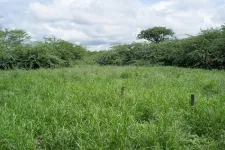
A team of scientists led by CABI have conducted a new study which shows that three ways to fight the invasive Prosopis juliflora tree in Ethiopia, Kenya and Tanzania all proved very effective in almost all cases. The three-year research, published in the journal CABI Agriculture and Bioscience, revealed that cut stump and basal bark herbicide application and manual uprooting were highly effective, killing the trees in between 85-100% of cases. In addition, three incremental restoration interventions were tested ...

Read the release
Poignant photo project reveals all we lost in lockdown
Science

Poignant photo project reveals all we lost in lockdown

Laptops and schoolwork on kitchen tables, a deserted playground, face masks on a washing line, an empty church, a walk in the woods. As the UK Covid inquiry continues for a fifth week, researchers at the University of East Anglia have created a unique snapshot of lockdown life. When the pandemic first hit, the team embarked on a project to track the physical and mental health of the nation. More than a thousand participants signed up and up and they were followed every day for three months in the first study of its kind. As well as keeping daily lifestyle diaries about their physical activity, diet and mood, ...

Read the release
Two UTA professors selected as Fulbright scholars
Science

Two UTA professors selected as Fulbright scholars

Two University of Texas at Arlington faculty members have received Fulbright U.S. Scholar Program awards from the U.S. Department of State and the Fulbright Foreign Scholarship Board. Kevin Schug, Shimadzu Distinguished Professor of Analytical Chemistry in the Department of Chemistry and Biochemistry, will travel to Palacky University in Olomouc, Czech Republic, continuing a decades-long relationship that began during his days as a graduate student. Ling Xu, associate professor in the School of Social Work, will use the award to travel to Taiwan and embark on 10-month project to raise awareness about the ...

Read the release
Daughters breastfed longer, and women accumulated greater wealth in ancient California matriarchal society
Science

Daughters breastfed longer, and women accumulated greater wealth in ancient California matriarchal society

In a new study, researchers and members of the Muwekma Ohlone Tribe of the San Francisco Bay Area are the first to publish evidence of wealth-driven patterns in maternal investment among ancient populations. Ancestors of the Muwekma Ohlone living 2,000 years ago at Kalawwasa Rummeytak in present-day Silicon Valley in California’s San Francisco Bay Area, placed high value on women’s economic contributions to their communities, according to the study. Women stayed in the villages in which they were born, and their male partners moved from their birth communities to join their wives’ families. Women’s intimate knowledge of the local ecology and female ...

Read the release
Food insecurity rate hits 17% for the second time in 18 months
Science

Food insecurity rate hits 17% for the second time in 18 months

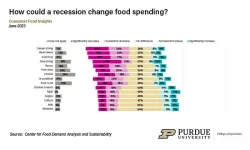
Food insecurity rate hits 17% for the second time in 18 months WEST LAFAYETTE, Ind. – Reported food insecurity has reached 17%, matching the rate last reached in March 2022, according to the June Consumer Food Insights Report. The new report also includes consumer changes in food spending as a result of a hypothetical recession and sentiments on artificial intelligence. The survey-based report out of Purdue University’s Center for Food Demand Analysis and Sustainabilityassesses food spending, consumer satisfaction ...

Read the release
Neutering practices for owned UK cats significantly influence feral, stray populations
Science

Neutering practices for owned UK cats significantly influence feral, stray populations

A new mathematical model of UK cat populations suggests that neutering of cats that belong to people not only affects the population dynamics of owned cats, but also affects feral, stray, and shelter subpopulations. Jenni McDonald of Cats Protection and co-authors present these findings in the open-access journal PLOS ONE on July 12. More than ten million cats live as owned pets in UK homes, and hundreds of thousands of additional cats live in shelters or as free-roaming feral or stray cats. Cats may transition from any of these subpopulations to another. However, while many prior studies have investigated cat population ...

Read the release
Science

Slow population declines might be going undetected, while later rates of extinction could increase exponentially

Slow population declines might be going undetected, while later rates of extinction could increase exponentially ### Article URL: https://journals.plos.org/plosone/article?id=10.1371/journal.pone.0285945 Article Title: The rate of species extinction in declining or fragmented ecological communities Author Countries: Greece, USA Funding: The authors received no specific funding for this work. END ...

Read the release
Simulation study of how body shapes and sizes affected energetic efficiency helps explain relative success of early Polynesian voyaging
Science

Simulation study of how body shapes and sizes affected energetic efficiency helps explain relative success of early Polynesian voyaging

Simulation study of how body shapes and sizes affected energetic efficiency helps explain relative success of early Polynesian voyaging ### Article URL: https://journals.plos.org/plosone/article?id=10.1371/journal.pone.0287290 Article Title: Estimated energetic demands of thermoregulation during ancient canoe passages from Tahiti to Hawaii and New Zealand, a simulation analysis Author Countries: USA, Australia, New Zealand Funding: AM received financial support from the Maritime Encounters (M21-0018) project funded by Sweden's Riksbankens Jubileumsfond. ...

Read the release
Science

How larger body sizes helped the colonizers of New Zealand

COLUMBUS, Ohio – For the first time, researchers have developed a model to estimate how much energy the original colonizers of New Zealand expended to maintain their body temperatures on the cold, harrowing ocean journey from Southeast Asia. Results showed that people making the first voyages from Tahiti to New Zealand in sailing canoes would expend 3.3 to 4.8 times more energy on thermoregulation – the technical term for maintaining body temperature - than those making a trip of similar length to Hawaii. The ocean route to New Zealand required much more energy for thermoregulation ...

Read the release
Those who are smarter live longer
Science

Those who are smarter live longer

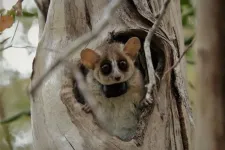
Cognitive abilities not only vary among different species but also among individuals within the same species. It is expected that smarter individuals live longer, as they are likely to make better decisions, regarding habitat and food selection, predator avoidance, and infant care. To investigate the factors influencing life expectancy of wild gray mouse lemurs, researchers from the German Primate Center conducted a long-term study in Madagascar. They administered four different cognitive tests and two personality tests to 198 animals, while also measuring their weight and tracking their survival over several years. ...

Read the release
Secrets of Egyptian painters revealed by chemistry
Science

Secrets of Egyptian painters revealed by chemistry

Within the scope of a vast research program undertaken in coordination with the Egyptian Ministry of Antiquities and the University of Liège, an international team—including scientists from the CNRS, Sorbonne University, and Université Grenoble Alpes—has revealed the artistic license exercised in two ancient Egyptian funerary paintings (dating to ~1,400 and ~1,200 BCE, respectively), as evident in newly discovered details invisible to the naked eye. Their findings are published in PLOS ONE (12 July). The language of ancient ...

Read the release
From the original Press-News collection. Issuers of news releases are responsible for the accuracy of their content.