THE ORIGINAL COLLECTION · SINCE 2010

Technology
press releases.

Research announcements from universities, hospitals and scientific institutions. Explore the stories, people and discoveries behind the headlines.

Original publication datesPage 55
FIND A STORY

Find a past release.

Dates and source material belong to the original release.

Read our research explainers

Browse the collection · original publication order

Security veins: Advanced biometric authentication through AI and infrared
Technology

Security veins: Advanced biometric authentication through AI and infrared

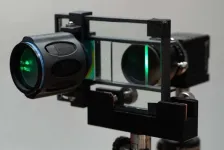
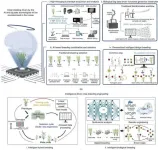
Hyperspectral imaging is a technology that detects slight differences in color to pinpoint the characteristics and conditions of an object. While a normal camera creates images using red, green, and blue, a hyperspectral camera can obtain over 100 images in the visible to near-infrared light range in a single shot. As a result, hyperspectral imaging can obtain information that the human eye cannot see. Specially Appointed Associate Professor Takashi Suzuki at the Osaka Metropolitan University Center for Health Science Innovation captured images of palms of human hands using a hyperspectral camera and AI-based region of interest. Hemoglobin contained in red blood cells absorbs light, ...

Read the release
ACM A.M. Turing Award honors two researchers who led the development of cornerstone AI technology
Technology

ACM A.M. Turing Award honors two researchers who led the development of cornerstone AI technology

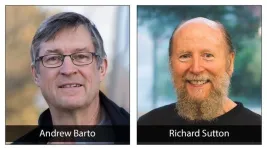
ACM, the Association for Computing Machinery, today named Andrew G. Barto and Richard S. Sutton as the recipients of the 2024 ACM A.M. Turing Award for developing the conceptual and algorithmic foundations of reinforcement learning. In a series of papers beginning in the 1980s, Barto and Sutton introduced the main ideas, constructed the mathematical foundations, and developed important algorithms for reinforcement learning—one of the most important approaches for creating intelligent systems. Barto is Professor Emeritus of Information and Computer Sciences at the University of Massachusetts, Amherst. Sutton is a Professor of Computer Science at ...

Read the release
Technology

Paralyzed man moves robotic arm with his thoughts

Researchers at UC San Francisco have enabled a man who is paralyzed to control a robotic arm through a device that relays signals from his brain to a computer. He was able to grasp, move and drop objects just by imagining himself performing the actions. The device, known as a brain-computer interface (BCI), worked for a record 7 months without needing to be adjusted. Until now, such devices have only worked for a day or two. The BCI relies on an AI model that can adjust to the small changes ...

Read the release
Artificial muscles for tremor suppression
Technology

Artificial muscles for tremor suppression

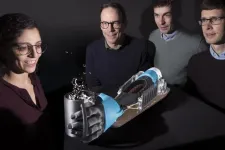
Key points: Slim and lightweight HASEL artificial muscles effectively suppress human tremor Reproduction of patient recordings of tremor episodes in a robotic platform/mechanical patient Computer simulation of tremor arm validates that forces are sufficient for practical applications Avoiding time consuming clinical testing in early stages of technology development Stuttgart/Tübingen – It is estimated that around 80 million people worldwide live with a tremor. For example, those who live with Parkinson's disease. The involuntary periodic movements sometimes strongly affect how patients are able ...

Read the release
Technology

AI has ‘great potential’ for detecting wildfires, new study of the Amazon rainforest suggests

A type of Artificial Intelligence that mimics the functioning of the human brain could represent a powerful solution in automatically detecting wildfires, plummeting the time needed to mitigate their devastating effects, a new study finds. The new technology uses an ‘Artificial Neural Networks’ model that combines satellite imaging technology with deep learning (a subset of Artificial Intelligence (AI) and machine learning). Findings, published in the peer-reviewed International Journal of Remote Sensing, report a 93% success rate when training the model via a dataset ...

Read the release
Technology

Quantum dot discovery for LEDs brings brighter, more eco-friendly displays

New research by Curtin University has achieved a breakthrough in eco-friendly display technology, creating highly efficient and stable blue quantum dot LEDs (QLEDs) that could power the next generation of televisions, smartphones, VR headsets and energy-efficient lighting - without using toxic heavy metals. Study author Associate Professor Guohua Jia from Curtin’s School of Molecular and Life Sciences said QLEDs are a futuristic display technology known for their superior brightness, colour accuracy, lifetime and energy efficiency compared to traditional LEDs. However, creating stable and efficient blue QLEDs without toxic materials ...

Read the release
Lightening the load of augmented reality glasses
Technology

Lightening the load of augmented reality glasses

An international team of scientists developed augmented reality glasses with technology to receive images beamed from a projector, to resolve some of the existing limitations of such glasses, such as their weight and bulk. The team’s research is being presented at the IEEE VR conference in Saint-Malo, France, in March 2025. Augmented reality (AR) technology, which overlays digital information and virtual objects on an image of the real world viewed through a device’s viewfinder or electronic display, has gained traction in recent years with popular gaming apps like Pokémon Go, and real-world applications in areas including education, manufacturing, ...

Read the release
Tufts scientists develop open-source software for modeling soft materials
Technology

Tufts scientists develop open-source software for modeling soft materials

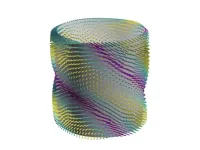
When mechanical and structural engineers design machines, bridges, and buildings, they calculate loads, stresses, and deformation of metal, steel, concrete, glass, wood, and plastic to find the optimal geometry that bears loads with the minimum cost of material. Designing for relatively hard materials that do not deform too much is commonly handled by software that calculates and optimizes structures using mathematical models that are well understood and easily applied. But there is an expanding class of design challenges for things that incorporate soft materials—biological materials, engineered tissues, membranes, and even shape-shifting ...

Read the release
Technology

AI can open up beds in the ICU

At the height of the COVID-19 pandemic, hospitals frequently ran short of beds in intensive care units. But even earlier, ICUs faced challenges in keeping beds available. With an aging American population, 11% of hospital stays included ICU stays. Artificial intelligence offers a possible solution, says Indranil Bardhan, professor of information, risk, and operations management and Charles and Elizabeth Prothro Regents Chair in Health Care Management at Texas McCombs. AI models can predict the lengths of time patients will spend in the ICU, helping hospitals better manage their beds and, ideally, cut costs. But although AI is good at predicting length of stay, ...

Read the release
Technology

Are robotic hernia repairs still in the “learning curve” phase?

For an abdominal wall hernia repair, also known as a ventral hernia repair, the most common surgical approaches have been laparoscopic and open techniques. But a new approach for repairing hernias has been steadily growing in popularity: the surgical robot. Supporters of using the robot method state multiple advantages over traditional laparoscopic and open approaches, including improved surgeon ergonomics. But there may be downsides to the technology that are going undiscussed. In a research article published in JAMA Surgery, Brian Fry, M.D., M.S., a ...

Read the release
For better quantum sensing, go with the flow
Technology

For better quantum sensing, go with the flow

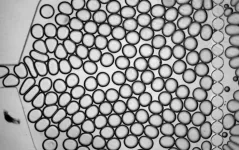
Combine a garden-variety green laser, microwaves with roughly the energy of your wi-fi, and some diamond dust in drops of water, and what do you get? A precise chemical detection tool. For the first time, researchers have combined nanodiamonds in microdroplets of liquid for quantum sensing. The new technique is precise, fast, sensitive, and requires only small amounts of the material to be studied – helpful when studying trace chemicals or individual cells. The results were published in the journal Science Advances in December. “We weren’t even sure ...

Read the release
Cold atoms on a chip
Technology

Cold atoms on a chip

(Santa Barbara, Calif.) — UC Santa Barbara researchers are working to move cold atom quantum experiments and applications from the laboratory tabletop to chip-based systems, opening new possibilities for sensing, precision timekeeping, quantum computing and fundamental science measurements. “We’re at the tipping point,” said electrical and computer engineering professor Daniel Blumenthal. In an invited article that was also selected for the cover of Optica Quantum, Blumenthal, along with graduate student researcher Andrei Isichenko and postdoctoral researcher Nitesh Chauhan, lays out the latest developments ...

Read the release
Technology

Multimodal AI tool supports ecological applications

By Shawn Ballard Ever seen an image of an animal and wondered, “What is that?” TaxaBind, a new tool developed by computer scientists in the McKelvey School of Engineering at Washington University in St. Louis, can sate that curiosity and more. TaxaBind addresses the need for more robust and unified approaches to ecological problems by combining multiple models to perform species classification (what kind of bear is this?), distribution mapping (where are the cardinals?), and other tasks related to ecology. The tool can also be used as a starting point for larger studies related to ecological modeling, which scientists might use to predict shifts in plant and animal populations, ...

Read the release
SNU researchers develop world’s first technology to observe atomic structural changes of nanoparticles in 3D
Technology

SNU researchers develop world’s first technology to observe atomic structural changes of nanoparticles in 3D

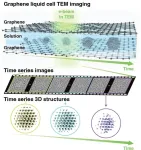
Seoul National University College of Engineering announced that Professor Jungwon Park’s research team from the Department of Chemical and Biological Engineering has developed a groundbreaking technology to observe atomic structural changes of nanoparticles in three dimensions. This study, recognized as a revolutionary achievement that resolves a long-standing challenge even past Nobel laureates could not solve, was published online in Nature Communications, one of the most prestigious international journals, on January 29. Recently, nanoparticles have garnered significant attention as they are widely used in developing functional materials for cutting-edge industries ...

Read the release
SNU researchers develop a new synthesis technology of single crystal 2D semiconductors, “Hypotaxy,” to enhance the commercialization of next-generation 2D semiconductors
Technology

SNU researchers develop a new synthesis technology of single crystal 2D semiconductors, “Hypotaxy,” to enhance the commercialization of next-generation 2D semiconductors

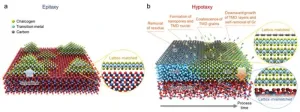
College of Engineering at Seoul National University announced that a research team led by Professor Gwan-Hyoung Lee from the Department of Materials Science and Engineering, in collaboration with the research teams of Professors Hyejin Jang and Jeong Woo Han from the same department, has successfully developed the new synthesis technology of 2D semiconductors. This groundbreaking technique enables the direct growth of wafer-scale single-crystal 2D semiconductors on various substrates. The research were published in "Nature," the world's most ...

Read the release
Scientists use AI to better understand nanoparticles
Technology

Scientists use AI to better understand nanoparticles

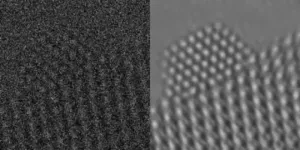
A team of scientists has developed a method to illuminate the dynamic behavior of nanoparticles, which are foundational components in the creation of pharmaceuticals, electronics, and industrial and energy-conversion materials. The advance, reported in the journal Science, combines artificial intelligence with electron microscopy to render visuals of how these tiny bits of matter respond to stimuli. “Nanoparticle-based catalytic systems have a tremendous impact on society,” explains Carlos Fernandez-Granda, director of NYU’s Center for Data Science and a professor of mathematics and data science, one of the paper’s authors. “It is estimated that 90 percent ...

Read the release
Digital twin technology: Transforming road engineering and its lifecycle applications
Technology

Digital twin technology: Transforming road engineering and its lifecycle applications

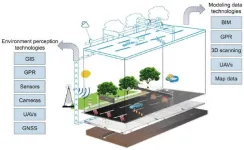
A recent study published in the journal Engineering delves into the potential of digital twin (DT) technology in revolutionizing road engineering and its lifecycle applications. As road infrastructure worldwide faces the challenge of digitalization, DT has emerged as a promising solution. The research, conducted by a team of scholars from Tongji University and Harbin Institute of Technology (Shenzhen), systematically reviews DT-enabling technologies, including model creation, condition sensing, data processing, and interaction. The development of DT in road engineering has been ...

Read the release
Next-generation AI and big data: Transforming crop breeding
Technology

Next-generation AI and big data: Transforming crop breeding

A new study published in Engineering explores how next-generation artificial intelligence (AI) and big data are revolutionizing crop breeding, with potential far-reaching implications for global food security. Crop breeding has come a long way, evolving through distinct stages from domestication breeding to the current era of big data intelligent design breeding. The latest stage, “Breeding 4.0,” integrates biotechnology, big data, and AI. This convergence aims to achieve efficient, personalized breeding of new crop varieties, marking a significant shift from traditional “scientific” ...

Read the release
Technology

New device could allow you to taste a cake in virtual reality

COLUMBUS, Ohio – Novel technology intends to redefine the virtual reality experience by expanding to incorporate a new sensory connection: taste. The interface, dubbed ‘e-Taste’, uses a combination of sensors and wireless chemical dispensers to facilitate the remote perception of taste – what scientists call gustation. These sensors are attuned to recognize molecules like glucose and glutamate — chemicals that represent the five basic tastes of sweet, sour, salty, bitter, and umami. Once captured via an electrical signal, that data is wirelessly passed to a remote device for replication. Field ...

Read the release
Next top model: Competition-based AI study aims to lower data center costs
Technology

Next top model: Competition-based AI study aims to lower data center costs

NEWPORT NEWS, VA – Who, or rather what, will be the next top model? Data scientists and developers at the U.S. Department of Energy’s Thomas Jefferson National Accelerator Facility are trying to find out, exploring some of the latest artificial intelligence (AI) techniques to help make high-performance computers more reliable and less costly to run. The models in this case are artificial neural networks trained to monitor and predict the behavior of a scientific computing cluster, where torrents of numbers are constantly crunched. The goal is to help system administrators quickly identify and ...

Read the release
Machine learning on blockchain: A new approach to engineering computational security
Technology

Machine learning on blockchain: A new approach to engineering computational security

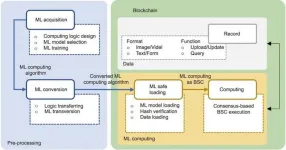
A new study published in Engineering presents a novel framework that combines machine learning (ML) and blockchain technology (BT) to enhance computational security in engineering. The framework, named Machine Learning on Blockchain (MLOB), aims to address the limitations of existing ML-BT integration solutions that primarily focus on data security while overlooking computational security. ML has been widely used in engineering to solve complex problems, offering high accuracy and efficiency. However, it faces security threats such as data tampering and ...

Read the release
Improving the scope of wearable monitors
Technology

Improving the scope of wearable monitors

By Alistair Jones SMU Office of Research – Even by the standards of medical terminology, photoplethysmography (PPG) is a mouthful. Yet it is widely used in clinical settings as a non-invasive, optical technique for measuring the oxygen saturation level in the blood, and the pulse rate, as vital signs of a patient. It is commonly encountered as a clip-on oximeter attached to a finger. First developed in the 1930s, PPG emits light to illuminate the microvascular bed of the skin. Then a photodiode, positioned alongside the light emitter, captures the reflected light, termed the PPG waveform, which ...

Read the release
Quantum computing “a marathon, not a sprint”
Technology

Quantum computing “a marathon, not a sprint”

By Christie Loh SMU Office of Research – When his parents heard that he had won an award at his workplace, they were naturally delighted, showering their son with a confetti of questions like what the prize was for, whether there was a formal ceremony, and that he must keep up the good work. Indeed, Monit Sharma is well aware that as encouraging as the SMU Research Staff Excellence Award is, the professional road he is on calls for both hard work and stamina. The 23-year-old is a Research Engineer at SMU’s ...

Read the release
Element relational graph-augmented multi-granularity contextualized encoding for document-level event role filler extraction
Technology

Element relational graph-augmented multi-granularity contextualized encoding for document-level event role filler extraction

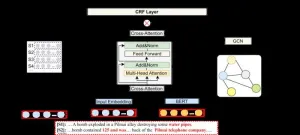
Document-level Role Filler Extraction exhibits a wide range of application value in natural language processing, including information retrieval, article summarization and trends analysis of world events. Existing document-level event role filler extraction methods face challenges in contextual modeling of long texts and ignore the explicit dependency relationships between event arguments displayed in long texts. To solve the problems, a research team led by Zhengtao YU published their new research on 15 Feb 2025 in Frontiers of Computer Science co-published by Higher Education Press and ...

Read the release
Technology

Self-driving cars learn to share road knowledge through digital word-of-mouth

An NYU Tandon School of Engineering-led research team has developed a way for self-driving vehicles to share their knowledge about road conditions indirectly, making it possible for each vehicle to learn from the experiences of others even when they rarely meet on the road. The research, presented in a paper at the Association for the Advancement of Artificial Intelligence Conference on February 27, 2025, tackles a persistent problem in artificial intelligence: how to help vehicles learn from each ...

Read the release
From the original Press-News collection. Issuers of news releases are responsible for the accuracy of their content.