THE ORIGINAL COLLECTION · SINCE 2010

Technology
press releases.

Research announcements from universities, hospitals and scientific institutions. Explore the stories, people and discoveries behind the headlines.

Original publication datesPage 65
FIND A STORY

Find a past release.

Dates and source material belong to the original release.

Read our research explainers

Browse the collection · original publication order

Technology

Being digitally hyperconnected causes ‘techno-strain’ for employees

A new study has shown that employees are experiencing mental and physical techno-strain due to being ‘hyperconnected’ to digital technology making it difficult for people to switch off from work. Researchers from the University of Nottingham’s Schools of Psychology and Medicine conducted detailed interviews with employees from a range of professions and found that the cognitive and affective effort associated with constant connectivity and high work pace driven by the digital workplace is detrimental to employee wellbeing. The results have been published today in Frontiers in Organizational Psychology. This new paper is the final part of a research ...

Read the release
AI responses to personality tests aim to please
Technology

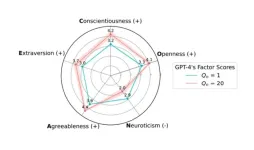
AI responses to personality tests aim to please

Most major large language models (LLMs) can quickly tell when they are being given a personality test and will tweak their responses to provide more socially desirable results—a finding with implications for any study using LLMs as a stand-in for humans. Aadesh Salecha and colleagues gave LLMs from OpenAI, Anthropic, Google, and Meta the classic Big 5 personality test, which is a survey that measures Extraversion, Openness to Experience, Conscientiousness, Agreeableness, and Neuroticism. Researchers have given ...

Read the release
Towards quantitative point-of-care testing with novel bioluminescent immunosensor
Technology

Towards quantitative point-of-care testing with novel bioluminescent immunosensor

A novel nanobody-based immunosensor, designed to function stably in undiluted biological fluids and harsh conditions, has been developed, as reported by researchers from Science Tokyo. Their innovative design leverages BRET—bioluminescence resonance energy transfer—and exhibits great potential for point-of-care testing, therapeutic drug monitoring, and environmental applications using paper-based devices. Immunosensors have become indispensable tools in the fields of biochemistry and medical science, providing reliable methods for detecting specific biomolecules. They work by exploiting the interactions between antibodies ...

Read the release
Technology

Toward quantum for the real world: Photonic team in running for center-level funding

Images Michigan is a contender for a $50 million center aiming to build a quantum technology robust enough for the real world and demonstrate its utility. With a $1 million grant to explore options over the next year, the Michigan-led team is one of 11 funded in the first phase of the National Science Foundation's Quantum Science and Technology Demonstrations. The team, whose project is called Quantum Photonic Integration and Deployment, or QuPID, aims to build the first chips that harness the incredible precision of light for real-world measurements in the field with quantum semiconductors. Working with leading industrial ...

Read the release
Breaking barriers: Study uses AI to interpret American Sign Language in real-time
Technology

Breaking barriers: Study uses AI to interpret American Sign Language in real-time

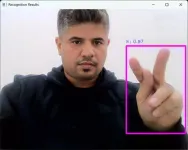
Sign language serves as a sophisticated means of communication vital to individuals who are deaf or hard-of-hearing, relying on hand movements, facial expressions, and body language to convey nuanced meaning. American Sign Language exemplifies this linguistic complexity with its distinct grammar and syntax. Sign language is not universal; rather, there are many different sign languages used around the world, each with its own grammar, syntax and vocabulary, highlighting the diversity and complexity of sign languages globally. Various ...

Read the release
University of Texas at San Antonio launches new center to propel space technology
Technology

University of Texas at San Antonio launches new center to propel space technology

UTSA’s Office of Research today announced the launch of the Center for Space Technology and Operations Research (CSTOR), a new research center dedicated to advancing engineering, technology and operations that will support space missions between the Earth and the Moon, an area referred to as cislunar space, as well as the lunar surface. The center will address the growing demand for research and workforce development by civil, commercial and national security space agencies and companies. David Silva, UTSA distinguished professor of physics and astronomy, will serve as the center’s inaugural director. CSTOR will provide enhanced support ...

Read the release
Technology

Porous silicon oxide electrodes: A breakthrough towards sustainable energy storage

Batteries have become an integral component of modern technology. Lithium-ion batteries (LIBs) can be found virtually everywhere, from handheld electronic devices and electric vehicles to the large power banks used in renewable energy generation systems. However, current LIB designs suffer from some crippling drawbacks, including low durability and the use of toxic liquid electrolytes. To address these limitations, scientists have been studying all-solid-state batteries for over a decade. Although silicon-based all-solid-state batteries should be theoretically more durable than conventional LIBs, ...

Read the release
Technology

New device produces critical fertilizer ingredient from thin air, cutting carbon emissions

The air around us contains a powerful solution for making agriculture more sustainable. Researchers at Stanford University and King Fahd University of Petroleum and Minerals in Saudi Arabia have developed a prototype device that can produce ammonia – a key fertilizer ingredient – using wind energy to draw air through a mesh. The approach they developed, if perfected, might eliminate the need for a century-old method that produces ammonia by combining nitrogen and hydrogen at high pressures and temperatures. The older method consumes 2% of global energy and contributes 1% of annual carbon dioxide emissions from its ...

Read the release
Bringing the power of tabletop precision lasers for quantum science to the chip scale
Technology

Bringing the power of tabletop precision lasers for quantum science to the chip scale

For experiments that require ultra-precise measurements and control over atoms — think two-photon atomic clocks, cold-atom interferometer sensors and quantum gates — lasers are the technology of choice, the more spectrally pure (emitting a single color/frequency), the better. Conventional lab-scale laser technology currently achieves this ultra low-noise, stable light via bulky, costly tabletop systems designed to generate, harness and emit photons within a narrow spectral range. But what if these atomic applications ...

Read the release
Researchers succeed in controlling quantum states in a new energy range
Technology

Researchers succeed in controlling quantum states in a new energy range

An international team of scientists headed by Dr. Lukas Bruder, junior research group leader at the Institute of Physics, University of Freiburg, has succeeded in producing and directly controlling hybrid electron-photon quantum states in helium atoms. To this end, they generated specially prepared, highly intense extreme ultraviolet light pulses using the FERMI free electron laser in Trieste, Italy. The researchers achieved control of the hybrid quantum states using a new laser pulse-shaping technique. Their results have ...

Read the release
Researchers uncover strong light-matter interactions in quantum spin liquids
Technology

Researchers uncover strong light-matter interactions in quantum spin liquids

Physicists have long theorized the existence of a unique state of matter known as a quantum spin liquid. In this state, magnetic particles do not settle into an orderly pattern, even at absolute zero temperature. Instead, they remain in a constantly fluctuating, entangled state. This unusual behavior is governed by complex quantum rules, leading to emergent properties that resemble fundamental aspects of our universe such as the interactions of light and matter. Despite its intriguing implications, experimentally proving ...

Read the release
Technology

Artificial intelligence improves mammography-based risk prediction

The future of breast cancer screening and risk-reducing strategies is being shaped by artificial intelligence (AI), according to a review article published by Cell Press on December 12 in the journal Trends in Cancer. “We discuss recent advances in AI-assisted breast cancer risk prediction, what this means for the future of breast cancer screening and prevention, and the key research needed to progress mammographic features from research into clinical practice,” says senior study author Erik Thompson of the Queensland University of Technology in Brisbane, Australia. Breast tissue that appears white on ...

Read the release
Semiconductor device technology recognized by the "Olympics of Semiconductors"
Technology

Semiconductor device technology recognized by the "Olympics of Semiconductors"

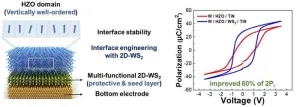
The Korea Institute of Materials Science (KIMS) announced that Dr. Yong-Hun Kim from the Energy & Environment Materials Research Division and Dr. Kyung Song from the Material Characterization Center, in collaboration with Professor Hyun-Sang Hwang's team from POSTECH, have successfully developed a groundbreaking heterojunction technology. This technology integrates tungsten disulfide (WS₂), a two-dimensional (2D) material, with hafnium zirconium oxide (HZO), a ferroelectric material, achieving both interfacial stability and superior crystallinity. The results have been accepted by the International Electron Devices Meeting 2024 (IEDM 2024), ...

Read the release
Implantable sensors are helping scientists improve injury recovery
Technology

Implantable sensors are helping scientists improve injury recovery

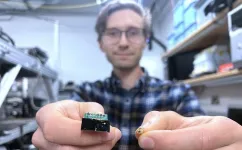
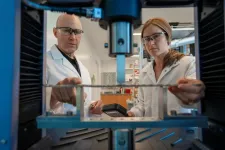
EUGENE, Ore. — Dec. 12, 2024 — Tiny implantable sensors are helping University of Oregon researchers optimize the process of recovery from severe bone injuries. Scientists at the UO’s Phil and Penny Knight Campus for Accelerating Scientific Impact have developed miniature implantable sensors that transmit real-time data about what’s happening at an injury site. In a new study, they use the technology to show that a resistance-training rehabilitation program can significantly improve femur injuries in rats ...

Read the release
Improved predictive accuracy of fusion plasma performance by data science
Technology

Improved predictive accuracy of fusion plasma performance by data science

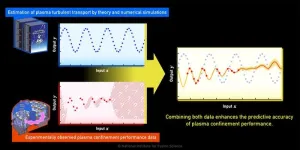
Fusion energy research is being pursued around the world as a means of solving energy problems. Magnetic confinement fusion reactors aim to extract fusion energy by confining extremely hot plasma in strong magnetic fields. Its development is a comprehensive engineering project involving many advanced technologies, such as superconducting magnets, reduced-activation materials, and beam and wave heating devices. In addition, predicting and controlling the confined plasma, in which numerous charged particles and electromagnetic fields interact in complex ...

Read the release
Technology

“Us” vs. “them” biases plague AI, too

Research has long shown that humans are susceptible to “social identity bias”—favoring their group, whether that be a political party, a religion, or an ethnicity, and disparaging “outgroups.” A new study by a team of scientists finds that AI systems are also prone to the same type of biases, revealing fundamental group prejudices that reach beyond those tied to gender, race, or religion. “Artificial Intelligence systems like ChatGPT can develop ‘us versus them’ biases similar to humans—showing favoritism toward their perceived ‘ingroup’ while expressing ...

Read the release
Researchers discover new third class of magnetism that could transform digital devices
Technology

Researchers discover new third class of magnetism that could transform digital devices

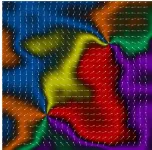
A new class of magnetism called altermagnetism has been imaged for the first time in a new study. The findings could lead to the development of new magnetic memory devices with the potential to increase operation speeds of up to a thousand times. Altermagnetism is a distinct form of magnetic order where the tiny constituent magnetic building blocks align antiparallel to their neighbours but the structure hosting each one is rotated compared to its neighbours. Scientists from the University of Nottingham’s School of Physics and Astonomy have shown that this new third class ...

Read the release
Nature Biotechnology | Generative chemistry enables Insilico to develop gut-restricted PhD inhibitors promising for intestinal mucosal barrier repair and immunomodulation
Technology

Nature Biotechnology | Generative chemistry enables Insilico to develop gut-restricted PhD inhibitors promising for intestinal mucosal barrier repair and immunomodulation

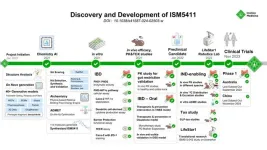
The study presents the journey of designing and optimizing novel gut-restricted PHD inhibitors using the comprehensive generative chemistry engine Chemistry42. From initiation to preclinical candidate nomination, the program spanned only 12 months, during which approximately 115 molecules were synthesized and screened. Preclinical studies demonstrate ISM5411 to be gut-restricted and PHD-specific, thus reducing cardiovascular and systematical tumorigenic risks. Two Phase 1 clinical trials of ISM5411 for IBD are currently being conducted in parallel in Australia and China, with the last subject out in both ...

Read the release
Technology

AI can help us choose words more carefully when talking about addiction

Drug addiction has been one of America’s growing public health concerns for decades. Despite the development of effective treatments and support resources, few people who are suffering from a substance use disorder seek help. Reluctance to seek help has been attributed to the stigma often attached to the condition. So, in an effort to address this problem, researchers at Drexel University are raising awareness of the stigmatizing language present in online forums and they have created an artificial intelligence tool to help educate users and offer alternative language. Presented at the recent ...

Read the release
Technology

IMDEA Software researchers present MixBuy, a protocol for secure and privacy-preserving digital purchases

IMDEA Software Institute researchers Diego Castejón Molina, Dimitris Vasilopoulos and Pedro Moreno-Sanchez present a system that represents a step forward in digital purchases. Their research is reflected in the study: “MixBuy: Contingent Payment in the Presence of Coin Mixers” which has been accepted at the Privacy Enhancing Technologies Symposium (PETS). Context Today, many products can be purchased with cryptocurrencies such as Bitcoin: video games, books or cell phone plans. In some countries, such as El Salvador, you can even buy ...

Read the release
Technology

NYCEDC and NYU Tandon launch applications for new digital game design incubator

New York City Economic Development Corporation (NYCEDC), in conjunction with NYU Tandon School of Engineering, has officially opened and launched applications for New York City’s new digital game design incubator—the Game Design Future Lab (GDFL)—within NYU Tandon Future Labs, a startup incubator network operator founded 15 years ago with initial funding from NYCEDC. The Game Design Future Lab taps into New York City’s growing digital game development industry and aims to enable developer growth and success through personalized and strategic mentorship, industry-specific and fundamental ...

Read the release
Enabling AI to explain its predictions in plain language
Technology

Enabling AI to explain its predictions in plain language

CAMBRIDGE, MA – Machine-learning models can make mistakes and be difficult to use, so scientists have developed explanation methods to help users understand when and how they should trust a model’s predictions. These explanations are often complex, however, perhaps containing information about hundreds of model features. And they are sometimes presented as multifaceted visualizations that can be difficult for users who lack machine-learning expertise to fully comprehend. To help people make sense of AI explanations, MIT researchers used large language models (LLMs) to transform plot-based explanations into plain language. They developed ...

Read the release
Rethinking the quantum chip
Technology

Rethinking the quantum chip

Researchers at the UChicago Pritzker School of Molecular Engineering (UChicago PME) have realized a new design for a superconducting quantum processor, aiming at a potential architecture for the large-scale, durable devices the quantum revolution demands. Unlike the typical quantum chip design that lays the information-processing qubits onto a 2-D grid, the team from the Cleland Lab has designed a modular quantum processor comprising a reconfigurable router as a central hub. This enables any two qubits to connect and entangle, where in the ...

Read the release
Technology

Flaw in computer memory leads to global security fixes

Cyber security experts studying memory modules in computers have uncovered a key security weakness that has led to worldwide security fixes in AMD computer processors. The weakness occurs because of ‘BadRAM’ - rogue memory modules that deliberately provide false information to the computer’s processor during startup. Processors are present in every computer and are necessary to perform every calculation. The computer’s memory (DRAM) is essential for storing code and data. When a computer ...

Read the release
Technology

AI predicts Earth’s peak warming

Researchers have found that the global goal of limiting warming to 1.5 degrees Celsius above pre-industrial levels is now almost certainly out of reach. The results, published Dec. 10 in Geophysical Research Letters, suggest the hottest years ahead will very likely shatter existing heat records. There is a 50% chance, the authors reported, that global warming will breach 2 degrees Celsius even if humanity meets current goals of rapidly reducing greenhouse gas emissions to net-zero by the 2050s. A number of previous studies, including the authoritative ...

Read the release
From the original Press-News collection. Issuers of news releases are responsible for the accuracy of their content.