THE ORIGINAL COLLECTION · SINCE 2010

Technology
press releases.

Research announcements from universities, hospitals and scientific institutions. Explore the stories, people and discoveries behind the headlines.

Original publication datesPage 90
FIND A STORY

Find a past release.

Dates and source material belong to the original release.

Read our research explainers

Browse the collection · original publication order

Technology

NYU Tandon researchers selected for National Artificial Intelligence Research Resource Pilot to enhance AI vision models

An NYU Tandon School of Engineering project led by Chinmay Hegde – Associate Professor in the Department of Computer Science and Engineering and the Department of Electrical and Computer Engineering – is one of the first 35 initiatives selected for the National Artificial Intelligence Research Resource (NAIRR) Pilot by the U.S. National Science Foundation (NSF) and Department of Energy, a result of President Biden's Executive Order on the Safe, Secure and Trustworthy Development and Use of AI. The NAIRR Pilot aims to connect U.S. researchers and educators with the computational power, data resources, ...

Read the release
AI shows how field crops develop
Technology

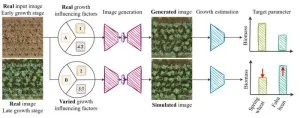
AI shows how field crops develop

Researchers at the University of Bonn have developed software that can simulate the growth of field crops. To do this, they fed thousands of photos from field experiments into a learning algorithm. This enabled the algorithm to learn how to visualize the future development of cultivated plants based on a single initial image. Using the images created during this process, parameters such as leaf area or yield can be estimated accurately. The results have been published in the journal Plant Methods. Which plants should I combine ...

Read the release
Technology

New initiative aims to help tens of thousands with recurrent pericarditis

DALLAS, June 17, 2024 — About 40,000 people in the United States experience recurrent pericarditis, or inflammation of the sac-like structure that protects the heart, which can cause chest pain and may lead to fluid buildup around the heart muscle. The American Heart Association, celebrating 100 years of lifesaving service in 2024, is launching a three-year initiative to empower patients and equip health care providers with up-to-date science to inform recurrent pericarditis care decisions. The Addressing Recurrent Pericarditis initiative, supported by Kiniksa Pharmaceuticals, aims to improve diagnosis, treatment and quality of life for those with ...

Read the release
Towards wider 5G network coverage: novel wirelessly powered relay transceiver
Technology

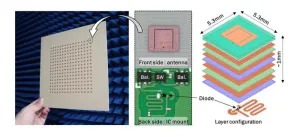
Towards wider 5G network coverage: novel wirelessly powered relay transceiver

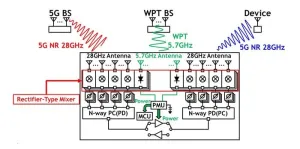
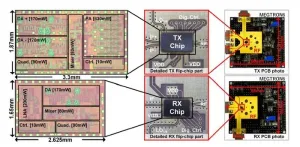
A novel 256-element wirelessly powered transceiver array for non-line-of-sight 5G communication, featuring efficient wireless power transmission and high-power conversion efficiency, has been designed by scientists at Tokyo Tech. The innovative design can enhance the 5G network coverage even to places with link blockage, improving flexibility and coverage area, and potentially making high-speed, low-latency communication more accessible. Millimeter wave 5G communication, which uses extremely high-frequency radio signals (24 to 100 GHz), is a promising technology for next-generation wireless ...

Read the release
Wirelessly powered relay will help bring 5G technology to smart factories
Technology

Wirelessly powered relay will help bring 5G technology to smart factories

A recently developed wirelessly powered 5G relay could accelerate the development of smart factories, report scientists from Tokyo Tech. By adopting a lower operating frequency for wireless power transfer, the proposed relay design solves many of the current limitations, including range and efficiency. In turn, this allows for a more versatile and widespread arrangement of sensors and transceivers in industrial settings. One of the hallmarks of the Information Age is the transformation of industries towards a greater flow of ...

Read the release
A novel 640 Gbps chipset paves the way for next generation wireless systems
Technology

A novel 640 Gbps chipset paves the way for next generation wireless systems

A new D-band CMOS transceiver chipset with 56 GHz signal-chain bandwidth achieves the highest transmission speed of 640 Gbps for a wireless device realized with integrated circuits, as reported by researchers from Tokyo Tech and National Institute of Information and Communications Technology. The proposed chipset is highly promising for the next generation of wireless systems. To achieve faster speeds and handle increasing data traffic, wireless systems are operating in higher millimeter-wave frequency bands. Current high-band 5G systems offer speeds as high as 10 Gbps and operate in frequency bands between 24–47 GHz. The next generation ...

Read the release
Technology

New study offers a better way to make AI fairer for everyone

In a new paper, researchers from Carnegie Mellon University and Stevens Institute of Technology show a new way of thinking about the fair impacts of AI decisions. They draw on a well-established tradition known as social welfare optimization, which aims to make decisions fairer by focusing on the overall benefits and harms to individuals. This method can be used to evaluate the industry standard assessment tools for AI fairness, which look at approval rates across protected groups. "In assessing fairness, the AI community tries to ensure equitable treatment for groups that differ in economic level, ...

Read the release
Technology

NYCST announces inaugural awards for space technology projects

The New York Consortium for Space Technology (NYCST) is led by Cornell University, which is funded by the U.S. Department of Defense’s Office of Local Defense Community Cooperation through the Defense Manufacturing Community Support Program. Ithaca, NY— June 14, 2024 — The New York Consortium for Space Technology Innovation and Development (NYCST) today announced more than $300 thousand has been allocated to support 6 projects through the inaugural round of the consortium’s funding program. The projects were selected during NYCST’s inaugural ...

Read the release
Quantum entanglement measures Earth rotation
Technology

Quantum entanglement measures Earth rotation

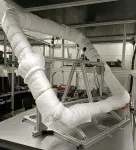
A team of researchers led by Philip Walther at the University of Vienna carried out a pioneering experiment where they measured the effect of the rotation of Earth on quantum entangled photons. The work, just published in Science Advances, represents a significant achievement that pushes the boundaries of rotation sensitivity in entanglement-based sensors, potentially setting the stage for further exploration at the intersection between quantum mechanics and general relativity. Optical Sagnac interferometers are the most sensitive devices to rotations. They have been pivotal in our understanding of fundamental physics since the early years of the last century, contributing to establish ...

Read the release
Technology

Does endogenous technological change matter in model-based climate change narratives?

Curbing the confirmed human influence on the climate system and mitigating climate change require profound transformation of global energy system. In this context, modeling technical progress and innovation within Integrated Assessment Models (IAMs) is crucial for providing insights about the consequences of long-term energy system transformation, and capturing the development of several interacting systems and technical evolution process. A review of Endogenous Technological Change (ETC) written by Hongbo Duan ...

Read the release
Making ferromagnets ready for ultra-fast communication and computation technology
Technology

Making ferromagnets ready for ultra-fast communication and computation technology

RIVERSIDE, Calif. -- An international team led by researchers at the University of California, Riverside, has made a significant breakthrough in how to enable and exploit ultra-fast spin behavior in ferromagnets. The research, published in Physical Review Letters and highlighted as an editors’ suggestion, paves the way for ultra-high frequency applications. Today’s smartphones and computers operate at gigahertz frequencies, a measure of how fast they operate, with scientists working to make them even faster. The new research has found a way to achieve terahertz frequencies using conventional ferromagnets, which ...

Read the release
Technology

AI can help doctors make better decisions and save lives

New York, NY [June 13, 2024]—Deploying and evaluating a machine learning intervention to improve clinical care and patient outcomes is a key step in moving clinical deterioration models from byte to bedside, according to a June 13 editorial in Critical Care Medicine that comments on a Mount Sinai study published in the same issue. The main study found that hospitalized patients were 43 percent more likely to have their care escalated and significantly less likely to die if their care team received AI-generated alerts signaling adverse changes in their health. ...

Read the release
Avi Wigderson to deliver Turing Lecture at ACM Symposium on Theory of Computing
Technology

Avi Wigderson to deliver Turing Lecture at ACM Symposium on Theory of Computing

ACM, the Association for Computing Machinery, is pleased to announce that 2023 ACM A.M. Turing Award recipient Avi Wigderson will give his Turing Lecture at the 2024 ACM Symposium on the Theory of Computing (STOC) on Thursday, June 27 in Vancouver, British Columbia, Canada. Wigderson received the A.M. Turing Award for foundational contributions to the theory of computation, including reshaping our understanding of the role of randomness in computation, and for his decades of intellectual leadership in theoretical computer science. In "Alan Turing: A TCS Role Model," Wigderson ...

Read the release
JMIR Aging announces new theme issue on digital ageism
Technology

JMIR Aging announces new theme issue on digital ageism

(Toronto, June 13, 2024) JMIR Publications invites submissions to a new theme issue titled “Addressing Digital Ageism in the Modern Era” in its premier open access journal JMIR Aging, indexed in PubMed, SCOPUS, Web of Science, and DOAJ. The theme for this call was selected by the journal’s diverse audiences through a social media poll. While digital technologies offer immense opportunities for societal progress and individual empowerment, they also bring forth new challenges, such as digital ageism. Digital ageism is discrimination against individuals based on their age within the context ...

Read the release
Photonic chip integrates sensing and computing for ultrafast machine vision
Technology

Photonic chip integrates sensing and computing for ultrafast machine vision

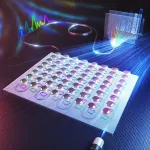
WASHINGTON — Researchers have demonstrated a new intelligent photonic sensing-computing chip that can process, transmit and reconstruct images of a scene within nanoseconds. This advance opens the door to extremely high-speed image processing that could benefit edge intelligence for machine vision applications such as autonomous driving, industrial inspection and robotic vision. Edge computing, which performs intensive computing tasks like image processing and analysis on local devices, is evolving into edge intelligence by adding artificial intelligence (AI) driven analysis and decision-making. “Capturing, processing and analyzing images ...

Read the release
Quantum data assimilation: A quantum leap in weather prediction
Technology

Quantum data assimilation: A quantum leap in weather prediction

Data assimilation is a mathematical discipline that integrates observed data and numerical models to improve the interpretation and prediction of dynamical systems. It is a crucial component of earth sciences, particularly in numerical weather prediction (NWP). Data assimilation techniques have been widely investigated in NWP in the last two decades to refine the initial conditions of weather models by combining model forecasts and observational data. Most NWP centers around the world employ variational and ensemble-variational data assimilation methods, which iteratively reduce cost functions via gradient-based optimization. However, these methods require significant computational resources. Recently, ...

Read the release
Ingestible microbiome sampling pill technology advances
Technology

Ingestible microbiome sampling pill technology advances

Significant progress has been made at Tufts University School of Engineering in the development of a small device, about the size of a vitamin pill, that can be swallowed and passed through the gastrointestinal tract to sample the full inventory of microorganisms in an individual’s gastro-intestinal tract. This device has the potential to advance research on the relationship between resident bacteria and a wide range of health conditions. It could also serve as a diagnostic tool for adjusting the microbiome or administering drugs to treat those conditions. The device has completed ...

Read the release
Technology

Permeable carbon fiber based thermoelectric film with exceptional EMI shielding performance and sensor capabilities

Thermoelectric technology, which enables the direct conversion of heat into electricity, has emerged as a promising alternative energy source. Notably, this technology can efficiently convert body heat into electrical energy, garnering significant attention in the field of wearable electronics. However, the dense structure of most thermoelectric materials results in ultra-low moisture permeability. In practical applications, insufficient moisture permeability can trap heat and humidity, fostering bacterial growth and potentially causing skin lesions. Hence, developing thermoelectric materials with superior moisture permeability is crucial. A team led by ...

Read the release
Sweeping review reveals impact of integrating artificial intelligence technologies into photovoltaic systems
Technology

Sweeping review reveals impact of integrating artificial intelligence technologies into photovoltaic systems

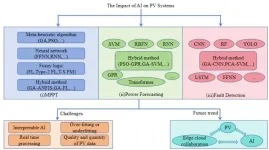
Artificial intelligence is poised to bring photovoltaic systems into a new era through revolutionary improvements in efficiency, reliability, and predictability of solar power generation. In their paper published on May 8 in CAAI Artificial Intelligence Research, a research team from Chinese and Malaysian universities explored the impact of artificial intelligence (AI) technology on photovoltaic (PV) power generation systems and their applications from a global perspective. “The overall message is an optimistic outlook on how AI can lead to more sustainable and efficient energy solutions,” said Xiaoyun Tian from ...

Read the release
Technology

How can artificial intelligence be applied to the business needs of the electric power industry?

A recent study published in IET Generation, Transmission & Distribution explores how artificial intelligence—in particular machine learning techniques—can be leveraged as powerful tools for the electric power and energy industry, and for managing its assets. By showcasing practical applications and success stories, the study demonstrates the growing acceptance of machine learning as a valuable technology for current and future business needs in the power sector. It also assesses the barriers and difficulties of implementing large-scale ...

Read the release
Towards a new era in flexible piezoelectric sensors for both humans and robots
Technology

Towards a new era in flexible piezoelectric sensors for both humans and robots

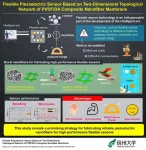
Flexible piezoelectric sensors are essential to monitor the motions of both humans and humanoid robots. However, existing designs are either are costly or have limited sensitivity. In a recent study, researchers from Japan tackled these issues by developing a novel piezoelectric composite material made from electrospun polyvinylidene fluoride nanofibers combined with dopamine. Sensors made from this material showed significant performance and stability improvements at a low cost, promising advancements ...

Read the release
Quantum dots and metasurfaces: Deep connections in the nano world
Technology

Quantum dots and metasurfaces: Deep connections in the nano world

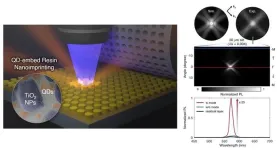
In relationships, sharing closer spaces naturally deepens the connection as bonds form and strengthen through increasing shared memories. This principle applies not only to human interactions but also to engineering. Recently, an intriguing study was published demonstrating the use of quantum dots to create metasurfaces, enabling two objects to exist in the same space. Professor Junsuk Rho from the Department of Mechanical Engineering, the Department of Chemical Engineering, and the Department of Electrical Engineering, ...

Read the release
Technology

Virtual reality as a reliable shooting performance-tracking tool

COLUMBUS, Ohio – Virtual reality technology can do more than teach weaponry skills in law enforcement and military personnel, a new study suggests: It can accurately record shooting performance and reliably track individuals’ progress over time. In the study of 30 people with a range of experience levels in handling a rifle, researchers at The Ohio State University found that a ballistic simulator captured data on the shooters’ accuracy, decision-making and reaction time – down to the millimeter in distance ...

Read the release
Technology

Female AI ‘teammate’ generates more participation from women

ITHACA, N.Y. – An artificial intelligence-powered virtual teammate with a female voice boosts participation and productivity among women on teams dominated by men, according to new Cornell University research. The findings suggest that the gender of an AI’s voice can positively tweak the dynamics of gender-imbalanced teams and could help inform the design of bots used for human-AI teamwork, researchers said. The findings mirror previous research that shows minority teammates are more likely to participate if the team adds members similar to them, said Angel Hsing-Chi Hwang, postdoctoral associate in information science and ...

Read the release
New technique could help build quantum computers of the future
Technology

New technique could help build quantum computers of the future

Quantum computers have the potential to solve complex problems in human health, drug discovery, and artificial intelligence millions of times faster than some of the world’s fastest supercomputers. A network of quantum computers could advance these discoveries even faster. But before that can happen, the computer industry will need a reliable way to string together billions of qubits – or quantum bits – with atomic precision. Connecting qubits, however, has been challenging for the research community. Some methods form qubits by placing ...

Read the release
From the original Press-News collection. Issuers of news releases are responsible for the accuracy of their content.