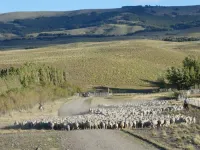
Plants show surprising diversity in arid landscape
Understanding how plants cope with climatic extremes and grazing pressure is important for reliable prediction about future biodiversity and the functioning of dryland ecosystems[1]. An international team, coordinated by KAUST’s Fernando Maestre, has assessed how 20 chemical and morphological plant functional traits jointly respond to changes in aridity and grazing pressure across global drylands. Increasing aridity and grazing pressure could be expected to reduce the level of plant diversity. However, the diversity of plant traits — including key traits linked to nutrient cycling such as specific leaf area and foliar ...
Read the release