Antibodies recognize and attack different SARS-CoV-2 spike shapes
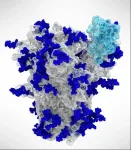
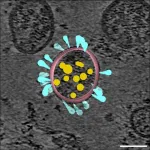
ROCKVILLE, MD - The virus that causes COVID-19 belongs to the family of coronaviruses, "corona" referring to the spikes on the viral surface. These spikes are not static--to infect cells, they change shapes. Maolin Lu, an associate research scientist at Yale University, directly visualized the changing shapes of those spike proteins and monitored how the shapes change when COVID-19 patient antibodies attach. Her work, which was published in Cell Host & Microbe in December 2020 and will be presented on Thursday, February 25 at the 65th Annual Meeting of the Biophysical Society informs the development of ...
Read the release