Medicine Technology 🌱 Environment Space Energy Physics Engineering Social Science Earth Science Science
Medicine 2026-03-23

Single-cell sequencing reveals unexpected protist diversity

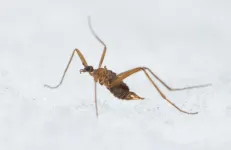
Researchers from the Earlham Institute, in collaboration with The Department of Biology at the University of Oxford, discovered three previously unrecognised lineages of the protist Bodo, each with its own bacterial endosymbiont (a symbiotic organism living within the body of its host). Bodo is a genus of heterotrophic (a living organism that obtains nutrition from other plants, animals, or microorganisms) protists that are common in fresh and brackish waters and soil. They are the closest known free-living relatives of Trypanosoma, a parasitic protist that causes major human diseases including Human African trypanosomiasis (sleeping sickness). Until ...
Read more →
Medicine 2026-03-23

Volunteer US and UK fighters in Ukraine face hidden health crises – new study

Key points Study offers insight into the experiences of foreign volunteer fighters in Ukraine for the first time. US and UK veterans who have volunteered in Ukraine report extremely intense combat exposure and limited training or preparation. Many experience significant combat trauma-related distress, alcohol misuse and untreated physical injuries, yet struggle to access appropriate healthcare in Ukraine or on returning home. Existing military and civilian support systems appear to be ill-equipped to recognise ...
Read more →
Moby Dick ‘ship sinking’ sperm whales caught headbutting on camera
Science 2026-03-23

Moby Dick ‘ship sinking’ sperm whales caught headbutting on camera

New research from the University of St Andrews reports sperm whales headbutting one another. The behaviour was captured on film and described scientifically for the first time, confirming accounts by 19 th century mariners of sperm whales using their heads to deliberately push and strike objects, occasionally even sinking ships, thereby inspiring Herman Melville’s classic tale Moby Dick. Using drone technology, researchers were able to film sperm whales headbutting  each other, as well as the surrounding behavioural and social context. ...
Read more →
Earth Science 2026-03-23

Why plants fail in dry soil

Plants need water, light and air to thrive. But when they transport water from the soil up to their leaves, they defy gravity. Scientists describe this astonishing phenomenon as “negative water potential”, a form of negative tension that enables herbs, shrubs and trees to draw water from the soil. Nevertheless, plants do not constantly extract water from the soil. For decades, researchers have sought to understand what limits a plant’s water uptake. Now, a team of researchers led by Andrea Carminati, Professor of Soil Physics at ETH Zurich, and Tim ...
Read more →
An end to the battle between touchscreens and long fingernails is on the horizon
Medicine 2026-03-23

An end to the battle between touchscreens and long fingernails is on the horizon

ATLANTA, March 23, 2026— Anybody who tried to use a smartphone or tablet with long nails knows that there’s a learning curve. Rather than effortlessly tapping with a fingertip, you must awkwardly lay the pads of your fingers onto the screen. Wouldn’t it be easier if you could just type with your fingernails instead? To try and make this idea a reality, a group of researchers are formulating a clear nail polish that could turn long fingernails into touchscreen-compatible styluses.  The team from Centenary ...
Read more →
Medicine 2026-03-23

Do psychosocial factors affect cancer risk?

New research indicates that psychosocial factors—which influence how a person perceives, interprets, and reacts to their surroundings—do not affect an individual’s risk of developing cancer. The findings are published by Wiley online in CANCER, a peer-reviewed journal of the American Cancer Society. For the study, investigators examined data from the Psychosocial Factors and Cancer (PSY-CA) consortium, an international research collaboration funded by the Dutch Cancer Society that analyzes information from prospective studies to assess whether psychosocial factors—such as perceived social support, loss of a loved one, relationship ...
Read more →
Initial tests find lead in children’s fast-fashion clothing
Science 2026-03-23

Initial tests find lead in children’s fast-fashion clothing

ATLANTA, March 23, 2026 — Fast fashion is an inexpensive way to dress rapidly growing kids. But preliminary research has found that the fabric in some of these items contains an unwanted, toxic ingredient: lead. After testing several shirts from different retailers, undergraduate researchers found that all samples exceeded U.S. federal regulatory lead limits. They also estimate that even briefly chewing these fabrics (which young kids tend to do) could expose children to dangerous lead levels. The researchers will present their results at the spring meeting of the American Chemical Society (ACS). ACS Spring ...
Read more →
Drone footage captures sperm whales headbutting each other for the first time
Engineering 2026-03-23

Drone footage captures sperm whales headbutting each other for the first time

Researchers at the University of St Andrews used drones to film sperm whales headbutting one another in the Azores and Balearic Islands - the first scientific documentation of a behavior that 19th-century whalers described and that inspired Herman Melville's Moby Dick. Surprisingly, it was sub-adults, not large males, engaging in the collisions.
Read more →
Environment 2026-03-23

It is the soil, not the plant, that sets the limit on water uptake during drought

Researchers from ETH Zurich and the University of Tasmania have found that the limiting factor in plant water uptake is not the plant's own physiology but the physics of water movement through soil pores. The finding, published in Science, explains why breeding programs aimed at making drought-resistant crops through increased cellular solute concentrations have consistently failed.
Read more →
Want to change a group's mind? Math says: make opponents neutral first
Science 2026-03-23

Want to change a group's mind? Math says: make opponents neutral first

New mathematical modeling and experiments from the University of Bath demonstrate that groups change their collective opinion more quickly when opponents are encouraged to adopt a neutral stance rather than being directly persuaded to switch sides. The effect was confirmed in both locust swarms and human voting games.
Read more →