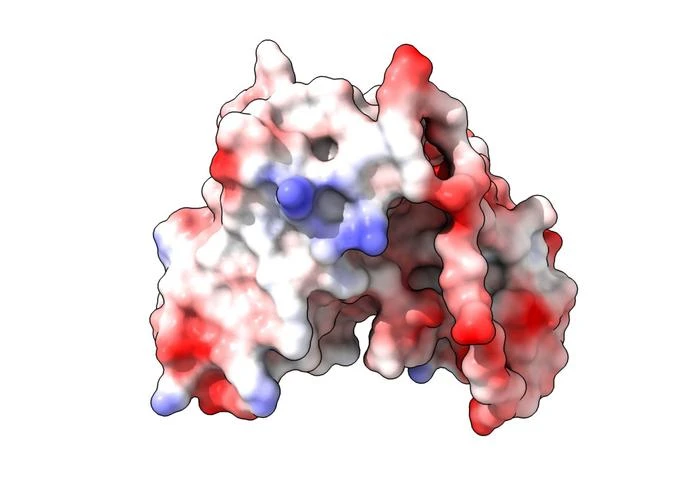
AI redesigns 672 antibodies to work inside cells, targeting Alzheimer's and MND proteins
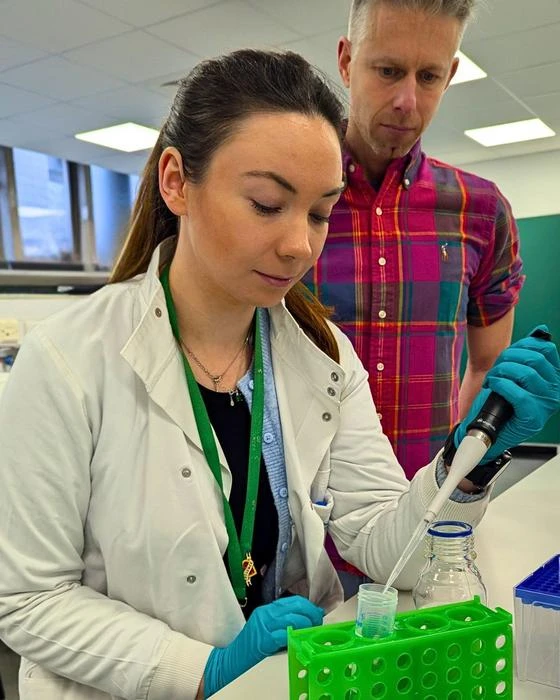
University of Essex / Nature Communications
Antibodies are among the most precise tools in medicine — they can be engineered to grab almost any protein with exacting specificity. But they come with a fundamental limitation: they only work outside cells. The interior of a human cell is a chemically hostile environment for conventional antibodies, which misfold, aggregate, and become useless within minutes of crossing the cell membrane.
That constraint has blocked researchers from targeting the proteins that actually drive neurodegenerative diseases like Alzheimer's, Parkinson's, Huntington's, and motor neurone disease (MND). These disease-causing proteins do their damage inside neurons, precisely where standard antibodies cannot reach.
A team at the University of Essex has now converted 672 different antibodies into intrabodies — antibody fragments redesigned to survive and function within the cell interior. The work, published in Nature Communications, used AI-based protein design software developed by Nobel Prize winner David Baker's group, and the entire library will be made freely available to other researchers.
The charge problem nobody had quantified
The key insight came from a surprisingly simple observation. Lead author Dr. Caitlin O'Shea and her colleague Dr. Gareth Wright analyzed the electrical charge properties of millions of antibodies and compared them with the proteins naturally found inside human cells.
The mismatch was stark. Antibodies typically carry the wrong net electrical charge for the intracellular environment. When they enter a cell, this charge mismatch causes them to stick together — aggregating into useless clumps rather than seeking out their intended targets. The cell's interior is a fundamentally different chemical world from the bloodstream and extracellular fluid where antibodies evolved to operate.
"We figured out that antibodies usually have the wrong charge to exist inside cells without sticking together," said Dr. O'Shea, who specializes in MND and Parkinson's disease research.
Redesigning with Baker's AI tools
Armed with this understanding, the team used computational protein design software — originally developed in David Baker's laboratory at the University of Washington, work that contributed to his 2024 Nobel Prize in Chemistry — to systematically redesign antibody fragments. The software adjusted the surface charge of each fragment while maintaining its ability to bind its specific target protein.
The result: 672 intrabodies targeting key proteins implicated in neurodegeneration. These redesigned fragments carry the correct charge profile to remain soluble and stable inside cells, and they retain the binding specificity of their parent antibodies.
The redesigned molecules aren't drugs — not yet. They are research tools and potential therapeutic starting points. Each one can be expressed directly inside human cells, where it binds to a specific disease-related protein in that protein's native environment. For the first time, researchers can study these protein interactions where they actually matter: inside living neurons.
Over a million people in the UK, tens of millions worldwide
The diseases targeted by this library are among the most devastating and least treatable in medicine. Alzheimer's, Parkinson's, Huntington's, and MND collectively affect more than a million people in the UK alone. There are no cures for any of them, and effective treatments remain scarce.
A central challenge in developing therapies for these conditions has been the inability to interact with disease-causing proteins in their natural cellular context. Standard drug discovery approaches — screening small molecules, testing conventional antibodies — operate outside the cell. The intrabody approach could fill that gap.
Dr. Brian Dickie, Chief Scientist at the MND Association, which funded the research, called the work a significant advance. The combination of intrabody technology with emerging gene therapy techniques, he noted, may lead to therapeutic strategies that can target specific molecules within neurons.
From tool to therapy — the distance remaining
Converting an intrabody from a research tool into a treatment would require solving a separate set of problems. Delivering genetic instructions for the intrabody into the right cells in a patient's brain demands gene therapy vectors that are still being perfected. Ensuring the intrabody doesn't interfere with normal protein function, proving safety in animal models, and navigating clinical trials — each step is years of work.
The study also focused on demonstrating that charge-corrected intrabodies can be expressed and remain stable inside cells. Whether they can alter the course of disease — by neutralizing toxic protein aggregates or preventing harmful protein interactions — is a question for subsequent studies.
But the open-source approach accelerates the timeline. By publishing the full library and making it freely available, the Essex team allows any research group worldwide to begin testing these intrabodies against neurodegenerative disease targets. That's 672 starting points that didn't exist before, each one engineered to work in the one place conventional antibodies cannot go.