New framework bridges gaps in power grid operations with AI technology
Study addresses challenges like weather-related outages, energy costs, and growing demand
Published 2026-03-23 · Original archive entry · Explore research explainers
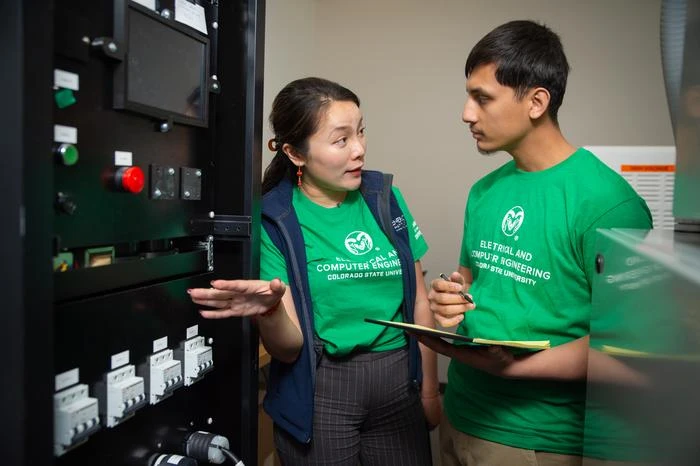
New research led by Colorado State University highlights a critical need for system-level thinking and innovation in shaping the electric power grid of the future.
Professor Zongjie Wang recently published a paper in Scientific Reports, part of the Nature portfolio, that outlines a novel framework. The proposed method helps different how parts of the grid – transmission and distribution operations – work together to make holistic decisions, without requiring system centralization.
The research is particularly relevant as power industry leaders and consumers grapple with the impacts of weather-related outages, rising energy costs, and increasing demand driven by population growth.
Those factors include the integration of smart technologies and new energy sources, such as wind and solar, which add layers of complexity. Building the grid of the future also opens the door to new challenges, such as cybersecurity threats and vulnerabilities to natural disasters like wildfires and hurricanes.
For decades, the nation’s power grid has operated in silos, meaning utility companies manage electric distribution systems while local and regional operators handle transmission systems – with little coordination between them.
“As distributed energy resources grow, the traditional separation between transmission and distribution operations becomes increasingly inefficient,” said Wang. “Industry leaders often lack system-level visibility into how distribution-level resources impact transmission operations.”
Wang’s paper details a solution to bridge the gap between distribution and transmission operations.
“As more people adopt solar panels, electric vehicles, and other distributed energy resources, we’re pulling together many pieces to simplify these systems and ensure they work together seamlessly,” said Wang.
Leveraging Wang’s background in theoretical optimization, the new framework draws on the power of reduced distribution network models to combine data from transmission and distribution systems. The method provides more accurate and operationally feasible dispatch information to electricity providers.
Her team’s approach harnesses AI-powered modeling to account for uncertainties and complexities to enhance situational awareness and streamline coordination. The holistic framework facilitates the integration of new energy sources while mitigating threats to grid reliability and resilience.
“This work offers a path forward for a big problem many of us are trying to solve,” said Wang. “By improving coordination and reducing inefficiencies, it has the potential to lower system costs, which ultimately flow through to consumers.”
END
Professor Zongjie Wang recently published a paper in Scientific Reports, part of the Nature portfolio, that outlines a novel framework. The proposed method helps different how parts of the grid – transmission and distribution operations – work together to make holistic decisions, without requiring system centralization.
The research is particularly relevant as power industry leaders and consumers grapple with the impacts of weather-related outages, rising energy costs, and increasing demand driven by population growth.
Those factors include the integration of smart technologies and new energy sources, such as wind and solar, which add layers of complexity. Building the grid of the future also opens the door to new challenges, such as cybersecurity threats and vulnerabilities to natural disasters like wildfires and hurricanes.
Creating a smarter grid
Wang is the director of the new Grid Modernization Initiative at CSU’s Energy Institute and a faculty member in the Department of Electrical and Computer Engineering. Her research findings are part of a broader effort to create smarter, more efficient, and reliable power systems to benefit everyone, from utilities to everyday customers.For decades, the nation’s power grid has operated in silos, meaning utility companies manage electric distribution systems while local and regional operators handle transmission systems – with little coordination between them.
“As distributed energy resources grow, the traditional separation between transmission and distribution operations becomes increasingly inefficient,” said Wang. “Industry leaders often lack system-level visibility into how distribution-level resources impact transmission operations.”
Wang’s paper details a solution to bridge the gap between distribution and transmission operations.
“As more people adopt solar panels, electric vehicles, and other distributed energy resources, we’re pulling together many pieces to simplify these systems and ensure they work together seamlessly,” said Wang.
Leveraging Wang’s background in theoretical optimization, the new framework draws on the power of reduced distribution network models to combine data from transmission and distribution systems. The method provides more accurate and operationally feasible dispatch information to electricity providers.
Her team’s approach harnesses AI-powered modeling to account for uncertainties and complexities to enhance situational awareness and streamline coordination. The holistic framework facilitates the integration of new energy sources while mitigating threats to grid reliability and resilience.
“This work offers a path forward for a big problem many of us are trying to solve,” said Wang. “By improving coordination and reducing inefficiencies, it has the potential to lower system costs, which ultimately flow through to consumers.”
Walter Scott, Jr. College of Engineering at CSU
Experience academic and research excellence at the Walter Scott, Jr. College of Engineering, boasting $100 million in research funding and more than one-third of CSU’s patents. Its state-of-the-art facilities, including the Powerhouse Energy Campus, provide collaborative spaces for students, faculty and industry partnerships. The College excels in climate and sustainability research in all programs, with top Atmospheric Science and Systems Engineering graduate-only departments. Undergraduate programs offer hands-on learning and mentorship from pioneering faculty, empowering students to drive innovation in their fields.END