THE ORIGINAL COLLECTION · SINCE 2010

Earth Science
press releases.

Research announcements from universities, hospitals and scientific institutions. Explore the stories, people and discoveries behind the headlines.

Original publication datesPage 14
FIND A STORY

Find a past release.

Dates and source material belong to the original release.

Read our research explainers

Browse the collection · original publication order

New research shows vegetation accelerates coastal dune erosion during extreme events
Earth Science

New research shows vegetation accelerates coastal dune erosion during extreme events

INTRODUCTION Coastal sand dunes provide the first line of defense from storms for some of the most economically valuable and ecologically important landscapes in the world (1–3). A current and broadly accepted paradigm is that vegetation reduces the erosion of these dunes during wave attack (4–7). The existing body of dune research shows that a greater size (8), density (9–11), and diversity (12) of plants are associated with less erosion, although these studies have been limited ...

Read the release
We’ve pumped so much groundwater that we’ve nudged the Earth’s spin
Earth Science

We’ve pumped so much groundwater that we’ve nudged the Earth’s spin

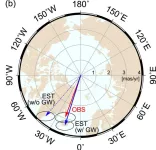
American Geophysical Union 15 June 2023 Release No. 23-25 For Immediate Release This press release is available online at: https://news.agu.org/press-release/weve-pumped-so-much-groundwater-that-weve-nudged-the-earths-spin AGU press contact: Rebecca Dzombak, news@agu.org (UTC-4 hours) Contact information for the researchers: Ki-Weon Seo, Seoul National University, seokiweon@snu.ac.kr (UTC+9 hours) WASHINGTON — By pumping water out of the ground and moving it elsewhere, humans have shifted such a large mass of water that the Earth tilted nearly 80 centimeters (31.5 inches) east between 1993 and 2010 alone, according to a new study published in Geophysical Research Letters, ...

Read the release
Earth Science

A ‘pinch’ of mineral salts helps the noncaloric sweeteners go down

Perfect noncaloric replacements for sugar and high fructose corn syrup just don’t exist yet. For example, some alternatives have a lingering sweet aftertaste and lack a sugar-like mouthfeel, leaving consumers unsatisfied. Now, researchers in ACS’ Journal of Agricultural and Food Chemistry propose adding blends of nutritionally important mineral salts to make noncaloric sweeteners seem more like the real thing. Taste-testers indicated that these blends gave zero- and low-calorie drinks a better ...

Read the release
Newly planted vegetation accelerates dune erosion during extreme storms, research shows
Earth Science

Newly planted vegetation accelerates dune erosion during extreme storms, research shows

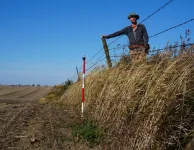
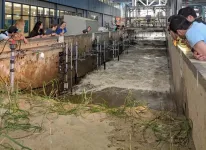
CORVALLIS, Ore. – Newly planted vegetation on coastal sand dunes can accelerate erosion from extreme waves, a study involving researchers from the Oregon State University College of Engineering suggests. The authors note the findings run counter to the widely accepted paradigm that vegetation always acts to reduce erosion on dunes, the first line of storm defense for landscapes that are among the world’s most ecologically important and economically valuable. The experiments involved building beach dune profiles 70 meters long and 4.5 meters high and subjecting ...

Read the release
Preserving forests to protect deep soil from warming
Earth Science

Preserving forests to protect deep soil from warming

A recent study led by scientists at Lawrence Berkeley National Laboratory (Berkeley Lab) and the University of Zurich has revealed that the organic compounds proposed for carbon sequestration in deep soil are highly vulnerable to decomposition under global warming. The finding has implications for a key strategy in carbon management that relies on soil and forests – natural carbon “sinks” – to mitigate global warming. About 25 percent of global carbon emissions are captured by forests, grasslands, and rangelands. During photosynthesis, plants store carbon in their cell walls and in the soil. Because ...

Read the release
Plate tectonics not required for the emergence of life
Earth Science

Plate tectonics not required for the emergence of life

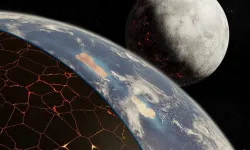
Scientists have taken a journey back in time to unlock the mysteries of Earth’s early history, using tiny mineral crystals called zircons to study plate tectonics billions of years ago. The research sheds light on the conditions that existed in early Earth, revealing a complex interplay between Earth’s crust, core, and the emergence of life. Plate tectonics allows heat from Earth’s interior to escape to the surface, forming continents and other geological features necessary for life to emerge. Accordingly, “there has been the assumption that plate tectonics is necessary for life,” says John Tarduno, who teaches in the Department ...

Read the release
The life below our feet: team discovers microbes thriving in groundwater and producing oxygen in the dark
Earth Science

The life below our feet: team discovers microbes thriving in groundwater and producing oxygen in the dark

WOODS HOLE, Mass. – Nearly a third of Earth’s freshwater resources lie in groundwater – much more than in all lakes, rivers and the atmosphere combined, and exceeded only by the frozen water in polar ice caps. Accordingly, about half of humankind depends on groundwater as a source of drinking water. Despite the global occurrence and essential importance of groundwater, however, knowledge of the organisms that inhabit it, and how they survive, remains thin. A recent investigation led by microbial ecologist Emil Ruff of the Marine Biological Laboratory (MBL) has discovered ...

Read the release
Earth Science

Seismic Waves tell lithospheric delamination mechanism in south China

A research team led by Prof. ZHANG Haijiang from the University of Science and Technology of China (USTC) of the Chinese Academy of Sciences, and Prof. HOU Zengqian from Chinese Academy of Geological Sciences, revealed the seismically imaged lithospheric delamination and its controls on the Mesozoic Magmatic Province in South China by using a new joint seismic inversion algorithm. The study was published in Nature Communications. Based on the latest developed seismic joint inversion algorithm, the researchers made use of the seismic body wave travel time, surface wave dispersion ...

Read the release
Earth Science

Campi Flegrei volcano edges closer to possible eruption

The Campi Flegrei volcano in southern Italy has become weaker and more prone to rupturing, making an eruption more likely, according to a new study by researchers at UCL (University College London) and Italy’s National Research Institute for Geophysics and Volcanology (INGV). The volcano, which last erupted in 1538, has been restless for more than 70 years, with two-year spikes of unrest in the 1950s, 1970s and 1980s, and a slower phase of unrest over the last decade. Tens of thousands of small earthquakes have occurred during these periods ...

Read the release
Why earthquakes happen more frequently in Britain than Ireland
Earth Science

Why earthquakes happen more frequently in Britain than Ireland

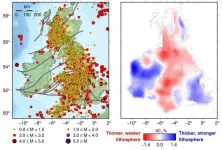
Researchers from the University of Cambridge and the Dublin Institute for Advanced Studies have discovered that variations in the thickness of tectonic plates relate directly to the distribution of earthquakes in Britain, Ireland and around the world. The study also solves an enduring mystery as to why small earthquakes happen frequently in Britain but are almost completely absent from neighbouring Ireland. The researchers produced a computer-generated image of Earth’s interior using a technique called seismic tomography, which works in a similar way to a medical CT scan. The data they collected revealed variations in the thickness of the ...

Read the release
Cobalt mineralogy at the Iron Creek deposit, Idaho cobalt belt, USA: Implications for domestic critical mineral production
Earth Science

Cobalt mineralogy at the Iron Creek deposit, Idaho cobalt belt, USA: Implications for domestic critical mineral production

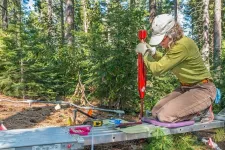
Contributed by Laura Fattaruso, GSA Science Communication Fellow Boulder, Colo., USA: A new study published in Geology evaluates the potential for cobalt extraction from the Idaho Cobalt Belt (ICB) of east-central Idaho, using a detailed study of the Iron Creek deposit. The ICB hosts the second largest known domestic resource of the critical mineral cobalt, one of the key ingredients in many rechargeable batteries needed for the green energy transition. Demand for cobalt is projected to increase more than 500% by 2050. Roughly 70% of the cobalt mined globally is from the Democratic Republic of the Congo, where mining practices have been criticized for human rights violations including ...

Read the release
Tectonics matter: USU geoscientists probe geochemistry, microbial diversity of Peruvian hot springs
Earth Science

Tectonics matter: USU geoscientists probe geochemistry, microbial diversity of Peruvian hot springs

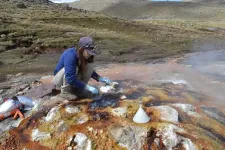
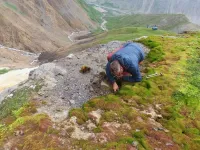
LOGAN, UTAH, USA -- South America’s Andes Mountains, the world’s longest mountain range and home to some of the planet’s highest peaks, feature thousands of hot springs. Driven by plate tectonics and fueled by hot rock and fluids, these thermal discharges vary widely in geochemistry and microbial diversity. Utah State University geoscientists, along with colleagues from Montana State University, examined 14 hot springs within the southern Andes in Peru and discovered microbial community composition is distinctly different in two tectonic settings. Dennis Newell, associate professor in USU’s Department of Geosciences, and recent USU graduate Heather Upin, ...

Read the release
Bubble, bubble, more earthquake trouble? Geoscientists study Alaska's Denali fault
Earth Science

Bubble, bubble, more earthquake trouble? Geoscientists study Alaska's Denali fault

LOGAN, UTAH, USA -- The 1,200-mile-long Denali Fault stretches in an upward arc from southwestern Alaska and the Bering Sea eastward to western Canada’s Yukon Territory and British Columbia. The long-lived and active strike-slip fault system, which slices through Denali National Park and Preserve, is responsible for the formation of the Alaska Range. “It’s a big, sweeping fault and the source of a magnitude 7.9 earthquake in 2002, that ruptured more than 200 miles of the Denali Fault, along with the Totschunda Fault to the east, causing significant damage to remote villages and central Alaska’s infrastructure,” says Utah State University ...

Read the release
Earth Science

Xrays reveal ancient secrets about our prehistoric world this World Dinosaur Day

Researchers are shedding light on our ancient prehistoric world using state-of-the art Xray technology. This World Dinosaur Day, scientists are sharing the bones which lay beneath the Harbury Icthyosau – providing clues to dinosaur anatomy, physiology and evolution. The University's of Warwick’s Centre for Imaging, Metrology and Additive Technologies (CiMAT) group at WMG has employed its cutting-edge equipment to explore the anatomy and biology of the Harbury Icthyosaur, a large marine reptile which lived on the Earth hundreds of millions of years ...

Read the release
Earth Science

No-till revolution could stop Midwest topsoil loss in its tracks

American Geophysical Union 25 May 2023 AGU Release No. 22 For Immediate Release This press release and accompanying multimedia are available online at: https://news.agu.org/press-release/no-till-revolution-could-stop-midwest-topsoil-loss-in-its-tracks/ No-till revolution could stop Midwest topsoil loss in its tracks If Midwestern farms all adopted low-intensity tilling practices or stopped tilling entirely, the erosion of critical topsoil could decrease by 95% in the next 100 years, new study finds AGU press contact: Rebecca ...

Read the release
River erosion can shape fish evolution, study suggests
Earth Science

River erosion can shape fish evolution, study suggests

If we could rewind the tape of species evolution around the world and play it forward over hundreds of millions of years to the present day, we would see biodiversity clustering around regions of tectonic turmoil. Tectonically active regions such as the Himalayan and Andean mountains are especially rich in flora and fauna due to their shifting landscapes, which act to divide and diversify species over time. But biodiversity can also flourish in some geologically quieter regions, where tectonics hasn’t shaken up the land for millennia. The Appalachian Mountains are a prime example: The range ...

Read the release
Saving our soil: How to extend US breadbasket fertility for centuries
Earth Science

Saving our soil: How to extend US breadbasket fertility for centuries

May 25, 2023 Saving Our Soil: How to Extend US Breadbasket Fertility for Centuries New research from UMass Amherst shows that the rapid and unsustainable rate of topsoil erosion can be drastically reduced with no-till agricultural methods already in practice AMHERST, Mass. – The Midwestern United States has lost 57.6 billion tons of topsoil due to farming practices over the past 160 years, and the rate of erosion, even following the U.S. Department of Agriculture’s guidelines, is still 25 times higher than the rate at which topsoil ...

Read the release
Did dome-headed dinosaurs sport bristly headgear?
Earth Science

Did dome-headed dinosaurs sport bristly headgear?

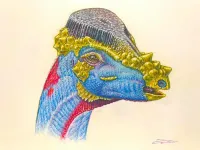
If you look at enough dinosaur fossils, you'll see that their skulls sport an amazing variety of bony ornaments, ranging from the horns of Triceratops and the mohawk-like crests of hadrosaurs to the bumps and knobs covering the head of Tyrannosaurus rex. But paleontologists are increasingly finding evidence that dinosaurs had even more elaborate head ornaments not preserved with the fossil skulls — structures made of keratin, the stuff of fingernails, that were likely used as visual signals or semaphores to others of their kind. A newly described species of dome-headed dinosaur — a pachycephalosaur ...

Read the release
Earth Science

How the February 2023 Türkiye earthquakes ruptured and produced damaging shaking

Three studies now published in the open-access journal The Seismic Record offer an initial look at the February 6, 2023 earthquakes in south-central Türkiye and northwestern Syria, including how, where, and how fast the earthquakes ruptured and how they combined as a “devastating doublet” to produce damaging ground shaking. The two earthquakes, a magnitude 7.8 followed approximately nine hours later by a magnitude 7.6, took place at the tectonically active and complex junction between the Anatolian, Arabian, and ...

Read the release
New book eyes Earth's excavators, from microbes to elephants and dinosaurs
Earth Science

New book eyes Earth's excavators, from microbes to elephants and dinosaurs

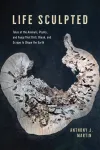
The ordinary person looks at Georgia’s Stone Mountain and sees a solid, unmovable monolith. Emory University paleontologist Anthony Martin, who thinks in geologic time, sees something more akin to a giant sugar cube. Ever since the crystalized mass of igneous-born minerals rose from deep underground, pushed by the upwelling of magma that formed the Blue Ridge Mountains around 350 million years ago, the giant rock’s flanks have faced continuous assault — and not just from weather and water. Stone Mountain “is fighting a battle against life, and life is winning,” Martin writes ...

Read the release
Otago researchers reveal impact of ancient earthquake
Earth Science

Otago researchers reveal impact of ancient earthquake

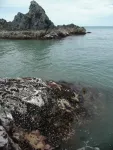
By combining the scientific powerhouses of genetics and geology, University of Otago researchers have identified a new area of coastal uplift, which had been hiding in plain sight. The previously unknown region of earthquake uplift, in Rarangi, Marlborough, was discovered using a combination of new data from laser mapping and kelp genetics. Co-author Professor Jon Waters, of the Department of Zoology, says the study gives new insights into the changes in Aotearoa’s landscapes and the recent history of earthquake impacts. “In a geologically well studied country like New Zealand, there ...

Read the release
Earth Science

At the foot of the geologically diverse front range

Boulder, Colo., USA: The Geological Society of America (GSA) is pleased to announce the upcoming 2023 GSA Rocky Mountain Section Meeting to be held from 23–25 May in Fort Collins, Colorado, USA. This highly anticipated event will provide a dynamic platform for scientists, researchers, industry professionals, and students to exchange ideas, present research findings, and foster collaborations. The meeting will feature a wide range of engaging sessions, a plenary lecture on climate intervention, scientific field trips, informative short courses, and impactful mentoring programs ...

Read the release
Out of this world control on Ice Age cycles
Earth Science

Out of this world control on Ice Age cycles

A research team, composed of climatologists and an astronomer, have used an improved computer model to reproduce the cycle of ice ages (glacial periods) 1.6 to 1.2 million years ago. The results show that the glacial cycle was driven primarily by astronomical forces in quite a different way than it works in the modern age. These results will help us to better understand the past, present, and future of ice sheets and the Earth’s climate. Earth’s orbit around the Sun and its spin axis orientation change slowly over time, due to the pull of gravity from the Sun, the Moon, and other planets. These astronomical forces affect the environment on Earth due to changes in ...

Read the release
Gene linking circadian and circatidal rhythms is discovered in tiny crustacean
Earth Science

Gene linking circadian and circatidal rhythms is discovered in tiny crustacean

Scientists at UMass Chan Medical School and the Marine Biological Laboratory at Woods Hole have identified the first gene—Bmal1—to play a crucial role in regulating circatidal behavior in the crustacean Parhyale hawaiensis. Circatidal rhythms help animals cope with the rise and fall of the tides in coastal areas. Published in Current Biology, the study by neurobiologists Patrick Emery, PhD, Joshua Rosenthal, PhD, and colleagues demonstrates the first molecular link between circatidal and circadian ...

Read the release
Study presents new clues about the rise of earth’s continents
Earth Science

Study presents new clues about the rise of earth’s continents

Continents are part of what makes Earth uniquely habitable for life among the planets of the solar system, yet surprisingly little is understood about what gave rise to these huge pieces of the planet’s crust and their special properties. New research from Elizabeth Cottrell, research geologist and curator of rocks at the Smithsonian’s National Museum of Natural History, and lead study author Megan Holycross, formerly a Peter Buck Fellow and National Science Foundation Fellow at the museum and now an assistant professor at Cornell University, deepens the understanding of Earth’s crust by testing ...

Read the release
From the original Press-News collection. Issuers of news releases are responsible for the accuracy of their content.