THE ORIGINAL COLLECTION · SINCE 2010

Engineering
press releases.

Research announcements from universities, hospitals and scientific institutions. Explore the stories, people and discoveries behind the headlines.

Original publication datesPage 28
FIND A STORY

Find a past release.

Dates and source material belong to the original release.

Read our research explainers

Browse the collection · original publication order

Engineering

Stanford researchers unveil new material infused with gold in an exotic chemical state

For the first time, Stanford researchers have found a way to create and stabilize an extremely rare form of gold that has lost two negatively charged electrons, denoted Au2+. The material stabilizing this elusive version of the valued element is a halide perovskite—a class of crystalline materials that holds great promise for various applications including more-efficient solar cells, light sources, and electronics components. Surprisingly, the Au2+ perovskite is also quick and simple to make using off-the-shelf ingredients at room temperature. "It was a real surprise that we were able to synthesize a stable material containing Au2+—I didn't even believe it at ...

Read the release

New study unveils insights into ethylene copolymerization with linear and end-cyclized olefins using a metallocene catalyst
Engineering

New study unveils insights into ethylene copolymerization with linear and end-cyclized olefins using a metallocene catalyst

A research team led by Changjiang Wu at SINOPEC (Beijing) Research Institute of Chemical Industry Co., Ltd. in China has made important progress in understanding the polymerization behavior and thermal properties of copolymers formed through ethylene copolymerization with linear and end-cyclized olefins. The findings, published in the journal Engineering, shed light on the potential of utilizing different comonomers in olefin solution polymerization to obtain high-performance polyolefin materials. Polyolefin elastomers (POEs) are widely used in various industries due to their exceptional properties. However, the high cost ...

Read the release
'Side-by-side' utility terrain vehicles linked to high rates of hand injuries
Engineering

'Side-by-side' utility terrain vehicles linked to high rates of hand injuries

September 28, 2023 – Recently popularized utility terrain vehicles (UTVs) with "side-by-side" passenger seating are associated with higher rates of severe hand injuries when compared to traditional all-terrain vehicles (ATVs), reports a study in the October issue of Plastic and Reconstructive Surgery®, the official medical journal of the American Society of Plastic Surgeons (ASPS). The journal is published in the Lippincott portfolio by Wolters Kluwer. "Our study finds much higher rates of mutilating hand injuries and amputations associated with side-by-side UTVs, compared to ATVs," comments ASPS Member Surgeon Shaun D. Mendenhall, ...

Read the release
Why an unusual global export industry keeps growing in a developing country
Engineering

Why an unusual global export industry keeps growing in a developing country

The global citrus export industry based in South Africa is a surprising outlier in many ways, not least for its vigorous growth. Somehow, the diverse industry has emerged as the second biggest in the world after Spain. Researchers Ms Shingie Chisoro and Prof Simon Roberts unpack the key factors driving this exceptional success in a study published in The European Journal of Development Research. Chisoro is a PhD candidate and Roberts the Lead Researcher at the Centre for Competition, Regulation and Economic Development (CCRED), within the College of Business & Economics at the University of Johannesburg. Resilient ...

Read the release
Genetically engineering associations between plants and nitrogen-fixing microbes could lessen dependence on synthetic fertilizer
Engineering

Genetically engineering associations between plants and nitrogen-fixing microbes could lessen dependence on synthetic fertilizer

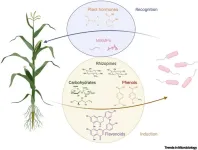
Nitrogen is an essential nutrient for plant growth, but the overuse of synthetic nitrogen fertilizers in agriculture is not sustainable. In a review article publishing in the journal Trends in Microbiology on September 26, a team of bacteriologists and plant scientists discuss the possibility of using genetic engineering to facilitate mutualistic relationships between plants and nitrogen-fixing microbes called “diazotrophs.” These engineered associations would help crops acquire nitrogen from the air by mimicking the mutualisms between legumes and nitrogen-fixing bacteria. “Engineering associative diazotrophs to provide nitrogen ...

Read the release
Benefit breakdown, 3D printed vs. wood molds
Engineering

Benefit breakdown, 3D printed vs. wood molds

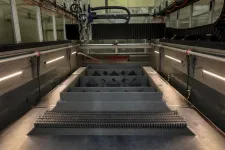
Oak Ridge National Laboratory researchers have conducted a comprehensive life cycle, cost and carbon emissions analysis on 3D-printed molds for precast concrete and determined the method is economically beneficial compared to conventional wood molds. Precast concrete is used in building construction and produced by pouring the material into a reusable mold. For decades, these molds have been made from wood — a technique that requires a highly specialized skillset. As an alternative, molds made from fiber-reinforced polymer composites can be 3D printed. “We developed a techno-economic model that compared costs associated with each method, evaluating materials, equipment, ...

Read the release
Engineering

Chameleon-inspired coating could cool and warm buildings through the seasons

As summer turns to fall, many people will be turning off the air conditioning and firing up heaters instead. But traditional heating and cooling systems are energy intensive, and because they typically run on fossil fuels, they aren’t sustainable. Now, by mimicking a desert-dwelling chameleon, a team reporting in ACS’ Nano Letters has developed an energy-efficient, cost-effective coating. The material could keep buildings cool in the summers — or warm in the winters — without additional energy. Many ...

Read the release
Engineering

Tall buildings could be built quicker if damping models were correct, study finds

Multi-storey buildings are assembled over cautiously to withstand wind strengths, researchers have found. This is because there are several difficulties in estimating damping – the method of removing energy in order to control vibratory motion like noise and mechanical oscillation, accurately in high-rise buildings The findings, published today in the journal Structures, addresses the draw back and were compiled by a team at the University of Bristol who studied the damping and natural frequency characteristics of a 150 m tall building in London (UK) obtained from the full-scale wind-induced responses using a minimal monitoring system. In general, the response ...

Read the release
Fast-track strain engineering for speedy biomanufacturing
Engineering

Fast-track strain engineering for speedy biomanufacturing

Using engineered microbes as microscopic factories has given the world steady sources of life-saving drugs, revolutionized the food industry, and allowed us to make sustainable versions of valuable chemicals previously made from petroleum. But behind each biomanufactured product on the market today is the investment of years of work and many millions of dollars in research and development funding. Berkeley Lab scientists want to help the burgeoning industry reach new heights by accelerating and streamlining the process of engineering microbes to produce important compounds with ...

Read the release
Engineering

MSU researchers receive 12 million- grant for drone biometric recognition system

Images EAST LANSING, Mich. – Michigan State University researchers received a $12 million, four-year federal grant from the Intelligence Advanced Research Projects Activity, or IARPA, under its Biometric Recognition and Identification at Altitude and Range, or BRIAR, program. The IARPA BRIAR program is a 48-month effort to deliver end-to-end software systems capable of detecting individuals at severe imaging conditions, extracting biometric signatures from the whole-body (such as an individual’s gait and/or body shape) and face, and fusing biometric information for robust multi-modal matching. The MSU project ...

Read the release
MXene, a dream new material, paves the way for mass production
Engineering

MXene, a dream new material, paves the way for mass production

Developed in 2011, MXene is a two-dimensional nanomaterial with alternating metal and carbon layers, which has high electrical conductivity and can be combined with various metal compounds, making it a material that can be utilized in various industries such as semiconductors, electronic devices, and sensors. To properly utilize MXene, it is important to know the type and amount of molecules covered on the surface, and if the molecules covered on the surface are fluorine, the electrical conductivity of decreases and the efficiency of electromagnetic wave shielding decreases. However, since it is only 1 nm (nanometer - billionth of a meter) thick, ...

Read the release
Engineers join forces for eco-efficient online shopping
Engineering

Engineers join forces for eco-efficient online shopping

Home-delivery services perpetually compete for the consumer’s attention not only through advertisements but also through methods that reduce basket decision time or make new suggestions. Current research on the topic focuses on optimizing delivery schedules and minimizing costs. However, neither the insufficiency of home delivery options for some cities nor the bigger problem of high carbon emissions due to the abundance of it, are resolved. A new study conducted by Koç University Industrial Engineering Department professor Barış Yıldız takes a fresh perspective ...

Read the release
Engineering

Most Ohio students who earn manufacturing-related credentials work in other industries

Most students who complete manufacturing-related credentials in Ohio do not end up employed in manufacturing in the state, highlighting a challenge that faces policymakers as they push to create more U.S. manufacturing jobs, according to a new RAND Corporation report. Among those who earned a manufacturing-related credential from a public postsecondary institute in Ohio from 2006 to 2019, fewer than 40% worked in manufacturing in the state within one year after completing their education. Wages are not a likely contributor to the trend. Students who enter other fields after completing a manufacturing-related credential earn less than their peers who pursued ...

Read the release
Engineering

Research empirically shows structural discrimination negatively impacts LGB youth and adults

“This study provides evidence that supports the belief of researchers and advocates that national policies protecting the human rights of lesbian, gay and bisexual people have an impact on individual development,” University of Delaware Assistant Professor Eric K. Layland said. “For LGB people, many of these identity and social milestones occur during the critical developmental period of adolescence. Results of this study add to other research showing protective policy can benefit LGB health by ...

Read the release
3D printing with coffee: Turning used grounds into caffeinated creations
Engineering

3D printing with coffee: Turning used grounds into caffeinated creations

Coffee can do a lot of things: Wake you up, warm you up and lessen that existential dread. According to a new study, it could also help reduce the waste from 3D printing. That’s the vision behind a new project led by Michael Rivera, an assistant professor in the ATLAS Institute and Department of Computer Science at the University of Colorado Boulder. He and his colleagues have developed a method for 3D printing a wide range of objects using a paste made entirely out of old coffee grounds, water and a few other sustainable ingredients. The team has already experimented with using coffee grounds to craft jewelry, pots for plants and even, ...

Read the release
Two in one: FSU researchers develop polymer that can be adapted to high and low temperature extremes
Engineering

Two in one: FSU researchers develop polymer that can be adapted to high and low temperature extremes

The modern world is filled with synthetic polymers, long-chained molecules designed by scientists to fill all manner of applications. Researchers at FAMU-FSU College of Engineering have developed two closely related polymers that respond differently to high and low temperature thresholds, despite their similar design. The polymer pair could be used in applications in medicine, protein synthesis, protective coatings and other fields. Their work is published in Macromolecules. “Typically, in order to have one thermal behavior, we have to prepare a polymer for that specific application, and if you ...

Read the release
Engineering

Rubber plumbing seals can leak additives into drinking water, study says

As drinking water flows through pipes and into a glass, it runs against the rubber seals inside some plumbing devices. These parts contain additives that contribute to their flexibility and durability, but these potentially harmful compounds can leak into drinking water, according to a small-scale study in ACS’ Environmental Science & Technology Letters. The authors report that the released compounds, which are typically linked to tire pollution, also transformed into other unwanted byproducts. To enhance rubber’s strength and durability, manufacturers typically mix in additives. Scientists have shown that tire dust ...

Read the release
Engineering

Study of “revolving door” in Washington shows one-third of HHS appointees leave for industry jobs

LOS ANGELES – Almost one-third of government appointees to the Department of Health and Human Services (HHS) leave to take jobs in private industry, according to a study by the USC Schaeffer Center for Health Policy & Economics and Harvard University. The study, published in Health Affairs, is the first to quantify the personnel movement between health-care industries and the government agencies that regulate them, according to the authors. Although there are understandable reasons for people to move between the public and private sectors, the study notes that such a revolving door could make government agencies more vulnerable to pro-industry bias. “Laws passed ...

Read the release
3D-printed ‘living material’ could clean up contaminated water
Engineering

3D-printed ‘living material’ could clean up contaminated water

Researchers at the University of California San Diego have developed a new type of material that could offer a sustainable and eco-friendly solution to clean pollutants from water. Dubbed an “engineered living material,” it is a 3D-printed structure made of a seaweed-based polymer combined with bacteria that have been genetically engineered to produce an enzyme that transforms various organic pollutants into benign molecules. The bacteria were also engineered to self-destruct in the presence ...

Read the release
Engineering

Perspective: Building megaprojects on time and under-budget

A Perspective sheds light on why megaprojects take so long and cost so much—and what can be done to prevent the problem. Why did Boston’s “Big Dig” building project go 19 billion dollars over budget and take 9 years longer than anticipated? Globally, between $6 trillion and $9 trillion is spent on megaprojects every year, including everything from space telescopes to wind farms. In the United States, the recently passed $1 trillion infrastructure bill means a new era of megaprojects is at hand. In a Perspective, Guru Madhavan and colleagues review the causes behind ballooning costs and extended timelines for such megaprojects. Problems include premature ...

Read the release
Illinois professor examines the overlooked role of food in civil rights struggle
Engineering

Illinois professor examines the overlooked role of food in civil rights struggle

CHAMPAIGN, Ill. — Food was used as both a weapon and a tool of resistance in the Mississippi Delta during the Civil Rights Movement. Bobby J. Smith II, an African American studies professor at the University of Illinois Urbana-Champaign, looked at how the Civil Rights Movement expanded to include struggles around food in his book “Food Power Politics: The Food Story of the Mississippi Civil Rights Movement.” The book is the inaugural title in the Black Food Justice series by the University of North Carolina Press. Smith wrote about how white ...

Read the release
New and improved bioink to enhance 3D bioprinted skeletal muscle constructs
Engineering

New and improved bioink to enhance 3D bioprinted skeletal muscle constructs

(LOS ANGELES) – August 29, 2023 - An advancement in 3D bioprinting of native-like skeletal muscle tissues has been made by scientists at the Terasaki Institute for Biomedical Innovation (TIBI). The key to the TIBI scientists’ approach lies in their specially formulated bioink, which contains microparticles engineered for sustained delivery of insulin-like growth factor-1 (IGF-1). As was shown in their recent paper in Macromolecular Bioscience, sustained delivery of IGF-1 enhances the formation of mature skeletal muscle tissue from muscle precursor cells and facilitates their structural alignment. This increases the efficiency of the regenerative process ...

Read the release
Starch discovery reaps benefits for brewing, baking and milling industries
Engineering

Starch discovery reaps benefits for brewing, baking and milling industries

Research has brought clarity to the longstanding question of how starch granules form in the seeds of Triticeae crops – wheat, barley, and rye - unlocking diverse potential benefits for numerous industries and for human health. Starch in wheat, maize, rice and potatoes is a vital energy-giving part of our diet and a key ingredient in many industrial applications from brewing and baking to the production of paper, glue, textiles, and construction materials. Starch granules of different crops vary greatly in size and shape. Wheat starch (and those of other Triticeae) uniquely have two distinct types of granules: large A-type granules and smaller B-type granules. The ratio ...

Read the release
Making materials more durable through science
Engineering

Making materials more durable through science

ALBUQUERQUE, N.M. — A team at Sandia National Laboratories developed a molecule that helps change the way some materials react to temperature fluctuations, which makes them more durable. It’s an application that could be used in everything from plastic phone cases to missiles. Polymers, which include various forms of plastics, are made up of many smaller molecules, bonded together. This bond makes them especially strong and an ideal product to be used to protect delicate components in a wide variety of items. But with time, use and exposure to different environments, all materials begin to deteriorate. Hot ...

Read the release
Engineering

Cambridge and ISPA scientists create a tool to identify individuals at risk of developing different myeloid leukemias

Scientists have created a new test for identifying people at risk of developing acute myeloid leukaemia and related cancers, years before they do. The new platform, ‘MN-predict’, will allow doctors and scientists to identify those at risk and to design new treatments to prevent them from developing these potentially lethal cancers. Researchers at the Wellcome-MRC Cambridge Stem Cell Institute (CSCI), the University of Cambridge’s Department of Haematology, and Instituto de Investigación Sanitaria del Principado de Asturias (ISPA) analysed data from more than 400,000 individuals participating ...

Read the release
From the original Press-News collection. Issuers of news releases are responsible for the accuracy of their content.