THE ORIGINAL COLLECTION · SINCE 2010

Engineering
press releases.

Research announcements from universities, hospitals and scientific institutions. Explore the stories, people and discoveries behind the headlines.

Original publication datesPage 29
FIND A STORY

Find a past release.

Dates and source material belong to the original release.

Read our research explainers

Browse the collection · original publication order

MIT engineers use kirigami to make ultrastrong, lightweight structures
Engineering

MIT engineers use kirigami to make ultrastrong, lightweight structures

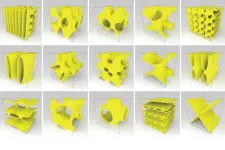
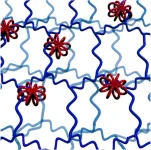
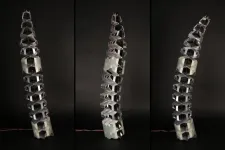
Cellular solids are materials composed of many cells that have been packed together, such as a honeycomb. The shape of those cells largely determines the material’s mechanical properties, including its stiffness or strength. Bones, for instance, are filled with a natural material that enables them to be lightweight, but stiff and strong. Inspired by bones and other cellular solids found in nature, humans have used the same concept ...

Read the release

Coffee offers performance boost for concrete
Engineering

Coffee offers performance boost for concrete

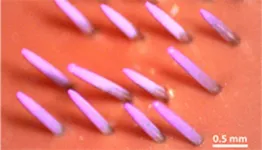
Engineers in Australia have found a way of making stronger concrete with roasted used-coffee grounds, to give the drink-additive a “double shot” at life and reduce waste going to landfills. Lead author Dr Rajeev Roychand from RMIT University said the team developed a technique to make concrete 30% stronger by turning waste coffee grounds into biochar, using a low-energy process without oxygen at 350 degrees Celsius. “The disposal of organic waste poses an environmental challenge as it emits large amounts of greenhouse gases including methane and carbon dioxide, which contribute to climate change,” ...

Read the release
Scientists develop efficient spray technique for bioactive materials
Engineering

Scientists develop efficient spray technique for bioactive materials

Rutgers scientists have devised a highly accurate method for creating coatings of biologically active materials for a variety of medical products. Such a technique could pave the way for a new era of transdermal medication, including shot-free vaccinations, the researchers said. Writing in Nature Communications, researchers described a new approach to electrospray deposition, an industrial spray-coating process. Essentially, Rutgers scientists developed a way to better control the target region within a spray zone as well as the electrical properties of microscopic ...

Read the release
ORNL's Bryan Maldonado to receive 2023 HENAAC Most Promising Engineer Award
Engineering

ORNL's Bryan Maldonado to receive 2023 HENAAC Most Promising Engineer Award

Bryan Maldonado, a dynamic systems and controls researcher at the Department of Energy’s Oak Ridge National Laboratory, has been recognized by the 2023 Hispanic Engineer National Achievements Awards Conference, or HENAAC, with the Most Promising Engineer Award. Given by Great Minds in STEM, or GMiS, the award highlights engineers who have made significant contributions to raising science, technology, engineering and math education awareness in underserved communities. Maldonado will receive ...

Read the release
Advancing metasurface manufacturing with water-soluble mold
Engineering

Advancing metasurface manufacturing with water-soluble mold

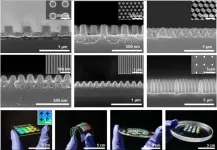
When will the protruding rear camera on smartphones become obsolete? The implementation of a metasurface, which completely disregards the properties of light, promises to reduce the thickness of a camera lens to 1/10,000 of a conventional lens. However, despite this advancement, challenges still persist due to high production costs and intricate processes. Nonetheless, a recent study unveiled a “mold” that dissolves in water, enhancing the efficiency of the fabrication process. A collaborative team led by Professor Junsuk Rho from the Department of Mechanical Engineering and the Department ...

Read the release
Institutions with strong engineering operations are more efficient in producing patents, researchers find
Engineering

Institutions with strong engineering operations are more efficient in producing patents, researchers find

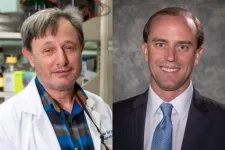
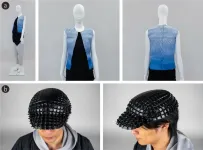
When it comes to translational medicine, Robert Gourdie is among the 2 percent of “super-producers,” National Institutes of Health-funded scientists at U.S. biomedical institutions who hold 10 or more issued patents. Super-producers were responsible for half of all patents issued according to research published Aug. 11 in Nature Biotechnology. The objective of the research was to create a tool to better quantify bridges and barriers to clinical translation of biomedical discoveries. The research marks a novel area of inquiry for Gourdie, a professor and cell biologist at the Fralin Biomedical ...

Read the release

ORNL buildings researchers earn top ASHRAE honors
Engineering

ORNL buildings researchers earn top ASHRAE honors

Kashif Nawaz and Mahabir Bhandari, building technologies researchers at the Department of Energy’s Oak Ridge National Laboratory, were recognized for research achievements in support of ASHRAE during the 2023 annual conference of the national heating, refrigerating, and air-conditioning engineering society. Nawaz, a distinguished researcher and head of ORNL’s Buildings Technologies Research Section, received the Crosby Field Award, which honors the highest-rated paper presented before a technical session, a symposium or poster session ...

Read the release

Ribbons of graphene push the material’s potential
Engineering

Ribbons of graphene push the material’s potential

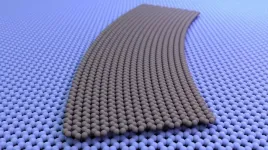
Think you know everything about a material? Try giving it a twist­—literally. That’s the main idea of an emerging field in condensed matter physics called “twistronics,” which has researchers drastically changing the properties of 2D materials, like graphene, with subtle changes—as small as going from a 1.1° to 1.2°—in the angle between stacked layers. Twisted layers of graphene, for example, have been shown to behave in ways that single sheets have not, including acting like magnets, like electrical superconductors, or like a superconductor’s opposite, insulators, all due to small changes in the twist angle between sheets. In theory, you ...

Read the release
Engineering

AIBS receives NSF Award to convene discussions on building an integrated, open, FAIR data network

The American Institute of Biological Sciences (AIBS) has been awarded a workshop grant (Award No. 2303588) from the National Science Foundation (NSF) to support the development of a series of discussions on enabling interdisciplinary and collaborative science through the integration of biological and environmental data. AIBS, in collaboration with the Biodiversity Collections Network (BCoN), will organize a set of domain-focused virtual listening sessions and a subsequent interdisciplinary workshop to engage an expansive set of stakeholders toward Building an Integrated, Open, Findable, Accessible, Interoperable, and Reusable (BIOFAIR) Data Network. During the last two decades, a wealth ...

Read the release
Three-dimensional printing achieves precision light control for structural coloration
Engineering

Three-dimensional printing achieves precision light control for structural coloration

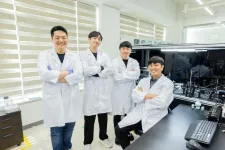
The world's first 3D printing technology that can be used in transparent displays and AR devices has been developed, which implements the physical phenomenon of chameleon's changing skin color or peacock's beautiful feather color. Dr. Jaeyeon Pyo’s team at KERI has succeeded in realizing a three-dimensional diffraction grating that can precisely control the path of light based on 'nanoscale 3D printing technology'. This is a novel technology that can utilize the principle of structural color observed in nature ...

Read the release
Scientists develop novel method to synthesize azide compounds for wider industrial applications
Engineering

Scientists develop novel method to synthesize azide compounds for wider industrial applications

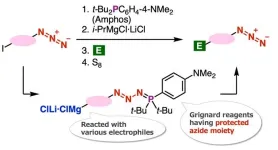
Azide compounds play a pivotal role for subsequent synthesis of organonitrogens such as amines and triazoles that are essential compounds in organic and materials chemistry. Triazoles that can be synthesized by the ‘click’ reaction have attracted attention in the development of pharmaceuticals and other industries. However, the azido groups are electrophilic and are susceptible to various nucleophiles such as carbanions. This poses a significant challenge for the synthesis of carbanions having azido groups. To this end, a team of researchers from Japan, led by Associate Professor Suguru ...

Read the release
Nanorings: New building blocks for chemistry
Engineering

Nanorings: New building blocks for chemistry

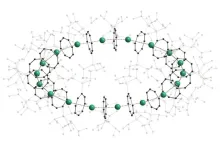
Sandwich complexes were developed about 70 years ago and have a sandwich-like structure. Two flat aromatic organic rings (the “slices of bread”) are filled with a single, central metal atom in between. Like the slices of bread, both rings are arranged in parallel. Adding further layers of ‘bread’ and ‘filling’ produces triple or multiple sandwiches. “These compounds are among the most important complexes used in modern organometallic chemistry,” says Professor Peter ...

Read the release
ORNL researcher, team received honors for advanced alloy development with industry
Engineering

ORNL researcher, team received honors for advanced alloy development with industry

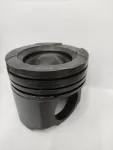
Dean Pierce of the Department of Energy’s Oak Ridge National Laboratory and a research team led by ORNL’s Alex Plotkowski were honored by DOE’s Vehicle Technologies Office for development of novel high-performance alloys that can withstand extreme environments. At this year’s Vehicle Technologies Annual Merit Review, held virtually on June 12, VTO recognized Pierce, an R&D staff scientist in the Physical Sciences Directorate, and the DuAlumin-3D research team under Plotkowski. VTO honored Pierce, a member of ORNL’s Alloy Behavior and Design group, ...

Read the release
Engineering

Public invited to follow Bering Land Bridge research project

The public can follow a team of scientists aboard the research vessel Sikuliaq as they spend the month of August studying conditions that existed on the Bering Land Bridge during the last ice age. The project, led by University of Alaska Fairbanks geology professor Sarah Fowell, will collect samples from beneath the sea floor to learn about the vegetation and climate of the region about 25,000 years ago. The project team will share updates during their journey via several digital and social media channels: Facebook Aboard the ...

Read the release
New method simplifies the construction process for complex materials
Engineering

New method simplifies the construction process for complex materials

Engineers are constantly searching for materials with novel, desirable property combinations. For example, an ultra-strong, lightweight material could be used to make airplanes and cars more fuel-efficient, or a material that is porous and biomechanically friendly could be useful for bone implants. Cellular metamaterials — artificial structures composed of units, or cells, that repeat in various patterns — can help achieve these goals. But it is difficult to know which cellular structure will lead to the desired properties. Even if one focuses on structures made of smaller building blocks like interconnected beams or ...

Read the release
Multicyclic molecular wheels with polymer potential
Engineering

Multicyclic molecular wheels with polymer potential

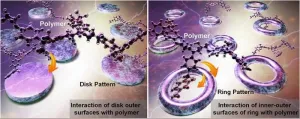
Molecules that act as connected wheels can hold long molecular chains together to modify the properties of soft polymers. Rotaxanes are interlocked molecular structures with a linear ‘axle’ molecule penetrating one or more cyclic ‘wheel’ molecules. Bulky groups at the end of the axle prevent the wheels from coming off. Now, researchers at Hokkaido University have taken the previous achievements of this technology a step further, making macro-rotaxanes that have multicyclic wheels interlocked with several high-molecular-weight axles. They report their innovation in the journal Angewandte Chemie International Edition. Rotaxanes, initially regarded as ...

Read the release
False claims attacks on infrastructure focus of NSF-funded research
Engineering

False claims attacks on infrastructure focus of NSF-funded research

False claims and disinformation, especially in a social media-driven society, have become major problems with potentially severe consequences. Kash Barker, Ph.D., principal investigator and the Anadarko Presidential Professor in the School of Industrial and Systems Engineering, Gallogly College of Engineering at the University of Oklahoma, is leading a team of researchers examining indirect attacks targeting infrastructure systems via unwitting users, supported by a $599,947 grant from the National Science Foundation's Secure ...

Read the release
The rise of bio-concrete (video)
Engineering

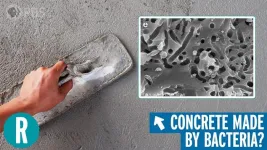
The rise of bio-concrete (video)

WASHINGTON, July 31, 2023 — Concrete is the most important building material on Earth, but its production causes a MASSIVE amount of global carbon emissions. Join George as he discovers how a surprising discovery in 1973 could dramatically change how we make concrete forever. https://youtu.be/fEt92F1c730 Reactions is a video series produced by the American Chemical Society and PBS Digital Studios. Subscribe to Reactions at http://bit.ly/ACSReactions and follow us on Twitter @ACSReactions. The American Chemical Society (ACS) is a nonprofit organization chartered by the U.S. Congress. ACS’ ...

Read the release
CABBI develops eco-friendly enzyme to create key chemical building blocks
Engineering

CABBI develops eco-friendly enzyme to create key chemical building blocks

Using energy from light to activate natural enzymes can help scientists create new-to-nature enzymatic reactions that support eco-friendly biomanufacturing — the production of fuels, plastics, and valuable chemicals from plants or other biological systems. Applying this photoenzymatic approach, researchers have developed a clean, efficient way to synthesize crucial chemical building blocks known as chiral amines, solving a longstanding challenge in synthetic chemistry. The study, published in Nature Catalysis, ...

Read the release
New app developed at NYU Tandon School of Engineering promises to make navigating subway stations easier for people with blindness and low vision
Engineering

New app developed at NYU Tandon School of Engineering promises to make navigating subway stations easier for people with blindness and low vision

A new trip-planning app has shown encouraging results in improving navigation inside subway stations, according to a study published in IEEE Journal of Translational Engineering in Health and Medicine, promising the possibility of easier commutes for people who are blind and low-vision. Designed by researchers at NYU Tandon School of Engineering and NYU Grossman School of Medicine, Commute Booster routes public-transportation users through the “middle mile” – the part of a journey inside subway stations or other similar transit hubs – in addition to the “first” and “last” miles that bring travelers to and from those hubs. “The ...

Read the release
A novel approach for balancing properties in composite materials
Engineering

A novel approach for balancing properties in composite materials

Dr. Amir Asadi, an assistant professor in the Department of Engineering Technology and Industrial Distribution at Texas A&M University, is making groundbreaking strides in the field of composite materials. His research explores embedding patterned nanostructures composed of multiple materials into high-performance composites to achieve the desired multifunctionality without sacrificing any other properties. This could lead to advancements in various fields, including electronics, energy storage, transportation and consumer products. Asadi's work has significant implications, as it addresses the challenge of simultaneously enhancing two properties — multifunctionality ...

Read the release
A whole new dimension for 3D printing
Engineering

A whole new dimension for 3D printing

3D printing of complex objects typically takes a long time due to the printing process necessarily laying down a large number of 2D layers to build up the object. The process usually wastes a lot of material required to support the unfinished object. Some novel ways to make flat materials self-fold into 3D shapes exist, but have shortcomings. For the first time, researchers combined 2D printing, origami, and chemistry to create a method of rapid 3D object fabrication without creating any waste material. These shapes self-fold in seconds. For some time, 3D printing has been used to prototype ...

Read the release
A defense against attacks on unmanned ground and aerial vehicles
Engineering

A defense against attacks on unmanned ground and aerial vehicles

A University of Texas at Arlington engineering researcher is working on defenses that could thwart cyberattacks against networks of self-driving cars and unmanned aerial vehicles. Animesh Chakravarthy, associate professor in the Department of Mechanical and Aerospace Engineering (MAE), is the principal investigator on an approximately $800,000 U.S. Department of Defense grant titled “Resilient Multi-Vehicle Networks.” MAE Professor Kamesh Subbarao, and Bill Beksi, assistant professor ...

Read the release
Ricardo Valerdi named Head of Systems and Industrial Engineering at the University of Arizona
Engineering

Ricardo Valerdi named Head of Systems and Industrial Engineering at the University of Arizona

Ricardo Valerdi was selected as head of the Department of Systems and Industrial Engineering after a national search that yielded a highly competitive pool of candidates after serving as interim head for the 2022-2023 academic year. “When I joined SIE 12 years ago, it looked very different,” said Valerdi. “Today we have a new generation of talented and ambitious faculty who are impacting our society’s Grand Challenges in manufacturing, transportation, aerospace ...

Read the release
Engineering

Give more people with learning disabilities the chance to work, Cambridge historian argues

Employment levels for people with learning disabilities in the UK are 5 to 10 times lower than they were a hundred years ago. And the experiences of workers from the 1910s–50s offer inspiration as well as lessons about safeguarding. A new study by Cambridge historian Professor Lucy Delap (Murray Edwards College) argues that loud voices in the 20th-century eugenics movement have hidden a much bigger picture of inclusion in British workplaces that puts today’s low rates to shame. Professor Delap found that in some parts of Britain, up to 70% of people variously labelled ‘defective’, ...

Read the release
From the original Press-News collection. Issuers of news releases are responsible for the accuracy of their content.