THE ORIGINAL COLLECTION · SINCE 2010

Environment
press releases.

Research announcements from universities, hospitals and scientific institutions. Explore the stories, people and discoveries behind the headlines.

Original publication datesPage 54
FIND A STORY

Find a past release.

Dates and source material belong to the original release.

Read our research explainers

Browse the collection · original publication order

University of Oregon scientists advance a greener way to produce iron
Environment

University of Oregon scientists advance a greener way to produce iron

University of Oregon chemists are bringing a greener way to make iron metal for steel production closer to reality, a step towards cleaning up an industry that’s one of the biggest contributors to carbon emissions worldwide. Last year UO chemist Paul Kempler and his team reported a way to create iron with electrochemistry, using a series of chemical reactions that turn saltwater and iron oxide into pure iron metal. In their latest work, they’ve optimized the starting materials for the process, identifying which kinds of iron oxides will make the chemical reactions the most cost-effective. That’s a key ...

Read the release
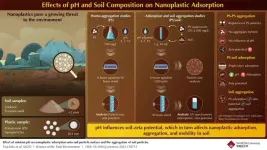
Nanoplastics in soil: how soil type and pH influence mobility
Environment

Nanoplastics in soil: how soil type and pH influence mobility

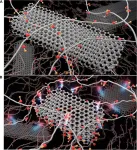
Plastics are everywhere—from packaging and textiles to electronics and medical devices. As plastic waste breaks down, it releases microscopic particles that can penetrate our ecosystems, hinder plant growth, and potentially transfer harmful pollutants to organisms, including humans. Therefore, these plastic particles are a potential threat to the ecosystem, especially in their nanoparticulate form (1–100 nm diameter), which can penetrate the environment through different routes, including the soil beneath our feet. With this in mind, a team of researchers from Japan set out to study the migration behavior of nanoplastics ...

Read the release
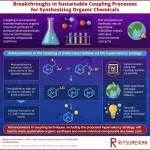
Rethinking coupling methods for more sustainable organic synthesis
Environment

Rethinking coupling methods for more sustainable organic synthesis

Coupling reactions are among the most transformative tools in organic chemistry, enabling the formation of crucial chemical bonds in pharmaceuticals, agrochemicals, and advanced materials. Since their introduction, they have been one of the backbones of modern organic synthesis. However, these methods have long relied on environmentally taxing transition metal catalysts, such as palladium, which are often scarce, costly, and generate unwanted byproducts. The limitations of conventional coupling methods have prompted researchers to seek alternative strategies that better align with the principles of green and sustainable chemistry ...

Read the release
UN University: five deep changes urgently needed for a sustainable world and how to achieve them
Environment

UN University: five deep changes urgently needed for a sustainable world and how to achieve them

Amid deepening inequalities and escalating crises, including climate change, biodiversity loss and pollution, a new United Nations report presents a bold approach for change. The 2025 Interconnected Disaster Risks report, Turning Over a New Leaf, issued by the UN University’s Institute for Environment and Human Security (UNU-EHS), shifts focus from diagnosing problems to mapping out solutions. It establishes that many of today’s solutions are surface-level fixes, and that to create ...

Read the release
Environment

Decarbonization improves energy security for most countries, Stanford study finds

A pivot from fossil fuels to clean energy technologies by 2060 would improve energy security and reduce trade risks for most nations, according to an April 9 study in Nature Climate Change. Lithium, nickel, cobalt, copper, and rare earth minerals are among the prized materials for countries and corporations racing to secure supplies for energy systems that do not add greenhouse gases to our atmosphere. Unlike fossil fuels, natural reserves of these materials are most concentrated in the Global South, shuffling the geopolitics of energy and global trade. “Most people ...

Read the release
Environment

How is climate change affecting seasonal allergies?

A review published in The Laryngoscope indicates that climate change’s effects on pollen seasons and concentrations are contributing to increasing rates of allergic rhinitis, or hay fever. When investigators assessed research published between 2000 and 2023, they identified 30 studies that reported on the current epidemiological state of allergic rhinitis, described factors related to climate change, and observed how global warming is affecting pollen seasons and allergy symptoms. Sixteen studies reported longer pollen seasons and/or higher pollen concentrations related to climate change. As an example, total pollen emissions in the U.S. are projected to increase by 16–40% ...

Read the release
Environment

AMS science preview: Fire weather, bumpy hurricane flights, climate extremes and protests

The American Meteorological Society continuously publishes research on climate, weather, and water in its 12 journals. Many of these articles are available for early online access–they are peer-reviewed, but not yet in their final published form. Below are some recent examples. JOURNAL ARTICLES Multi-factor Change in Western U.S. Nighttime Fire Weather Journal of Climate Western fires become less prone to “lay down” at night. Wildfires typically calm down at night–a crucial break for firefighters–yet firefighter and satellite measurements confirm increased nocturnal fire activity in the western U.S. from 1980 to 2020. This study shows increases in meteorological ...

Read the release
Dinosaurs’ apparent decline prior to asteroid may be due to poor fossil record
Environment

Dinosaurs’ apparent decline prior to asteroid may be due to poor fossil record

The idea that dinosaurs were already in decline before an asteroid wiped most of them out 66 million years ago may be explained by a worsening fossil record from that time rather than a genuine dwindling of dinosaur species, suggests a new study led by UCL researchers. The study, published in Current Biology, analysed the fossil record of North America in the 18 million years up to the asteroid impact at the end of the Cretaceous period (between 66 and 84 million years ago). Taken at face value, these fossils - more than 8,000 of them - suggest the number of dinosaur species peaked about 75 million years ago and then declined in the nine million years leading up to the ...

Read the release
Eclipse echoes: groundbreaking study reveals surprising avian vocal patterns during solar eclipse
Environment

Eclipse echoes: groundbreaking study reveals surprising avian vocal patterns during solar eclipse

A new study published today in Scientific Reports reveals how birds responded to the April 8, 2024, total solar eclipse across North America. The study finds bird vocalizations significantly declined only where more than 99% solar obscuration occurred. Researchers from Loggerhead Instruments, Inc. and the K. Lisa Yang Center for Conservation Bioacoustics at the Cornell Lab of Ornithology analyzed data from 344 community-based acoustic monitoring devices, called Haikuboxes, using a novel neural network approach. Unlike previous studies, ...

Read the release
New study finds that 90 percent of U.S. Christian leaders believe climate change is real
Environment

New study finds that 90 percent of U.S. Christian leaders believe climate change is real

Chestnut Hill, Mass (4/7/2025) – From Catholics to Evangelicals, a surprising 90 percent of Christian leaders in the U.S. believe in man-made climate change, yet most do not share that understanding with their congregants, according to a new report by Boston College researchers. The findings hold implications for how Christians might help address climate change, knowing their beliefs about the climate crisis align with their church’s values, according to Boston College Assistant Professor of Psychology Gregg Sparkman, senior author of the ...

Read the release
New study reveals polymers with flawed fillers boost heat transfer in plastics
Environment

New study reveals polymers with flawed fillers boost heat transfer in plastics

New Study Reveals Polymers with Flawed Fillers Boost Heat Transfer in Plastics The UMass Amherst-led team challenges the conventional wisdom that perfect fillers are better for making thermally conductive polymers AMHERST, Mass. — In the quest to design the next generation of materials for modern devices – ones that are lightweight, flexible and excellent at dissipating heat – a team of researchers led by the University of Massachusetts Amherst made a discovery: imperfection has its upsides. This research, published in Science Advances, ...

Read the release
Animal behavioral diversity at risk in the face of declining biodiversity
Environment

Animal behavioral diversity at risk in the face of declining biodiversity

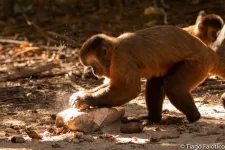
Our environment is changing rapidly, largely as a result of human activities, leading to a significant decline in biodiversity. According to researchers from the University of Victoria and the Max Planck Institute for Evolutionary Anthropology, this decline does not only affect animal life, but also our understanding of their behavior, including tool use. "Cultural behaviors range from the songs of whales to the tool use of primates," says Ammie Kalan of the University of Victoria. "These adaptations to environmental change not only benefit the animals, but also provide important insights into the origins of behavior and learning across species. However, shrinking ...

Read the release
Researchers from MARE ULisboa discover that the European catfish, an invasive species in Portugal, has a prolonged breeding season, enhancing its invasive potential
Environment

Researchers from MARE ULisboa discover that the European catfish, an invasive species in Portugal, has a prolonged breeding season, enhancing its invasive potential

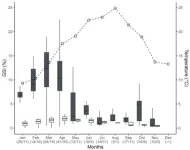
The European Catfish is the largest freshwater fish in Europe, reaching up to 2.8 meters in length and 130 kg in weight. It was first detected in Portugal in 2014. As a top predator, it has no natural enemies and exhibits high fecundity, with females capable of producing up to half a million oocytes (unfertilized eggs). “This is not new information, as this invasive species reaches large sizes, and there is a direct relationship between abdominal cavity volume and the total number of oocytes produced,” said Christos Gkenas, a researcher at MARE-ULisboa and the study’s lead author. ...

Read the release
Carbon capture could become practical with scalable, affordable materials
Environment

Carbon capture could become practical with scalable, affordable materials

‘Vast majority’ of direct air capture research through air’s moisture swings relies on engineered ion exchange resins to sequester CO2 Other previously untested materials with dual functions like aluminum oxide and activated carbon would reduce associated energy and cost Cheap, scalable carbon capture will be critical to reducing worldwide carbon footprint EVANSTON, Ill. --- Researchers at Northwestern University have expanded the potential of carbon capture technology that plucks CO2 directly from the air by demonstrating that there are multiple ...

Read the release
Environment

Solar wave squeezed Jupiter’s magnetic shield to unleash heat

A massive wave of solar wind that squished Jupiter’s protective bubble has been detected for the first time. Scientists at the University of Reading have discovered a solar wind event from 2017 that hit Jupiter and compressed its magnetosphere – a protective bubble created by a planet's magnetic field. This created a hot region spanning half Jupiter's circumference and exhibiting temperatures exceeding 500°C – significantly higher than the typical 350°C atmospheric background temperature. A new study published today (Thursday, 3 April) in Geophysical Research Letters, describes for the first time a solar burst that scientists now believe hits ...

Read the release
Researchers recycle wind turbine blade materials to make improved plastics
Environment

Researchers recycle wind turbine blade materials to make improved plastics

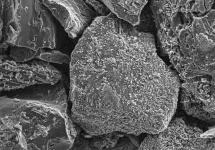
PULLMAN, Wash. – A new method to recycle wind turbine blades without using harsh chemicals resulted in the recovery of high-strength glass fibers and resins that allowed Washington State University researchers to re-purpose the materials to create stronger plastics. The innovation provides a simple and environmentally friendly way to recycle wind turbine blades to create useful products. Reporting in the journal, Resource, Conservation, and Recycling, the team of researchers cut the lightweight material that is commonly used in wind turbine blades, called glass fiber-reinforced polymer (GFRP), into approximately two ...

Read the release
Microplastics detected in cat placentas and fetuses during early pregnancy
Environment

Microplastics detected in cat placentas and fetuses during early pregnancy

In a small study of eight cats at early stages of pregnancy, researchers detected 19 different kinds of microplastic particles in fetuses from two cats and in the placentas of three cats. Ilaria Ferraboschi of the University of Parma, Italy, and colleagues present these findings in the open-access journal PLOS One on April 2, 2025. Humans and other animals worldwide are increasingly exposed to microplastics, which are small particles of plastic contaminants. Studies suggest that microplastics can have a variety of adverse health effects. For instance, research in rodents suggests that fetuses exposed to microplastics ...

Read the release
Environment

Science ‘storytelling’ urgently needed amid climate and biodiversity crisis

Scientists should experiment with creative ways of communicating their work to inspire action to protect the natural world, researchers say. Scientists primarily publish their work in academic journals, where writing is expected to be technical, objective and dispassionate – making it unlikely to appeal to, or be easily understood by non-experts. The researchers – from the University of Exeter – argue for science “translated into stories”, with benefits both for science and wider society. They suggest ways that scientists can tell powerful, passionate stories without compromising the objectivity of science. “As ...

Read the release
Environment

Illuminating single atoms for sustainable propylene production

More than 150 million metric tons of propylene are produced annually, making it one of the most widespread chemicals used in the chemical industry. Propylene is the basis for polypropylene, a polymer used in everything from medical devices to packaging to household goods. But most propylene is produced through steam cracking, a high-energy process that uses heat to break down crude oil into smaller hydrocarbons. Now, Northwestern University chemists have found a way to create propylene using light. Their findings show that a nanoengineered photoactive ...

Read the release
We know nanoplastics are a threat—this new tool can help us figure out just how bad they are
Environment

We know nanoplastics are a threat—this new tool can help us figure out just how bad they are

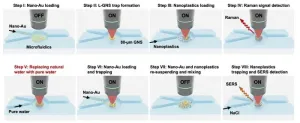
April 1, 2025 AMHERST, Mass. – While the threat that microplastics pose to human and ecological health has been richly documented and is well known, nanoplastics, which are smaller than one micrometer (1/50th the thickness of an average human hair), are far more reactive, far more mobile and vastly more capable of crossing biological membranes. Yet, because they are so tiny and so mobile, researchers don’t yet have an accurate understanding of just how toxic these particles are. The first step to understanding the toxicology of nanoplastics is to build a reliable, ...

Read the release
Environment

Research: Top scientists issue urgent warning on fossil fuels

WASHINGTON— In a review published today in the peer-reviewed journal Oxford Open Climate Change, top scientists issued an urgent warning that fossil fuels and the fossil fuel industry are driving interlinked crises that threaten people, wildlife, and a livable future. Today’s review synthesizes the extensive scientific evidence showing that fossil fuels and the fossil fuel industry are fueling not only the climate crisis but also public health harms, environmental injustice, biodiversity loss, and the plastics ...

Read the release
Thinner Arctic sea ice may affect the AMOC
Environment

Thinner Arctic sea ice may affect the AMOC

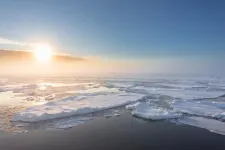
One of the ocean currents in the Arctic Ocean is at risk of disappearing this century because of climate change, according to a new joint study from the University of Gothenburg and the German Alfred Wegener Institute. As a result, the North Atlantic could be flooded with freshwater which would weaken the global ocean circulation. The weakening of the AMOC, Atlantic Meridional Overturning Circulation, is a hot topic among the world's climate scientists. However, it is unclear what the consequences will be when ...

Read the release
Environment

Melting ice, more rain drive Southern Ocean cooling

In brief Surface waters in the Southern Ocean have been cooling in recent decades, counter to what climate models predict. Scientists have quantified how much of the cooling observed since 1990 has been driven by an influx of freshwater that’s unaccounted for in state-of-the-art climate models. The researchers discovered that freshwater inputs along the coast from melting ice sheets exert surprisingly strong influence on Southern Ocean surface temperatures and the broader climate system. Global climate models predict that the ocean around Antarctica ...

Read the release
Environment

Losing forest carbon stocks could put climate goals out of reach

In the past, intact forests absorbed 7.8 billion tonnes of CO₂ annually – about a fifth of all human emissions – but their carbon storage is increasingly at risk from climate change and human activities such as deforestation. A new study from the Potsdam Institute for Climate Impact Research (PIK) shows that failing to account for the potentially decreasing ability of forests to absorb CO₂ could make reaching the Paris agreement targets significantly harder, if not impossible, and much more costly. “Delaying action leads to disproportionately higher costs,” explains Michael Windisch, ...

Read the release
Fossils: Ancient parasitic ‘Venus flytrap’ wasp preserved in amber
Environment

Fossils: Ancient parasitic ‘Venus flytrap’ wasp preserved in amber

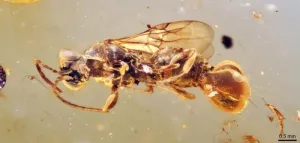
An extinct lineage of parasitic wasps dating from the mid-Cretaceous period and preserved in amber may have used their Venus flytrap-like abdomen to capture and immobilise their prey. Research, published in BMC Biology, finds that the specimens of Sirenobethylus charybdis — named for the sea monster in Greek mythology which swallowed and disgorged water three times a day — date from almost 99 million years ago and may represent a new family of insects. The morphology of S. charybdis indicates the wasps were ...

Read the release
From the original Press-News collection. Issuers of news releases are responsible for the accuracy of their content.