THE ORIGINAL COLLECTION · SINCE 2010

Environment
press releases.

Research announcements from universities, hospitals and scientific institutions. Explore the stories, people and discoveries behind the headlines.

Original publication datesPage 53
FIND A STORY

Find a past release.

Dates and source material belong to the original release.

Read our research explainers

Browse the collection · original publication order

Environment

Extreme drought contributed to barbarian invasion of late Roman Britain, tree-ring study reveals

Three consecutive years of drought contributed to the ‘Barbarian Conspiracy’, a pivotal moment in the history of Roman Britain, a new Cambridge-led study reveals. Researchers argue that Picts, Scotti and Saxons took advantage of famine and societal breakdown caused by an extreme period of drought to inflict crushing blows on weakened Roman defences in 367 CE. While Rome eventually restored order, some historians argue that the province never fully recovered. The ‘Barbarian Conspiracy’ of 367 CE was one of the most severe threats to Rome’s hold on Britain since the Boudiccan revolt three centuries earlier. Contemporary sources indicate that components ...

Read the release
Strongest hints yet of biological activity outside the solar system
Environment

Strongest hints yet of biological activity outside the solar system

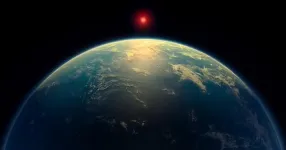
Astronomers have detected the most promising signs yet of a possible biosignature outside the solar system, although they remain cautious. Using data from the James Webb Space Telescope (JWST), the astronomers, led by the University of Cambridge, have detected the chemical fingerprints of dimethyl sulfide (DMS) and/or dimethyl disulfide (DMDS), in the atmosphere of the exoplanet K2-18b, which orbits its star in the habitable zone. On Earth, DMS and DMDS are only produced by life, primarily microbial life such as marine phytoplankton. While an unknown chemical process may be the source of these molecules in K2-18b’s atmosphere, the results are ...

Read the release
Marine radar can accurately monitor vessel speeds to protect whales, study finds
Environment

Marine radar can accurately monitor vessel speeds to protect whales, study finds

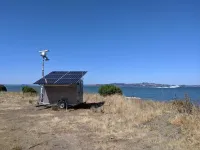
A new study by researchers at ProtectedSeas highlights the potential of marine radar technology to monitor speed of small vessels. The research, aimed at testing the accuracy of radar in assessing potential violations, found that the technology could detect speed violations with 95% confidence, offering a promising solution to help reduce the threat of vessel strikes on whale populations. The analysis was recently published in the journal Sensors. The impact of small vessels on whales is becoming a growing concern in busy marine environments due to the increasing number ...

Read the release
Environment

Microbes in Brooklyn Superfund site teach lessons on fighting industrial pollution

Using advanced DNA sequence analysis, a research team led by NYU Tandon School of Engineering's Assistant Professor Elizabeth Hénaff has discovered that tiny organisms in Brooklyn's highly contaminated Gowanus Canal have developed a comprehensive collection of pollution-fighting genes. The findings were published in the Journal of Applied Microbiology on April 15, 2025. The team identified 455 species of microorganisms wielding 64 different biochemical pathways to degrade pollutants ...

Read the release
Forward genetics approach reveals the factor responsible for carbon trade-off in leaves
Environment

Forward genetics approach reveals the factor responsible for carbon trade-off in leaves

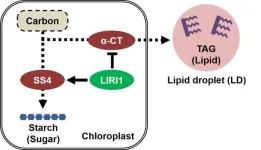
Plants store carbon in two primary forms: starch and triacylglycerols (TAGs). Starch is mainly stored in chloroplasts in leaves, where it serves as a readily available energy source, while TAGs are stored in seeds for long-term energy storage. Past studies have shown that a carbon trade-off exists between these two storage forms, implying that an increase in the levels of one form often reduces the levels of the other. Interestingly, attempts to increase TAG in leaves have led to a decrease in the levels of starch, suggesting ...

Read the release
Environment

Climate-related trauma can have lasting effects on decision-making, study finds

A new study from University of California San Diego suggests that climate trauma — such as experiencing a devastating wildfire — can have lasting effects on cognitive function. The research, which focused on survivors of the 2018 Camp Fire in Northern California, found that individuals directly exposed to the disaster had difficulty making decisions that prioritize long-term benefits. The findings were recently published in Scientific Reports, part of the Nature portfolio of journals. “Our previous research has shown that survivors of California’s 2018 Camp Fire experience prolonged symptoms ...

Read the release
The bear in the (court)room: who decides on removing grizzly bears from the endangered species list?
Environment

The bear in the (court)room: who decides on removing grizzly bears from the endangered species list?

By Dr Kelly Dunning The Endangered Species Act (ESA), now 50 years old, was once a rare beacon of bipartisan unity, signed into law by President Richard Nixon with near-unanimous political support. Its purpose was clear: protect imperiled species and enable their recovery using the best available science to do so. Yet, as our case study on the grizzly bear in the Greater Yellowstone Ecosystem reveals, wildlife management under the ESA has changed, becoming a political battleground where science is increasingly drowned out by partisan ideology, bureaucratic delays, power struggles, and competing political interests. ...

Read the release
Foraging on the wing: How can ecologically similar birds live together?
Environment

Foraging on the wing: How can ecologically similar birds live together?

UNIVERSITY PARK, Pa. — A spat between birds at your backyard birdfeeder highlights the sometimes fierce competition for resources that animals face in the natural world, but some ecologically similar species appear to coexist peacefully. A classic study in songbirds by Robert MacArthur, one of the founders of modern ecology, suggested that similar wood warblers — insect-eating, colorful forest songbirds — can live in the same trees because they actually occupy slightly different locations in the tree and presumably eat different insects. Now, a new study is using modern techniques to revisit MacArthur’s ...

Read the release
Environment

Colombia’s peatlands could be a crucial tool to fight climate change. But first we have to find them

UC Santa Cruz Assistant Professor of Environmental Studies Scott Winton has been wading through thick, smelly muck in the tropics for almost a decade. He wouldn’t have it any other way. As a wetland ecologist and biogeochemist, he’s been hard at work investigating an important and mysterious topic: peatlands. Peatlands are a special type of wetland with enormous potential to either help or hurt global efforts to address climate change. If we want peatlands on our side, we’ll have to protect them. But that’s difficult to do, since we still don’t ...

Read the release
Coastal heritage threatened by climate change
Environment

Coastal heritage threatened by climate change

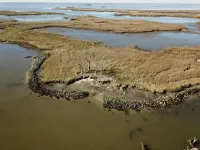
Humans have always lived by coasts and waterways, and thus these locations are rich with archeological sites. Natural and cultural resource management are conducted separately, despite the fact that climate change, sea level rise, and extreme weather threaten them both. Jayur Mehta and colleagues argue a synergy of both approaches is required to protect coastal archaeological landscapes. The authors used LiDAR digital elevation models, site location data, and NOAA sea level rise models to define ...

Read the release
Environment

How proactive salmon conservation in the North Pacific can deliver global benefits

April 15, 2025 | Portland, Oregon—A new study in the journal Fisheries shows how a salmon-focused ecosystem protection strategy in the North Pacific can deliver meaningful results in the global drive to protect biodiversity. The approach, called the stronghold strategy, aims to proactively protect the world’s greatest remaining “strongholds”—a select group of salmon, steelhead, and trout systems that collectively comprise 119 distinct watersheds. According to Wild Salmon Center President & CEO Guido Rahr—lead author of the peer-reviewed study—salmonids center the strategy because they are both iconic and globally recognized ...

Read the release
Environment

Archaeologists discover historical link between inequality and sustainability

EMBARGOED UNTIL 15.00 US ET (20.00 BST) ON MONDAY 14 APRIL 2025 The study lead by Professor Dan Lawrence, of Durham University in the UK, found that across ten millennia, more unequal distributions of wealth correlated with longer-term human settlement. However, the team are keen to stress that one factor is not causally dependent on the other, giving hope that humankind’s survival is not linked to ever increasing inequality. The research is part of a Special Feature of the Proceedings of the National Academy of Sciences (PNAS), entitled Global Dynamics of Wealth Inequality. Sustainability is defined by the ...

Read the release
Pioneering research reveals Arctic matter pathways poised for major shifts amidst climate change
Environment

Pioneering research reveals Arctic matter pathways poised for major shifts amidst climate change

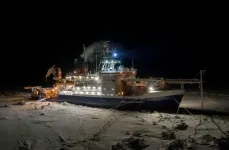
A new study has shed unprecedented light on the highly variable and climate-sensitive routes that substances from Siberian rivers use to travel across the Arctic Ocean. The findings raise fresh concerns about the increasing spread of pollutants and the potential consequences for fragile polar ecosystems as climate change accelerates. The international research, published today in Nature Communications and led by the University of Bristol, in the UK, provides the clearest ever picture of how the underlying transport system, known as the Transpolar Draft, operates. It also uncovers the various factors controlling this major Arctic surface current, ...

Read the release
New method for detecting nanoplastics in body fluids
Environment

New method for detecting nanoplastics in body fluids

Microplastics and the much smaller nanoplastics enter the human body in various ways, for example through food or the air we breathe. A large proportion is excreted, but a certain amount remains in organs, blood and other body fluids. In the FFG bridge project Nano-VISION, which was launched two years ago together with the start-up BRAVE Analytics, a team led by Harald Fitzek from the Institute of Electron Microscopy and Nanoanalysis at Graz University of Technology (TU Graz) and an ophthalmologist from Graz addressed the question of whether nanoplastics also play a role in ophthalmology. The project partners have now been able to develop a method for detecting and quantifying nanoplastics ...

Read the release
Crustal brines at an oceanic transform fault
Environment

Crustal brines at an oceanic transform fault

Woods Hole, Mass. (April 11, 2025) - Being a geophysicist can sometimes feel like being a detective —uncovering clues, and then building a case based on the evidence. In a new article published in Science Advances, a collaborative team led by the Woods Hole Oceanographic Institution (WHOI), presents a never-before-seen image of an oceanic transform fault from electromagnetic (EM) data collected at the Gofar fault in the eastern Pacific Ocean. The National Science Foundation funded work reveals ...

Read the release
Environment

Preserving and using the deep sea: scientists call for more knowledge to enable sustainable management

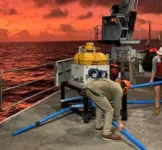
Where does the deep sea begin? Definitions vary across science and legal frameworks. For the purposes of their joint analysis, the members of the European Marine Board’s (EMB) Deep Sea and Ocean Health Working Group defined the deep sea as the water column and seabed below 200 metres. Below this point, sunlight barely penetrates the water, and the habitat changes dramatically. According to this definition, the deep sea accounts for about 90 per cent of the ocean’s volume. Its importance for ...

Read the release
Scalable graphene membranes: a leap for carbon capture
Environment

Scalable graphene membranes: a leap for carbon capture

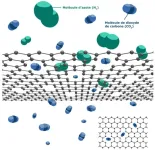
Capturing carbon dioxide (CO₂) from industrial emissions is crucial in the fight against climate change. But current methods, like chemical absorption, are expensive and energy-intensive. Scientists have long eyed graphene—an atom-thin, ultra-strong material—as a promising alternative for gas separation, but making large-area, efficient graphene membranes has been a challenge. Now, a team at EPFL, led by Professor Kumar Agrawal, has developed a scalable technique to create porous graphene membranes ...

Read the release
Environment

Government urged to tackle inequality in ‘low-carbon tech’ like solar panels and electric cars

Decarbonisation in the automotive and housing sectors is paramount if the UK’s legally binding commitment to achieving net zero by 2050 is to succeed, say researchers at University of Sheffield Exploring the presence of socioeconomic inequalities in the uptake of low-carbon technologies (LCTs), such as solar panels and electric vehicles, has important policy implications for the decarbonisation in the UK The new report advocates for interventions at an individual, as well as community-level, to help those from more disadvantaged backgrounds adopt technologies that ...

Read the release
Venom characteristics of a deadly snake can be predicted from local climate
Environment

Venom characteristics of a deadly snake can be predicted from local climate

Local climate can be used to predict the venom characteristics of a deadly snake that is widespread in India, helping clinicians to provide targeted therapies for snake bite victims, according to a study publishing April 10 in the open-access journal PLOS Neglected Tropical Diseases by Kartik Sunagar and colleagues at the Indian Institute of Science. Russell’s viper (Daboia russelii) is found across the Indian subcontinent and is responsible for over 40% of snake ...

Read the release
Environment

Environment: Less than 10% of global plastics manufactured from recycled materials

Only 9.5% of plastic materials produced globally in 2022 were manufactured from recycled materials. The findings, reported in Communications Earth & Environment, are part of a comprehensive analysis of the global plastics sector, which also reveals a large increase in the amount of plastic being disposed of by incineration and substantial regional differences in plastic consumption. Plastic production has increased from two million tonnes per year in 1950 to 400 million tonnes per year in 2022 and ...

Read the release
Caspian Sea decline threatens endangered seals, coastal communities and industry
Environment

Caspian Sea decline threatens endangered seals, coastal communities and industry

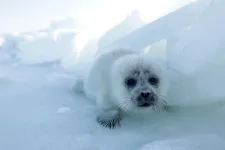
UNDER EMBARGO UNTIL THURSDAY 10 APRIL, 10AM LONDON TIME, 5AM EASTERN TIME. Urgent action is needed to protect endangered species, human health and industry from the impacts of the Caspian Sea shrinking, research led by the University of Leeds has found. Water levels in the Caspian Sea – the world’s largest landlocked water body – are getting lower, as hotter temperatures cause more water to evaporate than is flowing in. Even if global warming is limited to below 2°C, ...

Read the release
Aussie tech helps make bio-oils for greener industrial applications
Environment

Aussie tech helps make bio-oils for greener industrial applications

Australian technology developed at RMIT University could enable more sustainable and cheaper production of bio-oils to replace petroleum-based products in electronic, construction and automotive applications. The technology, known as PYROCOTM, uses high temperatures without oxygen to convert treated sewage (biosolids) into a carbon-rich product called biochar, which can act as a catalyst to produce phenol-rich bio-oil. PYROCOTM has been developed by RMIT in collaboration with South East Water, Intelligent Water Networks and other water authorities over several years and is now being applied to several exciting circular economy applications. The RMIT team's latest research in collaboration ...

Read the release
Mapping mercury contamination in penguins of the Southern Ocean
Environment

Mapping mercury contamination in penguins of the Southern Ocean

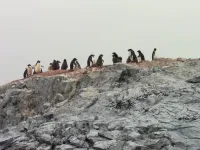
In 1962, when environmentalist and author Rachel Carson penned Silent Spring, alerting the world to the dangers of the pesticide DDT, it was the reproductive threat to birds – the bald eagle in particular – that spurred people to action. Six decades later, Rutgers University–New Brunswick researchers are taking the measure of another global environmental pollutant by drawing parallels to the crisis Carson identified. This time, the pollutant is mercury, and the sentinels are penguins living in the farthest reaches of the Antarctic Peninsula. “With mercury, there’s an analogy to DDT,” said John Reinfelder, a professor in the Department of Environmental Sciences ...

Read the release
The green past of the Saharo-Arabian Desert
Environment

The green past of the Saharo-Arabian Desert

The Saharo-Arabian Desert experienced repeated wetter periods over the past eight million years. Wetter conditions favoured the exchange of mammals between Africa and Eurasia. Fossilised rain water reveals monsoon rains reached Arabia in such wet periods. The Saharo-Arabian Desert is one of the largest biogeographic barriers on Earth, hindering the dispersal of animals between Africa and Eurasia, and is at least eleven million years old. How did water-dependent mammals, including our early ancestors, manage to cross this inhospitable desert in ...

Read the release
Enhancing power distribution systems with renewable energy: a new configuration approach
Environment

Enhancing power distribution systems with renewable energy: a new configuration approach

A groundbreaking study presents a comprehensive approach to restructuring medium-level voltage (MLV) distribution systems that enhances reliability while reducing both energy losses and carbon emissions. The study introduces an innovative "N+1 bus configuration" for radial distribution systems (RDS) - a simple yet powerful modification to conventional power networks that adds just one additional tie line to existing systems. This seemingly minor change delivers remarkable improvements in system performance when combined with distributed renewable energy resources (DER). The research team conducted extensive testing on both real-time radial ...

Read the release
From the original Press-News collection. Issuers of news releases are responsible for the accuracy of their content.