THE ORIGINAL COLLECTION · SINCE 2010

Environment
press releases.

Research announcements from universities, hospitals and scientific institutions. Explore the stories, people and discoveries behind the headlines.

Original publication datesPage 55
FIND A STORY

Find a past release.

Dates and source material belong to the original release.

Read our research explainers

Browse the collection · original publication order

New species revealed after 25 years of study on ‘inside out’ fossil – and named after discoverer’s mum
Environment

New species revealed after 25 years of study on ‘inside out’ fossil – and named after discoverer’s mum

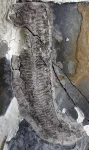
A new species of fossil from 444 million years ago that has perfectly preserved insides has been affectionately named ‘Sue’ after its discoverer’s mum. The result of 25 years of work by a University of Leicester palaeontologist and published in the journal Palaeontology, the study details a new species of multisegmented fossil and is now officially named as Keurbos susanae. Lead author Professor Sarah Gabbott from the School of Geography, Geology and the Environment said: “‘Sue’ is an inside-out, legless, headless wonder. Remarkably her insides are a mineralised ...

Read the release
Cleaning microplastics
Environment

Cleaning microplastics

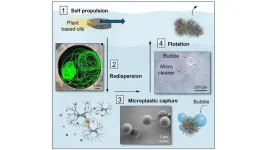
In a new paper, researchers at North Carolina State University show proof of concept for a system that, in a single cycle, actively removes microplastics from water. The findings, described in the journal Advanced Functional Materials, hold the potential for advances in cleansing oceans and other bodies of water of tiny plastics that may harm human health and the environment. “The idea behind this work is: Can we make the cleaning materials in the form of soft particles that self-disperse in water, capture microplastics as they sink, and then return to the surface with the captured microplastic contaminants?” said Orlin Velev, the S. Frank and Doris Culberson Distinguished ...

Read the release
A new method to recycle fluoride from long-lived PFAS chemicals
Environment

A new method to recycle fluoride from long-lived PFAS chemicals

UNDER EMBARGO UNTIL: 16:00 GMT / 12 NOON ET WEDNESDAY 26 MARCH 2025 A new method to recycle fluoride from long-lived PFAS chemicals Images available via the link in the notes section. Oxford Chemistry researchers have developed a method to destroy fluorine-containing PFAS (sometimes labelled ‘forever chemicals’) while recovering their fluorine content for future use. The results have been published today (26 March 2025) in Nature. PFAS – which stands for poly- and perfluoroalkylated substances – have been produced in large ...

Read the release
The devastating human impact on biodiversity
Environment

The devastating human impact on biodiversity

Humans are having a highly detrimental impact on biodiversity worldwide. Not only is the number of species declining, but the composition of species communities is also changing. These are the findings of a study by Eawag and the University of Zurich published in the scientific journal Nature. It is one of the largest studies ever conducted on this topic. Biological diversity is under threat. More and more plant and animal species are disappearing worldwide, and humans are responsible. Until now, however, there has been no synthesis of the extent of human intervention in nature and whether the effects can be found everywhere in the world ...

Read the release
Environment

Pew funds scientists from 5 countries to advance marine conservation

PHILADELPHIA—The Pew Charitable Trusts announced today that six distinguished researchers will receive the 2025 Pew fellowship in marine conservation. The scientists—from China, Curaçao, Indonesia, the Philippines, and South Africa—join a community of more than 200 Pew marine fellows committed to advancing ocean knowledge and the sustainable use of marine resources. “The challenges facing our oceans, from habitat destruction to pollution, require bold scientific leadership and innovative solutions,” said Donna Frisby-Greenwood, Pew’s senior vice president for Philadelphia and scientific advancement. ...

Read the release
Environment

If native plants are going to survive climate change, they need our help to move—here’s how to do it safely

March 26, 2025 AMHERST, Mass. – Many native plants in the U.S. cannot possibly move themselves fast enough to avoid climate-change driven extinction. If these native plants are going to have any chance of surviving into the future, they’ll need human help to move into adjacent areas, a process known as “managed relocation.” And yet, there’s no guarantee that a plant will thrive in a new area. Furthermore, movement of introduced plants, albeit over much larger distances, is exactly how the problem of invasive species began—think of kudzu-choked forests, wetlands taken over by purple ...

Read the release
Scientists discovered chemical oscillations in palladium nanoparticles, paving the way for recycling precious metal catalysts
Environment

Scientists discovered chemical oscillations in palladium nanoparticles, paving the way for recycling precious metal catalysts

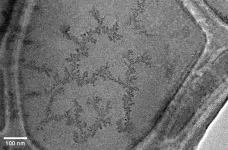
Scientists have for the first time filmed the real-time growth and contraction of Palladium nanoparticles, opening new avenues for utilising and recycling precious metal catalysts. Researchers at the University of Nottingham’s School of Chemistry used transmission electron microscopy (TEM) to observe the complete lifecycle of palladium nanoparticles in a liquid environment, from nucleation through growth to dissolution, with the entire cycle repeating multiple times. This study has been published today in Nanoscale. One of the most important applications of metal nanoparticles is in catalysis, which forms a backbone of chemical industries. Dr Jesum Alves ...

Read the release
USU ecologists document Utah's bee species and say beehive state is rich in bee diversity
Environment

USU ecologists document Utah's bee species and say beehive state is rich in bee diversity

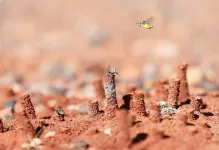
TOOELE, UTAH, USA -- Wildlife conservation is critical to sustaining the planet’s biodiversity and health. But putting together a conservation plan is a tall order. First of all, you need to determine what species you’re conserving, along with their numbers, habitat needs, threats and how they fit into a complex ecosystem. As pollinators for native plants and food crops, bees play a pivotal role in our ecosystem, according to Utah State University ecologist Joseph Wilson. He and undergraduate researcher Anthony Hunsaker took on the herculean task of documenting Utah’s bee species using online occurrence records from the Symbiota Collection of Arthropods ...

Read the release
The Frontiers of Knowledge Award goes to Avelino Corma, John Hartwig and Helmut Schwarz for their founding work on the catalysts that are enabling a more efficient, sustainable chemistry
Environment

The Frontiers of Knowledge Award goes to Avelino Corma, John Hartwig and Helmut Schwarz for their founding work on the catalysts that are enabling a more efficient, sustainable chemistry

The BBVA Foundation Frontiers of Knowledge Award in Basic Sciences has gone in this seventeenth edition to Avelino Corma (Institute of Chemical Technology, Universitat Politècnica de València-CSIC, Spain), John F. Hartwig (University of California, Berkeley, United States) and Helmut Schwarz (Technical University of Berlin, Germany) for fundamental advances in the catalysis field, in the words of the committee, that have made it possible to “control and accelerate chemical ...

Read the release
Environment

Ocean eddies – the food trucks of the sea

Mesoscale eddies, oceanic swirling currents with typical horizontal scales of 10-100 kilometres in diameter, are ubiquitous features of the global ocean and play a vital role in marine ecosystems. Eddies, which form in biologically productive coastal upwelling regions, are important vehicles for the transport of carbon and nutrients. These eddies trap water masses and migrate into the open ocean, where productivity is comparatively low. As such, they have a significant influence on the nutrient and carbon cycles within the ocean. For decades, marine scientists have sought to understand in detail how coastal waters are transported offshore and how this process affects productivity in ...

Read the release
Pork similar to poultry and legumes on key sustainability and agricultural resource indicators
Environment

Pork similar to poultry and legumes on key sustainability and agricultural resource indicators

A new peer-reviewed studyi* published in Frontiers in Nutrition provides compelling evidence that pork can play a beneficial role in sustainable diets. The research, conducted by scientists at William & Mary, modeled the environmental and economic impacts of substituting various protein sources with pork in a nationally representative sample of U.S. adults. The findings suggest that pork performs similarly to poultry, seafood, eggs and legumes across key sustainability and agricultural resource indicators with a ± 1% change in land use, fertilizer nutrient use and pesticide use. Modeled ...

Read the release
Refining Siberia’s land cover data: A leap forward for climate science
Environment

Refining Siberia’s land cover data: A leap forward for climate science

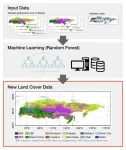
Siberia, a province located in Russia, is a significant geographical region playing a crucial role in the world’s carbon cycle. With its vast forests, wetlands, and permafrost regions (permanently frozen grounds), Siberia stores a considerable amount of carbon on a global scale. But climate change is rapidly altering Siberia’s landscape, shifting its vegetative distribution and accelerating the permafrost thaw. Classifying land cover is essential to predict future climatic changes, but accumulating land cover data in regions like ...

Read the release
Environment

ASM and IUMS unveil global framework to implement microbial climate solutions

Washington, D.C.—As climate change continues to accelerate at an alarming pace, innovative and scalable solutions are more critical than ever. This week, the American Society for Microbiology (ASM) and the International Union for Microbiological Societies (IUMS) released Microbial Solutions for Climate Change, a report developed by their scientific advisory group (SAG) of global experts. The report outlines innovative microbial technologies that can significantly contribute to climate change mitigation and underscores the urgent need for coordinated global action across nations ...

Read the release
Environment

Chewing gum can shed microplastics into saliva, pilot study finds

SAN DIEGO, March 25, 2025 — Plastic is everywhere. And many products we use in everyday life, such as cutting boards, clothes and cleaning sponges, can expose people to tiny, micrometer-wide plastic particles called microplastics. Now, chewing gum could be added to the list. In a pilot study, researchers found that chewing gum can release hundreds to thousands of microplastics per piece into saliva and potentially be ingested. The researchers will present their results at the spring meeting of the American Chemical ...

Read the release
Fluorescent caves could explain how life persists in extraterrestrial environments
Environment

Fluorescent caves could explain how life persists in extraterrestrial environments

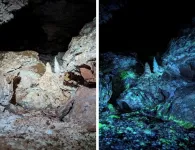
SAN DIEGO, March 25, 2025 — Deep below Earth’s surface, rock and mineral formations lay hidden with a secret brilliance. Under a black light, the chemicals fossilized within shine in brilliant hues of pink, blue and green. Scientists are using these fluorescent features to understand how the caves formed and how life is supported in extreme environments, which may reveal how life could persist in faraway places, like Jupiter’s icy moon Europa. The researchers will present their results at the spring meeting of the American Chemical Society (ACS). ACS Spring 2025 is being held March 23-27; it features about 12,000 presentations on ...

Read the release
Ecosystem disrupted following the disappearance of Great white sharks, new study finds
Environment

Ecosystem disrupted following the disappearance of Great white sharks, new study finds

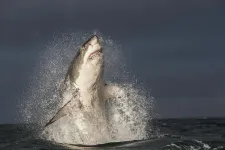
Ecosystem disrupted following the disappearance of Great white sharks, new study finds Known for their powerful ability to launch out of the water in pursuit of prey, the loss of Great white sharks from False Bay in South Africa has scientists and conservationists concerned about the rippling effects on the ecosystem. Miami, Florida – A new study published in the journal Frontiers in Marine Science, has uncovered evidence of far-reaching ecosystem consequences following the disappearance of Great white sharks (Carcharodon carcharias) from False Bay, South Africa. The research, conducted by scientists at the University of Miami Rosenstiel ...

Read the release
Teaching kids about bugs benefits the environment
Environment

Teaching kids about bugs benefits the environment

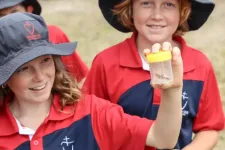
Pro-environmental behaviour increases among school students who participate in insect-related citizen science projects, according to new research from the University of Adelaide. Students who participated in citizen science project Insect Investigators, which engages students in the discovery of new insects, not only expressed an intention to change their personal behaviour but also to encourage others to protect nature. “As a result of their involvement in this program, students expressed intentions to further engage in insect–science–nature activities,” says the University of Adelaide’s Dr Erinn Fagan-Jeffries, who contributed ...

Read the release
Environment

New study reveals impact of vermicomposted olive wastes on plant defense and pest control.

A recent study published in Soil Ecology Letters has elucidated the combined effects of soil amendments and pest attacks on plant-induced defence mechanisms and their impact on the behaviour of biological control agents. The research, conducted by the Spanish National Research Council (CSIC) and Fundación MEDINA, focused on the utilisation of vermicomposted olive mill waste as a soil amendment and its consequence on the tri-trophic interactions between olive trees (Olea europaea), ...

Read the release
5,700-year storm archive shows rise in tropical storms and hurricanes in the Caribbean
Environment

5,700-year storm archive shows rise in tropical storms and hurricanes in the Caribbean

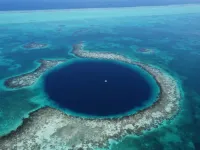
FRANKFURT. In the shallow waters of the Lighthouse Reef Atoll, located 80 kilometers off the coast of the small Central American country of Belize, the seabed suddenly drops steeply. Resembling a dark blue eye surrounded by coral reefs, the “Great Blue Hole” is a 125-meter-deep underwater cave with a diameter of 300 meters, which originated thousands of years ago from a karst cave located on a limestone island. During the last ice age, the cave’s roof collapsed. As ice sheets melted and global sea level started to rise, the cave ...

Read the release
Environment

Exploring why it is harder to hear in noisy environments

Imagine trying to listen to a friend speak over the commotion of a loud party. It is difficult to detect and process sounds in noisy environments, especially for those with hearing loss. Previous research has typically focused on how competing sounds influence cortical brain activity, with the end goal of informing treatment strategies for people who are hard of hearing. But in a new eNeuro study, Melissa Polonenko and Ross Maddox, from the University of Rochester, explored a lesser-studied influence of competing sounds on subcortical brain ...

Read the release
Environment

Embrace change with dynamic conservation models

A recent article in BioScience, the journal of the American Institute of Biological Sciences, challenges conventional conservation wisdom, suggesting that protected areas such national parks and designated wilderness areas must embrace natural landscape dynamics rather than trying to preserve static conditions and landscape features. Dr. Gavin M. Jones (USDA Forest Service) and colleagues contend that current conservation models often resist natural ecosystem processes such as wildfire, leading to a "backfire effect" that makes ecosystems more vulnerable ...

Read the release
Environment

New Microbiology Society policy briefing on Antimicrobial Resistance (AMR) in wastewater

AMR occurs when disease-causing bacteria, viruses, fungi and parasites (pathogens) are no longer affected by the medicines that have been developed to target them. Drug-resistant pathogens can cause infections that are difficult or impossible to treat; they increase the risk of disease spread and can lead to severe illness, disability and death. Wastewater is commonly contaminated with antimicrobial resistant micro-organisms and antimicrobial compounds. Upon entering our environment, such as rivers and seas, contaminated wastewater therefore serves as a pathway for, and major contributor to, the spread of AMR in the UK and ...

Read the release
Environment

Climate warming and heatwaves accelerate global lake deoxygenation, study reveals

Freshwater ecosystems require adequate oxygen levels to sustain aerobic life and maintain healthy biological communities. However, both long-term climate warming and the increasing frequency and intensity of short-term heatwaves are significantly reducing surface dissolved oxygen (DO) levels in lakes worldwide, according to a new study published in Science Advances. Led by Prof. SHI Kun and Prof. ZHANG Yunlin from the Nanjing Institute of Geography and Limnology of the Chinese Academy of Sciences, in collaboration with researchers from the Nanjing University and the UK’s ...

Read the release
Green recipe: Engineered yeast boosts D-lactic acid production
Environment

Green recipe: Engineered yeast boosts D-lactic acid production

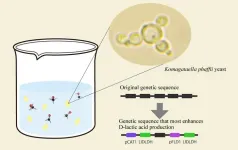
Great recipes require the perfect combination of ingredients — biotechnology recipes are no exception. Researchers from Osaka Metropolitan University have discovered the ideal genetic “recipe” to turn yeast into a tiny yet powerful eco-friendly factory that converts methanol into D-lactic acid, a key compound used in biodegradable plastics and pharmaceuticals. This approach could help reduce reliance on petroleum-based processes and contribute to more sustainable chemical production. Lactic acid is widely used in food, cosmetics, pharmaceuticals and bioplastics. It exists in two forms: L-lactic acid ...

Read the release
Environment

Shrinking Andean glaciers threaten water supply of 90 million people, global policy makers warne

Shrinking Andean glaciers threaten water supply of 90 million people, global policy makers warned Shrinking glaciers in the Andes threaten the water supplies of 90 million people Andean glaciers are thinning by 0.7 metres a year, 35 percent faster than the global average Climate change is threatening the stability of the Andean glaciers as a water source and the water security of the people who rely on them Scientists argue we are not doing enough to curb the carbon emissions fueling climate change Scientists from the University of Sheffield will warn policymakers that the shrinking glaciers of the Andes threaten ...

Read the release
From the original Press-News collection. Issuers of news releases are responsible for the accuracy of their content.