THE ORIGINAL COLLECTION · SINCE 2010

Environment
press releases.

Research announcements from universities, hospitals and scientific institutions. Explore the stories, people and discoveries behind the headlines.

Original publication datesPage 56
FIND A STORY

Find a past release.

Dates and source material belong to the original release.

Read our research explainers

Browse the collection · original publication order

Environment

Mountain uplift and dynamic topography shapes biodiversity over deep time

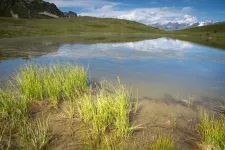
Rising mountains do more than reshape the landscape – they also drive evolutionary change, according to a new study. By simulating millions of years of tectonic uplift, researchers have uncovered a link between mountain building and biodiversity, shedding light on how Earth’s dynamic topography shapes biodiversity over deep time. Mountain ranges are widely recognized as global hotspots of terrestrial biodiversity yet only cover a relatively small proportion of the Earth’s surface, suggesting a strong connection between topographic evolution and species diversity. Mountainous terrain can promote speciation by isolating populations, ...

Read the release
Environment

Majority of carbon sequestered on land is locked in nonliving carbon reservoirs

Challenging long-held assumptions about global terrestrial carbon storage, a new study finds that the majority of carbon dioxide (CO2) absorbed by ecosystems has been locked away in dead plant material, soils, and sediments, rather than living biomass, researchers report. These new insights, which suggest that terrestrial carbon stocks are more resilient and stable than previously appreciated, are crucial for shaping future climate mitigation strategies and optimizing carbon sequestration efforts. Recent studies have shown that terrestrial carbon stocks are increasing, offsetting ...

Read the release
Most of the carbon sequestered on land is stored in soil and water
Environment

Most of the carbon sequestered on land is stored in soil and water

Recent studies have shown that carbon stocks in terrestrial ecosystems are increasing, mitigating around 30% of the CO2 emissions linked to human activities. The overall value of carbon sinks on the earth's surface is fairly well known—as it can be deduced from the planet's total carbon balance anthropogenic emissions, the accumulation of carbon in the atmosphere and the ocean sinks—yet, researchers know very little about carbon distribution between the various terrestrial pools: living vegetation—mainly forests—and nonliving carbon pools—soil organic matter, sediments at the bottom of lakes and rivers, wetlands, ...

Read the release
Environment

Peatlands' potential to capture carbon upgraded as temperatures rise

According to a predictive model developed by a CNRS researcher1 and his European colleagues, the microalgae present in peat bogs could offset up to 14% of future CO2 emissions, thanks to their photosynthetic activity2. This conclusion was reached by basing the work on in situ experiments and the various predictive scenarios established by the IPCC. It is the first model to quantify the potential compensation of future CO2 emissions by peatlands on a global scale. This result lifts the veil on a currently ambiguous section of the terrestrial carbon cycle3 and its alterations by anthropogenic climate change. The associated study is published in Nature Climate Change. Representing ...

Read the release
Recycled cements drive down emissions without slacking on strength
Environment

Recycled cements drive down emissions without slacking on strength

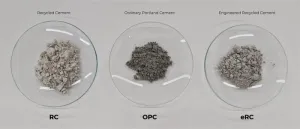
Giving a second life to construction materials after demolition, engineers at the University of São Paulo and Princeton have developed an approach for recycling cement waste into a sustainable, low-carbon alternative that is comparable in performance to the industry standard. In addition to lowering the carbon intensity of the cement and concrete industry, the process could enable new uses for construction and demolition waste, of which concrete is a significant component. In 2018 in the United States, the total ...

Read the release
New carbon-negative material could make concrete and cement more sustainable
Environment

New carbon-negative material could make concrete and cement more sustainable

Using seawater, electricity and carbon dioxide (CO2), Northwestern University scientists have developed a new carbon-negative building material. As Earth’s climate continues to warm, researchers around the globe are exploring ways to capture CO2 from the air and store it deep underground. While this approach has multiple climate benefits, it does not maximize the value of the enormous amounts of atmospheric CO2. Now, Northwestern’s new strategy addresses this challenge by locking away CO2 permanently and turning it into valuable materials, which can be used to manufacture concrete, cement, plaster and paint. The process to generate ...

Read the release
Environment

Researchers optimize a method using seawater that produces mineral deposits while trapping carbon dioxide

The ocean can be harnessed to absorb carbon dioxide from the atmosphere, effectively storing it in water layers and acting as a carbon sink. In research published in Advanced Sustainable Systems, investigators optimized an electrochemical method called seawater splitting for trapping and sequestering carbon dioxide into stable solid mineral deposits. When applying voltage or current to seawater during seawater splitting, or electrolysis, hydrogen gas evolves at the cathode, while oxygen or chlorine gas is generated at the anode. Deposits of carbon-trapping minerals ...

Read the release
Marine animals help solve ocean issues
Environment

Marine animals help solve ocean issues

Sensors attached to animals gather valuable data to track and mitigate the human influence on marine life. The Kobe University review paper emphasizes the importance of integrating data from various sources and advocates for an “Internet of Animals” based on open access and shared standards. Humanity influences marine life through a broad range of activities, spanning from fishing and pollution to noise from boats, construction and mining. To enable a sustainable life together, we need to monitor the influence of our activities on marine life and use this ...

Read the release
Conservation efforts are bringing species back from the brink, even as overall biodiversity falls
Environment

Conservation efforts are bringing species back from the brink, even as overall biodiversity falls

A major review of over 67,000 animal species has found that while the natural world continues to face a biodiversity crisis, targeted conservation efforts are helping bring many species back from the brink of extinction. The study draws on data from the IUCN Red List, the world’s largest database of species conservation status. The researchers say their results, reported in the journal PLOS Biology, highlight both the successes and the need for urgent action. The world is facing a global biodiversity crisis, with 28% of more than 160,000 assessed species threatened with extinction, and an estimated one million species facing this fate due to human activities. ...

Read the release
Conservation efforts analysis reveals which actions are most helpful for endangered species status
Environment

Conservation efforts analysis reveals which actions are most helpful for endangered species status

Targeted conservation actions are essential to prevent wildlife extinctions, but more efforts are needed to fully recover biodiversity, according to a study published March 18th in the open-access journal PLOS Biology by Ashley Simkins of the University of Cambridge, UK and colleagues. Out of over 166,000 species assessed by the International Union for Conservation of Nature, around 28% are threatened with extinction. Global efforts to prevent extinction and recover biodiversity have had some success, but there is limited data to show which conservation actions are most effective. In this study, Simkins and colleagues compile information ...

Read the release
Environment

Time is not the driving influence of forest carbon storage, U-M study finds

Figures and photos It is commonly assumed that as forest ecosystems age, they accumulate and store, or "sequester," more carbon. A new study based at the University of Michigan Biological Station untangled carbon cycling over two centuries and found that it's more nuanced than that. The synergistic effects of forest structure, the composition of the tree and fungal communities, and soil biogeochemical processes have more influence on how much carbon is being sequestered above and below ground than previously thought. The ...

Read the release
Environment

Adopting zero-emission trucks and buses could save lives, prevent asthma in Illinois

Guided by the lived experiences of community partners, Northwestern University scientists have simulated the effects of zero-emission vehicle (ZEV) adoption on future air quality for the greater Chicago area. The results were published today (March 18) in the journal Frontiers of Earth Science. Motivated by California’s Advanced Clean Trucks (ACT) policy, Neighbors for an Equitable Transition to Zero-Emissions (NET-Z) Illinois members partnered with Northwestern researchers to explore how a similar strategy might play out in Cook County and the surrounding areas. To develop a model that more realistically simulates ...

Read the release
New fossil discovery reveals how volcanic deposits can preserve the microscopic details of animal tissues
Environment

New fossil discovery reveals how volcanic deposits can preserve the microscopic details of animal tissues

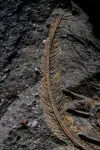
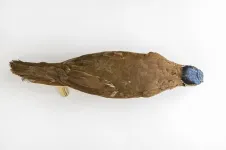
An analysis of a 30,000-year-old fossil vulture from Central Italy has revealed for the first time that volcanic rock can preserve microscopic details in feathers - the first ever record of such a preservation. An international team, led by Dr Valentina Rossi (University College Cork, Ireland), discovered a new mode of preservation of soft tissues that can occur when animals are buried in ash-rich volcanic sediments. The new research, published in the scientific journal Geology, reveals that the feathers ...

Read the release
Environment

Reusing old oil and gas wells may offer green energy storage solution

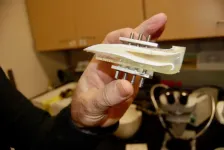
UNIVERSITY PARK, Pa. — Moving from fossil fuels to renewable energy sources like wind and solar will require better ways to store energy for use when the sun is not shining or the wind is not blowing. A new study by researchers at Penn State found that taking advantage of natural geothermal heat in depleted oil and gas wells can improve the efficiency of one proposed energy storage solution: compressed-air energy storage (CAES). The researchers recently published their findings in the Journal of Energy Storage. CAES plants compress air and store it underground when energy demand is low and then extract the air to create electricity when demand ...

Read the release
New genetic pathway unlocks drought-resistant cucumbers with fewer branches
Environment

New genetic pathway unlocks drought-resistant cucumbers with fewer branches

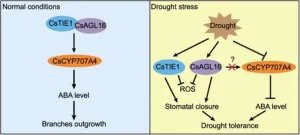
A new discovery has unveiled a genetic module, CsTIE1-CsAGL16, that simultaneously regulates lateral branch development and drought tolerance in cucumbers. This dual-function genetic pathway offers a promising new approach to breeding cucumber varieties that are both resilient to water scarcity and tailored to market preferences. By deciphering how these genes coordinate water conservation and branch growth, researchers have opened new doors for improving crop adaptability and productivity in the face of climate change. Drought stress poses a major challenge to ...

Read the release
Environment

Kansas, Missouri farmers avoid discussing climate change regardless of opinions, study finds

LAWRENCE — We have all avoided having conversations if the topic is controversial or may lead to an argument. Farmers, who are on the front lines of climate change, avoid talking about it with their neighbors, community members, elected officials and even their own families because of potential conflict and harm to their livelihood, new research from the University of Kansas has found. Researchers conducted interviews with more than 20 farmers in Kansas and Missouri to understand their communication about climate change. Results showed respondents had a range of views on climate ...

Read the release
Environment

Plastic-degrading enzymes from landfills

Enzymes found in landfills around the world may be able to break down plastic waste. Some 11 billion metric tons of plastic are projected to accumulate in the environment by 2050. Enzymatic and microbial degradation is a promising method of plastic recycling. Landfills, environments where plastics are an abundant resource, are crucibles of bacterial evolution. Liyan Song and colleagues collected plastic biocatalytic enzymes from landfills around the world, using metagenomics and machine learning. Samples came from China, Italy, Canada, Great Britain, Jamaica, and India and included refuse, leachate, sludge, and airborne particles. The authors identified 31,989 possible ...

Read the release
Unique dove species is the dodo of the Caribbean and in similar danger of dying out
Environment

Unique dove species is the dodo of the Caribbean and in similar danger of dying out

On first inspection, the Cuban blue-headed quail dove doesn’t look like much: drab brown feathers, a slender beak, a pronounced strut in their walk typical of most other doves. You’d be forgiven for overlooking it in favor of Cuba’s prismatic parrots. But looks aren’t everything. For decades, this unassuming bird has perplexed biologists, who have no idea where it came from, how it got to the island or what it’s related to. Now, for the first time, scientists have sequenced DNA from the blue-headed quail dove with the goal of finally getting to the bottom of things. Instead, they’re even more perplexed now than when they started. “This ...

Read the release
Webb telescope captures its first direct images of carbon dioxide outside solar system
Environment

Webb telescope captures its first direct images of carbon dioxide outside solar system

The James Webb Space Telescope has captured its first direct images of carbon dioxide in a planet outside the solar system in HR 8799, a multiplanet system 130 light-years away that has long been a key target for planet formation studies. The observations provide strong evidence that the system’s four giant planets formed in much the same way as Jupiter and Saturn, by slowly building solid cores. They also confirm Webb can do more than infer atmospheric composition from starlight measurements—it can directly analyze the chemistry ...

Read the release
Top locations for ocean energy production worldwide revealed
Environment

Top locations for ocean energy production worldwide revealed

As global electricity demand grows, traditional energy sources are under strain. Oceans, which cover more than 70% of Earth’s surface, offer vast potential for clean energy from renewable resources such as ocean currents and waves. However, marine renewable energy development is still in its early stages compared to wind and solar power. One challenge is identifying the most feasible and economically viable locations for ocean current energy projects. While many studies have focused on regional ocean current energy resource assessment, a global evaluation based on actual data has been lacking – until now. Using more ...

Read the release
New discovery in plant–pest warfare could lead to sustainable farming solutions
Environment

New discovery in plant–pest warfare could lead to sustainable farming solutions

As global food demand continues to increase, effective pest control remains one of agriculture’s most pressing challenges. Worldwide, farmers apply nearly 4 million tons of chemical pesticides annually to protect their crops, representing a $60 billion industry. While these compounds have significantly boosted agricultural productivity, their widespread use has raised concerns regarding environmental impact, health risks, and the long-term sustainability of modern farming. The two-spotted spider mite, Tetranychus urticae, exemplifies the limitations of conventional pesticide-based pest management in agriculture and horticulture. ...

Read the release
Growing solar: Optimizing agrivoltaic systems for crops and clean energy
Environment

Growing solar: Optimizing agrivoltaic systems for crops and clean energy

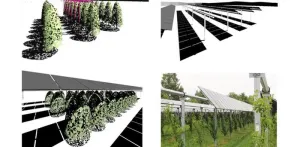
Agrivoltaic systems, which combine solar power generation with agricultural practices, offer a promising solution to the growing demand for both renewable energy and food production. By integrating solar panels with crops, these systems not only address the land use conflict between agriculture and energy production, but they also provide important benefits such as reducing crop water stress and offering protection against extreme weather events. In addition, agrivoltaics can contribute to biodiversity by providing pollinator habitats and forage production. ...

Read the release
Environment

Smoke from wildland-urban interface fires more deadly than remote wildfires

EMBARGOED until Friday, March 14 at 2:00 p.m. Eastern Time (12 noon MT) Contacts: David Hosansky, NSF NCAR and UCAR Manager of Media Relations hosansky@ucar.edu 303-497-8611 Audrey Merket, NSF NCAR and UCAR Science Writer and Public Information Officer amerket@ucar.edu 303-497-8293 The smoke from fires that blaze through the wildland-urban interface (WUI) has far greater health impacts than smoke from wildfires in remote areas, new research finds. The study, published this week in Science Advances, estimates that emissions from WUI fires are proportionately about three times more likely to lead ...

Read the release
Misha lived in zoos, but the elephant’s tooth enamel helps reconstruct wildlife migrations
Environment

Misha lived in zoos, but the elephant’s tooth enamel helps reconstruct wildlife migrations

Teeth recovered from a beloved zoo elephant that died in 2008 are helping University of Utah geologists develop a method for tracking the movements of large herbivores across landscapes, even for animals now extinct, such as mastodons and mammoths. Outlined in recently published findings, the technique analyzes isotope ratios of the element strontium (Sr), which accumulates in tooth enamel. For large plant-eating land mammals, the relative abundance of two strontium isotopes in teeth and tusks ...

Read the release
Study: ‘Sustainable intensification’ on the farm reduces soil nitrate losses, maintains crop yields
Environment

Study: ‘Sustainable intensification’ on the farm reduces soil nitrate losses, maintains crop yields

CHAMPAIGN, Ill. — A nine-year study comparing a typical two-year corn and soybean rotation with a more intensive three-year rotation involving corn, cereal rye, soybean and winter wheat, found that the three-year system can dramatically reduce nitrogen — an important crop nutrient — in farm runoff without compromising yield. The new findings are detailed in the journal Frontiers in Environmental Science. “Subterranean drainage pipes called tiles transport nitrogen, in the form of nitrate, from fields to streams, impairing downstream surface waters,” the scientists wrote. ...

Read the release
From the original Press-News collection. Issuers of news releases are responsible for the accuracy of their content.