THE ORIGINAL COLLECTION · SINCE 2010

Environment
press releases.

Research announcements from universities, hospitals and scientific institutions. Explore the stories, people and discoveries behind the headlines.

Original publication datesPage 57
FIND A STORY

Find a past release.

Dates and source material belong to the original release.

Read our research explainers

Browse the collection · original publication order

Advancing sorghum science: drought-resilient crop for Spain's agricultural future
Environment

Advancing sorghum science: drought-resilient crop for Spain's agricultural future

Press release Information embargoed until March 13, 2025, at 09:00 am (time in Barcelona, Spain) Sorghum is an increasingly important crop for animal and human nutrition, especially in arid and semi-arid regions, due to its natural resistance to drought and high temperatures. CRAG researchers have identified the molecular mechanisms responsible for drought resistance in sorghum and developed tools that could be used in biotechnological applications. These advances could combat the effects of climate change, reduce dependence on imports and improve food security for human consumption. Bellaterra (Barcelona), 13 March ...

Read the release
No countries on track to meet all 17 UN Sustainable Development Goals
Environment

No countries on track to meet all 17 UN Sustainable Development Goals

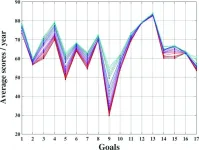
A new analysis reveals complex linkages among the United Nations’ (UN’s) 17 Sustainable Development Goals—which include such objectives as gender equality and quality education—and finds that no country is on track to meet all 17 goals by the target year of 2030. Alberto García-Rodríguez of Universidad Nacional Autónoma de México and colleagues present these findings in the open-access journal PLOS One on March 12, 2025. In 2015, UN member countries adopted the Sustainable Development ...

Read the release
Critically endangered hawksbill turtles migrate up to 1,000km from nesting to foraging grounds in the Western Caribbean, riding with and against ocean currents to congregate in popular feeding hotspot
Environment

Critically endangered hawksbill turtles migrate up to 1,000km from nesting to foraging grounds in the Western Caribbean, riding with and against ocean currents to congregate in popular feeding hotspot

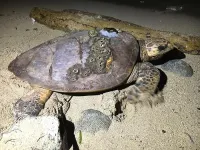
Critically endangered hawksbill turtles migrate up to 1,000km from nesting to foraging grounds in the Western Caribbean, riding with and against ocean currents to congregate in popular feeding hotspots Article URL: https://plos.io/41LfJZK Article title: Inter-nesting area use, migratory routes, and foraging grounds for hawksbill turtles (Eretmochelys imbricata) in the Western Caribbean Author countries: US, Honduras, Costa Rica Funding: Funding for this project was provided by the Boyd Lyon Sea Turtle Fund to QDB, ...

Read the release
Environment

Want to preserve biodiversity? Go big, U-M researchers say

ANN ARBOR—Large, undisturbed forests are better for harboring biodiversity than fragmented landscapes, according to University of Michigan research. Ecologists agree that habitat loss and the fragmentation of forests reduces biodiversity in the remaining fragments. But ecologists don't agree whether it's better to focus on preserving many smaller, fragmented tracts of land or larger, continuous landscapes. The study, published in Nature and led by U-M ecologist Thiago Gonçalves-Souza, comes to a conclusion on the decades-long debate. "Fragmentation is bad," said study author Nate Sanders, U-M professor of ecology and evolutionary biology. ...

Read the release
KIER unveils blueprint for cost-effective production of eco-friendly green hydrogen
Environment

KIER unveils blueprint for cost-effective production of eco-friendly green hydrogen

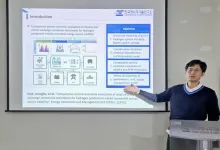
Dr. Joungho Park and his research team from the Energy AI and Computational Science Laboratory at the Korea Institute of Energy Research (KIER) have conducted an economic analysis of water electrolysis, a key technology for future eco-friendly hydrogen production, and presented optimal operation strategies to maximize efficiency and reduce costs. Green hydrogen, considered a key eco-friendly fuel of the future, is primarily produced using two technologies: alkaline water electrolysis and proton exchange membrane (PEM) water electrolysis. Among ...

Read the release
Landscape scale pesticide pollution detected in the Upper Rhine region, from agricultural lowlands to remote areas
Environment

Landscape scale pesticide pollution detected in the Upper Rhine region, from agricultural lowlands to remote areas

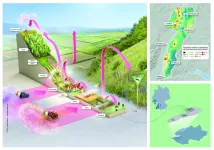
A recent study by the RPTU University Kaiserslautern-Landau shows extensive pesticide contamination in the landscape of the Upper Rhine Region. The research team led by Carsten Brühl shows for the first time that synthetic chemical pesticides from conventional agriculture do not remain on the cultivated areas, but spread from the lowlands to the Black Forest and the Palatinate Forest. The results show that the entire landscape is contaminated with pesticide mixtures, shedding new light on the potential environmental ...

Read the release
SwRI receives $3 million NASA astrobiology grant to study microbial life in Alaska’s arctic sand dunes
Environment

SwRI receives $3 million NASA astrobiology grant to study microbial life in Alaska’s arctic sand dunes

SAN ANTONIO — March 11, 2025 —Southwest Research Institute (SwRI) has received a three-year, $2,999,998 million grant from NASA to identify and characterize life and its biosignatures in frozen sand dunes in Alaska, under conditions similar to dune fields on early Mars and Saturn’s moon Titan. The Assessing Regional Reflectors of Astrobiology in Kobuk dunes for Interplanetary Science (ARRAKIS) project team, which includes researchers from Brigham Young University and the University of California—Davis, seek insight into ...

Read the release
Environment

Microplastics increase antimicrobial resistance

Washington, D.C.—Microplastics are not just pollutants, but also highly complex materials that facilitate antimicrobial resistance, even without antibiotics, according to a new study. The findings were published in Applied and Environmental Microbiology, a journal of the American Society for Microbiology. “Addressing plastic pollution isn’t just an environmental issue—it’s a critical public health priority in the fight against drug-resistant infections,” said lead study author Neila Gross, a Ph.D. candidate in the lab of Professor Muhammad ...

Read the release
Environment

Arctic sea ice loss drives drier weather over California and wetter over Spain and Portugal

A study led by researchers from the Barcelona Institute for Global Health (ISGlobal), a centre supported by the "la Caixa" Foundation, has used a novel approach to unravel the influence of the loss of Arctic sea ice on the planet's climate, isolating it from other factors related to climate change. The study, published in the journal Communications Earth and Environment, shows that on decadal timescales, the loss of Arctic ice favours the climate of the south-west of the United States - and California in particular - becoming drier on average, especially in winter. This phenomenon would also affect ...

Read the release
Environment

Earth's 'dirty mirror' effect is accelerating climate change

Earth is absorbing more sunlight and trapping more heat than it releases into space, causing our planet to warm up at an increasing rate. New research shows that cloudy areas over oceans are reflecting less sunlight to space than before, adding to heating from rising greenhouse gas levels and causing climate change to accelerate. The study, published today (Tuesday, 11 March) in Environmental Research Letters, found this dimming effect was occurring in several regions, including cloudy areas off the coasts of California and Namibia, ...

Read the release
Environment

New research reveals how a 252 million year old climate crisis accompanied the ‘Great Dying’ mass extinction event, completely reorganizing the Earth’s ecosystems

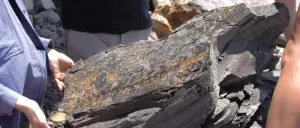
The mass extinction that ended the Permian geological epoch, 252 million years ago, wiped out most animals living on Earth. Huge volcanoes erupted, releasing 100,000 billion metric tons of carbon dioxide into the atmosphere. This destabilized the climate and the carbon cycle, leading to dramatic global warming, deoxygenated oceans, and mass extinction. However, many plants survived, leaving behind fossils which scientists have used to model a dramatic 10 degree rise in global temperatures. “While fossilized spores and pollen of plants from the Early Triassic do not provide strong evidence for a sudden and catastrophic ...

Read the release
A dive into erythritol slurry and its potential for waste heat recovery
Environment

A dive into erythritol slurry and its potential for waste heat recovery

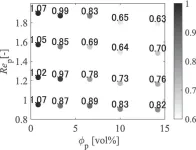
Energy efficiency is crucial for sustainability, yet vast amounts of low-temperature waste heat remain unused in industrial processes. Now, researchers from Japan have investigated erythritol slurry as a promising heat transfer medium for thermal storage and transport. By analyzing its flow behavior and non-Newtonian properties, they developed a predictive equation for its rheological characteristics. Their findings could help guide the design of industrial waste heat recovery systems, advancing energy efficiency and carbon neutrality. Energy efficiency is one of the most important pillars of our global sustainability goals. Simply put, one of the most straightforward and effective ...

Read the release
Environment

Emotive marketing for sustainable consumption?

Does triggering certain emotions increase willingness to pay for sustainably produced food? In social media, emotional messages are often used to influence users' consumer behaviour. An international research team including the University of Göttingen investigated the short- and medium-term effects of such content on consumers' willingness to pay for bars of chocolate. They found that in the short term, provoking certain emotions increases willingness to pay, but the effect weakens after a very short time. The results were published in the journal Q Open. Food ...

Read the release
Environment

Rising CO2 likely to speed decrease in ‘space sustainability’

Currently more than 8,000 satellites are orbiting at altitudes of between 300 and 1000 km in the Earth’s upper atmosphere – also called the thermosphere. While changes in space weather, such as coronal mass ejections and solar flares, can cause temporary changes in the density of this region, scientists at the University of Birmingham suggest the effects caused by global warming are likely to be much longer term. This is because of the effects caused by greenhouse gases (GHGs) ...

Read the release
Environment

Study: Climate change will reduce the number of satellites that can safely orbit in space

MIT aerospace engineers have found that greenhouse gas emissions are changing the environment of near-Earth space in ways that, over time, will reduce the number of satellites that can sustainably operate there. In a study that will appear in Nature Sustainability, the researchers report that carbon dioxide and other greenhouse gases can cause the upper atmosphere to shrink. An atmospheric layer of special interest is the thermosphere, where the International Space Station and most satellites orbit today. When the thermosphere contracts, the decreasing density reduces atmospheric drag— a force that pulls old satellites and other debris down to altitudes where they will ...

Read the release
Environment

Common approaches for assessing business impact on biodiversity are powerful, but often insufficient for strategy design

A University of Oxford study has determined that the widely used tools available to businesses for assessing their biodiversity impacts depend on broad assumptions and can have large uncertainties that are poorly understood or communicated. If used appropriately, they can be powerful tools to help guide effective action to address biodiversity loss – but if not, they can lead to misguided effort and can be insufficient for robust biodiversity strategy design. Businesses across a range of industries and sectors are under growing pressure to develop biodiversity strategies that not only minimise their negative impacts but ...

Read the release
Environment

Growing consumption of the American eel may lead to it being critically endangered like its European counterpart

High demand for eel combined with decline in stock have resulted in soaring prices for this food item, which in many cultures, is considered a delicacy. This has fuelled a concern globally as the prized food item is now being illegally traded from Europe to Asia. Current research has focused on the critically endangered Anguilla anguilla, commonly known as the European eel. While its export outside the European Union is tightly regulated, large quantities of A. anguilla juveniles continue to be smuggled ...

Read the release
Earth's orbital rhythms link timing of giant eruptions and climate change
Environment

Earth's orbital rhythms link timing of giant eruptions and climate change

On ten thousand to million years time scales, climate dynamics on the Earth’s surface are driven by both external and internal processes. Earth`s interior provides heat from radioactive decay and chemical compounds by volcanic degassing, such as sulfur dioxide (SO2) and carbon dioxide (CO2). Quasiperiodic changes in Earth’s orbit around the sun regulate the amount of incoming solar radiation on the planet’s surface as well as its distribution across latitudes, affecting the length and intensity ...

Read the release
Environment

Incarcerated people are disproportionately impacted by climate change, CU doctors say

When a wildfire approaches a prison and an evacuation warning is issued, what are the health risks that incarcerated people face when officials decide to not evacuate? What happens if the evacuation warning turns into a mandate and there are no transportation options to securely move everyone, or there are no nearby facilities to go to? These are some of the issues raised by two University of Colorado Department of Medicine faculty members — Katherine LeMasters, PhD, and Lawrence Haber, MD — in a correspondence titled, “The Hidden Crisis of Incarcerated Individuals During Wildfires,” which was recently ...

Read the release
Environment

Tropical forests in the Americas are struggling to keep pace with climate change

Embargoed until 14:00 US Eastern Time, Thursday 6 March 2025 Tropical forests in the Americas are struggling to keep pace with climate change Tropical rainforests play a vital role in global climate regulation and biodiversity conservation. However, a major new study published in Science reveals that forests across the Americas are not adapting quickly enough to keep pace with climate change, raising concerns about their long-term resilience. The research, led by Dr. Jesús Aguirre-Gutiérrez from the University of Oxford’s Environmental Change Institute (ECI), involved over 100 scientists ...

Read the release
Plants struggled for millions of years after the world’s worst climate catastrophe
Environment

Plants struggled for millions of years after the world’s worst climate catastrophe

A team of scientists from University College Cork (UCC) , the University of Connecticut, and the Natural History Museum of Vienna have uncovered how plants responded to catastrophic climate changes 250 million years ago. Their findings, published in GSA Bulletin, reveal the long, drawn-out process of ecosystem recovery following one of the most extreme periods of warming in Earth’s history: the ‘End-Permian Event’. With more than 80% of ocean species wiped out, the end-Permian event was the worst mass extinction of all time. But the impacts of this event for life on land have been elusive. By examining fossil plants and ...

Read the release
Environment

Climate change threatens future of banana export industry

Climate change is rapidly reducing the ability of banana producers to supply one of our favourite fruits. New research from the University of Exeter, published in Nature Food, has found it will be economically unsustainable by 2080 for many areas across Latin America and the Caribbean to continue growing bananas for export, because of rising temperatures caused by climate change. Bananas are a key export crop worth $11 billion (£8.9 billion) annually and are crucial for the economies of many countries. Yet in just over half a century, 60 per cent of the regions currently producing bananas will ...

Read the release
Developing zero-waste, sustainable smart polymer materials
Environment

Developing zero-waste, sustainable smart polymer materials

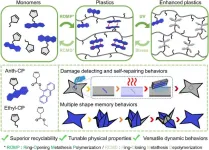
Plastics, which are polymeric materials composed of long chains of small molecules called monomers, are widely used in everyday life and industry due to their lightweight, good strength and flexibility. However, with approximately 52 million tons of plastic waste generated annually, plastic pollution has become a major environmental concern. To address this issue, research efforts have focused on developing sustainable polymeric materials. Unfortunately, most materials developed so far suffer from complex synthesis processes or difficulties in separating them from other polymers during waste disposal. To overcome these limitations, a research team led by Dr. Tae Ann Kim of the Convergence ...

Read the release
Environment

Seismic study of Singapore could guide urban construction and renewable energy development

A new seismic study of Singapore could guide urban growth and renewable energy development in the coastal city nation, where 5.6 million residents live within an area of 734 square kilometers. The study, published in Seismological Research Letters, identifies areas with increased risk of ground shaking and a possible reservoir for geothermal energy production, as well as a glimpse at Singapore’s tectonic history. Jiayuan Yao of China University for Geosciences and colleagues analyzed teleseismic data captured by a few permanent seismic stations and a nodal seismic array deployed in 2019 around the city. Their results provide the first detailed look at the top-kilometer ...

Read the release
Study reveals how agave plants survive extreme droughts
Environment

Study reveals how agave plants survive extreme droughts

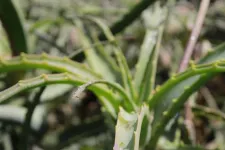
WASHINGTON — Agave plants may be best known for their role in tequila production, but they are also remarkably adept at retaining water in extremely dry environments. In a new study, researchers used terahertz spectroscopy and imaging to gain new insights into how these succulents store and manage water to survive in dry conditions. “Understanding how plants adapt to dry conditions could lead to better farming practices and be used to develop crops that require less water,” said Monica Ortiz-Martinez ...

Read the release
From the original Press-News collection. Issuers of news releases are responsible for the accuracy of their content.