THE ORIGINAL COLLECTION · SINCE 2010

Environment
press releases.

Research announcements from universities, hospitals and scientific institutions. Explore the stories, people and discoveries behind the headlines.

Original publication datesPage 71
FIND A STORY

Find a past release.

Dates and source material belong to the original release.

Read our research explainers

Browse the collection · original publication order

‘Alaska’s Changing Environment’ — a new report
Environment

‘Alaska’s Changing Environment’ — a new report

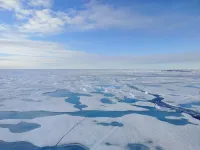
The University of Alaska Fairbanks released a new report this week highlighting environmental changes and extremes that impact Alaskans and their livelihoods. “Alaska’s Changing Environment” provides people with timely, reliable and understandable information on topics ranging from temperature and precipitation changes to salmon and polar bears. The report was led by the Alaska Center for Climate Assessment and Policy at the UAF International Arctic Research Center, with contributions from more ...

Read the release
Environment

Microfiber plastics appear to tumble, roll and move slowly in the environment

PULLMAN, Wash. -- The first-known direct observations of the movement of microfiber plastics through a thin layer of soil-like particles show that they tend to tumble, roll and sometimes get stuck in spaces. The findings, reported in the journal, Water Resources Research, mean that the fibers could get easily trapped in sediment. The work helps to improve understanding of the exposure risks and possible health impacts of the pervasive pieces of plastic, which are the largest pollutant in the world by mass. “The ...

Read the release
Scientists question the use of “tipping point” metaphor in climate change discussions
Environment

Scientists question the use of “tipping point” metaphor in climate change discussions

A group of scientists, including researchers from Rutgers University-New Brunswick, Princeton University and Carleton University, has questioned the accuracy and utility of the metaphor “tipping point” in calling attention to the threat of climate change. The phrase, while perhaps initially useful as a clarion call that warns about sudden, drastic changes, may now be confusing the public and impeding action, researchers said. Writing a perspective in Nature Climate Change, the scientists, from the Rutgers Climate and Energy Institute, Princeton’s Center ...

Read the release
Environment

Ecosystems: New study questions common assumption about biodiversity

Plant species can fulfil different functions within an ecosystem, even if they are closely related to each other. This surprising conclusion was reached by a global analysis of around 1.7 million datasets on plant communities. The study was led by Martin Luther University Halle-Wittenberg (MLU) and the University of Bologna. Their findings overturn previous assumptions in ecology. The study was published in "Nature Ecology & Evolution" and offers insights for nature conservation. When ...

Read the release
Countdown to an ice-free Arctic: New research warns of accelerated timelines
Environment

Countdown to an ice-free Arctic: New research warns of accelerated timelines

The first summer on record that melts practically all of the Arctic’s sea ice, an ominous milestone for the planet, could occur as early as 2027. For the first time, an international research team, including University of Colorado Boulder climatologist Alexandra Jahn and Céline Heuzé from the University of Gothenburg in Sweden, used computer models to predict when the first ice-free day could occur in the northernmost ocean. An ice-free Arctic could significantly impact the ecosystem and Earth’s climate by changing weather patterns. “The first ice-free day in the Arctic won’t change things dramatically,” ...

Read the release
Environment

Insect fossil find ‘extremely rare’

Newly discovered insect fossils are so small they can barely be seen by the human eye but have been preserved in an “extraordinary” way. Published in the journal Palaeobiodiversity and Palaeoenvironments, a new study reveals rare whitefly insect fossils have been found in Miocene age crater lake sediments at Hindon Maar, near Dunedin. Adult whiteflies are tiny insects about 3mm in size, smaller if they are immature. The fossils found at Hindon Maar are about 1.5mm by 1.25mm and have been preserved in the position they lived and died, attached to the underside ...

Read the release
Feeding grazing cattle seaweed cuts methane emissions by almost 40%
Environment

Feeding grazing cattle seaweed cuts methane emissions by almost 40%

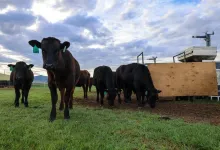
Seaweed is once again showing promise for making cattle farming more sustainable. A new study by researchers at the University of California, Davis, found that feeding grazing beef cattle a seaweed supplement in pellet form reduced their methane emissions by almost 40% without affecting their health or weight. The study was published today (Dec. 2) in Proceedings of the National Academy of Sciences. This is the first study to test seaweed on grazing beef cattle in the world. It follows previous studies that showed seaweed cut methane emissions 82% in feedlot cattle ...

Read the release
KIER unveils catalyst innovations for sustainable turquoise hydrogen solutions
Environment

KIER unveils catalyst innovations for sustainable turquoise hydrogen solutions

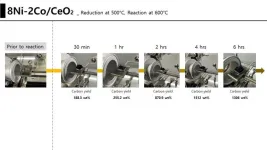
Dr. Woohyun Kim's research team from the Hydrogen Research Department at the Korea Institute of Energy Research (KIER) has successfully developed an innovative nickel-cobalt composite catalyst that can accelerate the production and commercialization of turquoise hydrogen.* *Turquoise Hydrogen: A technology that produces hydrogen and carbon by decomposing hydrocarbons such as methane (CH₄) (CH₄ → C + 2H₂). Unlike gray hydrogen, the most widely used hydrogen production technology, ...

Read the release
Environment

New insights in plant response to high temperatures and drought

Ghent, 29 November 2024 – We are increasingly confronted with the impacts of climate change, with failed harvests being only one example. Addressing these challenges requires multifaceted approaches, including making plants more resilient. An international research team led by researchers at VIB-UGent has unraveled how the opening and closing of stomata - tiny pores on leaves – is regulated in response to high temperatures and drought. These new insights, published in Nature Plants, pave the way for developing climate change-ready crops. Global climate change affects more and more people, with extreme weather conditions ...

Read the release
Environment

Satellite evidence bolsters case that climate change caused mass elephant die-off

A new study led by King’s College London has provided further evidence that the deaths of 350 African elephants in Botswana during 2020 were the result of drinking from water holes where toxic algae populations had exploded due to climate change. The lead author of the report says their analysis shows animals were very likely poisoned by watering holes where toxic blooms of blue-green algae, or cyanobacteria, had developed after a very wet year followed a very dry one. Davide Lomeo, a PhD student in the Department of Geography at King’s College London and co-supervised by Plymouth Marine Laboratory (PML) and ...

Read the release
A fossil first: Scientists find 1.5-million-year-old footprints of two different species of human ancestors at same spot
Environment

A fossil first: Scientists find 1.5-million-year-old footprints of two different species of human ancestors at same spot

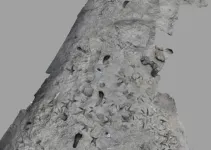
More than a million years ago, on a hot savannah teeming with wildlife near the shore of what would someday become Lake Turkana in Kenya, two completely different species of hominins may have passed each other as they scavenged for food. Scientists know this because they have examined 1.5-million-year-old fossils they unearthed and have concluded they represent the first example of two sets of hominin footprints made about the same time on an ancient lake shore. The discovery will provide more insight into human evolution and how species cooperated and competed with ...

Read the release
Environment

The key to “climate smart” agriculture might be through its value chain

In 2023, the United Nations climate conference (COP28) officially recognized the importance of agriculture in influencing and mitigating climate change. In a Policy Forum, Johan Swinnen and colleagues offer an approach to overcome challenges related to improving climate-sensitive farming practices across the globe. They discuss the importance of working with Agricultural Value Chains (AVC) by incentivizing small businesses who play an important role in the support of small- and medium-sized farms. This would involve both upstream enterprises related to seeds, fertilizer, ...

Read the release
Environment

New footprints offer evidence of co-existing hominid species 1.5 million years ago

Newly discovered footprints show that at least two hominid species were walking through the muddy submerged edge of a lake in Kenya’s Turkana Basin at the same time, about 1.5 million years ago. The find from the famous hominid fossil site of Koobi Fora described by Kevin Hatala and colleagues provides physical evidence for the co-existence of multiple hominid lineages in the region—something that has only been inferred previously from overlapping dates for scattered fossils. Based on information on gait and stance gleaned from the footprints, Hatala et al. think that the two species were Homo erectus and Paranthropus ...

Read the release
Environment

New paper calls for harnessing agrifood value chains to help farmers be climate-smart

Washington DC, November 28, 2024: The global food system is uniquely vulnerable to climate impacts, making adaptation of paramount importance. While contributing roughly one-third of total anthropogenic emissions, food systems around the world fortunately also hold immense potential for mitigation through improved practices and land use. A new article published today in Science emphasizes the critical role of agrifood value chains (AVCs) in supporting both adaptation and mitigation at the farm level. Authored by Johan Swinnen (International Food Policy Research Institute), Loraine Ronchi (World Bank Group), and Thomas Reardon (Michigan State University and IFPRI), the paper pushes back ...

Read the release
Oceans emit sulfur and cool the climate more than previously thought
Environment

Oceans emit sulfur and cool the climate more than previously thought

Researchers have quantified for the first time the global emissions of a sulfur gas produced by marine life, revealing it cools the climate more than previously thought, especially over the Southern Ocean. The study, published in the journal Science Advances, shows that the oceans not only capture and redistribute the sun's heat, but produce gases that make particles with immediate climatic effects, for example through the brightening of clouds that reflect this heat. It broadens the climatic impact of marine sulfur because it adds a new compound, methanethiol, that had previously gone unnoticed. Researchers only detected the gas recently, because ...

Read the release
Fossil dung reveals clues to dinosaur success story
Environment

Fossil dung reveals clues to dinosaur success story

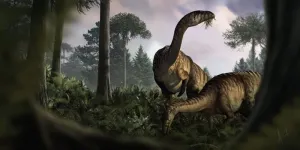
In an international collaboration, researchers at Uppsala University have been able to identify undigested food remains, plants and prey in the fossilised faeces of dinosaurs. These analyses of hundreds of samples provide clues about the role dinosaurs played in the ecosystem around 200 million years ago. The findings have been published in the journal Nature. “Piecing together ‘who ate whom’ in the past is true detective work,” says Martin Qvarnström, researcher at the Department of Organismal Biology and lead author of the study. “Being able to examine what animals ate and how they interacted with their environment helps us understand what enabled ...

Read the release
World’s oldest lizard wins fossil fight
Environment

World’s oldest lizard wins fossil fight

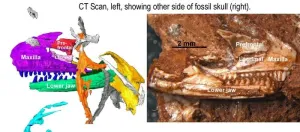
A storeroom specimen that changed the origins of modern lizards by millions of years has had its identity confirmed. The tiny skeleton, unearthed from Triassic-aged rocks in a quarry near Bristol, is at least 205 million years old and the oldest modern-type lizard on record. Recently, the University of Bristol team’s findings came under question, but fresh analysis, published today in Royal Society Open Science, proves that the fossil is related to modern anguimorphs such as anguids and monitors. The discovery ...

Read the release
Same plant, different tactic: Habitat determines response to climate
Environment

Same plant, different tactic: Habitat determines response to climate

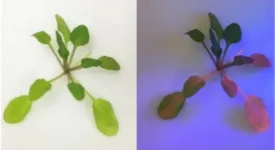
Plants need light to grow, but too much light can induce damage to the photosynthetic complex known as photosystem II. It is known that plants adapted to growing under full sun repair this light-induced damage more. But this repair activity slows down in colder temperatures. An Osaka Metropolitan University-led international research team has now found some clues to how plants survive in colder regions. Graduate School of Science Associate Professor Riichi Oguchi and colleagues from Australia, Austria, and Japan grew Arabidopsis thaliana (commonly ...

Read the release
Mapping the world's climate danger zones
Environment

Mapping the world's climate danger zones

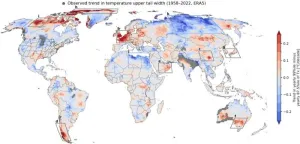
With 2024 on track to be declared the hottest on record, scientists from IIASA and Columbia University have noticed that specific regions are consistently more affected by extreme temperatures. A new study provides the first worldwide map of these regional climate danger zones. Amid the continued upward march in average temperatures over the past decades, a recent surge of record shattering extreme heat waves raise questions about the degree to which climate models can provide adequate estimates of relations between global mean temperature changes and regional climate risks. The study just published in the Proceedings of the National Academy of Sciences (PNAS) provides the ...

Read the release
Environment

Two-way water transfers can ensure reliability, save money for urban and agricultural users during drought in Western U.S., new study shows

A new study led by researchers at the University of North Carolina at Chapel Hill offers a solution to water scarcity during droughts amid the tug of economic development, population growth and climate uncertainty for water users in Western U.S. states. The proposed two-way leasing contracts would coordinate agricultural-to-urban leasing during periods of drought and urban-to-agricultural leasing during wet periods, benefiting both urban and agricultural water users. “Water markets are an important tool for allocating water in the Western U.S., and other water-scarce regions around the world, but they are often slow to respond to drought, ...

Read the release
Can we avert the looming food crisis of climate change?
Environment

Can we avert the looming food crisis of climate change?

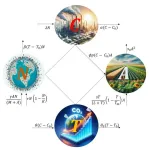
WASHINGTON, Nov. 26, 2024 – Human activities are causing atmospheric carbon dioxide (CO2) levels to rise, which increases the global average surface temperature—and poses a threat to crop growth. Escalating concerns about climate change’s impact on global food security inspired researchers from Banaras Hindu University in India to create a way to explore how these factors influence crop yields. In Chaos, from AIP Publishing, the researchers share a mathematical model created to capture the nonlinear relationships between CO2, temperature, human population, ...

Read the release
Microwave-induced pyrolysis: A promising solution for recycling electric cables
Environment

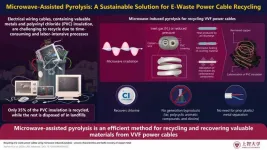
Microwave-induced pyrolysis: A promising solution for recycling electric cables

The demand for electronics has led to a significant increase in e-waste. In 2022, approximately 62 million tons of e-waste were generated, marking an 82% increase from 2010. Projections indicate that this figure could rise to 82 million tons by 2030. E-waste contains valuable materials such as metals, semiconductors, and rare elements that can be reused. However, in 2022, only 22.3% of e-waste was properly collected and recycled, while the remaining materials, estimated to be worth almost $62 billion, were discarded in landfills. Although efforts to improve e-waste recycling continue, the process remains labor-intensive, and a significant portion of e-waste ...

Read the release
Environment

Transformation of UN SDGs only way forward for sustainable development

Climate change is the single biggest threat to the global environment and socio-economic development – demanding an urgent transformation of the United Nations’ Sustainable Development Goals (SDGs), according to a new study. The UN SDGs were created to end poverty, build social-economic-health protection and enhance education and job opportunities, while tackling climate change and providing environmental protection. Following last week’s COP29 environmental summit in Baku, University of Birmingham experts say that, as climate action is linked to sustainable development, systematic integration of climate resilience into every ...

Read the release
Researchers show complex relationship between Arctic warming and Arctic dust
Environment

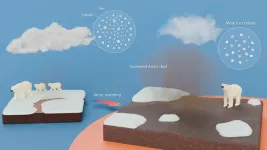
Researchers show complex relationship between Arctic warming and Arctic dust

The Arctic is warming two to four times faster than the global average. A recent study by researchers in Japan found that dust from snow- and ice-free areas of the Arctic may be an important contributor to climate change in the region. The findings were published in the journal npj Climate and Atmospheric Science. According to one view, higher temperatures in the Arctic are thought to lead to the region's clouds containing more liquid droplets and fewer ice crystals. Clouds become thicker, longer lasting, ...

Read the release
Protecting nature can safeguard cities from floods
Environment

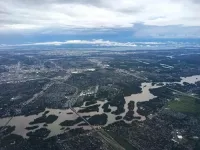
Protecting nature can safeguard cities from floods

A new UBC-led study shows that safeguarding key natural ecosystems across Canada can help reduce flood risks for more than half of the country’s urban areas at high risk for flooding. The research reveals that preserving the most important five per cent of watersheds—about 201,000 square kilometres or two per cent of Canada’s land—can significantly reduce rainwater runoff, protect homes and livelihoods, and safeguard croplands. “This is the first national study to assess the role of Canadian ecosystems in flood prevention and to identify where conservation could have the greatest impact,” said Dr. Matthew ...

Read the release
From the original Press-News collection. Issuers of news releases are responsible for the accuracy of their content.