THE ORIGINAL COLLECTION · SINCE 2010

Environment
press releases.

Research announcements from universities, hospitals and scientific institutions. Explore the stories, people and discoveries behind the headlines.

Original publication datesPage 72
FIND A STORY

Find a past release.

Dates and source material belong to the original release.

Read our research explainers

Browse the collection · original publication order

Environment

How climate change threatens this iconic Florida bird

ITHACA, N.Y. – Because of warmer winters, Florida scrub-jays are now nesting one week earlier than they did in 1981. But these early birds are not always getting the worm. A new analysis of data from a long-term study, published in Ornithological Advances, finds that warmer winters driven by climate change reduced the number of offspring raised annually by the federally threatened Florida scrub-jay by 25% since 1981. Warmer temperatures, the scientists hypothesize, make jay nests susceptible to predation by snakes for a longer period of the Florida ...

Read the release
Using sunlight to recycle black plastics
Environment

Using sunlight to recycle black plastics

Not all plastics are equal — some types and colors are easier to recycle than others. For instance, black foam and black coffee lids, which are often made of polystyrene, usually end up in landfills because color additives lead to ineffective sorting. Now, researchers report in ACS Central Science the ability to leverage one additive in black plastics, with the help of sunlight or white LEDs, to convert black and colored polystyrene waste into reusable starting materials. “Simple, visible light irradiation holds the potential to ...

Read the release
ODS FeCrAl alloys endure liquid metal flow at 600 °C resembling a fusion blanket environment
Environment

ODS FeCrAl alloys endure liquid metal flow at 600 °C resembling a fusion blanket environment

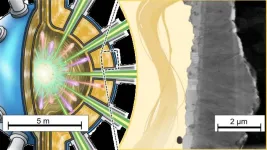
Researchers explored protective coatings on advanced to resist corrosion in fusion reactors. They tested α-Al2O3 oxide layers on ODS alloys in a high-temperature, flowing lithium-lead environment. Even bare ODS alloys formed a durable γ-LiAlO2 layer in situ, which suppressed further corrosion. The layers exhibited strong adhesion under mechanical stress, making these findings crucial for improving material durability in fusion reactors and high-temperature energy systems. Fusion reactors, a promising source of sustainable energy, require advanced materials that can withstand extreme temperatures and corrosive environments ...

Read the release
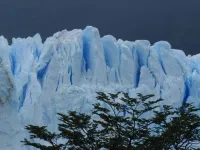
In Patagonia, more snow could protect glaciers from melt — but only if we curb greenhouse gas emissions soon
Environment

In Patagonia, more snow could protect glaciers from melt — but only if we curb greenhouse gas emissions soon

In an era of dwindling glaciers, Southern Patagonia has managed to hold on to a surprising amount of its ice. But, A new study in Scientific Reports from INSTAAR postdoc Matthias Troch suggests that this protective effect might be pushed up against its limits soon. Before making predictions, Troch and his collaborators looked back in time. They used an equation that, when plugged into NASA’s ice-sheet and sea-level system model, simulated glacial dynamics for the past six millenia. The results showed that precipitation, not temperature, was the main culprit of glacier fluctuation during around 4,500, of the past 6,000 years, or 76 percent of the time. In ...

Read the release
Environment

Whale-ship collision risk mapped across Earth’s oceans

By mapping global ship traffic and whale habitats, researchers found that 92% of whale habitats overlap with shipping routes, illuminating hotspots for whale-ship collision risk, according to a new study. Although only 7% of high-risk areas currently contain management strategies to reduce ship strikes, the findings show that expanding efforts to just 2.6% of the ocean’s surface could significantly reduce these fatal collisions, aiding whale conservation amid booming global shipping. “Mitigating the negative environmental impacts of marine shipping is essential ...

Read the release
Bye-bye microplastics: new plastic is recyclable and fully ocean-degradable
Environment

Bye-bye microplastics: new plastic is recyclable and fully ocean-degradable

Researchers led by Takuzo Aida at the RIKEN Center for Emergent Matter Science (CEMS) have developed a new durable plastic that won’t pollute our oceans. The new material is as strong as conventional plastics and biodegradable, but what makes it special is that it breaks down in seawater. The new plastic is therefore expected to help reduce harmful microplastic pollution that accumulates in oceans and soil and eventually enters the food chain. The experimental findings were published Nov 22 in Science. Scientists have been trying to develop safe and sustainable materials that can replace traditional plastics, which are non-sustainable and harm the environment. While ...

Read the release
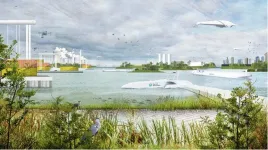
Design and imagination as essential tools during the climate crisis
Environment

Design and imagination as essential tools during the climate crisis

In Nature Partner Journals, ten researchers advocate the use of imagination in tackling the climate crisis. They focus specifically on urbanising river deltas, which are of great social and economic importance and highly vulnerable to climate change. "We scientists should not merely outline doomsday scenarios," says Professor Chris Zevenbergen. "Create a vision for people to believe in and work towards.” From doomscenarios to desired outcomes Due to the climate crisis, urban river deltas ...

Read the release
The unsolved mystery sounds of the Southern Ocean #ASA187
Environment

The unsolved mystery sounds of the Southern Ocean #ASA187

MELVILLE, N.Y., Nov. 21, 2024 – Mysterious, repeating sounds from the depths of the ocean can be terrifying to some, but in the 1980s, they presented a unique look at an underwater soundscape. In July 1982, researchers in New Zealand recorded unidentifiable sounds as a part of an experiment to characterize the soundscape of the South Fiji Basin. The sound consisted of four short bursts resembling a quack, which inspired the name of the sound “Bio-Duck.” “The sound was so repeatable, we couldn’t believe at first that it was biological,” said ...

Read the release
Climate-driven hazards increases risk for millions of coastal residents, study finds
Environment

Climate-driven hazards increases risk for millions of coastal residents, study finds

A new study published in Nature Climate Change estimates that a 1-meter sea level rise by 2100 would affect over 14 million people and $1 trillion worth of property along the Southeast Atlantic coast, from Norfolk, Virginia, to Miami, Florida. The study assesses the cumulative impact of multiple climate-driven coastal hazards, including sea level rise, flooding, beach erosion, sinking land, and rising groundwater, all of which are expected to worsen significantly by the end of the 21st century. The scale of these interconnected ...

Read the release
When trees 'talk:' Researchers probe ancient wood for clues about massive solar storms
Environment

When trees 'talk:' Researchers probe ancient wood for clues about massive solar storms

The Northern Lights were visible much farther south than usual this year, and pictures of the colorful hues filled social media. Now, imagine an aurora hundreds of times brighter – except no one would be able to snap a photo of it, as the onslaught of particles rushing in from the sun would instantly turn smartphones into bricks. Such extreme solar storms are rare – only six are known to have left their traces on Earth in the past 14,500 years, and none have been witnessed since the height of the Assyrian Empire nearly 2,700 years ago. A research team ...

Read the release
Research highlights the pressures human activities place on tropical marine ecosystems
Environment

Research highlights the pressures human activities place on tropical marine ecosystems

The tropical coastlines of Southeast Asia are home to some of the most important and biodiverse marine ecosystems on the planet. However, they are also among its most vulnerable, with areas of coral reefs, mangrove forests and seagrass beds under increasing threat from a wide range of human activities. To try and better understand those potential threats, a study by an international team of researchers has provided the first detailed assessment of activities taking place within coastal and marine habitats and the impact they have on those ecosystems. The research ...

Read the release
Environment

Turning carbon emissions into methane fuel

COLUMBUS, Ohio – Chemists have developed a novel way to capture and convert carbon dioxide into methane, suggesting that future gas emissions could be converted into an alternative fuel using electricity from renewable sources. Carbon dioxide (CO2) is a greenhouse gas that accounts for a large part of Earth’s warming climate, and is produced by power plants, factories and various forms of transportation. Typical carbon capture systems aimed at reducing its presence in the atmosphere work to lower carbon dioxide emissions by isolating CO2 from other gases and converting it to useful products. However, this process is difficult to implement on an industrial scale due to the ...

Read the release
Environment

Won’t you be mine? Neighborly networking may motivate local climate action

Individual motivation to act against climate change outweighs the impact of hyperlocal collective intentions, though both approaches are worth strengthening, according to a survey of nine European neighborhoods published Nov. 20, 2024 in the open-access journal PLOS Climate by Christian A. Klöckner from the Norwegian University of Science and Technology and colleagues. Western society contests the individual versus collective responsibility to combat climate change. But do people feel more motivated to act individually (e.g., making waste-free purchasing choices) or in tandem with others (e.g., protesting or completing ...

Read the release
Growing soybeans has a surprisingly significant emissions footprint, but it’s ripe for reduction
Environment

Growing soybeans has a surprisingly significant emissions footprint, but it’s ripe for reduction

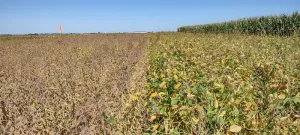
AMES, Iowa – Over the typical two-year rotation of corn and soybeans most Iowa farmers use, 40% of nitrous oxide emissions are in the soybean year, according to a new study by an Iowa State University research team. The share of the potent greenhouse gas released during the soybean half of a crop rotation cycle is surprisingly high, given most soybeans fields aren’t treated with nitrogen, said Michael Castellano, agronomy professor and William T. Frankenberger Professor of Soil Science at Iowa State University. “We’ve just been assuming that legume crops like soybeans don’t have a big emissions footprint because they don’t ...

Read the release
Superior photosynthesis abilities of some plants could hold key to climate-resilient crops
Environment

Superior photosynthesis abilities of some plants could hold key to climate-resilient crops

LA JOLLA (November 20, 2024)—More than 3 billion years ago, on an Earth entirely covered with water, photosynthesis first evolved in little ancient bacteria. In the following many millions of years, those bacteria evolved into plants, optimizing themselves along the way for various environmental changes. This evolution was punctuated around 30 million years ago with the emergence of a newer, better way to photosynthesize. While plants like rice continued using an old form of photosynthesis known as C3, others like corn and sorghum developed a newer and more efficient version called C4. There are now more than 8,000 different C4 plant ...

Read the release
Study calls for city fashion waste shakeup
Environment

Study calls for city fashion waste shakeup

With most donated clothes exported or thrown away, experts are calling for a shakeup of how we deal with the growing fashion waste issue. A first of its kind study, published in Nature Cities, analysed what happens to clothes and other textiles after consumers no longer want them in Amsterdam, Austin, Berlin, Geneva, Luxembourg, Manchester, Melbourne, Oslo and Toronto. Across most western cities from Melbourne to Manchester it found the same pattern of textile waste being exported, going to landfill or being dumped in the environment. Global textiles waste each year weighs 92 million tonnes and this could double by 2030. Charity shops handle a large amount of used clothes, but the study ...

Read the release
Environment

Texas A&M researchers uncover secrets of horse genetics for conservation, breeding

Researchers at the Texas A&M College of Veterinary Medicine and Biomedical Sciences (VMBS) are helping uncover new information about the Y chromosome in horses, which will help owners identify optimal lineages for breeding and help conservationists preserve breed diversity. “Because of its complex structure, the Y chromosome is much harder to sequence, making our knowledge of it far from complete,” said Dr. Gus Cothran, a professor emeritus in the VMBS’ Department of Veterinary Integrative Biosciences (VIBS). “In fact, scientists used to believe that the Y chromosome ...

Read the release
Climate change exposure associated with increased emergency imaging
Environment

Climate change exposure associated with increased emergency imaging

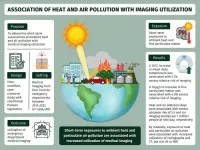
OAK BROOK, Ill. – Using data collected over a 10-year period from four emergency departments, researchers at the University of Toronto found that short-term exposure to ambient heat and air pollution levels was associated with increased utilization of X-rays and computed tomography (CT). Results of the study were published today in Radiology, a journal of the Radiological Society of North America (RSNA). “Extreme climate exposures are associated with higher demand for health care including emergency department visits,” ...

Read the release
7-year study reveals plastic fragments from all over the globe are rising rapidly in the North Pacific Garbage Patch
Environment

7-year study reveals plastic fragments from all over the globe are rising rapidly in the North Pacific Garbage Patch

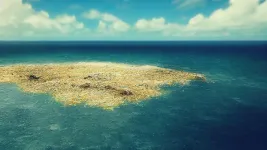
A study published today in IOP Publishing’s journal Environmental Research Letters reveals that centimetre-sized plastic fragments are increasing much faster than larger floating plastics in the North Pacific Garbage Patch [NPGP], threatening the local ecosystem and potentially the global carbon cycle. The research, which draws from not-for-profit The Ocean Cleanup’s systematic surveys of the NPGP between 2015 and 2022, found an unexpected rise in mass concentration of plastic fragments that are ...

Read the release
Environment

MSU researchers find trees acclimate to changing temperatures

Images Climate change is a persistent and growing challenge to plant life on our planet. Changes to the environment that plants are unaccustomed to affect how they grow, putting much at risk. Increasingly, plant scientists are trying to determine how these environmental changes will impact plant life and whether plants will be able to acclimate to a new status quo. Researchers from the Walker lab at the Michigan State University-U.S. Department of Energy Plant Research Laboratory, or PRL, are looking at how paper birch trees adapt to changing environments based on how they manage a vital plant process called photorespiration. “If ...

Read the release
World's first visual grading system developed to combat microplastic fashion pollution
Environment

World's first visual grading system developed to combat microplastic fashion pollution

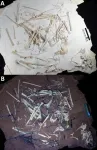
Over 14 million tonnes of microplastics are estimated to be lying on the ocean floor with the fashion industry among the worst pollutants. But a new project led by textile experts at Heriot-Watt University in the Scottish Borders, is aiming to make fashion labels and consumers alike, more environmentally aware when manufacturing and buying new clothes. For four years, a small team headed by Dr Lisa Macintyre, associate professor of textiles at the University’s School of Textiles and Design in the Galashiels campus, has overseen painstaking ...

Read the release
New fossil reveals the evolution of flying reptiles
Environment

New fossil reveals the evolution of flying reptiles

The pterosaurs are extinct flying reptiles that lived alongside their close relatives, the dinosaurs. The largest of these reached 10 m in wingspan, but early forms were generally limited to around 2 m. In a new paper today, a team led by palaeontologist Dr David Hone of Queen Mary University of London and published in the journal Current Biology describes a new species of pterosaur that helps to explain this important transition. They named the animal Skiphosoura bavarica meaning ‘sword tail from Bavaria’ because it comes from southern Germany and has a very unusual short, but ...

Read the release
Greg Liu is in his element using chemistry to tackle the plastics problem
Environment

Greg Liu is in his element using chemistry to tackle the plastics problem

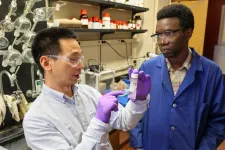
As an undergraduate student at Zhejiang University in eastern China, Greg Liu went with some of his classmates on a university-sponsored trip to tour a host of chemical industries within the area. The tour gave students pursuing degrees in chemical engineering an opportunity to learn more about the manufacturing and production processes of chemicals within China at the time. Liu realized that day exactly what he wanted to do for a career – find ways to alleviate or stop the industry from polluting the environment. “I realized that this was not going to be the sustainable way of our future. Pollution ...

Read the release
Political shadows cast by the Antarctic curtain
Environment

Political shadows cast by the Antarctic curtain

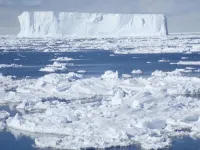
The scientific debate around the installation of a massive underwater curtain to protect Antarctic ice sheets from melting lacks its vital political perspective. A Kobe University research team argues that the serious questions around authority, sovereignty and security should be addressed proactively by the scientific community to avoid the protected seventh continent becoming the scene or object of international discord. A January 2024 article in Nature put the spotlight on a bold idea originally proposed by Finnish researchers to save the West Antarctic ...

Read the release
Rapid growth of global wildland-urban interface associated with wildfire risk, study shows
Environment

Rapid growth of global wildland-urban interface associated with wildfire risk, study shows

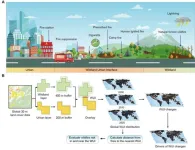
Rapid human expansion into natural landscapes, resulting in the growth of the wildland-urban interface (WUI), has heightened risks associated with wildfires. Prof. WANG Jianghao’s team from the Institute of Geographic Sciences and Natural Resources Research of the Chinese Academy of Sciences has recently mapped global WUI changes in 2000, 2010, and 2020, revealing alarming upward trends in WUI areas. This work, published in Science Advances, provides critical insights into how urbanization can intensify potential wildfire risks faced by people worldwide. Against ...

Read the release
From the original Press-News collection. Issuers of news releases are responsible for the accuracy of their content.