THE ORIGINAL COLLECTION · SINCE 2010

Environment
press releases.

Research announcements from universities, hospitals and scientific institutions. Explore the stories, people and discoveries behind the headlines.

Original publication datesPage 73
FIND A STORY

Find a past release.

Dates and source material belong to the original release.

Read our research explainers

Browse the collection · original publication order

Environment

Study finds humidity diminishes daytime cooling gains in urban green spaces

Urban green spaces provide shade for city dwellers facing rising temperatures brought on by climate change, but how much relief from the heat island effect do they provide when humidity is factored in? The temperature and humidity effect cancel each other out during daylight hours, but green spaces provide a net reduction in humid heat at night, according to a new study in Nature Cities, co-authored by Yale School of the Environment doctoral student Yichen Yang and Xuhui Lee, Sara Shallenberger Brown Professor of Climate Science. "When it comes to urban ...

Read the release

Environment

Global plastic waste set to double by 2050, but new study offers blueprint for significant reductions

Without intervention, global plastic waste could double by 2050, a new machine learning study predicts. However, according to simulations by the study’s authors, a mix of policy interventions could cut plastic waste by more than 90% and it could cut plastics-related emissions by a third. With UN treaty negotiations underway, these findings provide a crucial blueprint for tackling the plastic crisis. Plastic production has increased relentlessly for decades, leading to surging plastic waste generation and environmental mismanagement. As plastic ...

Read the release
Environment

New study in Science finds that just four global policies could eliminate more than 90% of plastic waste and 30% of linked carbon emissions by 2050

Berkeley, CA/Santa Barabara, CA (14 November 2024) — A new study released in Science today determines that just four policies can reduce mismanaged plastic waste — plastic that isn’t recycled or properly disposed of and ends up as pollution — by 91% and plastic-related greenhouse gasses by one-third. The policies are: mandate new products be made with 40% post-consumer recycled plastic; cap new plastic production at 2020 levels; invest significantly in plastic waste management — such as landfills and waste collection services; and implement a small fee on plastic packaging. ...

Read the release
Environment

Study outlines key role of national and EU policy to control emissions from German hydrogen economy

Hydrogen is set to play an important role in a future low-carbon economy. However, the hydrogen value chain comes with a set of emissions challenges that need to be addressed for hydrogen deployment to help achieve climate goals. A study prepared by the Research Institute for Sustainability – Helmholtz Centre Potsdam (RIFS) with support from Environmental Defense Fund Europe evaluates the potential impact of climate-warming emissions in Germany’s future hydrogen economy and provides recommendations for German and EU policymakers on how to avoid them. There are hopes that hydrogen can become a carbon neutral alternative to fossil ...

Read the release
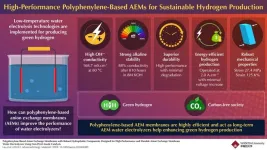
Transforming anion exchange membranes in water electrolysis for green hydrogen production
Environment

Transforming anion exchange membranes in water electrolysis for green hydrogen production

Hydrogen is a promising energy source due to its high energy density and zero carbon emissions, making it a key element in the shift toward carbon neutrality. Traditional hydrogen production methods, like coal gasification and steam methane reforming, release carbon dioxide, undermining environmental goals. Electrochemical water splitting, which yields only hydrogen and oxygen, presents a cleaner alternative. While proton exchange membrane (PEM) and alkaline water electrolyzers (AWEs) are available, they face limitations in either cost or efficiency. PEM electrolyzers, for instance, rely on costly platinum group metals (PGMs) as catalysts, whereas ...

Read the release
Green flight paths could unlock sustainable aviation, new research suggests
Environment

Green flight paths could unlock sustainable aviation, new research suggests

‘Green flight paths’ between key global locations could help to fast-track fully decarbonised aviation, according to research led by an international team based at Heriot-Watt University in the United Kingdom and the American University of Sharjah in the United Arab Emirates. The research, published in the in the Royal Society of Chemistry’s top international journal, Energy and Environmental Science, recommends that a small number of long-haul flights with high passenger volumes, ...

Read the release
Low-carbon collaborative dual-layer optimization for energy station considering joint electricity and heat demand response
Environment

Low-carbon collaborative dual-layer optimization for energy station considering joint electricity and heat demand response

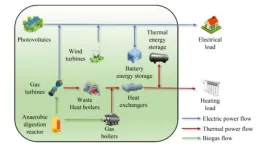
In a significant step towards achieving the "Carbon Peaking and Carbon Neutrality" goals, researchers at the Chinese Academy of Sciences, University of Chinese Academy of Sciences, Beijing Institute of Technology, in collaboration with Hohai University, have developed a groundbreaking dual-layer optimization strategy for park-level integrated energy systems (PIES). This strategy, which integrates electricity and heat demand response, significantly boosts the economic efficiency and low-carbon operation ...

Read the release
Environment

Research into UK’s use of plastic packaging finds households ‘wishcycle’ rather than recycle – risking vast contamination

Lancaster University researchers investigating consumer attitudes and behaviours around plastic food packaging have found UK households are ‘wishcycling’ rather than recycling – and say it’s a problem that everyone - government, food producers, waste management and residents – has to solve. Wishcycling – the act of putting packaging in recycling bins and hoping for the best, rather than knowing it’s recyclable – is something households are doing due to confusing product labels and differing recycling facilities around the country, experts warn. The academics behind Lancaster ...

Read the release
Extreme weather accelerates nitrate pollution in groundwater
Environment

Extreme weather accelerates nitrate pollution in groundwater

Extreme weather spurred by climate change, including droughts and heavy rains, may increase the risk of nitrates from fertilizers ending up in groundwater, according to a recent study from researchers at the University of California, Davis. The study found heavy rains after a drought caused nitrates to seep 33 feet under farm fields in as little as 10 days. The study was published in Water Resources Research. “The conventional wisdom was that it could take several weeks to years for nitrates to move from the crop root zones to reach groundwater,” said corresponding author Isaya Kisekka, a professor in the Departments ...

Read the release
Environment

Faster flowing glaciers could help predict nearby volcanic activity

Glaciers that are within three miles of a volcano move nearly 50% quicker than average, a new study has found, which could help create early warning of future eruptions. In a new article published in Communications Earth & Environment today, researchers from the University of Aberdeen, University of Birmingham and Manchester Metropolitan University analysed velocity data from 85% of the world’s approximately 217,000 glaciers. After controlling for factors such as climate, ice thickness and surface slope, the team found that glaciers near active volcanoes typically flowed 46% faster than other glaciers. Glaciers ...

Read the release
Environment

More green space linked to fewer preventable deaths in most deprived areas of UK

The provision of just 1% more green space in the most deprived urban neighbourhoods in 3 out of the 4 UK nations may be linked to around 40% fewer preventable deaths in these areas, finds research published online in the Journal of Epidemiology & Community Health. Green space is unequally distributed in England, Scotland, and Northern Ireland, with the lowest amounts in the most deprived areas, the findings show, prompting the researchers to suggest that green space investment might be an important public health strategy for tackling health inequalities. Spending time ...

Read the release
Environment

Fossil fuel CO2 emissions increase again in 2024

Global carbon emissions from fossil fuels have reached a record high in 2024, according to new research by the Global Carbon Project science team. The 2024 Global Carbon Budget projects fossil carbon dioxide (CO 2) emissions of 37.4 billion tonnes, up 0.8% from 2023. Despite the urgent need to cut emissions to slow climate change, the researchers say there is still “no sign” that the world has reached a peak in fossil CO2 emissions. With projected emissions from land-use change (such as deforestation) of 4.2 billion tonnes, total CO2 emissions are projected to be 41.6 billion tonnes in 2024, up from 40.6 billion tonnes last year. Over the last 10 years, fossil ...

Read the release
SwRI-led team proposes new solar composition ratios that could reconcile longstanding questions
Environment

SwRI-led team proposes new solar composition ratios that could reconcile longstanding questions

SAN ANTONIO — November 12, 2024 — A Southwest Research Institute-led team combined compositional data of primitive bodies like Kuiper Belt objects, asteroids and comets with new solar data sets to develop a revised solar composition that potentially reconciles spectroscopy and helioseismology measurements for the first time. Helioseismology probes the Sun’s interior by analyzing the waves that travel through it, while spectroscopy reveals the surface composition based on the spectral signature produced by each chemical element. A paper about this research, which ...

Read the release
In greening Arctic, caribou and muskoxen play key role
Environment

In greening Arctic, caribou and muskoxen play key role

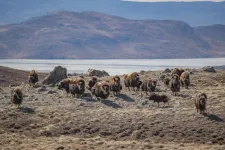
The story of Arctic greening has overlooked some main characters. At center stage are climate change and warming temperatures. Meanwhile, large grazing wildlife, such as caribou and muskoxen, also play a key role in the timing and abundance of Arctic plants, according to a study from the University of California, Davis. The study, published today in the journal PNAS Nexus, highlights the importance of large herbivores to the Arctic ecosystem, linking grazing with plant phenology and abundance in the Arctic tundra. Phenology is the study of the timing and cyclical patterns in nature, such as when birds migrate, or when a plant first sprouts or blooms. ...

Read the release
Environment

Climate change threatens rare temperate rainforests

Up to two thirds of the world’s temperate rainforests could fall victim to climate change by the year 2100 according to a new study by researchers at the University of Leeds. In the first ever worldwide assessment of the impacts of global overheating on these rare ecosystems, scientists used maps of tree cover, forest condition, and climate data to assess how much of the world’s temperate rainforests have already been impacted by human activity and how climate change would push some regions to the brink. The results of their study which are published today (Tuesday 12 November) ...

Read the release
Plant green-up and herbivory in Greenland
Environment

Plant green-up and herbivory in Greenland

A study links herbivory to phenology in the Arctic. Phenology is the study of the timing of events in the natural world. In recent decades, researchers have investigated how climate change is shifting many natural events. Eric Post and colleagues wanted to understand how a different variable—the presence or absence of herbivores—affects the timing of spring plant growth, or green-up, in Greenland. In an experiment lasting nine years, the authors excluded musk oxen and caribou from some areas, then compared the timing of the spring green-up of 9 tundra plant species in the areas with and without herbivores. Of the plants that showed altered green-up between the conditions, about ...

Read the release
Environment

Fighting microplastics for a cleaner future

Microplastics, plastics smaller than 5 millimeters, are littered across the world, contributing to global warming, disrupting food chains, and harming ecosystems with toxic chemicals. This is why Dr. Manish Shetty is working to break down plastics before they can get into the environment. Creating sustainable chemicals and developing better waste management will contribute to better sustainability. This research is part of figuring out how to make green hydrogen available for waste management using catalysts. Shetty’s research uses solvents in low amounts that also act as hydrogen sources to break down a specific class of plastics called ...

Read the release
Environment

Scientists issue call to action underlining importance of microbial solutions to tackle climate crisis

Ahead of COP29, Applied Microbiology International (AMI) has partnered with leading global scientific organisations to issue a unified call to action, spotlighting microbial solutions as pivotal in combating climate change. In a strategic publication, released in multiple high-impact scientific journals at once, the joint paper advocates for the establishment of a global science-driven climate task force. This initiative aims to expedite the deployment of microbiome technologies, providing stakeholders worldwide with access to effective and immediate solutions. Signatories of the paper, ‘Microbial solutions must be deployed against the climate catastrophe’ ...

Read the release
Environment

Scientists call for global action on microbial climate solutions

Washington, D.C. — Nov. 11, 2024 — Today, leaders from scientific societies, institutions and publishing bodies issued an urgent call for the global community and governments to take immediate and decisive emergency climate action. This appeal is made through an editorial published in mSystems, released on the opening day of the 2024 United Nations Climate Change Conference (COP29). Key contributors to this initiative include Virginia Miller, past president of the American Society for Microbiology (ASM); Jack Gilbert, Editor-in-Chief of mSystems; and Jay Lennon, ...

Read the release
Environment

Gender inequality ingrained in global climate negotiations, say researchers

Climate governance is dominated by men, yet the health impacts of the climate crisis often affect women, girls, and gender-diverse people disproportionately, argue researchers ahead of the upcoming 29th United Nations Climate Summit (COP29) in Azerbaijan. In an article published today in Lancet Planetary Health, a team of researchers – including several from the University of Cambridge – argue that much more needs to be done to mitigate the impacts of climate change on women, girls and gender-diverse individuals. Focusing specifically on the intersection between climate change, gender, and human health, ...

Read the release
Environment

There's no time like the present for integrating climate and violence policies: The opportunity is right

The dual goals of climate action and ending violence against children can be achieved according to a new paper by Columbia University Mailman School of Public Health and colleagues at the London School of Hygiene and Tropical Medicine. For the first time, governments are committing funds and making concrete pledges to reach the UN Sustainable Development Goal target of ending violence against children. On November 7th and 8th, the Government of Colombia, with support of the Government of Sweden, UNICEF, the UN Special Representative of the Secretary-General on Violence Against Children, and the World Health Organization will attend the first Global Ministerial Conference on ending ...

Read the release
Environment

Inland Delaware watersheds impaired by human waste

Highlights: Delaware watersheds show high microbial impairment. Researchers collected samples from Delaware waters over 2 years and identified microbial DNA signatures present in the water. The findings suggest that both treated and untreated human waste are the culprit, likely due to infrastructural issues. Washington, D.C.—Delaware has numerous inland waterways with high microbial impairment from unknown sources. Now, a new study suggests that human waste, both treated and untreated, is responsible for the waterway impairment in these Delaware watersheds. The study was published in Applied and Environmental Microbiology, ...

Read the release
Environment

Windfall profits from oil and gas could cover climate payments

A central issue at the UN Climate Change Conference, set to start on November 11, will be the negotiations on new payments from industrialized nations to poorer countries. However, the question of whether and how these payments will be financed remains highly controversial. The study by an international team of researchers, with participation by the Technical University of Munich (TUM), has now revealed: The windfall profits alone taken in by oil and gas companies due to the 2022 energy crisis would have been sufficient to cover the existing commitments of the industrialized nations for nearly five years. The researchers ...

Read the release
Breaking carbon–hydrogen bonds to make complex molecules
Environment

Breaking carbon–hydrogen bonds to make complex molecules

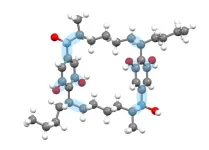
A team of scientists led by Caltech and Emory University has synthesized a highly complex natural molecule using a novel strategy that functionalizes normally nonreactive bonds, called carbon–hydrogen (C–H) bonds. The work demonstrates a new category of reactions that organic chemists can consider as they work to create natural products that could be used in pharmaceuticals or new materials, or to produce organic chemicals in more sustainable ways. "This work moves the field forward by showing the power of C–H functionalization," says ...

Read the release
Measurements from ‘lost’ Seaglider offer new insights into Antarctic ice melting
Environment

Measurements from ‘lost’ Seaglider offer new insights into Antarctic ice melting

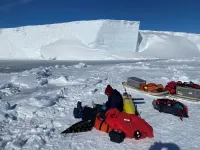
New research reveals for the first time how a major Antarctic ice shelf has been subjected to increased melting by warming ocean waters over the last four decades. Scientists from the University of East Anglia (UEA) say the study - the result of their autonomous Seaglider getting accidentally stuck underneath the Ross Ice Shelf - suggests this will likely only increase further as climate change drives continued ocean warming. The glider, named Marlin, was deployed in December 2022 into the Ross Sea from the edge of the sea ice. Carrying a range of sensors to collect data on ocean processes that are important for climate, it was programmed to travel northward into ...

Read the release
From the original Press-News collection. Issuers of news releases are responsible for the accuracy of their content.