THE ORIGINAL COLLECTION · SINCE 2010

Environment
press releases.

Research announcements from universities, hospitals and scientific institutions. Explore the stories, people and discoveries behind the headlines.

Original publication datesPage 77
FIND A STORY

Find a past release.

Dates and source material belong to the original release.

Read our research explainers

Browse the collection · original publication order

New study reveals larger insects' critical role in decomposition in arid ecosystems
Environment

New study reveals larger insects' critical role in decomposition in arid ecosystems

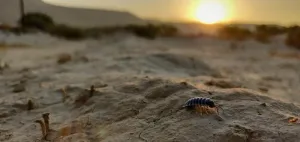
New study reveals that in arid ecosystems, larger arthropods such as termites and beetles play a crucial role in decomposition, challenging the traditional view that microbial activity dominates this process in dry environments. By demonstrating that macro-decomposition can peak during the summer in arid sites and that overall decomposition rates in these regions can be similar to or even exceed those in wetter climates, the research provides new insights into how decomposition functions in drylands and its implications for global carbon ...

Read the release

Environment

Air pollution linked to having a peanut allergy during childhood

Exposure to higher levels of air pollution as a baby is linked to having a peanut allergy throughout childhood, according to a new study. And policies aimed at tackling poor air quality could potentially reduce the prevalence and persistence of peanut allergies, it stated. The research, led by Murdoch Children’s Research Institute (MCRI) and the University of Melbourne, found being exposed to higher levels of air pollution from infancy was associated with increased odds of developing a peanut allergy and having the allergy persist across the first 10 years of life. However, the same association was not seen for egg allergy or eczema. Published ...

Read the release
European funders and organizations partner to promote sustainable research
Environment

European funders and organizations partner to promote sustainable research

A significant step forwards in changing research practices towards sustainability has been taken with the publication of the Heidelberg Agreement on Environmental Sustainability in Research Funding. The agreement provides a framework for research funders to play an active role and incentivize sustainable practices in research. It outlines principles for transitioning to a more sustainable research system and practical recommendations on how to implement sustainability in funding schemes. A key focus of the Heidelberg Agreement is to ensure that research funders take a proactive approach to promoting sustainability in scientific ...

Read the release
Plastic mulch is contaminating agricultural fields
Environment

Plastic mulch is contaminating agricultural fields

Using plastic sheets for weed control, even under current best management practices, pollutes soil with macro- and micro-plastics and negatively affect critical soil functions, according to a study. The United Nations considers soil plastic contamination an environmental health and food security threat. Around the world, over 25 million acres of farmland is seasonally covered with opaque plastic films used as “mulch” to prevent weeds, retain moisture, and warm soil—a practice known ...

Read the release
A visit from the stork brings genomic hope for this endangered species
Environment

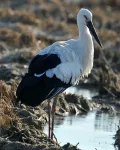
A visit from the stork brings genomic hope for this endangered species

A Visit from the Stork Brings Genomic Hope for this Endangered Species A new genomic study of the endangered Oriental Stork reveals that the population's genetic health is still surprisingly strong, with high genetic diversity and low levels of inbreeding. This is an uncommon finding in most endangered species populations, which makes it more difficult to rescue those species from extinction. Thus, despite the human-caused decline in the Oriental stork numbers, the findings in this study provide hope for the species' long-term ...

Read the release
Environment

New ice core data provides insight into climate ‘tipping points’ during the last Ice Age

CORVALLIS, Ore. – A changing climate triggers a sudden shift in ocean circulation, creating weather havoc and plunging Earth into an abrupt new Ice Age. It sounds like the basis for a Hollywood blockbuster - the 2004 science fiction disaster film “The Day After Tomorrow,” has similar plot lines – but it’s actually a scenario that played out multiple times during the last Ice Age, which ended more than 11,000 years ago. Just published research from multiple ice cores collected across Greenland with data spanning up to 120,000 years provides new understanding of these abrupt events, how they unfold and what that might ...

Read the release
Environment

Microbes drove methane growth between 2020 and 2022, not fossil fuels, study shows

Microbes in the environment, not fossil fuels, have been driving the recent surge in methane emissions globally, according to a new, detailed analysis published Oct 28 in the Proceedings of the National Academy of Sciences by CU Boulder researchers and collaborators. “Understanding where the methane is coming from helps us guide effective mitigation strategies,” said Sylvia Michel, a senior research assistant at the Institute of Arctic and Alpine Research(INSTAAR) and a doctoral student in the Department of Atmospheric and Oceanic Sciences at CU Boulder. “We need to know more about those emissions to ...

Read the release
Rapidly increasing industrial activities in the Arctic
Environment

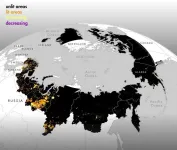
Rapidly increasing industrial activities in the Arctic

The Arctic is threatened by strong climate change: the average temperature has risen by about 3°C since 1979 – almost four times faster than the global average. The region around the North Pole is home to some of the world’s most fragile ecosystems, and has experienced low anthropogenic disturbance for decades. Warming has increased the accessibility of land in the Arctic, encouraging industrial and urban development. Understanding where and what kind of human activities take place is key to ensuring sustainable development in the region – for both people and the environment. Until now, a comprehensive assessment of this part of the world has ...

Read the release
Rare fossils of extinct elephant document the earliest known instance of butchery in India
Environment

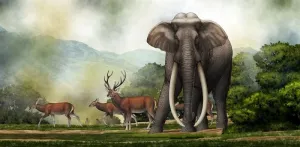
Rare fossils of extinct elephant document the earliest known instance of butchery in India

During the late middle Pleistocene, between 300 and 400 thousand years ago, at least three ancient elephant relatives died near a river in the Kashmir Valley of South Asia. Not long after, they were covered in sediment and preserved along with 87 stone tools made by the ancestors of modern humans. The remains of these elephants were first discovered in 2000 near the town of Pampore, but the identity of the fossils, cause of death and evidence of human intervention remained unknown until now. A team ...

Read the release
Understanding the relationship between food waste, climate change, and aging population
Environment

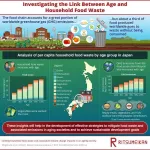
Understanding the relationship between food waste, climate change, and aging population

Food production is one of the pillars of human civilization and underlies many of the changes caused by humans on planet’s landscapes. Producing food and getting it to people’s plates entails a significant expenditure of energy and resources. Unfortunately, approximately one third of all food produced globally is not consumed and discarded. Hence, to build sustainable societies, it is essential to minimize food waste. In Japan, based on estimates reported by governmental institutions, an astonishing 2.47 megatons of food waste was generated in ...

Read the release
Environment

Majority of UK public expect universities to solve climate change, poll reveals

New poll shows nearly two-thirds of adults (61%) expect global research universities, such as the University of Cambridge, to come up with new innovations that will help to reduce the effects of climate change. Alternative fuels for cars and planes, improved batteries and capturing more carbon will have the greatest impact on climate change, the UK public believe. Respondents want the government to listen to universities when making climate policy, ahead of all other interest groups tested. Cambridge University is playing a leading role in ...

Read the release
Loss of ‘nitrogen fixers’ threatens biodiversity, ecosystems
Environment

Loss of ‘nitrogen fixers’ threatens biodiversity, ecosystems

STARKVILLE, Miss.—Mississippi State University is part of a European-American collaboration studying how human activities, like fertilizer use and polluting, are impacting nitrogen-fixing plants which are crucial for maintaining healthy ecosystems by adding nitrogen to the soil. MSU Assistant Professor Ryan A. Folk of the Department of Biological Sciences co-authored a study published today [Oct. 18] in Science Advances, showing that increased nitrogen deposition from human activity is reducing the diversity and evolutionary distinctiveness of nitrogen-fixing plants. Lead author Pablo Moreno García, ...

Read the release
Finding could help turn trees into affordable, greener industrial chemicals
Environment

Finding could help turn trees into affordable, greener industrial chemicals

EMBARGOED FOR RELEASE UNTIL 2 P.M. EDT ON FRIDAY, OCT. 18 Trees are the most abundant natural resource living on Earth’s land masses, and North Carolina State University scientists and engineers are making headway in finding ways to use them as sustainable, environmentally benign alternatives to producing industrial chemicals from petroleum. Lignin, a polymer that makes trees rigid and resistant to degradation, has proven problematic. Now those NC State researchers know why: They’ve identified the ...

Read the release
Environment

Materials of the future can be extracted from wastewater

"The perspective is enormous, because you’re taking something that is currently waste and making high-value products from it." This is what Professor Per Halkjær Nielsen, Department of Chemistry and Bioscience at Aalborg University in Denmark, says about the results of a research project that utilizes surplus biomass in wastewater treatment plants in new ways. The focal point is biopolymers that can be described as long chains of molecules that are bound to each other and that are produced by living organisms, including bacteria. Today, synthetic ...

Read the release
Environment

Global study reveals people, including those most affected by climate change, do not understand climate justice

An international study involving people from 11 countries has shown most people, including those in areas most affected by climate change, don’t understand the term ‘Climate Justice’. However they do recognise the social, historical, and economic injustices that characterise the climate crisis. The findings could help shape more effective communications and advocacy. Researchers from the Univeristy of Nottingham’s School of Psychology led a study that surveyed 5,627 adults in 11 countries (Australia, Brazil, Germany, India, Japan, Netherlands, Nigeria, Philippines, United Arab Emirates, United ...

Read the release
Better ocean connectivity boosts reef fish populations
Environment

Better ocean connectivity boosts reef fish populations

Research led by the University of Oxford has found that oceanographic connectivity (the movement and exchange of water between different parts of the ocean) is a key influence for fish abundance across the Western Indian Ocean (WIO). The findings have been published today in the ICES Journal of Marine Sciences. Connectivity particularly impacted herbivorous reef fish groups, which are most critical to coral reef resilience, providing evidence that decision-makers should incorporate connectivity into how they prioritise conservation areas. The study also revealed that, alongside oceanographic connectivity, sea surface temperature ...

Read the release
Two 2024 Nobel laureates are affiliates of the Marine Biological Laboratory, Woods Hole
Environment

Two 2024 Nobel laureates are affiliates of the Marine Biological Laboratory, Woods Hole

The Marine Biological Laboratory (MBL) in Woods Hole, Mass., has long been a magnet for scientific talent, as partly evidenced by the long list of Nobel laureates affiliated with the lab since 1929. Last week, the MBL was proud to add two new scientists to this list, which now includes 63 names: * Gary Ruvkin, former co-director of the MBL Biology of Aging course, was co-recipient with Victor Ambros of the Nobel Prize in Physiology or Medicine (for the discovery of microRNA and its role in gene regulation). here. * John Hopfield, former faculty in the MBL Methods in Computational Neuroscience ...

Read the release
Environment

When hurricanes hit, online chatter drowns out safety messaging

Hoboken, N.J. October 17, 2024 – When natural disasters strike, social networks like Facebook and X (formerly known as Twitter) can be powerful tools for public communication—but often, rescue workers and government officials struggle to make themselves heard above the general hubbub. In fact, new research from the Stevens Institute of Technology shows, during four recent major hurricanes, important public safety messaging was drowned out by more trivial social content—including people tweeting about pets, sharing human-interest stories, or bickering about politics. That’s a big problem for officials working to understand where help is needed ...

Read the release
Environment

Global CO2 emissions from forest fires increase by 60%

A major new study reveals that carbon dioxide (CO2) emissions from forest fires have surged by 60% globally since 2001, and almost tripled in some of the most climate-sensitive northern boreal forests. The study, led by the University of East Anglia (UEA) and published today in Science, grouped areas of the world into ‘pyromes’ - regions where forest fire patterns are affected by similar environmental, human, and climatic controls - revealing the key factors driving recent increases in forest fire activity. It is one of the first studies to look globally at the differences between forest ...

Read the release
Environment

Extratropical forest fire emissions are increasing as climate changes

As climate change promotes fire-favorable weather, climate-driven wildfires in extratropical forests have overtaken tropical forests as the leading source of global fire emissions, researchers report. The findings raise urgent concerns about the future of forest carbon sinks under climate change. Fire has long played a role in shaping Earth's forests and regulating carbon storage in ecosystems. However, anthropogenic climate change has intensified fire-prone weather, leading to an increase in burned areas and carbon emissions, particularly in forested regions. These fires not only reduce forests' ability to absorb carbon but also disrupt ecosystems, harm biodiversity, and pose significant ...

Read the release
Plankton balloon to six times their size in newly discovered mode of oceanic travel
Environment

Plankton balloon to six times their size in newly discovered mode of oceanic travel

Many plankton journey from the cold, dark depths of our oceans to the surface, only to eventually drift down again into the darkness in a perpetual rhythm. Yet, how single-celled phytoplankton, most of which have no appendages to help them swim, make this pilgrimage has remained a mystery. In a paper publishing October 17 in the Cell Press journal Current Biology, researchers describe a species of bioluminescent phytoplankton, called Pyrocystis noctiluca, that balloons to six times their original size of a few hundred microns. This massive inflation allows the plankton to journey up to 200 meters toward the ocean’s surface to capture sunlight, then ...

Read the release
Visible light energy yields two-for-one deal when added to CO2 recycling process
Environment

Visible light energy yields two-for-one deal when added to CO2 recycling process

CHAMPAIGN, Ill. — By combining visible light and electrochemistry, researchers have enhanced the conversion of carbon dioxide into valuable products and stumbled upon a surprising discovery. The team found that visible light significantly improved an important chemical attribute called selectivity, opening new avenues not only for CO2 conversion but also for many other chemical reactions used in catalysis research and chemical manufacturing. One way that chemists recycle CO2 into valuable products is through a process called electrochemical reduction, where a stream of CO2 gas moves through an electrolysis cell that breaks the CO2 and water ...

Read the release
Woods Hole Oceanographic Institution scientists discover fastest degrading bioplastic in seawater
Environment

Woods Hole Oceanographic Institution scientists discover fastest degrading bioplastic in seawater

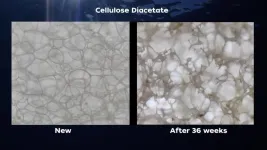
Woods Hole, Mass.(Oct. 17, 2024) — Scientists at the Wood Hole Oceanographic Institution (WHOI) have been working for years to find out what types of plastics have the shortest and longest lifespans in the ocean, and what types of plastic products, like straws and food wrappers, most commonly contribute to plastic pollution. With more biodegradable materials being developed , like cellulose diacetate (CDA)—a plastic-like polymer derived from wood pulp—researchers are racing to ensure they can replace traditional plastics without causing harm to ocean ...

Read the release
Marine experts challenge reliability of vessel strike prediction models
Environment

Marine experts challenge reliability of vessel strike prediction models

A new study has raised questions about current approaches to predicting the risk of vessel strikes on whales. Led by researchers at Heriot-Watt University in Edinburgh, Scotland, an international team of scientists compared eight models currently in place to assess and forecast the risk of ships colliding with whales. The study reveals notable inconsistencies in the results across the different models. Most reports of vessel collisions involve large whales but all species can be affected. Globally, strikes are under-reported and can often go undetected, particularly when they involve large vessels. Collisions can result in animals being injured or killed, and vessels ...

Read the release
Environment

Compound drought-heatwave events underrecognized in global soils

Soil is essential for life and plays a crucial role in Earth's ecosystem, providing support for plant roots and hosting countless microorganisms. In a warming world, it is important to understand how soil hydrothermal conditions, particularly dry-hot extremes, have changed already and how they will respond to further warming. In a study published in PNAS, researchers led by Prof. ZHANG Yunlin from the Nanjing Institute of Geography and Limnology of the Chinese Academy of Sciences, along with collaborators from the Helmholtz Centre for Environmental Research (UFZ) and Bangor University, have quantified global soil compound drought-heatwave (SCDHW) ...

Read the release
From the original Press-News collection. Issuers of news releases are responsible for the accuracy of their content.