THE ORIGINAL COLLECTION · SINCE 2010

Environment
press releases.

Research announcements from universities, hospitals and scientific institutions. Explore the stories, people and discoveries behind the headlines.

Original publication datesPage 78
FIND A STORY

Find a past release.

Dates and source material belong to the original release.

Read our research explainers

Browse the collection · original publication order

Microplastics detected in dolphin breath
Environment

Microplastics detected in dolphin breath

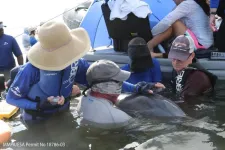
U.S. researchers have detected microplastic particles in air exhaled by wild bottlenose dolphins, suggesting that inhalation may be a relevant route of exposure to these potentially harmful contaminants. Miranda Dziobak of the College of Charleston in South Carolina, U.S., and colleagues present these findings in the open-access journal PLOS ONE on October 16, 2024. Around the world, humans and numerous other animals are exposed to tiny particles of plastic contaminants known as microplastics. In humans and rodents, microplastic exposure has been linked to adverse health impacts, such as oxidative stress and inflammation. Ingestion ...

Read the release

Plastic pollution sounds just like food to deep-diving whales
Environment

Plastic pollution sounds just like food to deep-diving whales

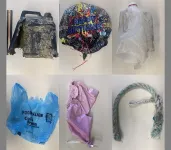
BEAUFORT, N.C. -- To whales that hunt with soundwaves in the lightless depths of the ocean, a torn plastic party balloon and a delicious squid seem to be remarkably similar, according to a new study that put some plastic beach trash through underwater acoustic testing. "These acoustic signatures are similar, and this might be a reason that these animals are driven to consume plastic instead of, or in addition to, their prey," said Duke University graduate student Greg Merrill, who led the research. "One hundred percent of plastic marine debris ...

Read the release
Environment

CSIRO research reveals marine heatwaves are underreported in the deep ocean

While marine heatwaves (MHWs) have been studied at the sea surface for more than a decade, new research published today in Nature has found 80 per cent of MHWs below 100 metres are independent of surface events, highlighting a previously overlooked aspect of ocean warming. The study was conducted by Australia’s national science agency CSIRO and the Chinese Academy of Sciences. MHWs are prolonged temperature events that can cause severe damage to marine habitats, such as impacts to coral reefs and species displacement. These events are becoming more frequent due to global warming, with notable occurrences off Australia’s East ...

Read the release
Korean research team proposes optimal utilization strategy for hydrogen energy, the key to carbon neutrality
Environment

Korean research team proposes optimal utilization strategy for hydrogen energy, the key to carbon neutrality

A joint research team, led by Dr. Sang Yong Park from the National Climate Technology Center at the Korea Institute of Energy Research (KIER) and Professor Dong Gu Choi from the Department of Industrial and Management Engineering at POSTECH, has developed an energy system model optimized for Korea's environment and proposed an optimal strategy for utilizing hydrogen energy. Hydrogen is being highlighted as a key resource for achieving the government's "2050 Carbon Neutrality Scenario." It is not only a clean energy source in itself but can also be produced using surplus power from renewable ...

Read the release
Grasslands live in the climate change fast lane
Environment

Grasslands live in the climate change fast lane

Although all ecosystems are affected by a changing climate, the impacts can take a while to appear. Changes in forest biodiversity, for example, are known to lag behind changes in a habitat's temperature and precipitation. Grasslands, on the other hand, are responding to climate change almost in real time, according to new research by the University of Michigan. Put another way, forests accumulate climate debt while grasslands are paying as they go, said the study's lead authors, Kai Zhu and Yiluan Song. "Climate change does have consequences for our ecosystems. It's going to come sooner or later," said Song, a postdoctoral fellow at the ...

Read the release
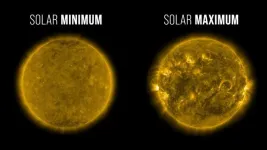
NASA, NOAA: Sun reaches maximum phase in 11-year solar cycle
Environment

NASA, NOAA: Sun reaches maximum phase in 11-year solar cycle

In a teleconference with reporters on Tuesday, representatives from NASA, the National Oceanic and Atmospheric Administration (NOAA), and the international Solar Cycle Prediction Panel announced that the Sun has reached its solar maximum period, which could continue for the next year. The solar cycle is a natural cycle the Sun goes through as it transitions between low and high magnetic activity. Roughly every 11 years, at the height of the solar cycle, the Sun’s magnetic poles flip — on Earth, that’d be like the ...

Read the release
Political candidates who fight climate change stand to benefit in election
Environment

Political candidates who fight climate change stand to benefit in election

A majority of Floridians expressed support for political candidates who fight climate change in a new Florida Atlantic University survey. The survey found that nearly 52% of respondents agreed that a candidate with a record of reducing climate impacts was more likely to get their vote. The Invading Sea’s Florida Climate Survey also revealed strong support in the state for increasing renewable energy use and teaching climate science in K-12 classrooms. The survey is the 11th conducted by the FAU Center for Environmental Studies ...

Read the release
Seven new frog species discovered in Madagascar: sounds like something from Star Trek
Environment

Seven new frog species discovered in Madagascar: sounds like something from Star Trek

Seven New Frog Species Discovered in Madagascar: Sounds Like Something from Star Trek An international team of researchers have discovered seven new species of tree frogs that make otherworldly calls in the rainforests of Madagascar. Their strange, high-pitched whistling calls sound more like sound effects from the sci-fi series Star Trek. As a result, the researchers have named the new species after seven of the series' most iconic If you think all frogs croak, you’d be wrong. Seven newly discovered species from the tree frog genus Boophis, found across the rainforests of Madagascar, emit special bird-like whistling ...

Read the release
Environment

How to make biodiversity credits work: science-based solutions for real conservation gains

Biodiversity is in crisis. Human activities are driving species extinctions at unprecedented rates, but funding for conservation remains woefully inadequate. To address this gap, the concept of a Biodiversity Credit Market (BCM) has emerged, inspired by carbon credit systems that incentivize conservation and restoration efforts. However, while the BCM holds promise, it risks falling into the same pitfalls as its carbon counterpart—especially if it fails to implement rigorous science-backed baselines, ...

Read the release
Adaptability of trees persists after millions of years of climate change
Environment

Adaptability of trees persists after millions of years of climate change

Seven of the most common forest trees in Europe have been shown to be able to shelter their genetic diversity from major shifts in environmental conditions. This is despite their ranges having shrunk and the number of trees having fallen sharply during ice age cycles. These are the findings of a study by a European consortium including Uppsala University, published in Nature Communications. “From a biodiversity perspective, this is very positive because these trees are keystone species on which many other species depend,” says Pascal Milesi, Associate Professor of Plant Ecology and Evolution at Uppsala University and first author of the study. The researchers aimed to investigate ...

Read the release
Let there be light: Bright future for solar panels, TV screens and more
Environment

Let there be light: Bright future for solar panels, TV screens and more

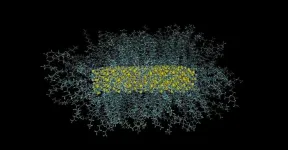
From brighter TV screens to better medical diagnostics and more efficient solar panels, new Curtin-led research has discovered how to make more molecules stick to the surface of tiny nanocrystals, in a breakthrough that could lead to improvements in everyday technology. Lead author Associate Professor Guohua Jia from Curtin’s School of Molecular and Life Sciences, said the study investigated how the shape of zinc sulfide nanocrystals affected how well molecules, known as ligands, stick to their surface. “Ligands, play an important role in controlling the behaviour and performance ...

Read the release
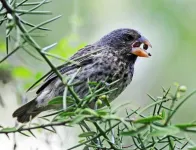
How playing songs to Darwin’s finches helped UMass Amherst biologists confirm link between environment and the emergence of new species
Environment

How playing songs to Darwin’s finches helped UMass Amherst biologists confirm link between environment and the emergence of new species

Embargoed: Not for Release Until 2:00 pm U.S. Eastern Time Thursday, 10 October 2024 October 10, 2024 AMHERST, Mass. – They say that hindsight is 20/20, and though the theory of ecological speciation — which holds that new species emerge in response to ecological changes — seems to hold in retrospect, it has been difficult to demonstrate experimentally, until now. In research recently published in Science, biologists from the University of Massachusetts Amherst have identified a key connection between ecology and speciation in Darwin’s finches, famous residents of the Galápagos Islands, Ecuador. Prior work on these birds ...

Read the release
Environment

Galápagos finches could be singing a different song after repeated drought—one that leads to speciation

Galápagos finches use their beaks to crush seeds and sing songs, so what happens to their musical trills when their beaks change to respond to new menus available under drought? Jeffrey Podos and Katie Schroeder found that the song might not remain the same after six cumulative future drought events that would likely reshape the finch beak. The projected changes in male mating songs could be so significant that they provide a pathway for ecological speciation, the researchers suggest. The researchers tested this idea by digitally modifying ...

Read the release
Environment

Hidden “tails” slow marine snow, impacting deep sea carbon transfer and storage

Newly discovered microscopic mucus tails – trailing from particles of marine snow particles – slow these particles’ descent into the deep ocean, research finds. This doubles the particles’ residence time in the ocean's upper layers and significantly alters estimates of how much carbon is sequestered in the deep sea. The oceans serve as a vast reservoir and critical sink for atmospheric carbon dioxide. A key process driving carbon sequestration in the ocean is the biological pump, where photosynthetic activity ...

Read the release
Environment

Seed dispersal “crisis” may impact plant species’ future in Europe

Europe is facing a seed dispersal “crisis,” due to extinction threats and population changes among the animals that do the seed dispersing, according to a new synthesis by Sara Beatriz Mendes and colleagues. Their literature review of animal and plant dispersal pairs helped them reconstruct the first European-wide seed dispersal network. Seed dispersal by animals is a critical part of maintaining healthy ecosystems, especially in fragmented environments like those found throughout Europe. Lack of seed dispersal to connect populations could prevent declining plant populations from ...

Read the release
Hidden biological processes can affect how the ocean stores carbon
Environment

Hidden biological processes can affect how the ocean stores carbon

New Stanford-led research unveils a hidden factor that could change our understanding of how oceans mitigate climate change. The study, published Oct. 11 in Science, reveals never-before seen mucus “parachutes” produced by microscopic marine organisms that significantly slow their sinking, putting the brakes on a process crucial for removing carbon dioxide from the atmosphere. The surprising discovery implies that previous estimates of the ocean’s carbon sequestration potential may have been overestimated, but also paves the way toward improving climate models and informing ...

Read the release
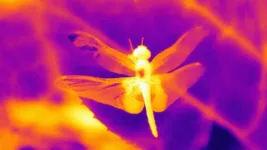
Hot dragonfly summer: species with darker wings have evolved to withstand heat and attract partners
Environment

Hot dragonfly summer: species with darker wings have evolved to withstand heat and attract partners

Temperature determines where species can live and if they are threatened by a warming climate. So, for a long time, biologists studied how heat tolerance affects survival. Yet, less is known about how thermal traits influence reproduction, which is directly linked to extinction risk. Now, researchers in the US have examined if males of dragonfly species that produce sexual signals in the form of dark coloration on their wings are more resistant to heat. They published their results in Frontiers in Ethology. “We show that dragonfly species that have evolved dark breeding coloration on ...

Read the release
Environment

Should doctors be suspended for unlawful climate activism?

Former GP Sarah Benn was suspended by the medical practitioners tribunal service (MPTS) after an arrest for her involvement in climate protests. In The BMJ today, two experts debate the question of when and whether doctors in such cases should be sanctioned. The recent case of Sarah Benn has sparked debate, partly because of a perception that the GMC referred her to a MPTS tribunal for taking part in peaceful protests, says Andrew Hoyle, assistant director at the GMC. In reality, he explains ...

Read the release
Environment

Ancient climate analysis reveals unknown global processes

According to highly cited conventional models, cooling and a major drop in sea levels about 34 million years ago should have led to widespread continental erosion and deposited gargantuan amounts of sandy material onto the ocean floor. This was, after all, one of the most drastic climate transitions on Earth since the demise of the dinosaurs. Yet a new Stanford review of hundreds of studies going back decades contrastingly reports that across the margins of all seven continents, little to no sediment has ever been found dating back to this transition. The discovery of this globally extensive gap in the geologic record was published this week in Earth-Science Reviews. “The ...

Read the release
Predatory birds from the same fossil formation as SUE the T. rex
Environment

Predatory birds from the same fossil formation as SUE the T. rex

The Hell Creek Formation in what’s now the Dakotas, Montana, and Wyoming was once home to some of the world’s most beloved dinosaurs, like Triceratops and Tyrannosaurus rex (including SUE, one of the largest, most complete, and best-preserved T. rex specimens ever found). But these giant dinosaurs weren’t alone in their ecosystem, and in a paper in the journal PLOS ONE, scientists have described two new species of birds that lived alongside these dinosaurs 68 million years ago. The researchers ...

Read the release
Scientists show accelerating CO2 release from rocks in Arctic Canada with global warming
Environment

Scientists show accelerating CO2 release from rocks in Arctic Canada with global warming

Researchers from the Department of Earth Sciences at the University of Oxford have shown that weathering of rocks in the Canadian Arctic will accelerate with rising temperatures, triggering a positive feedback loop that will release more and more CO2 to the atmosphere. The findings have been published today in the journal Science Advances. For sensitive regions like the Arctic, where surface air temperatures are warming nearly four times faster than the global average, it is particularly crucial to understand the potential contribution of atmospheric CO2 from weathering. ...

Read the release
Early human species benefited from food diversity in steep mountainous terrain
Environment

Early human species benefited from food diversity in steep mountainous terrain

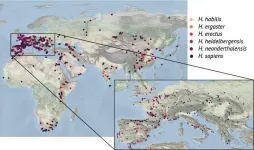
A new study published in the journal Science Advances [1] by researchers at the IBS Center for Climate Physics (ICCP) at Pusan National University in South Korea shows that the patchwork of different ecosystems found in mountainous regions played a key role in the evolution of humans. A notable feature of the archeological sites of early humans, members of the genus Homo known as hominins, is that they are often found in and near mountain regions. Using an extensive dataset of hominin fossils and artifacts, along with high-resolution landscape data and a 3-million-year-long simulation of Earth’s climate, the team of scientists from ICCP have provided a clearer picture of how ...

Read the release
Nature and plastics inspire breakthrough in soft sustainable materials
Environment

Nature and plastics inspire breakthrough in soft sustainable materials

Step aside hard, rigid materials. There is a new soft, sustainable electroactive material in town — and it’s poised to open new possibilities for medical devices, wearable technology and human-computer interfaces. Using peptides and a snippet of the large molecules in plastics, Northwestern University materials scientists have developed materials made of tiny, flexible nano-sized ribbons that can be charged just like a battery to store energy or record digital information. Highly energy efficient, biocompatible and made from sustainable materials, the systems could give rise to new ...

Read the release
Plant Science Research collaboration will explore key mosses critical to storing carbon
Environment

Plant Science Research collaboration will explore key mosses critical to storing carbon

ST. LOUIS, MO, October 9, 2024 - Plant scientists at the Donald Danforth Plant Science Center and the HudsonAlpha Institute for Biotechnology have been awarded a four-year National Science Foundation (NSF) Enabling Discovery through GEnomics (EDGE) grant to advance their understanding of sphagnum moss, a crucial component of peatlands and a vital player in global ecosystems. The collaborative research team will develop genetic and genomic resources to study sphagnum's life cycle, growth, and adaptation to various environmental conditions. Sphagnum ...

Read the release
Environment

Researchers examine the persistence of invisible plastic pollution

Plastic pollution – tiny bits of plastic, smaller than a grain of sand – is everywhere, a fact of life that applies even to newborn rodents, according to a Rutgers Health study published in the journal Science of the Total Environment. Researchers have long understood that micro- and nanoplastic particles (MNPs), which enter the environment through oxidation and natural degradation of consumer products, are easily deposited in the human body through inhalation, absorption and diet. Experts also understand that these pollutants can cross the placental barrier and deposit ...

Read the release
From the original Press-News collection. Issuers of news releases are responsible for the accuracy of their content.