THE ORIGINAL COLLECTION · SINCE 2010

Environment
press releases.

Research announcements from universities, hospitals and scientific institutions. Explore the stories, people and discoveries behind the headlines.

Original publication datesPage 79
FIND A STORY

Find a past release.

Dates and source material belong to the original release.

Read our research explainers

Browse the collection · original publication order

Environment

LANDFEED project kicks off: Transforming agro-food waste into bio-based fertilizers to support Europe’s circular economy

The LANDFEED project, co-funded by the European Union, held its official kick-off meeting on 12-13 September in Bilbao, Spain. Coordinated by Miriam Pinto from NEIKER, LANDFEED brings together experts across Europe to implement sustainable, circular solutions to Europe’s waste challenges, helping to increase the continent's self-sufficiency in agricultural resources while reducing environmental impact. LANDFEED will focus on converting under-utilised waste from the agri-food industry, forestry, urban centres, and the natural environment into ...

Read the release
How academia drives sustainability: Discover the impact of science on the SDGs
Environment

How academia drives sustainability: Discover the impact of science on the SDGs

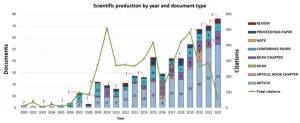
The role of universities in the fight for a fairer and more sustainable planet is increasingly significant. A team of researchers from ESPOL decided to examine how academia contributes to the Sustainable Development Goals (SDGs) by analyzing scientific publications on a global scale. Using tools such as ArcGIS, Biblioshiny, R, and VOSviewer, they conducted an in-depth review of scientific databases such as Web of Science and Scopus, tracking hundreds of articles addressing topics related to service-learning and community engagement. The results show a positive trend in scientific production on these topics, with a notable growth since 2009 and a peak in publications through 2022. ...

Read the release
Environment

NOAA awards grant to enhance decision-ready climate projections for diverse stakeholders

Researchers at the University of Miami Rosenstiel School of Marine, Atmospheric, and Earth Science were recently awarded $2.8 million of a $5.8 million grant from the National Oceanic and Atmospheric Administration (NOAA) Climate Program Office to support a groundbreaking four-year project aimed at developing best practices for decision-ready climate projection information. This work will address increased demand by public and private sectors for reliable, long-term extreme weather climate information. This initiative, led by the Rosenstiel School and including partners from the National Center for Atmospheric Research, Colorado State University, and Florida International ...

Read the release
Environment

Climate report warns of escalating crisis, urges immediate action as UN summit nears

CORVALLIS, Ore. – An international coalition led by Oregon State University scientists concludes in its annual report published today that the Earth’s worsening vital signs indicate a “critical and unpredictable new phase of the climate crisis” and that “decisive action is needed, and fast.” The collaboration directed by OSU’s William Ripple and former postdoctoral researcher Christopher Wolf outlines areas where policy change is needed – energy, pollutants, nature, food and economy – in “The 2024 State of the Climate Report: Perilous Times on Planet Earth,” published ...

Read the release
Environment

Scientists issue urgent warning on climate emergency

A new report published in BioScience warns that the world is facing a climate emergency of unprecedented magnitude. The "2024 State of the Climate Report," by an international team of scientists led by Oregon State University's William Ripple and Christopher Wolf, presents alarming evidence that climate change is worsening at a dangerous pace. In the report, the authors update 35 annually reported "planetary vital signs," which provide ongoing timeseries of human climate-related activities ...

Read the release
Solar-powered desalination system requires no extra batteries
Environment

Solar-powered desalination system requires no extra batteries

MIT engineers have built a new desalination system that runs with the rhythms of the sun. The solar-powered system removes salt from water at a pace that closely follows changes in solar energy. As sunlight increases through the day, the system ramps up its desalting process and automatically adjusts to any sudden variation in sunlight, for example by dialing down in response to a passing cloud or revving up as the skies clear. Because the system can quickly react to subtle changes in sunlight, it maximizes the utility of solar energy, producing large quantities of clean water despite ...

Read the release
Increase access to nature in all daily environments and in education
Environment

Increase access to nature in all daily environments and in education

Although access to nature is a basic human right, people’s actual use of green spaces is subject to inequalities. A Kobe University-led research team analyzed what conditions make it more likely that people are exposed to nature across generations: the availability of green spaces around where they live, work and shop, as well as nature relatedness and past natural experiences. Their findings may inform policies for urban planning and education for the improvement of human health. Visiting green spaces is good for people’s health, both psychologically and physiologically. ...

Read the release
Environment

Despite progress, China remains tethered to coal as climate change pressures mount

A new paper from the University of California San Diego details how China faces numerous political, economic and technological obstacles as it tries to transition away from coal—the country’s primary energy source—while balancing the need to combat climate change with the need for energy security. Despite its commitment to "phase down" coal, China recently has been permitting and constructing coal plants at rates not seen in a decade. “There is an increased focus on energy security in China—in 2021, the country experienced its worst power outages in decades, affecting ...

Read the release
Environment

Five George Mason researchers receive funding for Center for Climate Risks Applications

Five George Mason Researchers Receive Funding For Center For Climate Risks Applications Luis Ortiz, Assistant Professor, Atmospheric, Oceanic and Earth Sciences (AOES), College of Science; Fengxui Zhang, Assistant Professor, Schar School of Policy and Government; Edward Oughton, Assistant Professor, Geography and Geoinformation Science, College of Science; Natalie Burls, Associate Professor, AOES, and Director, Climate Dynamics Program, College of Science; and James Kinter, Director, Center for Ocean-Land-Atmosphere Studies (COLA); Director, ...

Read the release
Whale shark shipping collisions may increase as oceans warm
Environment

Whale shark shipping collisions may increase as oceans warm

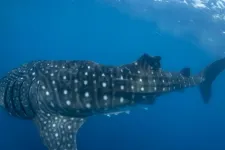
EMBARGOED: NOT FOR RELEASE UNTIL 07 OCTOBER 2024 AT 16:00 (LONDON TIME), 07 OCTOBER 2024 AT 11:00 (US EASTERN TIME). Global warming could increase the threat posed to whale sharks from large ships, according to a new study published in Nature Climate Change. Researchers from the University of Southampton and Marine Biological Association (MBA) predict that increased ocean temperatures will see this already endangered species driven into new habitats crossed by busy shipping lanes. The study predicts that the co-occurrence of whale sharks and large ships could be 15,000 times higher by the end of the century compared to the present day. Lead author Dr ...

Read the release
How a common economic theory could help save endangered frogs
Environment

How a common economic theory could help save endangered frogs

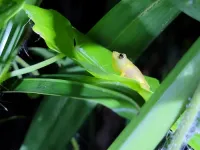
A common theory that guides financial investment strategies may be a handy tool to protect an endangered Puerto Rican frog. A new study uses modern portfolio theory to identify future “investments” in natural resource management that may help managers decide which actions to take to protect coquí llanero populations in Puerto Rico. The 17 species of coquí frogs, and their signature high-pitched chirp, are considered unofficial mascots of Puerto Rico. The entire population of coquí llanero frogs, the smallest and possibly most endangered of the island’s coquís, ...

Read the release
New polymer design breaks the tradeoff between toughness and recyclability
Environment

New polymer design breaks the tradeoff between toughness and recyclability

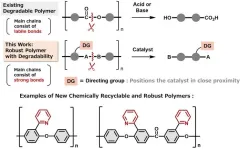
Osaka, Japan – Plastics underpin much of modern life—areas like medicine, technology, and food safety would be unrecognizable without plastics and their useful properties. However, the toughness of plastics, which is often desirable, also makes them a dangerous pollutant and difficult to recycle. The solution to this serious and growing problem is making plastics easier to recycle. In a study recently published in Chemical Science, researchers at Osaka University have found a way to make tough, high-performance polymers, the main component of plastics, that can be broken down easily and precisely into their component parts and ...

Read the release
Impact of pollutants on pollinators, and how neural circuits adapt to temperature changes
Environment

Impact of pollutants on pollinators, and how neural circuits adapt to temperature changes

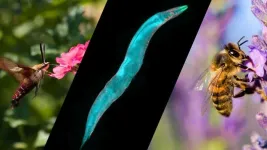
The Kavli Foundation and the U.S. National Science Foundation are collaborating to accelerate research in the emerging field of neurobiology in changing ecosystems, stemming from the foundation’s efforts in this area first announced in 2023. A joint Kavli-NSF grantmaking program was launched in December of 2023. Building on early success of this program, Kavli and NSF announce its continuation with a second call for proposals, open through February 10, 2025, for projects tackling hard problems in this understudied field. Research ...

Read the release
Antarctic ‘greening’ at dramatic rate
Environment

Antarctic ‘greening’ at dramatic rate

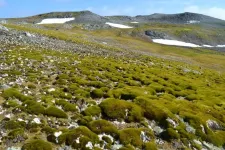
Vegetation cover across the Antarctic Peninsula has increased more than tenfold over the last four decades, new research shows. The Antarctic Peninsula, like many polar regions, is warming faster than the global average, with extreme heat events in Antarctica becoming more common. The new study – by the universities of Exeter and Hertfordshire, and the British Antarctic Survey – used satellite data to assess how much the Antarctic Peninsula has been “greening” in response to climate change. It found that the area of vegetation ...

Read the release
Environment

Addressing climate change and inequality: A win-win policy solution

Climate change and economic inequality are deeply interconnected, with the potential to exacerbate each other if left unchecked. A new study published in Nature Climate Change sheds light on this critical relationship using data from eight large-scale Integrated Assessment Models (IAMs) to examine the distributional impacts of climate policies and climate risks. The study provides robust evidence that climate policies aligned with the Paris Agreement can mitigate long-term inequality while addressing climate change. Led by Johannes Emmerling, Senior Scientist at the Euro-Mediterranean ...

Read the release
Environment

How future heatwaves at sea could devastate UK marine ecosystems and fisheries

The oceans are warming at an alarming rate. 2023 shattered records across the world’s oceans, and was the first time that ocean temperatures exceeded 1oC over pre-industrial levels. This led to the emergence of a series of marine heatwave events across both hemispheres, from the waters around Japan, around South America, and across the wider North Atlantic. Marine heatwaves are periods of extremely warm sea temperatures that can form in quite localized hot spots but also span large parts of ocean ...

Read the release
A new era of solar observation
Environment

A new era of solar observation

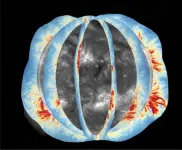
EMBARGOED: Not for Release Until 2:00 pm U.S. Eastern Time Thursday, 3 October 2024. A new era of solar observation International team produces global maps of coronal magnetic field Contacts: Audrey Merket, NSF NCAR and UCAR Science Writer and Public Information Officer amerket@ucar.edu 303-497-8293 David Hosansky, NSF NCAR and UCAR Manager of Media Relations hosansky@ucar.edu 720-470-2073 For the first time, scientists have taken near-daily measurements of the Sun’s global coronal magnetic field, a region of the Sun that has only been observed irregularly in the past. The resulting observations ...

Read the release
The true global impact of species-loss caused by humans is far greater than expected – new study reveals
Environment

The true global impact of species-loss caused by humans is far greater than expected – new study reveals

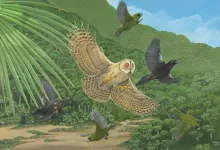
The extinction of hundreds of bird species caused by humans over the last 130,000 years has has led to substantial reductions in avian functional diversity – a measure of the range of different roles and functions that birds undertake within the environment – and resulted in the loss of approximately 3 billion years of unique evolutionary history, according to a new study published today in Science. Whilst humans have been driving a global erosion of species richness for millennia, the consequences of past extinctions for other dimensions of biodiversity are poorly known. ...

Read the release
Environment

Green subsidies may have hidden costs, experts warn

Government subsidies for business practices and processes should be approached with caution, even when they seem to be environmentally friendly, writes a group of scientists and economists in this week’s Policy Forum in the journal Science. They argue that subsidies can alter market pressures, leading to unintended consequences that not only perpetuate harmful subsidies over time but also diminish the overall effectiveness of those intended to promote environmental sustainability. Therefore, when they must be used, subsidies should have clear end-dates, advise the authors. “We’ve got this odd juxtaposition of ...

Read the release
Environment

Decades-long research reveals new understanding of how climate change may impact caches of Arctic soil carbon

Utilizing one of the longest-running ecosystem experiments in the Arctic, a Colorado State University-led team of researchers have developed a better understanding of the interplay among plants, microbes and soil nutrients — findings that offer new insight into how critical carbon deposits may be released from thawing Arctic permafrost. Estimates suggest that Arctic soils contain nearly twice the amount of carbon that is currently in the atmosphere. As climate change has caused portions of Earth’s northernmost polar regions to thaw, scientists have long been concerned about significant amounts of carbon being released in the ...

Read the release
Environment

Methane emissions from dairy farms higher than thought - but conversion could reduce emissions

New research has found methane emissions from slurry stores on dairy farms may be up to five times greater than official statistics suggest - and highlights the huge potential for turning them into a renewable energy source. The study shows that if captured and turned into biogas, emitted methane could be worth more than £400m a year to the dairy sector in saved fuel costs, or around £52,500 for an average-sized dairy farm. Capture technology already exists, and if rolled out across the EU dairy herd, the conversion of methane to biofuel could reduce emissions equivalent to an estimated 5.8% of the ...

Read the release
Iron nuggets in the Pinnacles unlock secrets of ancient and future climates
Environment

Iron nuggets in the Pinnacles unlock secrets of ancient and future climates

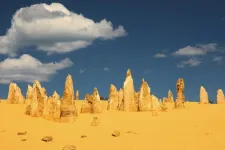
Small iron-rich formations found within Western Australia’s Pinnacles, which are part of the world’s largest wind-blown limestone belt spanning more than 1000km, have provided new insights into Earth’s ancient climate and changing landscape. The new research found the pinnacles were formed about 100,000 years ago during what was the wettest period in the past half-million years for the area, and very different from the Mediterranean climate Western Australia experiences today. Lead author ...

Read the release
Environment

Severe climate change may increase violence against women

Countries affected by severe climate change may also have a higher prevalence of violence against women, finds a new study led by UCL researchers. The research, published in PLOS Climate, examined how climate shocks – such as storms, landslides and floods – might be linked to higher rates of intimate partner violence in the two years following the event. The researchers gathered data on intimate partner violence from 363 surveys conducted in 156 countries between 1993 and 2019, focusing on women who currently had a partner. Intimate partner violence was defined as any physical and/or sexual violence in ...

Read the release
Environment

Storms, floods, landslides associated with intimate partner violence against women two years later

Climate change-related landslides, storms and floods are associated with intimate partner violence against women two years after the event, according to a study published October 2 in the open-access journal PLOS Climate by Jenevieve Mannell from University College London and colleagues. Low- and middle-income countries are disproportionately impacted by climate change’s acute (e.g., flooding) and chronic (e.g., rising sea levels) effects. Countries undergoing climate shocks are more likely to see increased intimate partner violence against women, possibly because climate disasters ...

Read the release
Environment

How do ‘double skeptics’ affect government policy on climate and vaccination?

Governments and other policymakers around the world wrestle with how to deal with people who are sceptical of official positions and guidelines, such as climate sceptics and antivaxxers. Earlier research has linked such scepticism to distrust of scientists among members of the public, while other studies have shown that it is difficult to erode sceptical attitudes that are psychologically motivated by factors such as bias against elite institutions or a conservative world view. New research from the University of Cambridge, reported in the journal PLOS ONE, suggests a more tailored approach could help ...

Read the release
From the original Press-News collection. Issuers of news releases are responsible for the accuracy of their content.