THE ORIGINAL COLLECTION · SINCE 2010

Science
press releases.

Research announcements from universities, hospitals and scientific institutions. Explore the stories, people and discoveries behind the headlines.

Original publication datesPage 212
FIND A STORY

Find a past release.

Dates and source material belong to the original release.

Read our research explainers

Browse the collection · original publication order

North American Early Paleoindians almost 13,000 years ago used the bones of canids, felids, and hares to create needles in modern-day Wyoming, potentially to make the tailored fur garments which enabl
Science

North American Early Paleoindians almost 13,000 years ago used the bones of canids, felids, and hares to create needles in modern-day Wyoming, potentially to make the tailored fur garments which enabl

North American Early Paleoindians almost 13,000 years ago used the bones of canids, felids, and hares to create needles in modern-day Wyoming, potentially to make the tailored fur garments which enabled their dispersal into these colder climates ### Article URL: https://journals.plos.org/plosone/article?id=10.1371/journal.pone.0313610 Article Title: Early Paleoindian use of canids, felids, and hares for bone needle production at the La Prele site, Wyoming, USA Contact: Spencer Pelton, spencer.pelton@wyo.gov, Ph. +1 307 399 2827 Author Countries: U.S. Funding: Funding for this project includes the National Science Foundation (award #1947297), the ...

Read the release
Wyoming research shows early North Americans made needles from fur-bearers
Science

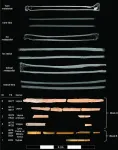
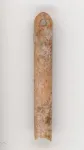
Wyoming research shows early North Americans made needles from fur-bearers

A Wyoming archaeological site where people killed or scavenged a Columbian mammoth nearly 13,000 years ago has produced yet another discovery that sheds light on the life of these early inhabitants of North America. Wyoming State Archaeologist Spencer Pelton and colleagues at the University of Wyoming and other institutions have found that these Paleolithic humans made needles from the bones of fur-bearers -- including foxes; hares or rabbits; and cats such as bobcats, mountain lions, lynx and possibly even the now-extinct ...

Read the release
Science

Ultraprocessed food intake and psoriasis

About The Study: The results of this study showed an association between high ultraprocessed food intake and active psoriasis status. After adjustments for age, body mass index (BMI), alcohol intake, and comorbidities, the results remained significant, suggesting that ultraprocessed food intake has a proinflammatory action separate from high BMI. Corresponding Author: To contact the corresponding author, Emilie Sbidian, MD, PhD, email emilie.sbidian@aphp.fr. To access the embargoed study: ...

Read the release
A matter of life and death
Science

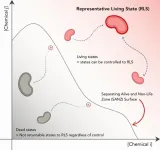
A matter of life and death

Cellular death is a fundamental concept in the biological sciences. Given its significance though, its definition depends on the context in which it takes place, and lacks a general mathematical definition. Researchers from the University of Tokyo propose a new mathematical definition of death based on whether a potentially dead cell can return to a predefined “representative state of living,” which are the states of being that we can confidently call “alive.” The researchers’ work could be useful for biological researchers and future medical research. While it’s ...

Read the release
What a gut fungus reveals about symbiosis and allergy
Science

What a gut fungus reveals about symbiosis and allergy

A fungus discovered in the mouse stomach may hold a key to fungal evolution within the gastrointestinal tract, according to new research led by Weill Cornell Medicine investigators. The finding suggests that preclinical studies until now have overlooked a major influencer of mouse physiology. Scientists recently have come to appreciate the importance, for human health and disease, of microbes—often called “commensals”—that naturally dwell in the gut. Bacterial commensals, for example, are known to have ...

Read the release
Science

ESMO Asia Congress 2024: Event Announcement

Lugano, Switzerland, 27 November 2024 – The ESMO Asia Congress 2024 is the annual event dedicated to multidisciplinary oncology in the Asian region. It will feature a broad spectrum of topics in cancer research, including novel treatment modalities, in-depth discussions on the management of specific cancer types, pan-Asian trials and subgroup analyses of cutting-edge studies relevant for the patients in the area. Data will be presented and discussed by leading experts from across Asia and beyond. The congress will be held onsite in Singapore from 6-8 December, with no virtual option available. Programme highlights Subgroup ...

Read the release
Science

Autism and neural dynamic range: insights into slower, more detailed processing

A new study has linked distinct neural and behavioral characteristics in autism spectrum disorder to a simple computational principle. Centered on the “dynamic range” of neurons, which reflects how gradually or sharply they respond to input, the study suggests that individuals with autism spectrum disorder have an increased dynamic range in their neuronal response, resulting in a more detailed but slower response to changes. This research defies previous descriptions of ASD as a “broken cog in the machine” and provides a deeper, richer account of the computational basis of ASD. [Hebrew University of Jerusalem]– Researchers Dr. Yuval Hart and Oded ...

Read the release
Simple secret to living a longer life
Science

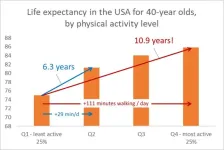
Simple secret to living a longer life

If everyone in the United States population was as active as the top 25 per cent, individuals over the age of 40 could add five years to their life, according to a new study led by Griffith University researchers. Physical activity has long been known to be good for health, however estimates have varied regarding how much benefit could be gained from a defined amount of activity, both for individuals and for populations. This latest study used accelerometry to gain an accurate view of the population’s physical activity levels instead of relying on survey responses as per other studies, and found the benefits were around twice as strong ...

Read the release
Science

Drinking plenty of water may actually be good for you

Public health recommendations generally suggest drinking eight cups of water a day. And many people just assume it’s healthy to drink plenty of water. Now researchers at UC San Francisco have taken a systematic look at the available evidence. They concluded that drinking enough water can help with weight loss and prevent kidney stones, as well as migraines, urinary tract infections and low blood pressure. “For such a ubiquitous and simple intervention, the evidence hasn’t been clear and the benefits were not well-established, so we wanted to take a closer look,” said senior and corresponding author Benjamin Breyer, MD, MAS, the Taube ...

Read the release
Depression can cause period pain, new study suggests
Science

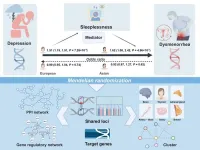
Depression can cause period pain, new study suggests

Women are twice as likely as men to suffer from depression and often experience more severe physical symptoms. This gender difference is particularly evident during reproductive years and dramatically impacts the lives of hundreds of millions of people worldwide. However, although links between mental health and reproductive health have been found, the associations have remained underexplored. In a new study published in Briefings in Bioinformatics, researchers from China and the UK have found that depression can increase the chances of a person experiencing menstrual pain (dysmenorrhea). Shuhe Liu, lead author of the study and a PhD ...

Read the release
Science

To catch financial rats, a better mousetrap

Enron. Lehman Brothers. More recently, General Electric and Supermicro. During the past quarter century, a variety of high-profile companies have been caught cooking their books. But they’re often not caught before they’ve cost investors billions of dollars. That’s why analysts have long tried to sniff out businesses that may be using questionable or flat-out illegal accounting tricks to hide poor performance. New research from Urooj Khan, accounting professor and the Deloitte & Touche Centennial Faculty Fellow at Texas McCombs, proposes a new and more effective way to gauge companies’ “earnings quality.” In analyses of corporate ...

Read the release
Team unlocks new insights on pulsar signals
Science

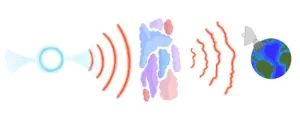
Team unlocks new insights on pulsar signals

Team Unlocks New Insights on Pulsar Signals November 26, 2024, Mountain View, CA – Dr. Sofia Sheikh from the SETI Institute led a study that sheds new light on how pulsar signals—the spinning remnants of massive stars—distort as they travel through space. This study, published in The Astrophysical Journal, was performed by a multi-year cohort of undergraduate researchers in the Penn State branch of the Pulsar Search Collaboratory student club. Maura McLaughlin, Chair, Eberly Distinguished Professor of Physics and Astronomy, West Virginia University, created the Pulsar Search Collaboratory to engage ...

Read the release
Great apes visually track subject-object relationships like humans do
Science

Great apes visually track subject-object relationships like humans do

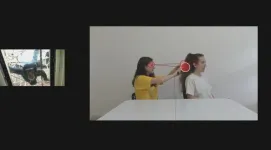
Great apes track events with their eyes in the same way that humans do, according to a study published November 26th in the open-access journal PLOS Biology by Vanessa Wilson from the University of Neuchatel, Switzerland, and colleagues. When watching a cat chase a mouse, humans will alternate looking at cat and mouse, using the information to connect the two into what’s called an agent-patient relationship—with the cat as the agent and the mouse as the patient. This cognitive mechanism is thought to be ...

Read the release
New era in amphibian biology
Science

New era in amphibian biology

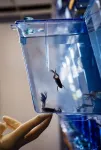
Amphibians hold a significant place in evolution, representing the transition from aquatic to terrestrial lifestyles. They are crucial for understanding the brain and spinal cord of tetrapods—animals with four limbs, including humans. A group of scientists led by a team at the Institute of Science and Technology Austria (ISTA) now shows how harmless viruses can be used to illuminate the development of the frog nervous system. The results have now been published in Developmental Cell. Virus. When you hear the word, you probably shudder. But not all viruses are bad or cause disease. Some are even used for therapeutic ...

Read the release
Science

Harbor service, VAST Data provide boost for NCSA systems

The National Center for Supercomputing Applications and VAST Data are giving supercomputing system Delta and the newly launched DeltaAI a boost in their storage and application performance. NCSA launched Harbor, a service that provides very fast storage for global home and software directories across all NCSA open-science resources. Its deployment has led to a 400% increase in application launch performance for the Delta system, among many other gains. Over the last two years, we’ve seen a significant increase in ...

Read the release
New prognostic model enhances survival prediction in liver failure
Science

New prognostic model enhances survival prediction in liver failure

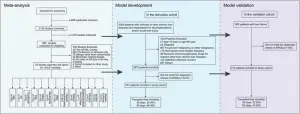
Researchers have unveiled a groundbreaking advancement in liver failure care: the CATCH-LIFE-MELD score (Chinese Acute-on-Chronic Liver Failure Consortium (CATCH-LIFE)-MELD score). This innovative tool, developed by an international team led by Xia Yu and colleagues, enhances the accuracy of predicting short-term survival outcomes for patients suffering from acute-on-chronic liver failure (ACLF). The study, published in eGastroenterology, promises to revolutionize patient management and treatment planning for this life-threatening condition. “ACLF presents unique challenges due to its rapid progression and high mortality rates,” said Dr. Yu Shi, senior researcher at Zhejiang University ...

Read the release
Study finds opposing effects of short-term and continuous noise on western bluebird parental care
Science

Study finds opposing effects of short-term and continuous noise on western bluebird parental care

Recent research led by Kerstin Ozkan and published in PeerJ Life and Environment has uncovered the complex and contrasting effects of human-generated noise on Western Bluebird (Sialia mexicana) parental behavior, raising critical questions about how anthropogenic noise affects wildlife in both urban and non-urban settings. The study, titled “Divergent effects of short-term and continuous anthropogenic noise exposure on Western Bluebird parental care behavior,” explores how different types of noise exposure alter the bird's ...

Read the release
Science

Sports betting and financial market data show how people misinterpret new information in predictable ways

Let’s say it’s a home game for the Golden State Warriors and Steph Curry shows he’s still got it, sinking back-to-back three-pointers minutes into the first quarter. The fans at Chase Center take notice, and so do the betting markets, where the odds move in the Warriors’ favor. Yet it’s a long game. The away team comes back, and with just 10 seconds to go, the Warriors are down by two and have just missed a shot. A victory is unlikely, and the betting odds should have shifted to reflect that near-certainty. ...

Read the release
Science

Delay and pay: Tipping point costs quadruple after waiting

RICHLAND, Wash. —Tip the first tile in a line of dominoes and you’ll set off a chain reaction, one tile falling after another. Cross a tipping point in the climate system and, similarly, you might spark a cascading set of consequences like hastened warming, rising sea levels and increasingly extreme weather. It turns out there’s more to weigh than catastrophic environmental change as tipping points draw near, though. Another point to consider, a new study reveals, is the cost of undoing the damage. The cost of reversing the effects of climate change—restoring melted polar sea ice, for ...

Read the release
Science

Oil spill still contaminating sensitive Mauritius mangroves three years on

Three years after bulk carrier MV Wakashio ran aground on a coral reef off Mauritius, spilling 1000 tonnes of a new type of marine fuel oil, Curtin University-led research has confirmed the oil is still present in an environmentally sensitive mangrove forest close to important Ramsar conservation sites. Lead researcher Dr Alan Scarlett, from Curtin’s WA Organic and Isotope Geochemistry Centre in the School of Earth and Planetary Sciences, said the chemical ‘fingerprint’ of the oil found ...

Read the release
Science

Sub-Saharan Africa leads global HIV decline: Progress made but UNAIDS 2030 goals hang in balance, new IHME study finds

**Embargo: 23.30 [UK time], 6:30 p.m. [ET], 3:30 p.m. [PT], Monday, November 25 2024** In contrast, the percentage of the population without a suppressed level of HIV (PUV) increased by 116.1% in Central Europe, Eastern Europe, and Central Asia from 2003 to 2021. The study authors are issuing recommendations to invigorate the global HIV response across global public health programs dedicated to HIV control and expansion of prevention services. The Institute for Health Metrics and Evaluation (IHME) has published a new study in The Lancet HIV journal that revealed significant progress in the global fight against HIV/AIDS, alongside ...

Read the release
Science

Stevens INI receives funding to expand research on the neural underpinnings of bipolar disorder

Leila Nabulsi, PhD, a postdoctoral researcher in computational neuroscience at the Keck School of Medicine of USC’s Mark and Mary Stevens Neuroimaging and Informatics Institute (Stevens INI) has received funding to expand research on the neurocircuitry that underlies bipolar disorder. Nabulsi was awarded the prestigious 2025 NARSAD Young Investigator Grant from the Brain & Behavior Research Foundation, a highly competitive grant that provides early-career researchers with crucial pilot funding to pursue new avenues in ...

Read the release
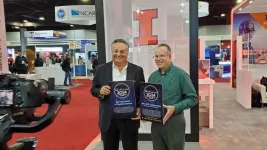
NCSA receives honors in 2024 HPCwire Readers’ and Editors’ Choice Awards
Science

NCSA receives honors in 2024 HPCwire Readers’ and Editors’ Choice Awards

The National Center for Supercomputing Applications was recognized by the HPCwire Readers’ and Editors’ Choice Awards for its outstanding achievements in artificial intelligence and the use of high-performance computing in the physical sciences. Announced at Supercomputing Conference 2024 (SC24) in Atlanta on November 18, NCSA was awarded the Readers’ Choice Award: Best HPC Collaboration and Editors’ Choice: Best Use of HPC in Physical Sciences. It’s the 14th consecutive ...

Read the release
Science

Warning: Don’t miss Thanksgiving dinner, it’s more meaningful than you think

Book the flight home for Thanksgiving, go to that party even though you’re tired, and write that thank you note. You may feel these experiences are not that significant in your busy life today, but according to Erin Westgate, assistant professor of psychology at the University of Florida, you are likely wrong. Westgate and her team of researchers at the Florida Social Cognition and Emotion Lab recently received a grant from the National Science Foundation to investigate the factors that lead people ...

Read the release
A clue to what lies beneath the bland surfaces of Uranus and Neptune
Science

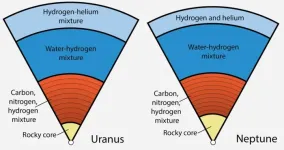
A clue to what lies beneath the bland surfaces of Uranus and Neptune

Diamond rain? Super-ionic water? These are just two proposals that planetary scientists have come up with for what lies beneath the thick, bluish, hydrogen-and-helium atmospheres of Uranus and Neptune, our solar system's unique, but superficially bland, ice giants. A planetary scientist at the University of California, Berkeley, now proposes an alternative theory — that the interiors of both these planets are layered, and that the two layers, like oil and water, don't mix. That configuration neatly explains the planets' unusual magnetic fields and implies ...

Read the release
From the original Press-News collection. Issuers of news releases are responsible for the accuracy of their content.