THE ORIGINAL COLLECTION · SINCE 2010

Science
press releases.

Research announcements from universities, hospitals and scientific institutions. Explore the stories, people and discoveries behind the headlines.

Original publication datesPage 216
FIND A STORY

Find a past release.

Dates and source material belong to the original release.

Read our research explainers

Browse the collection · original publication order

Science

First American Gastroenterological Association living guideline for moderate-to-severe ulcerative colitis

Bethesda, MD (Nov. 15, 2024) — The American Gastroenterological Association (AGA) has released a new clinical guideline on the pharmacological management of moderate-to-severe ulcerative colitis, published today in Gastroenterology. This guideline groups the 12 currently available advanced treatments based on efficacy, to simplify the decision-making process for gastroenterologists and the approximately 1.25 million patients in the U.S. living with ulcerative colitis. “Since the first biologic ...

Read the release
TAMEST recognizes Lyda Hill and Lyda Hill Philanthropies with Kay Bailey Hutchison Distinguished Service Award
Science

TAMEST recognizes Lyda Hill and Lyda Hill Philanthropies with Kay Bailey Hutchison Distinguished Service Award

TAMEST is pleased to announce Lyda Hill and Lyda Hill Philanthropies as the recipients of the Kay Bailey Hutchison Distinguished Service Award. TAMEST is recognizing Lyda Hill and her team for empowering and enabling groundbreaking research in science and nature that profoundly impacts society. Lyda Hill, a successful businesswoman and world-renowned philanthropist, believes science can solve many of the world’s most challenging issues and has chosen to donate all of her estate to philanthropy and scientific research. Aligned with this mission, Lyda Hill is committed to advancing science and public ...

Read the release
High exposure to everyday chemicals linked to asthma risk in children
Science

High exposure to everyday chemicals linked to asthma risk in children

A new study from researchers at Kumamoto University sheds light on a potential link between exposure to certain everyday chemicals during pregnancy and the development of asthma in children. The study analyzed data from over 3,500 mother-child pairs as part of the Japan Environment and Children’s Study (JECS), a large-scale nationwide research project. Key Findings: High levels of butylparaben, a chemical commonly used in personal care products like lotions and shampoos, during early pregnancy were associated with a 1.54-fold increase in the odds of asthma development in children ...

Read the release
Science

How can brands address growing consumer scepticism?

Transparency and effective communication are critical for brands to gain and keep consumer trust according to new research. The University of Adelaide’s Dr Kate Sansome, from the Adelaide Business School has led a study which suggests that consumers want brands to be transparent about topics that impact them. “As sociopolitical issues become topical in the news and social media, brands are expected to be transparent about them; for example, as consumers face cost-of-living pressures, they will expect brands to be transparent about this issue,” says Dr Sansome, who conducted the study with the Professor Jodie Conduit and Dr ...

Read the release
Science

Teenage truancy rates rise in English-speaking countries

Working paper | Quantitative data analysis | People Truancy rates have risen faster in developed English-speaking countries since the Covid-19 pandemic than in non-English-speaking countries, according to a new working paper by UCL researchers. Teenage girls are also increasingly more likely to skip school than boys across Anglophone countries. In 2022, 26% of all Year 11 pupils in England reported playing truant at least once in the last fortnight. This represented an increase from 2012 and 2018, the previous data capture points, when the figure was at 18% each time. In the same year (2022), 29% of Year 11 girls in England reported skipping school in the past ...

Read the release
For low-risk pregnancies, planned home births just as safe as birth center births, study shows
Science

For low-risk pregnancies, planned home births just as safe as birth center births, study shows

CORVALLIS, Ore. – In low-risk pregnancies, mothers and children are just as safe with a planned home birth as they are with a planned birth center birth, a national study led by Oregon State University researchers has shown. The findings, published in Medical Care, contradict doctors’ long-held concerns about home birth, including a recent opinion by the American College of Gynecologists and Obstetricians that describes hospitals and accredited birth centers as the safest places to have a baby. A birth center is a health care facility designed to provide a more natural and home-like environment than a hospital. OSU ...

Read the release
Science

Leaner large language models could enable efficient local use on phones and laptops

Large language models (LLMs) are increasingly automating tasks like translation, text classification and customer service. But tapping into an LLM’s power typically requires users to send their requests to a centralized server — a process that’s expensive, energy-intensive and often slow. Now, researchers have introduced a technique for compressing an LLM’s reams of data, which could increase privacy, save energy and lower costs. The new algorithm, developed by engineers at Princeton and Stanford Engineering, works by trimming redundancies and reducing the precision of an LLM’s ...

Read the release
Science

‘Map of Life’ team wins $2 million prize for innovative rainforest tracking

Traditionally, taking inventory of the species in a rainforest requires sending in a team of experts with field guides and binoculars for a multi-day expedition. But the devastating pace of the destruction of the world’s rainforests and increasing urgency to better monitor and protect what remains demand faster, easier, and more efficient approaches. Several years ago, a Yale-based team devised an alternate approach: they use lightweight, unmanned aerial vehicles (UAVs) to collect this critical biodiversity data in remote areas. Now they’ve collected ...

Read the release
Fewer than 1 in 5 know the 988 suicide lifeline
Science

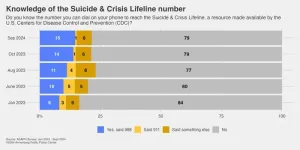
Fewer than 1 in 5 know the 988 suicide lifeline

PHILADELPHIA – Annenberg Public Policy Center survey data show that public recall of the 988 Suicide & Crisis Lifeline number has grown slowly since the three-digit phone number was introduced in July 2022. Just 15% of U.S. adults are familiar with it, as of September 2024. Survey respondents who accurately report awareness of the Suicide & Crisis Lifeline number increased significantly from August 2023 (11%) to September 2024 (15%). Those 15% of respondents reported both that they knew the number and, when asked in an open-ended format, said the number ...

Read the release
Science

Semaglutide eligibility across all current indications for US adults

About The Study: A total of nearly 137 million adults, representing more than half of all U.S. adults, are eligible for semaglutide therapy. This exceeds the number of adults eligible for statins (approximately 82 million), currently the most prescribed pharmaceuticals among U.S. adults. Corresponding Author: To contact the corresponding author, Dhruv S. Kazi, MD, MS, email dkazi@bidmc.harvard.edu. To access the embargoed study: Visit our For The Media website at this link https://media.jamanetwork.com/ (doi:10.1001/jamacardio.2024.4657) Editor’s Note: Please see the article for additional information, including other authors, author contributions ...

Read the release
Science

Revealing the hidden costs of what we eat

(Santa Barbara, Calif.) — Shifting our diets to be more sustainable can be a powerful way for each of us to address both climate change and global food insecurity, however making such adjustments at the large scales necessary to make a difference globally can be a delicate matter. “Changes in food demand in one part of the world can have cascading environmental and human welfare implications for people around the world),” said Joe DeCesaro, data analyst at UC Santa Barbara’s National Center for Ecological Analysis & Synthesis (NCEAS). Despite the seemingly daunting complexity of the global food system, to ensure a healthy population ...

Read the release
With new imaging approach, ADA Forsyth scientists closely analyze microbial adhesive interactions
Science

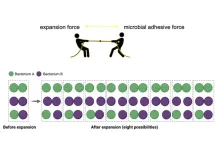
With new imaging approach, ADA Forsyth scientists closely analyze microbial adhesive interactions

Cambridge, Mass., 11/18/2024 – Scientists have identified many types of bacteria in the mouth, but many problems remain in understanding how they work with one another. One of the problems is that microbes assemble themselves into densely packed multi-species biofilms. Their density and complexity pose acute difficulties for visualizing individual cells and analyzing their interactions at single-cell level. ADA Forsyth scientists have developed a new imaging approach that makes it possible to analyze the spatial connections between bacteria, including the strength of adhesive forces that hold them together. Adhesion is of fundamental importance in ...

Read the release
TāStation®'s analytical power used to resolve a central question about sweet taste perception
Science

TāStation®'s analytical power used to resolve a central question about sweet taste perception

PHILADELPHIA, PA – November 18, 2024 – Opertech Bio, Inc., a leading innovator in taste assessment, today announced the publication of a research article in which the TāStation® rapid throughput taste evaluation system was used to resolve a central question about sweet taste perception. It has been well established that sweeteners impart their taste by activating the TAS1R2/TAS1R3 “sweet taste receptor” in the tongue. A second signaling pathway involving the activity of glucose transporters, operating independently of the receptor, recently has been proposed for metabolizable caloric sweeteners. In a powerful demonstration of the analytical ...

Read the release
Reducing antimicrobial resistance: accelerated efforts are needed to meet the EU targets
Science

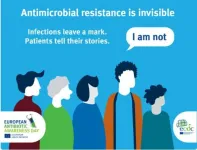
Reducing antimicrobial resistance: accelerated efforts are needed to meet the EU targets

Between 2019 and 2023, antibiotic consumption in the EU increased by 1%, moving further away from the 2030 target of a 20% reduction recommended by the Council of the European Union. Although there have been significant reductions in methicillin-resistant Staphylococcus aureus bloodstream infections during the same period, the situation in other critical areas, such as carbapenem-resistant Klebsiella pneumoniae bloodstream infections, has worsened, with an increase in incidence by almost 60% between 2019 and 2023. This represents a growing threat to patients in hospitals across the EU, particularly since very few therapeutic options remain available to treat patients infected with ...

Read the release
Gaming for the good!
Science

Gaming for the good!

So maybe the naysayers and detractors of online gaming and its ill effects on youth need to stand down. That’s what science is telling us in a new report in the journal Human Resource Development International from Melika Shirmohammadi, assistant professor at the UH College of Technology. The article reports that - contrary to popular belief - massive multiplayer online gamers learn by gaming and their skills in the workplace are enriched by those seemingly endless hours previously thought of as frittering away time. "Online gaming often ...

Read the release
Science

Weisburd receives funding for safer stronger together initiative

David Weisburd, Distinguished Professor, Criminology, Law and Society, College of Humanities and Social Sciences (CHSS); Executive Director, Center for Evidence-Based Crime Policy (CEBCP), received funding for: “Safer Stronger Together (SST) Initiative: An evaluation of the impact of a place-based social intervention on youth and their families.” Weisburd will evaluate baseline behaviors and attitudes of clients in the recently launched Safer Stronger Together (SST) Initiative in Maryland. A future proposal will be geared toward gaining outcome data. He ...

Read the release
Science

Wang studying effects of micronutrient supplementation

Dongqing Wang, Assistant Professor, Global and Community Health, College of Public Health, received funding for the project: “Effects of micronutrient supplementation on maternal and infant micronutrient status: a secondary analysis for Tanzania, and a systematic review and meta-analysis for low- and middle-income countries.” Wang will lead the secondary analysis using existing data from a randomized controlled trial in Tanzania. He aims to investigate the effect of multiple micronutrient ...

Read the release
Science

Pulmonary vein isolation with optimized linear ablation vs pulmonary vein isolation alone for persistent AF

About The Study: Among patients with persistent atrial fibrillation, linear ablation combined with ethanol infusion of the vein of Marshall in addition to pulmonary vein isolation significantly improved freedom from atrial arrhythmias within 12 months compared with pulmonary vein isolation alone. Corresponding Authors: To contact the corresponding authors, email Changsheng Ma, MD, (chshma@vip.sina.com) and Chenyang Jiang, MD, (jiangchenyangmail@163.com). To access the embargoed study: Visit our ...

Read the release
Science

Redefining net zero will not stop global warming – scientists say

In a new study,1 led by the University of Oxford’s Department of Physics and published today (18 November) in Nature, an international group of authors who developed the science behind net zero demonstrate that relying on ‘natural carbon sinks’ like forests and oceans to offset ongoing CO2 emissions from fossil fuel use will not actually stop global warming. The science of net zero, developed over 15 years ago,2 does not include these natural carbon sinks in the definition of net human-induced CO2 emissions. Natural sinks play a vital role to moderate the impact of current emissions and draw down atmospheric CO2 concentrations after the date of net zero, ...

Read the release
Tiny worm makes for big evolutionary discovery
Science

Tiny worm makes for big evolutionary discovery

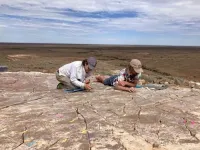
Everyone has a past. That includes the millions of species of insects, arachnids, and nematode worms that make up a major animal group called the Ecdysozoa. Until recently, details about this group’s most distant past have been elusive. But a UC Riverside-led team has now identified the oldest known ecdysozoan in the fossil record and the only one from the Precambrian period. Their discovery of Uncus dzaugisi, a worm-like creature rarely over a few centimeters in length, is described in a paper published today in Current ...

Read the release
Science

Cause of the yo-yo effect deciphered

Anyone who has ever tried to get rid of a few extra kilos knows the frustration: the weight drops initially, only to be back within a matter of weeks – the yo-yo effect has struck. Researchers at ETH Zurich have now been able to show that this is all down to epigenetics. Epigenetics is the part of genetics that’s based not on the sequence of genetic building blocks but on small yet characteristic chemical markers on these building blocks. The sequence of building blocks has evolved over a long period of time; we all inherit them from our parents. Epigenetic markers, on the other hand, are more dynamic: environmental factors, our eating habits and the condition of our body ...

Read the release
This year’s dazzling aurora produced a spectacular display… of citizen science
Science

This year’s dazzling aurora produced a spectacular display… of citizen science

Citizen scientists in Japan enabled researchers to learn why May 2024’s aurora appeared a magenta color over the country. This effort in extending research beyond academies and laboratories has greater consequence for humanity than explaining pretty lights Around the world, the historic geomagnetic superstorm of late spring 2024 inspired millions of non-scientists around the world—many armed with highly sensitive smartphone cameras—to take a fantastic, unprecedented number of images of the aurora it produced. In ...

Read the release
The MIT Press releases workshop report on the future of open access publishing and policy
Science

The MIT Press releases workshop report on the future of open access publishing and policy

Cambridge, MA (November 18, 2024) – Today the MIT Press is releasing a workshop report on what additional information is needed to ensure that open access publication benefits research, entitled "Access to Science & Scholarship 2024: Building an Evidence Base to Support the Future of Open Research Policy." The report is the outcome of a workshop funded by the National Science Foundation and held at the D.C. headquarters of the American Association for the Advancement of Science on September 20, 2024. The implementation of open access has resulted in consolidation of the publishing industry, an explosion in unreviewed articles, and new costs that may be hard ...

Read the release
Why substitute sugar with maple syrup?
Science

Why substitute sugar with maple syrup?

Quebec, CA, November 18, 2024 – A new study published in the The Journal of Nutrition, found that substituting two tablespoons of pure maple syrup for refined sugars reduced several cardiometabolic risk factors in humans. It was the first placebo-controlled clinical trial exploring potential health benefits of maple syrup in humans. “We know from decades of research that maple syrup is more than just sugar. It contains over 100 natural compounds, including polyphenols, that are known to prevent disease in part through their anti-inflammatory ...

Read the release
New study investigates insecticide contamination in Minnesota’s water
Science

New study investigates insecticide contamination in Minnesota’s water

MINNEAPOLIS / ST. PAUL (11/18/2024) — A new study by researchers at the University of Minnesota Twin Cities in collaboration with the Minnesota Department of Natural Resources (DNR) found that specific insecticides, called neonicotinoids, were found at high concentrations in some ground and surface water sources that could affect drinking water. Individuals relying on shallow groundwater or natural springs for drinking water have a higher risk of contamination from these insecticides compared to those getting their drinking water from deep groundwater wells. ...

Read the release
From the original Press-News collection. Issuers of news releases are responsible for the accuracy of their content.