THE ORIGINAL COLLECTION · SINCE 2010

Science
press releases.

Research announcements from universities, hospitals and scientific institutions. Explore the stories, people and discoveries behind the headlines.

Original publication datesPage 242
FIND A STORY

Find a past release.

Dates and source material belong to the original release.

Read our research explainers

Browse the collection · original publication order

New study: Deep-sea discovery shines light on life in the twilight zone
Science

New study: Deep-sea discovery shines light on life in the twilight zone

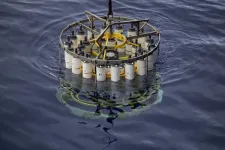
TAMPA, Fla. (Sept. 23, 2024) – The ocean’s twilight zone is deep, dark, and — according to new research — iron deficient. No sunlight reaches this region 200 to 1,000 meters below the sea surface, where levels of iron, a key micronutrient, are so low that the growth of bacteria is restricted. To compensate, these bacteria produce molecules called siderophores, which help the bacteria scavenge trace amounts of iron from the surrounding seawater. The paper detailing these unexpected findings from the Pacific Ocean will publish on Wednesday, Sept. 25, at 11 a.m. ET (4 p.m. London Time) in Nature, and will be viewable at that time at this link. The ...

Read the release

Science

Now we know why children with Down’s syndrome have higher risk of Leukemia

People with Down’s syndrome face a higher risk of developing Leukemia. Now researchers from the University of Copenhagen and Stanford University explain why, by identifying specific changes in blood cells of people with Down’s syndrome. In the world, one out of 700 children are born with Down’s syndrome. A syndrome, where the child has an extra copy of chromosome 21, resulting in 47 chromosomes instead of 46. This typically results in characteristic physical features and some level of learning disability. But newborns with Downs syndrome also tend to have an elevated number of red blood ...

Read the release
Science

One in two El Niño events could be extreme by mid-century

With the climate pattern known as El Niño in full force from mid-2023 to mid-2024, global temperatures broke records for 12 months in a row. As one of the strongest El Niño events on record, it was likely the main culprit of unprecedented heat, floods and droughts worldwide. In a new study published Sep. 25 in the journal Nature, a University of Colorado Boulder climate scientist and collaborators reveal that the planet could see more frequent extreme El Niño events by 2050 if greenhouse gas emissions continue to increase. “It’s ...

Read the release
To make fluid flow in one direction down a pipe, it helps to be a shark
Science

To make fluid flow in one direction down a pipe, it helps to be a shark

Link to Google Drive folder containing images: https://drive.google.com/drive/folders/1ZTBXkIFqwl_OyIMrUA1se_iv7hqEm_52?usp=sharing Link to release: https://www.washington.edu/news/2024/09/25/tesla-coil-shark-intestines/ FROM: James Urton University of Washington 206-543-2580 jurton@uw.edu (Note: researcher contact information at the end) For immediate release Sept. 25, 2024 To make fluid flow in one direction down a pipe, it helps to be a shark Flaps perform essential jobs. From pumping hearts to revving engines, flaps help fluid flow in one direction. ...

Read the release
Shrinking AR displays into eyeglasses to expand their use
Science

Shrinking AR displays into eyeglasses to expand their use

Augmented reality (AR) takes digital images and superimposes them onto real-world views. But AR is more than a new way to play video games; it could transform surgery and self-driving cars. To make the technology easier to integrate into common personal devices, researchers report in ACS Photonics how to combine two optical technologies into a single, high-resolution AR display. In an eyeglasses prototype, the researchers enhanced image quality with a computer algorithm that removed distortions. AR systems, like those in bulky goggles and automobile head-up displays, require portable optical components. But shrinking the typical four-lens AR system to the size of eyeglasses or smaller ...

Read the release
Science

Humbug damselfish use 'motion dazzle' to evade predators

When thinking of animal camouflage, we typically imagine creatures remaining still, blending seamlessly into their surroundings. But remaining motionless isn’t always practical, and many animals are highly mobile, constantly moving through their environment to graze their food. New research suggests that high-contrast patterns on animals’ bodies may serve a dual purpose: offering camouflage when stationary, then creating a ‘motion dazzle’ effect when moving, confusing potential predators into misjudging their location – and helping them avoid being ...

Read the release
A viral close-up of HTLV-1
Science

A viral close-up of HTLV-1

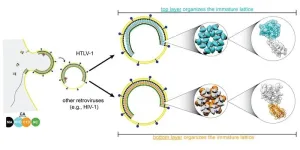
Martin Obr is on edge, anxiously waiting for his train to the airport. A storm called “Sabine” is brewing, shutting down all public transport. He catches his flight from Frankfurt to Vienna just in time. Obr spent the last days in Germany meticulously analyzing what he calls the “perfect sample”. This sample helped him and Florian Schur from the Institute of Science and Technology Austria (ISTA) decode the structure of a virus called HTLV-1 (Human T-cell Leukemia Virus Type 1). In collaboration with the University of Minnesota and Cornell University, ...

Read the release
Ancient reef-builders dodged extinction — at least temporarily
Science

Ancient reef-builders dodged extinction — at least temporarily

Will modern coral reefs go extinct? The answer is uncertain, but some of their ancient counterparts managed to dodge a bullet — for a while, at least. Scientists from Osaka Metropolitan University have discovered that ancient reef-building organisms called stromatoporoids survived the Late Devonian mass extinction event and continued to thrive as major reef-builders long after their presumed extinction. These findings shed light on how life on Earth has responded to past environmental changes, offering ...

Read the release
Rising waters, waning forests: How scientists are using tree rings to study how rising sea levels affect coastal forests
Science

Rising waters, waning forests: How scientists are using tree rings to study how rising sea levels affect coastal forests

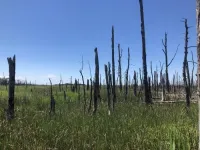
Sunlight filters through the canopy of pines, holly, sweet gum, and red maple while bird calls echo in the distance. These coastal forests may seem like others in the Mid-Atlantic, but a hidden challenge looms. Standing tall next to their salt marsh neighbors, where the wind carries the sharp scent of sulfidic seawater, these trees are more than just part of the landscape—they are living monuments to a rapidly changing environment. As sea levels rise, the future of these forests is uncertain. While the adjacent salt marshes can adapt to encroaching waters, the trees, vulnerable to the increasing frequency ...

Read the release
Science

Global prevalence of short-sightedness in children and teens set to top 740 million cases by 2050

Around 1 in 3 children and teens around the world is short (near)-sighted, with the global prevalence of myopia set to top 740 million cases by 2050 in this age group, finds a pooled data analysis of the available evidence, published online in the British Journal of Ophthalmology. Female sex, East Asian or urban area residence, and educational level all seem to be key factors influencing prevalence, the findings indicate. Short (near)-sightedness (myopia), which describes difficulty seeing objects at a distance, typically starts in early childhood and tends to worsen with age, explain the researchers. It has emerged ...

Read the release
Science

How emotion boosts memory for context

Researchers at the Beckman Institute for Advanced Science and Technology demonstrated that emotion enhances memory for contextual details, challenging the view that emotion impairs the ability to remember such information. The report was led by doctoral student Paul Bogdan, currently a postdoc at Duke University, and Florin and Sanda Dolcos, professors of psychology and neuroscience at the University of Illinois Urbana-Champaign. Their research appears in the Journal of Experimental Psychology: ...

Read the release
Thermal effects in spintronics systematically assessed for first time
Science

Thermal effects in spintronics systematically assessed for first time

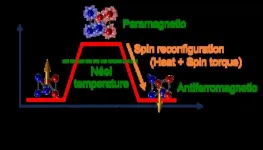
Spintronics – devices that use microscopic magnetism in conjunction with electric current – could lead to computing technology as fast as conventional electronics but much more energy efficient. As such devices are developed and studied, an important unresolved question is how device operation is affected by heating. A new experimental technique, reported by researchers at the University of Illinois Urbana-Champaign in the journal APL Materials, directly measures heating in spintronic devices, allowing direct comparison to other effects. The researchers say that this technique can be used to select spintronic materials whose magnetic behavior is minimally impacted by heating, ...

Read the release
Science

Study shows rates of e-bike injuries rise fourfold and powered scooter injuries nearly double

September 24, 2024-- The rate of e-bike and powered scooter injuries surged between 2019 and 2022-- by 293 percent and 88 percent, respectively, according to a new study at Columbia University Mailman School of Public Health. The research adds to the existing information and gap in knowledge on the sociodemographic and risk factor variables that might be contributing to micromobility vehicle–related injuries. The findings are published in the American Journal of Public Health. Micromobility generally refers to any small, low-speed, human- or electric-powered transportation device. Between 2019 and 2022, e-bike sales increased by 269 ...

Read the release
Science

Daniel R. Larson to receive 2025 Carolyn Cohen Innovation Award

ROCKVILLE, MD – The Biophysical Society is pleased to announce that Daniel R. Larson, PhD, of the Center for Cancer Research at the National Cancer Institute within the National Institutes of Health, will receive the 2025 Carolyn Cohen Innovation Award. Larson will be honored at the Society’s 69th Annual Meeting, being held in Los Angeles, California from February 15-19, 2025. Larson is being recognized for his pioneering contributions to the field of gene regulation using single-cell and single-molecule biophysical ...

Read the release
Science

Planting seeds for safer farming

Per- and polyfluoroalkyl substances (PFAS) are human-made chemicals that were introduced in the 1940s. PFAS are used to create a variety of products including water-resistant clothing, non-stick cookware, and firefighting foams. Unfortunately, PFAS can have negative effects on health, including increases in cholesterol levels and changes to liver function. Using PFAS-containing products can lead to their presence in the treated wastewater and treated sludge (referred to as biosolids). When grown on biosolid-amended farmland soils or irrigated with treated wastewater, crops can bioaccumulate PFAS. The PFAS-accumulated crops can be consumed directly by the public or indirectly ...

Read the release
Science

Silvia Cavagnero to receive 2025 Emily M. Gray Award

ROCKVILLE, MD – The Biophysical Society is pleased to announce that Silvia Cavagnero, PhD, of the University of Wisconsin-Madison, has been named the recipient of the 2025 Emily M. Gray Award. Cavagnero will be honored at the Society’s 69th Annual Meeting, being held in Los Angeles, California from February 15-19, 2025. Cavagnero is being honored for developing courses, innovating instructional methods, mentoring students at all levels, and promoting diversity in biophysics. “Silvia is an accomplished biophysicist and a born educator,” ...

Read the release
Improved cement to protect the living treasures of our coastlines
Science

Improved cement to protect the living treasures of our coastlines

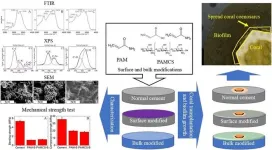
WASHINGTON, Sept. 24, 2024 – Coastlines are vital to our world’s ecology and economy. Coastal ecosystems help maintain biodiversity, provide natural barriers against erosion, storms, and flooding, and act as large carbon sinks to reduce greenhouse gases. Sustainable fisheries and seaside tourist venues support local economies. Natural coastlines, including coral reefs, marshes, and mangroves, are complete and stable, capable of self-regulation and restoration. That is, unless human interventions, such as urbanization, overdevelopment, pollution, and human-made erosion, make these areas vulnerable to devastation. Artificial coastlines, ...

Read the release
Science

Absolute and functional iron deficiency in the US

About The Study: The findings of this study suggest that absolute and functional iron deficiency affect a large proportion of American adults even in the absence of anemia, heart failure, or chronic kidney disease. Further research on the role of functional iron deficiency in adverse health outcomes and on iron deficiency screening strategies is needed. Corresponding author: To contact the corresponding author, Leo F. Buckley, Pharm.D., M.P.H., email lfbuckley@bwh.harvard.edu. To access the embargoed ...

Read the release
Review shows bird flu control strategies ‘not working’
Science

Review shows bird flu control strategies ‘not working’

A review of sustained mammal-to-mammal bird flu transmission in diverse species, led by The Pirbright Institute, shows global control strategies are not working. Writing in Nature, researchers analysed whether outbreaks in European fur farms, South American marine mammals and United States dairy cattle raise questions about whether humans are next. Led by zoonotic influenza specialist Dr Thomas Peacock, the scientists evaluated how recent changes in the ecology and molecular evolution of H5N1 in wild and domestic birds increase opportunities for spillover ...

Read the release
How a butterfly invasion minimizes genetic diversity
Science

How a butterfly invasion minimizes genetic diversity

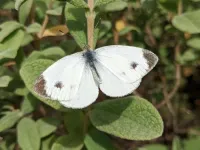
Until a few years ago, the butterfly known as the southern small white could barely be found north of the Alps. That was before a Europe-wide invasion that brought a huge increase in the insect’s distribution – at the same time as a rapid decrease in genetic diversity within the species. It took a while for zoologist Daniel Berner to notice that a butterfly species that wasn’t local to his area had become established in his garden. Then, suddenly, he saw it everywhere: Pieris mannii – also known as the southern small ...

Read the release
Another Franklin expedition crew member has been identified
Science

Another Franklin expedition crew member has been identified

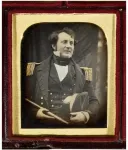
The skeletal remains of a senior officer of Sir John Franklin's 1845 Northwest Passage expedition have been identified by researchers from the University of Waterloo and Lakehead University using DNA and genealogical analyses. In April of 1848 James Fitzjames of HMS Erebus helped lead 105 survivors from their ice-trapped ships in an attempt to escape the Arctic. None would survive. Since the mid-19th century, remains of dozens of them have been found around King William Island, Nunavut. The identification was made possible by a DNA sample from a living descendant, which matched the ...

Read the release
Science

Duke-NUS study finds outbreak detection under-resourced in Asia

SINGAPORE, 24 September 2024 – A landmark study led by Duke-NUS Medical School revealed that despite the recent pandemic, outbreak detection efforts remain under-resourced in South and Southeast Asia, with only about half the countries reviewed having integrated pathogen genomic surveillance initiatives in their national plans. Published in Nature Microbiology today, the study also identifies key priorities to enhance the preparedness of the region against future pandemics. The study, conducted over 12 months between 2022 and 2023, analyses responses on genomic sequencing capacity for pathogen detection from 13 out of 19 countries that make up South and Southeast Asia. The ...

Read the release
Lengthened consonants mark the beginning of words
Science

Lengthened consonants mark the beginning of words

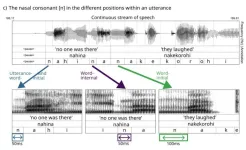
Distinguishing between words is one of the most difficult tasks in decoding spoken language. Yet humans do it effortlessly - even when languages do not seem to clearly mark where one word ends and the next begins. The acoustic cues that aid this process are poorly understood and understudied for the vast majority of the world's languages. Now, for the first time, comparative linguists have observed a pattern of acoustic effects that may serve as a distinct marker across diverse languages: the systematic lengthening of consonants at the beginning ...

Read the release
Science

TGen named Certified Service Provider for PacBio

The Translational Genomics Research Institute (TGen), part of City of Hope, today announced that is has received Certified Service Provider status from PacBio, a leading developer of high-quality, highly accurate sequencing solutions. The certification follows the addition of the Revio and Onso platforms to TGen’s Collaborative Sequencing Service Center, which provides investigators with access to best-in-class short and long read sequencing instrumentation to support all analysis needs including ...

Read the release
Science

Nursing shortages can be deadly

A new paper in the British Journal of Surgery, published by Oxford University Press, shows that nursing shortages result in longer hospital stays and worse patient outcomes, including higher mortality. Doctors perform over 300 million surgeries each year worldwide. Observers have expressed concern about the quality of care for adult patients undergoing surgery and the rising cost of avoidable complications, extended hospitalizations, and readmissions. Some 55% of surgical site infections are preventable. Until now ...

Read the release
From the original Press-News collection. Issuers of news releases are responsible for the accuracy of their content.