THE ORIGINAL COLLECTION · SINCE 2010

Science
press releases.

Research announcements from universities, hospitals and scientific institutions. Explore the stories, people and discoveries behind the headlines.

Original publication datesPage 241
FIND A STORY

Find a past release.

Dates and source material belong to the original release.

Read our research explainers

Browse the collection · original publication order

Science

Extreme heat impacts daily routines and travel patterns, study finds

A groundbreaking new study conducted by a team of researchers from Arizona State University, University of Washington and the University of Texas at Austin reveals that extreme heat significantly alters how people go about their daily lives, influencing everything from time spent at home to transportation choices. The study, titled "Understanding How Extreme Heat Impacts Human Activity-Mobility and Time Use Patterns," was recently published in Transportation Research Part D and underscores the urgent need for policy action ...

Read the release
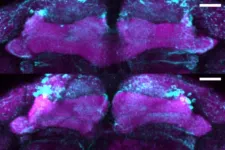
New mutation linked to early-onset Parkinsonism
Science

New mutation linked to early-onset Parkinsonism

Leuven, 26 September 2024 – A team of scientists led by Prof. Patrik Verstreken (VIB-KU Leuven) has identified a new genetic mutation that may cause a form of early-onset Parkinsonism. The mutation, located in a gene called SGIP1, was discovered in an Arab family with a history of Parkinson's symptoms that began at a young age. The study reveals that this mutation affects how brain cells communicate, providing new insights into the disease's development and potential treatment strategies. A genetic clue to Parkinsonism Parkinsonism is a group of neurological disorders that share similar symptoms, including motor dysfunction ...

Read the release
These fish use legs to taste the seafloor
Science

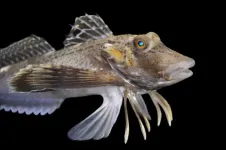
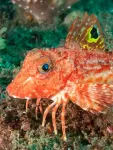
These fish use legs to taste the seafloor

Sea robins are unusual animals with the body of a fish, wings of a bird, and walking legs of a crab. Now, researchers show that the legs of the sea robin aren’t just used for walking. In fact, they are bona fide sensory organs used to find buried prey while digging. This work appears in two studies published in the Cell Press journal Current Biology on September 26. “This is a fish that grew legs using the same genes that contribute to the development of our limbs and then repurposed these legs to find ...

Read the release
This fish has legs
Science

This fish has legs

Sea robins are ocean fish particularly suited to their bottom-dwelling lifestyle: Six leg-like appendages make them so adept at scurrying, digging, and finding prey that other fish tend to hang out with them and pilfer their spoils. A chance encounter in 2019 with these strange, legged fish at Cape Cod’s Marine Biological Laboratory was enough to inspire Corey Allard to want to study them. “We saw they had some sea robins in a tank, and they showed them to us, because they know we like weird animals,” said Allard, a ...

Read the release
Scientists discover "pause button" in human development
Science

Scientists discover "pause button" in human development

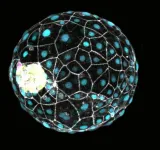
In some mammals, the timing of the normally continuous embryonic development can be altered to improve the chances of survival for both the embryo and the mother. This mechanism to temporarily slow development, called embryonic diapause, often happens at the blastocyst stage, just before the embryo implants in the uterus. During diapause, the embryo remains free-floating and pregnancy is extended. This dormant state can be maintained for weeks or months before development is resumed, when conditions are favorable. Although not all mammals use this reproductive ...

Read the release
Replica symmetry breaking in 1D Rayleigh scattering system: Theory and validations
Science

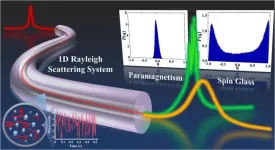
Replica symmetry breaking in 1D Rayleigh scattering system: Theory and validations

In both the natural world and human society, there commonly exist complex systems such as climate systems, ecological systems, and network systems. Due to the involvement of numerous interacting elements, complex systems can stay in multiple different states, and their overall behavior generally exhibits randomness and high disorder. For example, due to the complex interactions between factors such as solar radiation, terrain, and ocean currents, the climate system can exhibit various states like sunny, cloudy, and rainy. The dynamic changes and mutual influences of these factors make the behavior of the climate highly uncertain and difficult to predict accurately. For instance, the formation ...

Read the release
Science

Statement by NIH on research misconduct findings

EMBARGOED FOR RELEASE Thursday, September 26, 2024 - 9 a.m. EDT Contact: NIH Office of Communications and Public Liaison NIH News Media Branch 301-496-5787 Statement by NIH on Research Misconduct Findings Following an investigation, the National Institutes of Health (NIH) has made findings of research misconduct against Eliezer Masliah, M.D., due to falsification and/or fabrication involving re-use and relabel of figure panels representing different experimental results in two publications. NIH will notify the two journals of its findings so that appropriate action can be taken. NIH initiated its research misconduct review process ...

Read the release
An edible toothpaste-based transistor
Science

An edible toothpaste-based transistor

Milan (Italy), 26 September 2024 - A toothpaste-based transistor is the latest innovation from the research team at the Istituto Italiano di Tecnologia (IIT-Italian Institute of Technology) in Milan, which pushes the boundaries of edible electronics. This innovative nano-device is expected to become a key component of future smart pills, designed to monitor health conditions from within the body and then safely dissolve after completing their function. The research findings have been published in the journal Advanced Science. Several commercial toothpaste formulations contain crystals of copper phthalocyanine, a blue pigment that acts as a whitening ...

Read the release
Increased antioxidants and phenolic compounds produced in salted red perilla leaves during Japanese apricot pickling
Science

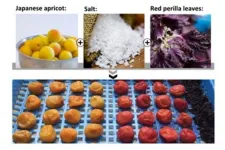
Increased antioxidants and phenolic compounds produced in salted red perilla leaves during Japanese apricot pickling

The diverse biochemical composition of Japanese apricot fruits explains their broad spectrum of action on the human body. The high levels of key phenolic compounds and hydroxycinnamic acids contribute to various health benefits including anti-inflammatory, antioxidant, and antimicrobial properties. A recent study published in Food Research International on July 19, 2024, led by Prof. Yukiharu Ogawa and Jutalak Suwannachot from Chiba University, quantitatively evaluated the changes in phenolic compounds and antioxidant activity during the production of Shiso-zuke Umeboshi (PP). The study also simulated the digestive process to characterize the release of these compounds and ...

Read the release
Science

Study finds more than 80% of women iron deficient by third trimester

Rockville, MD ̶ ̶ When a woman becomes pregnant, her iron requirements increase almost tenfold to support fetal development as well as her own increased iron needs. Her ability to meet these increased iron needs depends on her iron stores at the beginning of the pregnancy as well as the physiological adaptations that enhance iron absorption as pregnancy progresses. These physiological adaptations, however, are not always enough to support a pregnant woman’s iron needs, especially ...

Read the release
Science

4 in 5 pregnant women in Ireland are iron deficient by third trimester, study finds

Four out of five pregnant women in Ireland are iron deficient by their third trimester, a University College Cork (UCC) study reveals. Researchers at the Irish Centre for Maternal and Child Health (INFANT) and School of Food and Nutritional Sciences in UCC have shown that over 80% of women are iron deficient by their third trimester. The findings raise concerns as the participants in the study were a low-risk and generally healthy cohort. Iron deficiency during pregnancy is linked to increased risks of complications for both mother and child, including neurodevelopmental challenges for the baby. This study is the largest of its kind globally and was ...

Read the release
Researchers identify antibodies against Klebsiella pneumoniae
Science

Researchers identify antibodies against Klebsiella pneumoniae

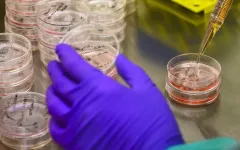
Research at UMC Utrecht has identified 29 novel antibodies against the bacterium Klebsiella pneumoniae, an important cause of drug-resistant infections. Using genetic and functional approaches, the researchers also managed to unravel how these antibodies interact with antigens on the bacterial surface. Finally, they found that some of these novel antibodies act synergistically to neutralize this pathogen. The increasing problem of antimicrobial resistance (AMR) urgently calls for the development of alternative ...

Read the release
Mysterious orca group near Chile tracked down, revealing newly discovered hunting skills
Science

Mysterious orca group near Chile tracked down, revealing newly discovered hunting skills

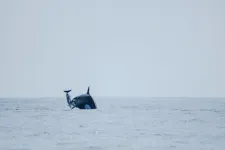
Off the coast of Chile, in waters filled with krill and anchovy by the Humboldt Current system, live an elusive and little-known population of orcas. Thanks to citizen science and years of dedicated surveillance, a team of scientists led by Dr Ana García Cegarra of the Universidad de Antofagasta are unveiling their secrets — starting with dinner. García Cegarra’s team, who previously observed these orcas using fishing boats to help them capture sea lions, have now spotted them successfully hunting dusky dolphins for the first time and sharing the food among the pod. This new evidence about their eating habits may help experts understand how populations ...

Read the release
Science

Risk of buprenorphine triggering sudden opioid withdrawal is low

Buprenorphine, an evidence-based treatment for opioid use disorder, is currently underprescribed because of concerns that it can cause ‘precipitated withdrawal’, in which the first dose causes sudden, intense pain and anxiety that resolves within a few hours. A new review of the best available evidence has found that the rate of buprenorphine-precipitated withdrawal in adults with opioid use disorder is low and should not be a barrier to use. The review is published in the scientific journal Addiction. Lead author Dr Caroline Gregory, of the University of Ottawa, explains: “There is a lot of speculation ...

Read the release
Science

Remote video consultations linked to reduced depression and anxiety

Remote video consultations between patients and mental health specialists show a small but significant improvement on symptoms of depression and anxiety, finds a trial published by The BMJ today. Although the effect size is small, the researchers say the effect is still meaningful given the high levels of these disorders in the community. Globally, depression and anxiety disorders are among the top leading causes of years lived with disability, but most people with depression and anxiety ...

Read the release
Science

Additional GP funding has been squeezed this year, finds BMJ investigation

Budgetary decisions by commissioners across England are affecting GPs’ ability to offer their patients what most people regard as essential services and forcing some practices to close, an investigation by The BMJ has found. This year, eight in 10 Integrated Care Boards (ICBs) - responsible for planning health services for their local population - either reduced or froze discretionary funding for general practices as a proportion of their overall budget for services such as taking blood, wound care, ...

Read the release
Science

Breakthrough research identifies new targets for wound healing

(Thursday, 26 September 2024) Novel research, presented today at the European Academy of Dermatology and Venereology (EADV) Congress 2024, has identified key molecular targets that could significantly enhance the healing of both acute and chronic wounds.1 These findings represent a crucial advancement in wound care, paving the way for more effective treatment options and improved patient outcomes. Globally, acute and chronic wounds affect nearly one billion people.2 In particular, chronic wounds pose a substantial economic burden on healthcare systems and severely impact ...

Read the release
Science

Tumour-specific antibodies able to detect melanoma in its earliest stages, new study shows

(Thursday, 26 September 2024, Amsterdam, Netherlands) Innovative research has unveiled promising advancements in melanoma detection, which could significantly enhance diagnosis and prognosis by identifying the disease at its earliest, most treatable stages.1 This new method, presented today at the European Academy of Dermatology and Venereology (EADV) Congress 2024, uses tumour-specific profiling to detect antibodies unique to stage I and II melanoma patients. Melanoma, a skin cancer with a high mutation rate,2 ...

Read the release
Science

Study finds certain MS therapies may not slow disability progression

EMBARGOED FOR RELEASE UNTIL 4 P.M. ET, WEDNESDAY, SEPTEMBER 25, 2024 MINNEAPOLIS – In people with primary progressive multiple sclerosis (MS), a new study has found no difference in the amount of time before disability worsened between people taking certain medications and those not receiving treatment. The study is published in the September 25, 2024, online issue of Neurology®, the medical journal of the American Academy of Neurology. With MS, the body’s immune system attacks myelin, the fatty, white substance that insulates and protects the nerves. People with ...

Read the release
Science

The Academy of Science of St. Louis names Katherine Polokonis as executive director

ST. LOUIS, MO, September 25, 2024 – After an extensive search, The Academy of Science of St. Louis has named Katherine Polokonis as the next Executive Director. “After a rigorous search, we are looking forward to Kate’s transformational leadership of The Academy of Science,” said Toni Kutchan, PhD, president of the Board of Trustees of the Academy and member emerita, Donald Danforth Plant Science Center. “Kate's comprehensive experience in STEM education and passion for social equity make her ...

Read the release
Dogs trained to detect explosives may perform worse in extreme temperature and humidity, taking longer to identify substances and with lower sensitivity
Science

Dogs trained to detect explosives may perform worse in extreme temperature and humidity, taking longer to identify substances and with lower sensitivity

Dogs trained to detect explosives may perform worse in extreme temperature and humidity, taking longer to identify substances and with lower sensitivity ### Article URL: https://journals.plos.org/plosone/article?id=10.1371/journal.pone.0306817 Article Title: Environmental effects on explosive detection threshold of domestic dogs Author Countries: USA Funding: This research was made possible through funding provided by the DoD Army Research Office under Contract No. W911NF2120124. https://www.arl.army.mil/who-we-are/aro/. SAK’s work was supported by the National Science Foundation ...

Read the release
Hardest hit by heat
Science

Hardest hit by heat

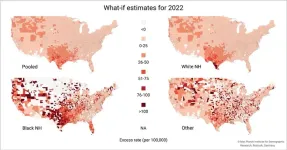
Each passing year, climate change drives summer temperatures to new extremes, with heat records being shattered one after another. In a new study, scientists from the Max Planck Institute for Demographic Research (MPIDR) have examined how extreme temperatures in the US affect the mortality of people from different racial groups. Risto Conte Keivabu, Ugofilippo Basellini, and Emilio Zagheni (director of MPIDR) analyzed data from 1993 to 2005 and examined racial differences in temperature-related deaths. The study found that both extreme cold (temperatures in the coldest 5%) and extreme heat (temperatures in the hottest 5%) increase mortality rates, with heat disproportionate impacting ...

Read the release
Science

Pigs may be transmission route of rat hepatitis E to humans

COLUMBUS, Ohio – New research suggests that pigs may function as a transmission vehicle for a strain of the hepatitis E virus (HEV) common in rats that has recently been found to infect humans. The Rocahepevirus ratti strain is called “rat HEV” because rats are the primary reservoir of the virus. Since the first human case was reported in a person with a suppressed immune system in Hong Kong in 2018, at least 20 total human cases have been reported – including in people with normal immune function. People infected with rat HEV did not report exposure to rats, leaving the cause of infection undefined. ...

Read the release
The Foundation of Consortium of Multiple Sclerosis Centers (FCMSC) receives $100,000 gift for the June Halper MS Nursing Scholarship Fund
Science

The Foundation of Consortium of Multiple Sclerosis Centers (FCMSC) receives $100,000 gift for the June Halper MS Nursing Scholarship Fund

(Hackensack, NJ, September 2024) The Foundation of the Consortium of Multiple Sclerosis Centers (FCMSC) recently received a generous donation of $100,000 from EMD Serono Inc., in honor of June Halper, MSN, APN-C, FAAN, MSCN. Ms. Halper a longtime pioneer in the comprehensive care movement for multiple sclerosis (MS), and leading nurse practitioner and MS advocate, passed away on July 24, 2024, at the age of 86, working until her final days as CEO of the CMSC, FCMSC and IOMSN (International Organization of MS Nurses). Since 1978, Ms. ...

Read the release
Effects of transjugular intrahepatic portosystemic shunt on renal and pulmonary function in hepatic decompensation with and without hepatorenal and hepatopulmonary syndromes
Science

Effects of transjugular intrahepatic portosystemic shunt on renal and pulmonary function in hepatic decompensation with and without hepatorenal and hepatopulmonary syndromes

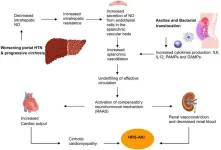
Cirrhosis is one of the leading causes of mortality from non-communicable diseases, with complications arising as liver function deteriorates. HRS and HPS represent the most severe outcomes of cirrhosis, associated with systemic vasodilation driven by elevated levels of vasodilators like nitric oxide (NO). These complications significantly impair renal and pulmonary functions, leading to high mortality rates. TIPS, by shunting blood from the portal to systemic circulation, can potentially improve renal function by increasing systemic blood volume. However, the diversion of NO through TIPS could exacerbate systemic hypotension, posing a risk to renal ...

Read the release
From the original Press-News collection. Issuers of news releases are responsible for the accuracy of their content.