THE ORIGINAL COLLECTION · SINCE 2010

Science
press releases.

Research announcements from universities, hospitals and scientific institutions. Explore the stories, people and discoveries behind the headlines.

Original publication datesPage 251
FIND A STORY

Find a past release.

Dates and source material belong to the original release.

Read our research explainers

Browse the collection · original publication order

Galaxies are much much bigger than we thought
Science

Galaxies are much much bigger than we thought

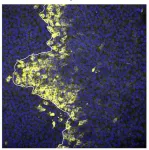
If this galaxy is typical, then the study, published today in Nature Astronomy, indicates that our galaxy is already interacting with its closest neighbour, Andromeda. Where does a galaxy end and deep space begin? It seems like a simple question until you look more closely at the gas that surrounds galaxies, known as the circumgalactic medium. The halo of gas surrounding the stellar disc accounts for about 70% of the mass of the galaxy – excluding dark matter – but until now has remained something of a mystery. In the past we have only been able to observe the gas by measuring the light from a background object, ...

Read the release

Youth igniting the flame of innovation: The third SynBio challenges held successfully in Shenzhen
Science

Youth igniting the flame of innovation: The third SynBio challenges held successfully in Shenzhen

From August 7 to 10, the Third SynBio Challenges were held at the Guangming Tianan Cloud Park International Conference Center in Shenzhen, China. The event was co-organized by Shenzhen Institute of Advanced Technology (SIAT) of the Chinese Academy of Sciences (CAS), Chinese Society of Biotechnology, Shenzhen University of Advanced Technology (SUAT), Shenzhen Institute of Synthetic Biology (iSynBio), Shenzhen Synthetic Biology Association, and the Shenzhen Industrial Innovation Center for Engineering Biology. The SynBio Challenges aim to provide a platform for students to engage in exchange and competition within the synthetic biology ...

Read the release
Making baby food safer
Science

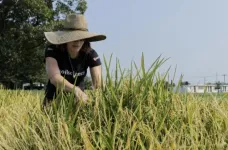
Making baby food safer

Rice and spinach are staples for babies’ and young children’s diets, but toxic metals and metalloids found in those foods can cause severe health impacts. In particular, heavy metals such as cadmium, lead, mercury, and metalloid arsenic could delay brain development in babies and young children. In new research published in the academic journal Environmental Geochemistry and Health, University of Delaware scientists have found that flooded rice fields tend to contain higher amounts of arsenic and lower amounts of cadmium. The drier those rice fields are, the lower the amounts of arsenic and the higher the amounts of cadmium. However, the higher cadmium is lower ...

Read the release
Science

K-State researchers determine molecular interactions in plants

Plant scientists have long known that phosphorus is a crucial component in plant growth. A major discovery by a K-State biologist and her lab is leading to a better understanding of how plants detect and use that resource — potentially leading to more efficient production of crops for food, fiber and fuel. A team of researchers led by Kathrin Schrick, associate professor of biology, recently published this research in New Phytologist, a high-impact journal in the plant sciences. Schrick's lab focused on a specific transcription factor that regulates gene expression during development. They discovered a new kind of molecular interaction between the ...

Read the release
Rice’s Aryeh Warmflash awarded $1.6M NIH grant for research on early human development
Science

Rice’s Aryeh Warmflash awarded $1.6M NIH grant for research on early human development

Researchers at Rice University are working to understand how a single cell evolves into the complex network of specialized cells that form the human body. Funded by a $1.6 million grant from the National Institutes of Health, the research team’s new study could advance our knowledge of developmental disorders and contribute to the future of regenerative medicine. Led byAryeh Warmflash, an associate professor of biosciences and Cancer Prevention and Research Institute of Texas Scholar in cancer ...

Read the release
Science

Researchers make mouse skin transparent using a common food dye

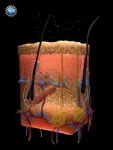
Seeing what’s going on inside a body is never easy. While technologies like CT scans, X-rays, MRIs, and microscopy can provide insights, the images are rarely completely clear and can come with side effects like radiation exposure. But what if you could apply a substance on the skin, much like a moisturizing cream, and make it transparent, without harming the tissue? That’s what Stanford scientists have done using an FDA-approved dye that is commonly found in food, among several other light-absorbing molecules that exhibit similar effects. Published in Science on ...

Read the release
A window into the body: groundbreaking technique makes skin invisible
Science

A window into the body: groundbreaking technique makes skin invisible

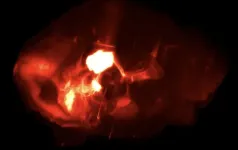
Images, animations, and video available in our NSF portal: https://nsf.widencollective.com/portals/ematkiby/TheInvisibleMouseEmbargoed Access Code: Le9ANH7tYTdr Researchers have developed a new way to see organs within a body by rendering overlying tissues transparent to visible light. The counterintuitive process—a topical application of food-safe dye—was reversible in tests with animal subjects, and may ultimately apply to a wide range of medical diagnostics, from locating injuries to monitoring digestive disorders to identifying cancers. Stanford University researchers published the research ″Achieving optical ...

Read the release
Serotonin to bounce back from adversity
Science

Serotonin to bounce back from adversity

The simple act of observing others cope with a traumatic experience can increase our capacity for resilience and prevent the pathological states that can result from it, notably depression. Neuroscientists at UNIL have demonstrated the presence of this “emotional contagion” in mice, and successfully deciphered its mechanism. The neurotransmitter serotonin, released in a brain structure called the habenula, has been shown to be the key to resilience. This discovery, published in Science, revisits the role of serotonin ...

Read the release
Yellow dye solution makes tissue transparent on living animals
Science

Yellow dye solution makes tissue transparent on living animals

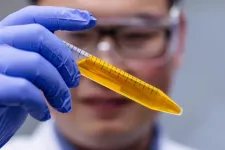
In a pioneering new study, researchers made the skin on the skulls and abdomens of live mice transparent by applying to the areas a mixture of water and a common yellow food coloring called tartrazine. Dr. Zihao Ou, assistant professor of physics at The University of Texas at Dallas, is lead author of the study, published in the Sept. 6 print issue of the journal Science. Living skin is a scattering medium. Like fog, it scatters light, which is why it cannot be seen through. “We combined the yellow dye, which is a molecule that absorbs most light, ...

Read the release
The collapse of bat populations led to more than a thousand infant deaths
Science

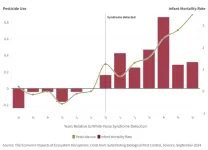
The collapse of bat populations led to more than a thousand infant deaths

Bats are considered a natural pesticide, widely relied on by farmers as an alternative to chemical pesticides to protect their crops from insects. But since 2006, many bat populations have collapsed in counties in North America due to an invasive fungus found in the caves bats use during the day and throughout winter that causes what is known as White-Nose Syndrome. A new study in Science uses their sudden collapse to explore whether farmers turned to chemical pesticides, and whether doing so impacts human health. It finds that farmers did increase their pesticide use, leading to more than 1,000 infant deaths. “Bats ...

Read the release
Science

Emotional contagion promotes resilience via serotonin release in mice

“Bystander” mice that briefly watched other mice be harmed show fewer signs of behavioral despair when faced with their own harmful event, compared to mice who do not observe their fellow mice being harmed. The negative emotional contagion experienced by the bystander mice appears to build resilience against a depressive-like state, according to new research by Sarah Mondoloni and colleagues. Mondoloni et al. demonstrate that resilience in these mice requires an increase in serotonin release in a part of the brain called the lateral habenula. “These findings support the notion that, as is the case in humans, graded trauma can be resilience-promoting, enabling ...

Read the release
Science

Injected fibroblasts transform to give thin skin a tough new identity

The thick and tough skin on our palms and soles, called volar skin, stands up well under high-pressure conditions. This type of skin would be welcome on the limb stumps of amputees, since these points of contact with prostheses are covered in thin, non-volar skin that can be damaged over time. Now, Sam Lee and colleagues demonstrate that an injection of volar fibroblasts into non-volar skin in a group of human volunteers can promote volar features in the thin skin that last up to five months. Based on their analysis, Lee et al. are now enrolling amputees in a phase 2 clinical trial to further explore volar fibroblasts as a future ...

Read the release
Science

Regenstrief to host semiannual LOINC® conference in Washington, D.C., Sept. 17-20

Regenstrief Institute will host its semiannual LOINC® conference September 17-20, 2024, in Washington, D.C. LOINC, a global healthcare terminology standard, will be the subject of the three-day conference during which experts worldwide will collaborate during presentations across three points of emphasis: implementation and policy, innovation and mapping. Keynote presenters will be: Wednesday, September 18 – Jesse Ehrenfeld, M.D., MPH, the president of the American Medical Association. Thursday, September ...

Read the release
Science

How fish guts might play a role in future skin care products

There are some pretty strange ingredients in cosmetics and skin care products. One example is snail mucin — also known as snail slime — which is used for its moisturizing and antioxidant properties. But researchers reporting in ACS Omega might have found something even weirder to put on your face: molecules made by fish gut bacteria. In cultured cells, the compounds had skin-brightening and anti-wrinkle properties, making them potential ingredients for your future skin care routine. Though fish guts might seem like the absolute last place to look for cosmetic compounds, it’s not a completely far-fetched idea. Many important drugs have ...

Read the release
Science

Research update: Recreational tubing, swimming leaves an impact on streams

How does your dip in a local watering hole affect the stream’s chemistry? Researchers who previously analyzed the impact of people swimming and tubing on a Colorado creek report updated observations in ACS ES&T Water. They find that these recreational activities over a busy Labor Day weekend have a short-term effect, increasing the levels of metals, human gut-associated microbes and substances from personal care products. Researchers James Ranville, Carsten Prasse, John Spear, Noor Hamden, Carmen Villarruel and colleagues studied how recreational ...

Read the release
Science

European Research Council awards €780 million in grants to emerging science talent across Europe

Iliana Ivanova, Commissioner for Innovation, Research, Culture, Education and Youth, said: “The European Commission is proud to support the curiosity and passion of our early-career talent under our Horizon Europe programme. The new ERC Starting Grants winners aim to deepen our understanding of the world. Their creativity is vital to finding solutions to some of the most pressing societal challenges. In this call, I am happy to see one of the highest shares of female grantees to date, a trend that I hope will continue. Congratulations to all!” President of the European Research Council, Prof. ...

Read the release
A $1.2 million Rosetta stone for honeybees
Science

A $1.2 million Rosetta stone for honeybees

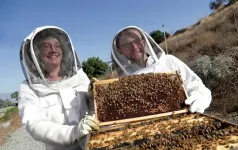
If you upset one bee, what determines whether the entire hive decides to avenge her grievance? A $1.2 million grant will support UC Riverside scientists in answering questions like these about how honeybees communicate. Every third bite of food you eat has been pollinated by a bee. They are central to worldwide food production, but there have been an alarming number of die-offs recorded since 2006. One solution to this issue is the use of special survivor bees that are more resistant to pests and diseases that are killing managed honeybees. Commonly found in ...

Read the release
ERC Starting Grant for IPK root researcher Prof. Dr. Hannah Schneider
Science

ERC Starting Grant for IPK root researcher Prof. Dr. Hannah Schneider

“We are extremely happy about the freshly granted ERC project for Hannah Schneider. Thereby, the European Research Agency distinguished a highly talented young researcher, who develops new ideas and approaches to explore anatomical roots traits that are highly relevant for stress tolerance and resource efficiency of crops”, says Prof. Dr. Nicolaus von Wirén, Managing Director at IPK. “The new ERC project of the scientist from Minnesota, whom we allured to IPK just last October, follows the two previous ERC-Starting Grant holders Martin Mascher and Stefan Heckmann and will bring great international visibility to root research at IPK.” “The ...

Read the release
Achieving a supercapacitor through the 'molecular coating' approach
Science

Achieving a supercapacitor through the 'molecular coating' approach

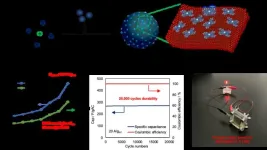
Researchers at Tohoku University have successfully increased the capacity, lifetime durability, and cost-effectiveness of a capacitor in their pursuit of a more power-efficient future. A capacitor is a device used as part of a circuit that can store and release energy, just like a battery. What makes a capacitor different from a battery is that it takes much less time to charge. For example, your cellphone battery will power your phone instantly, but charging that battery back up to 100% when it dies is far from instantaneous. While this makes capacitors sound like the superior choice, they have some big drawbacks that need to be overcome. Firstly, their capacity is much smaller ...

Read the release
WEHI bioinformatician wins prestigious Eureka prize
Science

WEHI bioinformatician wins prestigious Eureka prize

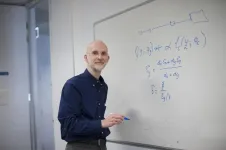
WEHI’s Bioinformatics division head, Professor Gordon Smyth, has won the 2024 Eureka Prize for Excellence in Research Software. The award recognises Prof Smyth’s lead role in developing and designing the limma software package, which helps researchers detect changes in gene activity. limma has helped researchers around the world detect changes in gene activity – a crucial element to finding new treatments for a range of diseases, like cancer – and has been used or cited in more than 70,000 published papers worldwide. The Australian Museum Eureka Prizes are ...

Read the release
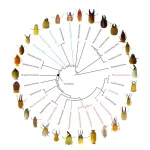
The dictionary of termites has been rewritten
Science

The dictionary of termites has been rewritten

Termites have a bad reputation. Most think of them as pests, a status that isn’t helped by their recent reclassification into the cockroach family. But not only do the termites that cause serious problems for humans only make up 3.5% of all termite species, termites also serve as crucial ecosystem engineers, maintaining the infrastructure of various environments. Like earthworms, they circulate nutrients by decomposing plant materials, and they play the important role of bioturbators: much like plowing a field, termites aerate the soil, expose underground nutrients, and let water infiltrate deeper layers of soil – ...

Read the release
Science

Texas A&M researchers discover that sustained neck exertions change the spine and muscles, causing pain

Learning new languages, sending emails, attending a virtual class, or speaking to loved ones halfway around the world are just some of the tasks accomplished by touching a button on a smartphone. Unfortunately, the ease and convenience of modern devices have also come with a painful crick in the neck. The sedentary nature of work and prolonged use of hand-held devices and computers have contributed to a sharp increase in neck pain. While fatigue in neck muscles has long been suspected of causing pain, the actual mechanical changes in the spine and muscles that precede weakness remain an outstanding question. Now, using high-precision X-ray ...

Read the release
Science

Three top ways to stop smoking

A major new scientific review of evidence published in the journal Addiction has identified three top strategies for quitting smoking: Varenicline -- a prescription drug sold under the brand names Chantix and Champix among others. Cytisine -- a plant-based compound available under prescription in the United Kingdom, in Canada as an over-the-counter natural health product (Cravv®) and throughout central and eastern Europe. Nicotine e-cigarettes. These work best when combined with behavioural support, ...

Read the release
Science

Scientific review reveals top three effective ways to stop smoking

A major new review of evidence by a team of scientists, including a University of Massachusetts Amherst public health researcher, has identified the three best strategies for quitting smoking: Varenicline – a prescription drug sold under the brand names Chantix and Champix, among others. Cytisine – a plant-based compound not widely available in the U.S. but sold as an over-the-counter natural health product (Cravv®) in Canada and throughout Central and Eastern Europe, and available under prescription in the United Kingdom. Nicotine e-cigarettes. The review, published ...

Read the release
Hudson River Foundation awards $1.7 million to Cary Institute for river monitoring program
Science

Hudson River Foundation awards $1.7 million to Cary Institute for river monitoring program

(Millbrook, NY) The Hudson River Foundation for Science and Environmental Research (HRF) has awarded $1.7 million to Cary Institute of Ecosystem Studies to monitor the Hudson River’s lower food web for three years. The project is an integral component of the $6.5 million Hudson River Ecosystem Monitoring Program, a collaboration of HRF and New York State Department of Environmental Conservation (DEC) to develop and implement the next generation comprehensive ecosystem monitoring program on the Hudson. Cary’s Chris Solomon will lead the Interim Lower Food Web Survey to provide ...

Read the release
From the original Press-News collection. Issuers of news releases are responsible for the accuracy of their content.